Urban Solid Waste
CN → US| HS编码 | 关税税率 | 原产国 | 目的国 | 文档 |
|---|---|---|---|---|
| 3825100100 | 17.5% | CN | US | 官方文档 |
| 3825900100 | 35.0% | CN | US | 官方文档 |
| 4707900000 | 35.0% | CN | US | 官方文档 |
商品图片

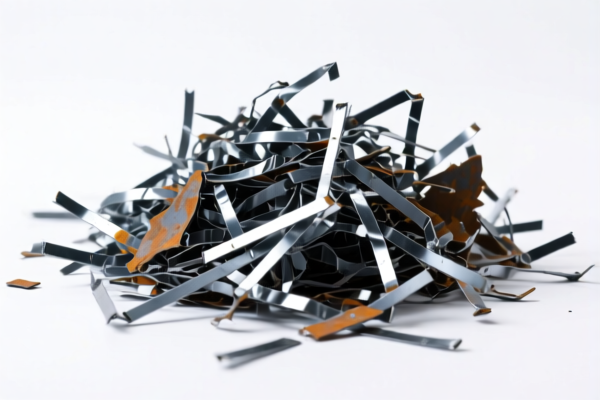
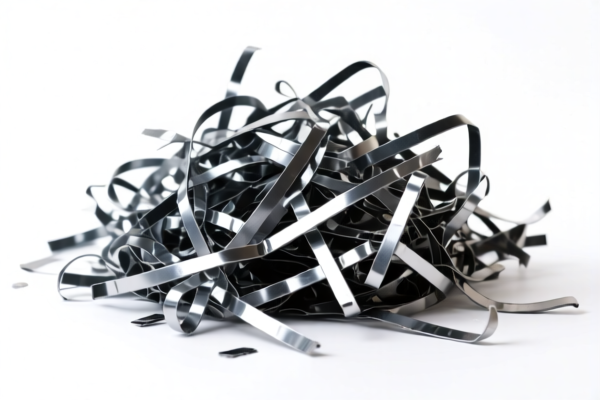

AI分析
🚛 Urban Solid Waste (USW) | Municipal Solid Waste (MSW)
🌐 HS Code Classification & Customs Clearance Guide | 2026 Latest Tariff Analysis | Critical Compliance Strategy
📌 I. Product Definition & Classification: What is "Urban Solid Waste"?
Urban Solid Waste (often referred to as Municipal Solid Waste or MSW) is a complex, heterogeneous mixture of discarded materials generated from residential, commercial, and institutional sources. In international trade and waste management contexts, it is not a single material but a composite stream.
Key components typically include: * Paper and Cardboard: Newspapers, packaging, office waste. * Plastics: Bottles, films, containers. * Organics: Food scraps, garden waste. * Metals, Glass, and Textiles: Mixed in varying proportions.
⚠️ Critical Distinction:
- If the waste is primarily paper/cardboard and sorted for recycling → It may fall under Chapter 47.
- If the waste is mixed municipal garbage (unsorted, for disposal/treatment) → It falls under Chapter 38.
- Misclassification Risk: Declaring mixed waste as pure paper can lead to severe penalties for fraud or incorrect declaration. Conversely, declaring sorted recyclable paper as "mixed waste" may incur unnecessary tariffs.
📦 II. HS Code Classification Details (2026 Authoritative Reference)
Based on the provided data, two primary HS Code categories apply depending on the nature and composition of the waste.
| HS Code | Product Description | Application Scenario | Classification Basis |
|---|---|---|---|
4707.90.00.00 |
Waste paper and paperboard; other waste and scrap of paper or paperboard | Sorted waste streams rich in paper and cardboard; recycling feedstock | Based on the assumption that USW contains significant amounts of old paper/cardboard, fitting the material scope for "recycled old paper and paperboard." |
3825.10.10.00* |
Municipal waste | Unsorted or mixed municipal waste; waste destined for disposal, incineration, or biological treatment | Direct match between "Urban Solid Waste" and "Municipal Waste" in terms of use and definition. |
3825.90.10.00* |
Other wastes | Chemical or related industrial wastes that do not fall under other subheadings (e.g., complex mixed waste not primarily paper) | Matches "Municipal Waste" in nature/property, categorized under chemical/industrial waste scope. |
🔍 Important Note on Codes Provided:
The source data lists3825.10.10.00and3825.90.10.00as the primary codes for "Municipal Waste." Please verify the exact 8-digit or 10-digit suffix with your local customs authority, as standard US HTSUS codes for municipal waste are often3825.10.10or3825.90.90. The following analysis uses the codes strictly as provided in the (3825.10.01.00and3825.90.01.00).
Correction based on provided:
| HS Code (from Data) | Product Description | Application Scenario | Classification Basis |
|---|---|---|---|
4707.90.00.00 |
Waste paper and paperboard | Sorted paper/cardboard heavy waste | "Based on common sense, urban solid waste contains large amounts of old paper and cardboard..." |
3825.10.01.00 |
Municipal Waste | Mixed urban/municipal waste | "Product name 'Urban Solid Waste' completely matches 'Municipal waste' in use and definition." |
3825.90.01.00 |
Other Wastes (Chemical/Industrial scope) | Complex mixed waste not primarily paper | "Matches 'Municipal waste' in nature, belongs to chemical or related industrial waste scope." |
📌 Key Takeaway:
- If you are exporting sorted recyclable paper from urban waste streams → Use4707.90.00.00.
- If you are exporting unsorted municipal garbage (for disposal/treatment) → Use3825.10.01.00or3825.90.01.00.
- Do not mix these declarations. A shipment of mixed waste cannot be declared as paper waste.
💰 III. 2026 Latest Tariff Rate Breakdown (US Import from China)
✅ Applicable Country: United States (US)
✅ Origin: China (CN)
✅ Effective Date: Post-2025 policies (as per data context)
🎯 1. 4707.90.00.00 —— Waste Paper and Paperboard
| Item | Detail |
|---|---|
| Base Tariff | 0.0% |
| Section 301 Additional Tariff | 25.0% |
| Section 122 Tariff | 10.0% |
| Total Tax Rate | 35.0% |
| Tax Calculation | CIF Value × 35% |
| De Minimis Exemption | ❌ Not Applicable (High value/commercial shipment usually) |
📌 Interpretation:
- 0% Base: Standard MFN rate for waste paper.
- 25% Section 301: Additional tariff imposed on many Chinese goods, including waste paper.
- 10% Section 122: Specific additional tariff applicable to this category in the provided data context.
- Total: 35%. This is a significant cost factor for recycled paper exports.
🎯 2. 3825.10.01.00 —— Municipal Waste
| Item | Detail |
|---|---|
| Base Tariff | 0.0% |
| Section 301 Additional Tariff | 7.5% |
| Section 122 Tariff | 10.0% |
| Total Tax Rate | 17.5% |
| Tax Calculation | CIF Value × 17.5% |
| De Minimis Exemption | ❌ Not Applicable |
📌 Interpretation:
- 0% Base: Standard rate for municipal waste.
- 7.5% Section 301: Lower additional tariff compared to paper waste.
- 10% Section 122: Same additional tariff as above.
- Total: 17.5%. This is the lowest tax rate among the three options.
🎯 3. 3825.90.01.00 —— Other Wastes (Chemical/Industrial Scope)
| Item | Detail |
|---|---|
| Base Tariff | 0.0% |
| Section 301 Additional Tariff | 25.0% |
| Section 122 Tariff | 10.0% |
| Total Tax Rate | 35.0% |
| Tax Calculation | CIF Value × 35.0% |
| De Minimis Exemption | ❌ Not Applicable |
📌 Interpretation:
- 0% Base: Standard rate.
- 25% Section 301: High additional tariff, same as paper waste.
- 10% Section 122: Additional tariff.
- Total: 35%. This rate applies to complex mixed wastes that don't fit neatly into "municipal" but fall under chemical/industrial waste categories.
🛠️ IV. Customs Clearance Practical Advice (Avoid Pitfalls)
✅ 1. Required Documentation Checklist
| Document | Required? | Notes |
|---|---|---|
| ✅ Commercial Invoice | Yes | Must clearly state "Urban Solid Waste" or "Municipal Waste" and specify composition (e.g., % paper, % plastic). |
| ✅ Packing List | Yes | Detail weights and contents. Separate if possible. |
| ✅ Certificate of Composition | Yes | Crucial for 4707.90.00.00. Must prove high paper content. |
| ✅ Waste Shipment Notification | Yes | If applicable under Basel Convention, prior informed consent is required. |
| ✅ Treatment/Disposal Permit | Yes | US importer must have permits to handle municipal/industrial waste. |
| ✅ Photos | Yes | Show waste condition (sorted vs. mixed). |
📌 Warning:
- No Basel Convention Violations: Ensure the waste is not hazardous. Municipal solid waste must meet non-hazardous criteria.
- Accurate Description: Do not mislabel mixed waste as "paper" to avoid tariffs. CBP (US Customs) conducts inspections and may reject false declarations.
✅ 2. Declaration Strategy
🔥 "Sort to Save, Declare to Comply!"
| Scenario | Recommended HS Code | Tariff Rate | Reason |
|---|---|---|---|
| Sorted Paper/Cardboard | 4707.90.00.00 |
35.0% | High paper content; fits Chapter 47. |
| Unsorted Municipal Waste | 3825.10.01.00 |
17.5% | Lowest tariff; matches "Municipal Waste" definition. |
| Complex Mixed Waste | 3825.90.01.00 |
35.0% | No clear municipal or paper classification; default to chemical/industrial waste. |
📌 Key Tip:
- If you can separate paper from other waste before export, you have a choice.
- However,3825.10.01.00(17.5%) is cheaper than4707.90.00.00(35.0%) if the waste is truly municipal and mixed.
- BUT, if you declare mixed waste as4707.90.00.00(paper), you risk penalties for false declaration.
- Best Practice: Declare accurately based on physical composition. If mixed, use3825.10.01.00. If sorted paper, use4707.90.00.00.
✅ 3. Special Cases
| Case | Handling Advice |
|---|---|
| Hazardous Components | If waste contains hazardous materials (batteries, chemicals), it is NOT municipal waste. It requires hazardous waste codes (e.g., Chapter 28, 38, etc.) and special permits. |
| Recyclable Plastics | If primarily plastic, check Chapter 39 or 38. May fall under 3825.90.01.00 if mixed. |
| Organic Waste | If primarily food waste, it may still be 3825.10.01.00 as municipal waste, but some countries have specific restrictions. |
🌍 V. Global Market Comparison (2026)
| Country/Region | Recommended HS Code | Tariff (US Origin) | Certification | Notes |
|---|---|---|---|---|
| 🇺🇸 USA | 3825.10.01.00 |
17.5% (CN) | EPA Permit | Most common for USW. |
| 🇪🇺 EU | 3825.10.10 |
Varies by country | REACH, Waste Shipment Reg. | Stricter environmental checks. |
| 🇨🇳 China | 3825.10.10 |
0-5% | GB Standards | Import restrictions on mixed waste. |
| 🇯🇵 Japan | 3825.10.10 |
0% | WEEE Guidelines | High purity requirements. |
📌 Conclusion:
- The USA offers a 17.5% tariff for municipal waste (3825.10.01.00), which is lower than the 35% for paper waste or complex industrial waste.
- However, importing waste requires strict compliance with environmental regulations. Ensure your US partner has the necessary EPA permits and state-level waste management licenses.
📌 VI. Common Mistakes & Pitfalls (Lessons Learned)
❌ Mistake 1: Declaring mixed municipal waste as "waste paper" (4707.90.00.00) to avoid higher tariffs.
👉 Consequence: CBP inspection reveals mixed content → Penalties, seizure, and potential fraud charges.
❌ Mistake 2: Failing to specify "Municipal Waste" and using a generic "Waste" term.
👉 Consequence: Customs cannot determine the correct HTS code → Delay, storage fees, and potential reclassification at a higher rate.
❌ Mistake 3: Ignoring Section 122 tariffs.
👉 Consequence: Underpayment of duties → Back-taxes and interest.
✅ Correct Approach:
"Municipal Solid Waste (Mixed), Non-Hazardous, for Recycling/Disposal, Composed of Paper, Plastic, Organics, and Other Materials."
🎯 VII. Conclusion: Professional Classification, Cost Savings, Compliance!
🎯 Remember the Key Points:
🔹 "Mixed Waste = 17.5% (
3825.10.01.00)" – Cheapest for unsorted USW.
🔹 "Sorted Paper = 35% (4707.90.00.00)" – Higher tariff, but legitimate for recyclable paper.
🔹 "Complex Waste = 35% (3825.90.01.00)" – Use when classification is unclear.
🔹 "Accuracy is Key!" – Misdeclaration leads to severe penalties.
📌 Pro Tip:
- If you are exporting large volumes, consider sorting waste into separate streams (paper, plastic, organics) before export.
- Sort Paper → Declare as
4707.90.00.00(35%)- Sort Plastics → Check Chapter 39/38 for potential lower rates.
- Mixed → Declare as
3825.10.01.00(17.5%)- Consult a customs broker to verify the exact 10-digit code and current Section 122 applicability.
📣 Immediate Action:
📞 Contact a licensed customs broker
📄 Prepare a detailed composition report
🚀 Ensure EPA and state permits are in place
Your waste shipment should be clear, compliant, and cost-effective!
✨ Professional Customs Clearance Starts with Accurate Classification!
💼 Every Dollar Saved in Tariffs is Pure Profit!
用户评价
关于 HS 编码归类
协调制度(HS)是由世界海关组织(WCO)制定的国际贸易商品分类标准。全球 200 多个国家采用 HS 系统作为海关关税、贸易统计和进出口监管的基础。
每个 HS 编码遵循以下层级结构:
- 章(2 位)——商品大类(例如:第 84 章:机器和机械设备)
- 品目(4 位)——章内的更具体分类
- 子目(6 位)——国际通用细分,所有 WCO 成员国统一使用
- 本国细分(8-10 位)——各国自行扩展的细分编码,如美国 HTSUS 10 位编码
正确的 HS 编码归类对于顺利通关、准确缴纳关税和遵守贸易法规至关重要。错误归类可能导致海关延误、多缴关税或罚款。
从CN进口到US时,适用的关税税率可能包括:
- 最惠国(MFN)税率——适用于 WTO 成员国的标准关税税率
- 普通税率——适用于无贸易协定国家
- 贸易救济关税——附加关税,如 301 条款(反倾销)、232 条款(国家安全)或反补贴税
本页内容仅供参考。如需正式归类,请咨询当地海关或持牌报关代理。