Used Passenger Car Tires
CN → US| HS编码 | 关税税率 | 原产国 | 目的国 | 文档 |
|---|---|---|---|---|
| 4012208000 | 35.0% | CN | US | 官方文档 |
| 4012206000 | 35.0% | CN | US | 官方文档 |
| 4012208000 | 35.0% | CN | US | 官方文档 |
| 4012206000 | 35.0% | CN | US | 官方文档 |
| 4012206000 | 35.0% | CN | US | 官方文档 |
商品图片
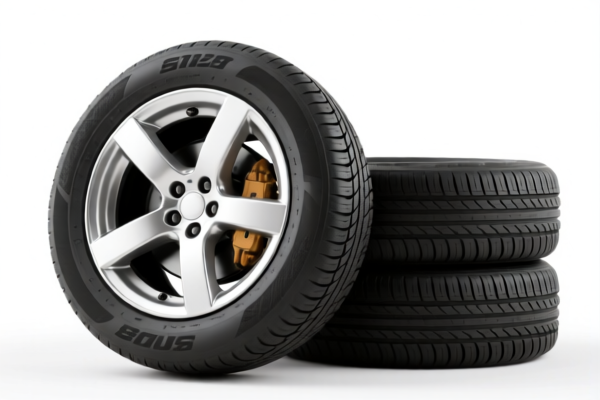
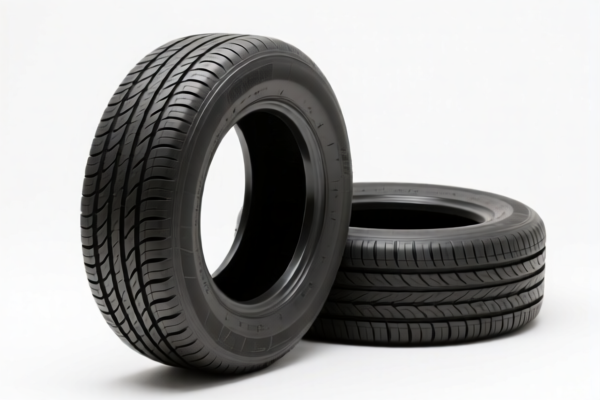
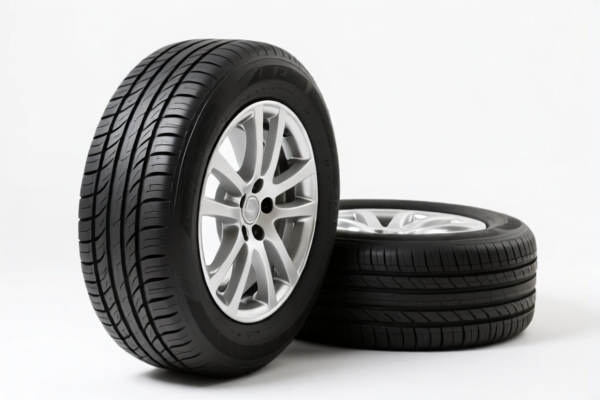
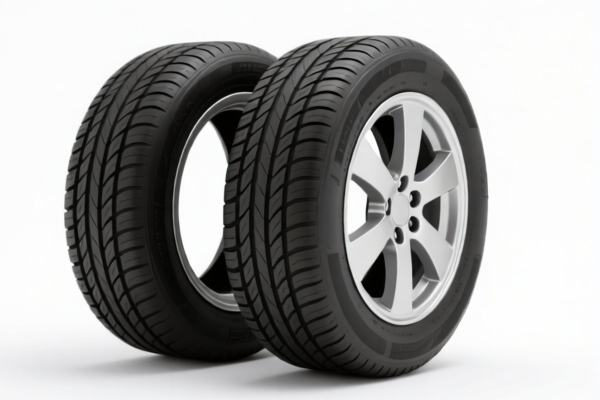
AI分析
🚗 Used Passenger Car Tires (Used Radial Pneumatic Tires)
🌐 HS Code Reference & Customs Clearance Guide | 2026 Latest Tariff Analysis | Professional Compliance Strategy
📌 I. Product Definition and Classification: Do You Truly Understand "Used Passenger Car Tires"?
In international trade, "Used Passenger Car Tires" are not a single homogeneous category. They are strictly classified based on usage scenarios (passenger vehicles vs. buses vs. freight trucks) and physical state (used/old). The key distinction lies in whether the tire is designated for light passenger cars or heavier commercial vehicles like buses and trucks.
⚠️ Key Distinction Point:
- Passenger Cars (Light Vehicles): Classified under4012.20.60.00. These are tires for standard sedans, SUVs, and crossovers.
- Buses & Heavy Freight (Commercial Vehicles): Classified under4012.20.80.00. This category covers "Old Pneumatic Tires" for buses and other heavy-duty applications.
- "Used" = "Old": In tariff nomenclature, "Used" tires are explicitly categorized as "Old" (旧) pneumatic tires.
📦 II. HS Code Classification Details (2026 Latest Tariff Authority Cross-Reference)
| HS Code | Product Description | Applicable Scenario | Material/Form |
|---|---|---|---|
4012.20.60.00 |
Used Passenger Car Tires (Specifically for passenger vehicles) | Standard passenger cars, SUVs, light vans | Rubber, Old Pneumatic Tires |
4012.20.80.00 |
Used Bus Tires / Heavy Freight Tires | Buses, large commercial trucks, heavy freight transport | Rubber, Old Pneumatic Tires |
🔍 Critical Clarification:
-4012.20.60.00: Specifically for passenger cars. If you declare "Used Tires" without specifying, but they are for buses, this is a misclassification.
-4012.20.80.00: Covers buses and freight tires. The summary explicitly states that "Used Highway Freight Tires" and "Used Bus Tires" fall here because they fit the "Other" (其他) or specific commercial categories under "Old Pneumatic Tires."
- Material: All listed codes assume the material is Rubber (橡胶).
💰 III. 2026 Latest Tariff Rate Details (Including Additional Taxes & Policy Surcharges)
✅ Applicable Country: United States (US)
✅ Origin: China (CN) (Note: Tariff details below reflect the provided data context which implies US-China trade dynamics given the "Section 122" and high rates)
✅ Effective Date: Current 2026 Rules
🎯 1. 4012.20.60.00 — Used Passenger Car Tires (Passenger Vehicles)
| Item | Content |
|---|---|
| Base Tariff | 0.0% (Ad Valorem) |
| Additional Tariff (Section 301) | +25.0% |
| Section 122 Tariff | +10.0% |
| Total Tax Rate | 35.0% |
| Tax Calculation | CIF Value × 35% |
| De Minimis Exemption | ❌ Not Applicable (Deny De Minimis for this category under current high-tariff regimes) |
| Legal Basis Path | Base: 0% → Add: 25% → 122 Clause: 10% → Total: 35% |
📌 Explanation:
- Base Rate: The general duty for old tires is 0%.
- 25% Surcharge: Likely refers to Section 301 tariffs on Chinese-origin goods.
- 10% Section 122 Tariff: A specific additional tariff often applied to certain goods, here explicitly added to tires.
- Total: 35% is a significant cost factor. Do not underestimate this!
🎯 2. 4012.20.80.00 — Used Bus Tires / Heavy Freight Tires
| Item | Content |
|---|---|
| Base Tariff | 0.0% (Ad Valorem) |
| Additional Tariff (Section 301) | +25.0% |
| Section 122 Tariff | +10.0% |
| Total Tax Rate | 35.0% |
| Tax Calculation | CIF Value × 35% |
| De Minimis Exemption | ❌ Not Applicable |
| Legal Basis Path | Base: 0% → Add: 25% → 122 Clause: 10% → Total: 35% |
📌 Note:
- Although the HS Code differs (.60vs.80), the tax rate is identical at 35%.
- This includes Used Highway Freight Tires (二手公路货运轮胎) as stated in the data, which also falls under.80.00.
- Even if declared as "Old Pneumatic Tires" for buses or trucks, the 35% rate applies uniformly.
🛠️ IV. Customs Clearance Practical Advice (Battle-Tested Pitfall Avoidance Guide)
✅ 1. Required Documentation Checklist (Non-Negotiable)
| Document | Must Provide | Explanation |
|---|---|---|
| ✅ Product Specification Sheet | ✔️ | Must clearly state: "Used/Old Pneumatic Tire," Material: Rubber, Size, Load Index. |
| ✅ Commercial Invoice | ✔️ | Must explicitly describe goods as "Used Passenger Car Tire" or "Used Bus Tire"—do not use vague terms like "Auto Parts." |
| ✅ Packing List | ✔️ | Detail quantity, weight, and dimensions. Ensure no mixed declarations (e.g., mixing new and used tires). |
| ✅ Certificate of Origin | ✔️ | Crucial for determining applicable surcharges (e.g., Section 301 if originating from China). |
| ✅ Condition Report/Photos | ✔️ | Proof that tires are "Used/Old" and not "Retreaded" or "New." Retreaded tires have different HS codes and regulations. |
| ✅ Environmental Compliance Docs | ✔️ | Some jurisdictions require proof that used tires are not hazardous waste. |
✅ 2. Declaration Tips (Key Mantra)
🔥 "Be Precise: Passenger vs. Bus, Used vs. New, Name Matters!"
| Scenario | Correct Declaration | Wrong Practice |
|---|---|---|
| Tires for Sedans/SUVs | 4012.20.60.00 - "Used Passenger Car Tires" |
Declaring as "Auto Accessories" → Higher scrutiny/risk |
| Tires for Buses | 4012.20.80.00 - "Used Bus Tires" |
Declaring as "Passenger Tires" → Misclassification penalty |
| Tires for Trucks | 4012.20.80.00 - "Used Freight Tires" |
Not specified → Likely flagged as .80 anyway |
| "Used" Terminology | Use "Old" or "Used" explicitly | Using "Second-hand" alone without HS context → Confusion |
⚠️ Critical Warning:
- Do NOT declare as "New Tires": New tires have completely different HS codes and lower/no additional tariffs. Misdeclaration is fraud.
- Do NOT mix HS Codes: If you have a container with both passenger and bus tires, you must declare them separately on different lines of the bill of lading/customs entry. Mixing them leads to audit delays.
✅ 3. Special Circumstances Handling
| Situation | Handling Advice |
|---|---|
| Retreaded Tires | ❗ Different Category: Retreaded tires are NOT "Used/Old" tires. They fall under 4012.11.00 or similar. Do not use the .60/.80 codes above for retreads. |
| Damaged Tires | If tires are scrap/waste, they may be classified as waste rubber (3903 or 3904). This may incur different environmental fees or bans. |
| Origin: Non-China | If tires originate from Vietnam/Mexico, the 25% Section 301 tariff may not apply, but the 10% Section 122 might still be checked. Verify origin rules carefully. |
| EPA/Transport Canada | In some markets, used tires face strict environmental import bans. Ensure the destination country allows import of used tires. (e.g., Some countries ban used tire imports entirely). |
🌍 V. Global Market Customs Comparison (2026 Latest)
| Country/Region | Recommended HS Code | Tariff Rate (China Origin) | Certification/Notes |
|---|---|---|---|
| 🇺🇸 USA | 4012.20.60.00 / .80.00 |
35% (0% + 25% + 10%) | High barrier. Ensure EPA compliance if applicable. |
| 🇨🇳 China | 4012.20.60.00 / .80.00 |
Varies (Import allowed with licenses) | Strict environmental standards for used goods. |
| 🇪🇺 EU | 4012.20 (General) |
Varies (Often 0-3%) | Ban on used tire imports in many EU member states. Check local laws! |
| 🇦🇺 Australia | 4012.20.00 |
Varies | Strict biosecurity and waste import regulations. |
| 🇲🇽 Mexico | 4012.20.01 |
Varies | Often used as a hub; check NAFTA/USMCA rules. |
📌 Conclusion:
- USA has a clear, high-cost structure (35%).
- EU/Australia may ban used tire imports entirely.
- Always verify destination country's import ban on used rubber products before shipping.
📌 VI. Common Errors & Pitfall Guide (Blood-Learnings)
❌ Error 1: Declaring "Used Tires" as "New Tires" to avoid tariffs.
👉 Consequence: Severe penalties, seizure, and blacklisting. Customs uses X-rays to detect wear patterns.
❌ Error 2: Misclassifying "Bus Tires" as "Passenger Tires" (4012.20.60.00).
👉 Consequence: Even if the tax rate is the same (35%), it is a misdeclaration of goods. Can lead to audits and delays.
❌ Error 3: Ignoring "Section 122" 10% surcharge.
👉 Consequence: Underpaying customs duties. CBP (US Customs) will demand back payment + interest.
❌ Error 4: Mixing "Retreaded" and "Used" tires in one shipment.
👉 Consequence: Retreads are new products (modified); Used are waste/secondary. Different HS codes. Mixed shipment → Rejection.
✅ Correct Approach:
"Used Passenger Car Tire, Rubber, Old, Size 205/55R16, Brand X, Origin China"
Use HS Code:4012.20.60.00
Tax: 35%
🎯 VII. Conclusion: Precise Declaration Saves Money and Time!
🎯 Remember the Mantra:
🔹 "Passenger = .60, Bus/Freight = .80, Both 35%!"
🔹 "Used means 'Old' in Tariff Lingo. Don't be vague!"
🔹 "Check for Import Bans before you Ship!"
📌 Pro Tip:
If your tires are not from China, the 25% Section 301 tariff may be avoided, but the 10% Section 122 tariff still applies in the provided data context. Always provide Certificate of Origin to prove source.
For Retreaded Tires, seek different HS Codes entirely (usually 4012.11.00), as they are not "Used/Old" but "Remanufactured."
📣 Take Action Now:
📞 Contact your customs broker with photos and specific usage (Car vs. Bus).
📄 Ensure your invoice says "Used Passenger Car Tire" or "Used Bus Tire" exactly.
🚀 Clear Customs Smoothly, Avoid 35% Surprises, Protect Your Margins!
✨ Professional Clearance Starts with Precise Classification!
💼 Every percentage point in tax is a point in profit!
用户评价
关于 HS 编码归类
协调制度(HS)是由世界海关组织(WCO)制定的国际贸易商品分类标准。全球 200 多个国家采用 HS 系统作为海关关税、贸易统计和进出口监管的基础。
每个 HS 编码遵循以下层级结构:
- 章(2 位)——商品大类(例如:第 84 章:机器和机械设备)
- 品目(4 位)——章内的更具体分类
- 子目(6 位)——国际通用细分,所有 WCO 成员国统一使用
- 本国细分(8-10 位)——各国自行扩展的细分编码,如美国 HTSUS 10 位编码
正确的 HS 编码归类对于顺利通关、准确缴纳关税和遵守贸易法规至关重要。错误归类可能导致海关延误、多缴关税或罚款。
从CN进口到US时,适用的关税税率可能包括:
- 最惠国(MFN)税率——适用于 WTO 成员国的标准关税税率
- 普通税率——适用于无贸易协定国家
- 贸易救济关税——附加关税,如 301 条款(反倾销)、232 条款(国家安全)或反补贴税
本页内容仅供参考。如需正式归类,请咨询当地海关或持牌报关代理。