V Belts for Power Transmission (Textile Reinforced)
CN → US| HS编码 | 关税税率 | 原产国 | 目的国 | 文档 |
|---|---|---|---|---|
| 5910001010 | 39.0% | CN | US | 官方文档 |
| 4010313000 | 38.4% | CN | US | 官方文档 |
| 4010316000 | 37.8% | CN | US | 官方文档 |
| 4010391000 | 38.4% | CN | US | 官方文档 |
| 5910001090 | 39.0% | CN | US | 官方文档 |
商品图片
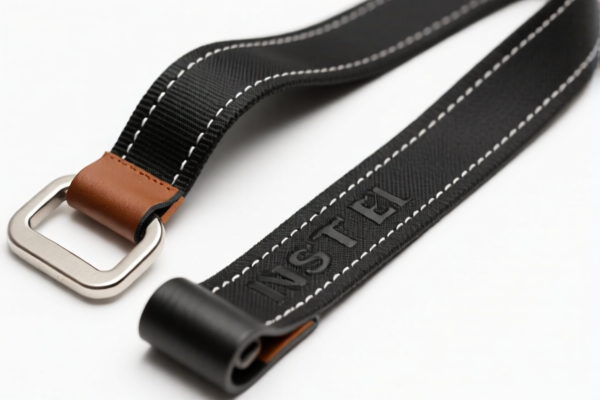
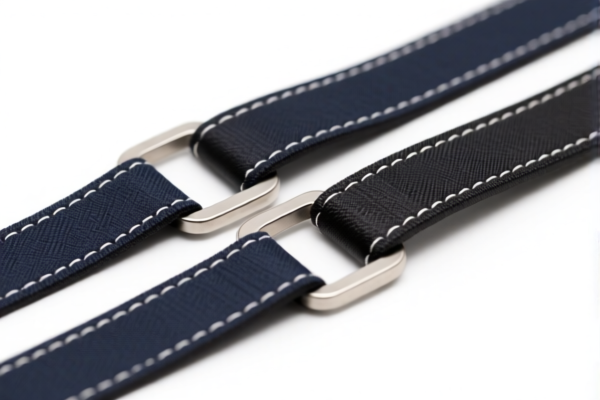
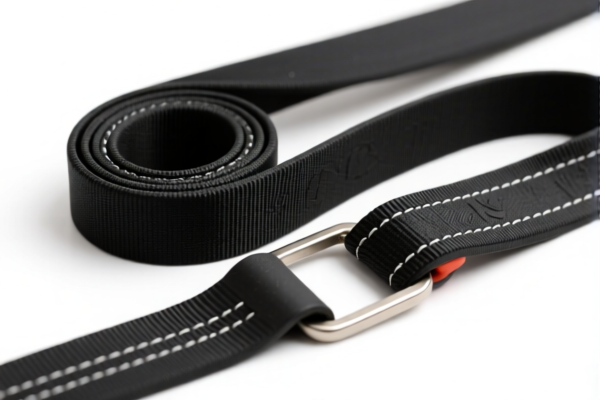
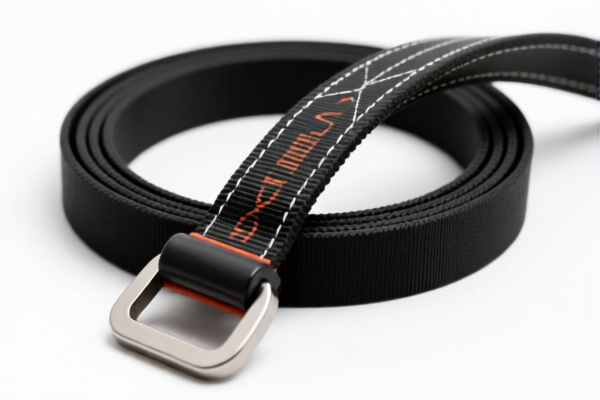
AI分析
🛠️ V-Belts for Power Transmission (Textile Reinforced)
🌐 HS Code Reference & Customs Clearance Guide | 2024/2025 Latest Tariff Analysis | Professional Clearance Strategy
📌 I. Product Definition & Classification: Do You Really Understand "V-Belts"?
V-belts are critical mechanical components used for power transmission, transferring rotational energy from a driving pulley to a driven pulley. In international trade, the classification of V-belts heavily depends on their material composition (Rubber vs. Textile/Man-made Fiber reinforcement) and structural form.
For "Textile Reinforced" V-belts, there are two primary HS Code pathways depending on the specific manufacturing structure: 1. Chapter 40 (Rubber): If the belt is primarily made of synthetic/natural rubber with textile reinforcement (e.g., textile cords embedded in rubber). 2. Chapter 59 (Impregnated/Coated Textiles): If the belt is primarily made of textile or man-made fibers, coated or covered with rubber or other materials, or reinforced with textile materials.
⚠️ Key Distinction Point:
- If the belt is vulcanized rubber-based with textile tension members (cords) → Generally classified under HS 4010.
- If the belt is textile/fabric-based (e.g., woven fabric belts) or heavily reinforced with textile materials in a non-rubber-primary structure → Generally classified under HS 5910.
- Note: Many "Textile Reinforced" V-belts in industrial use are rubber belts with textile cords, falling under 4010. However, specific "Fabric V-Belts" or those with heavy textile reinforcement may fall under 5910.
📦 II. HS Code Classification Details (Latest Tariff Authority Match)
Based on the provided <DATA>, here are the specific HS Codes applicable to V-belts, including tax details and summaries.
| HS Code | Product Summary | Material/Structure Inference | Total Tax Rate | Tax Breakdown |
|---|---|---|---|---|
| 5910.00.10.10 | V-belts for power transmission; shape meets V-structure requirements. | Textile-reinforced or Man-made fiber reinforced. | 39.0% | Base: 4.0%, Add'l (301): 25%, Sec 122: 10% |
| 4010.31.30.00 | V-belts for transmission; inferred as Sulfur-cured Rubber combined with textile materials. | Rubber-primary with textile reinforcement. | 38.4% | Base: 3.4%, Add'l (301): 25%, Sec 122: 10% |
| 4010.31.60.00 | Trapezoidal cross-section V-belts for transmission; inferred as Sulfur-cured Rubber. | Pure rubber structure (trapezoidal). | 37.8% | Base: 2.8%, Add'l (301): 25%, Sec 122: 10% |
| 4010.39.10.00 | Textile-reinforced transmission belts; material combines textile materials, used for transmission. | Rubber/Textile composite, non-V specific or other V-types. | 38.4% | Base: 3.4%, Add'l (301): 25%, Sec 122: 10% |
| 5910.00.10.90 | Transmission belts reinforced with textile materials or man-made fibers; meets shape and use requirements. | Textile/Fabric primary structure. | 39.0% | Base: 4.0%, Add'l (301): 25%, Sec 122: 10% |
🔍 Critical Insight:
- HS 4010 codes (37.8% - 38.4%) typically apply to Rubber-based V-belts, even if they contain textile cords for tension.
- HS 5910 codes (39.0%) typically apply to Textile/Fabric-based belts or those where textile is the primary structural element.
- All listed codes include significant additional tariffs due to US-China trade policies.
💰 III. 2024/2025 Latest Tariff Rate Breakdown (Detailed Policy Add-ons)
✅ Applicable Country: United States (US)
✅ Origin: China (CN)
✅ Effective Time: Current (Post-2024 Policy Continuation)
🎯 1. Rubber-Based V-Belts (HS 4010 Series)
(Includes: 4010.31.30.00, 4010.31.60.00, 4010.39.10.00)
| Item | Content |
|---|---|
| Base MFN Rate | 2.8% – 3.4% (Ad Valorem) |
| USITC Section 301 Tariff | +25.0% (Standard rate for most Chinese rubber products) |
| Section 122 Tariff | +10.0% (Specific surcharge on certain Chinese goods) |
| Total Effective Tax Rate | 37.8% – 38.4% |
| De Minimis Exemption? | ❌ No (Not eligible for $800 de minimis exemption; subject to full customs entry) |
| Legal Basis Path | USITC:4010.xx.xx → Footnote:301 → EO:12224 (Sec 122) |
📌 Explanation:
- Rubber V-belts are heavily scrutinized. Even if they are "textile reinforced," if the primary material is rubber (vulcanized), they fall under Chapter 40.
- The 25% Section 301 tariff is the most significant cost driver.
- The 10% Section 122 tariff is an additional layer, bringing the total to nearly 40%.
🎯 2. Textile/Fabric-Based V-Belts (HS 5910 Series)
(Includes: 5910.00.10.10, 5910.00.10.90)
| Item | Content |
|---|---|
| Base MFN Rate | 4.0% (Ad Valorem) |
| USITC Section 301 Tariff | +25.0% |
| Section 122 Tariff | +10.0% |
| Total Effective Tax Rate | 39.0% |
| De Minimis Exemption? | ❌ No |
| Legal Basis Path | USITC:5910.xx.xx → Footnote:301 → EO:12224 (Sec 122) |
📌 Explanation:
- These belts are classified under Chapter 59 because the textile/man-made fiber is the primary structural component, even if coated with rubber.
- The base tariff is slightly higher (4.0% vs 2.8-3.4%), resulting in a slightly higher total rate (39.0%) compared to some rubber-based belts.
- Strategic Note: If your belt is 90% textile and 10% rubber, it may qualify for 5910. If it's 90% rubber with 10% textile cords, it likely qualifies for 4010. The distinction impacts cost by 0.6%.
🛠️ IV. Customs Clearance Practical Advice (Real-World Pitfall Avoidance)
✅ 1. Documentation Checklist (Non-Negotiable)
| Document | Required? | Description |
|---|---|---|
| ✅ Product Specification Sheet | ✔️ | Must detail: Material composition (Rubber vs. Textile ratio), Cross-section shape (V, Wedge, Trapezoidal), Tension member material (Polyester, Steel, Nylon). |
| ✅ Composition Statement | ✔️ | Explicitly state: "Primary material: Sulfur-cured Rubber" OR "Primary material: Textile/Fabric." This determines Chapter 40 vs. 59. |
| ✅ Product Photos | ✔️ | Clear images of the cross-section, inner side, and outer side. Show texture (smooth rubber vs. woven fabric). |
| ✅ Commercial Invoice | ✔️ | Must match HS Code description exactly. Do not use generic terms like "Belt." Use "V-Belt, Rubber, Textile Reinforced." |
| ✅ Origin Certificate (if applicable) | ✔️ | For proving Chinese origin (and thus applicability of additional tariffs). |
✅ 2. Classification Strategy (Key Rules)
| Scenario | Correct HS Code Category | Common Mistake | Consequence |
|---|---|---|---|
| Rubber V-Belt with Textile Cords | HS 4010 (e.g., 4010.31.30.00) | Classifying as 5910 (Textile) | Overpayment of 0.6% tax + Risk of audit for misclassification. |
| Woven Fabric V-Belt (Rubber-coated) | HS 5910 (e.g., 5910.00.10.10) | Classifying as 4010 (Rubber) | Underpayment of tax → Penalties + Back Duties. |
| Standard V-Belt (No specific textile mention) | HS 4010.31.60.00 (Default Rubber) | Assuming 5910 | May be incorrect if textile is dominant. |
| Industrial Conveyor Belt (Not V-shape) | Check HS 4010.39 or 5910.00.90 | Using V-Belt code | Misdeclaration → Shipment delay. |
🔥 "Rule of Thumb":
- Rubber Dominant? → Go to Chapter 40.
- Textile Dominant? → Go to Chapter 59.
- Always verify with the customs broker using product cross-sections!
✅ 3. Special Circumstances
| Scenario | Handling Advice |
|---|---|
| OEM Custom Belts | Provide engineering drawings showing material layers. If unsure, opt for HS 4010.31.30.00 (common for industrial V-belts) unless proven otherwise. |
| High-Performance Belts (Aramid/Kevlar) | If reinforced with aramid (a man-made fiber), check if it fits 5910 or 4010. Kevlar-reinforced rubber belts are often still 4010 if rubber is the binder. |
| De Minimis (Section 321) | NOT APPLICABLE. V-belts are industrial goods and generally exceed the $800 threshold or are excluded from de minimis relief due to trade remedies. |
🌍 V. Global Market Comparison (2024/2025)
| Country/Region | Recommended HS Code | Total Tax Rate (China Origin) | Certification Requirements | Notes |
|---|---|---|---|---|
| 🇺🇸 USA | 4010.31.30.00 or 5910.00.10.10 | 37.8% – 39.0% | None (General) | High tariffs due to Sec 301 & Sec 122. Costly! |
| 🇨🇳 China | 4010.31.30.00 / 5910.00.10.10 | ~5% - 10% (Import) | None | Domestic production is competitive. |
| 🇪🇺 EU | 4010.31.00 / 5910.00.90 | 0% - 4% | CE (if machinery component) | No additional US-style tariffs. Favorable. |
| 🇲🇽 Mexico | 4010.31.00 / 5910.00.90 | 0% (under USMCA if origin rules met) | NOM | Potential for zero duty if manufactured in NA. |
| 🇻🇳 Vietnam | 4010.31.00 / 5910.00.90 | 0% - 2% | None | Good alternative sourcing hub to avoid US tariffs. |
📌 Conclusion:
- USA is the most expensive market due to trade war tariffs.
- EU and Mexico offer significantly lower duty rates.
- Consider supply chain diversification (e.g., sourcing from Vietnam or Mexico) if exporting to the US, to avoid the ~39% tax burden.
📌 VI. Common Errors & Pitfalls (Lessons Learned)
❌ Error 1: Classifying all V-belts as HS 4010.31.60.00 regardless of material.
👉 Consequence: If the belt is textile-dominant, customs may reclassify it to 5910, leading to a 0.6% overpayment and administrative hassle.
❌ Error 2: Ignoring Section 122 Tariffs.
👉 Consequence: Underestimating total landed cost. The 10% surcharge is often forgotten in initial pricing models.
❌ Error 3: Mislabeling "Textile Reinforced" as "100% Rubber."
👉 Consequence: If customs inspects and finds high textile content, they may argue for Chapter 59, but more likely, they will penalize for misdescription of material.
❌ Error 4: Using generic terms like "Drive Belt" on the Invoice.
👉 Consequence: Customs cannot verify the HS Code. Shipment held for inspection, leading to demurrage charges.
✅ Correct Practice:
"V-Belt, Rubber, Textile Reinforced, Cross-section: Wedge, Length: 1000mm, Model: SPZ1000"
🎯 VII. Conclusion: Professional Declaration for Cost Control
🎯 Key Takeaway:
🔹 "Rubber Dominant = 4010 (37.8-38.4%) | Textile Dominant = 5910 (39.0%)"
🔹 "Total Tax ≈ 40% for US Imports from China."
🔹 "Always declare material composition clearly!"📌 Pro Tip:
If your product is rubber-based (most common V-belts), strive for HS 4010.31.60.00 (37.8%) as it is the lowest among the options.
If you can prove textile dominance, you may end up with HS 5910 (39.0%), which is higher.
Therefore, for "Textile Reinforced" belts, the rubber classification (4010) is often more favorable IF the rubber is the primary material by weight or essential character.
📣 Immediate Action:
📞 Contact your customs broker with product samples.
🚀 Request a Binding Ruling from US Customs if importing large volumes.
💼 Optimize your supply chain to mitigate the ~40% tariff impact.
✨ Precision in Classification Saves Thousands!
💼 Every percentage point counts in global trade.
用户评价
关于 HS 编码归类
协调制度(HS)是由世界海关组织(WCO)制定的国际贸易商品分类标准。全球 200 多个国家采用 HS 系统作为海关关税、贸易统计和进出口监管的基础。
每个 HS 编码遵循以下层级结构:
- 章(2 位)——商品大类(例如:第 84 章:机器和机械设备)
- 品目(4 位)——章内的更具体分类
- 子目(6 位)——国际通用细分,所有 WCO 成员国统一使用
- 本国细分(8-10 位)——各国自行扩展的细分编码,如美国 HTSUS 10 位编码
正确的 HS 编码归类对于顺利通关、准确缴纳关税和遵守贸易法规至关重要。错误归类可能导致海关延误、多缴关税或罚款。
从CN进口到US时,适用的关税税率可能包括:
- 最惠国(MFN)税率——适用于 WTO 成员国的标准关税税率
- 普通税率——适用于无贸易协定国家
- 贸易救济关税——附加关税,如 301 条款(反倾销)、232 条款(国家安全)或反补贴税
本页内容仅供参考。如需正式归类,请咨询当地海关或持牌报关代理。