Vacuum Storage Bags
CN → US| HS编码 | 关税税率 | 原产国 | 目的国 | 文档 |
|---|---|---|---|---|
| 3923210030 | 38.0% | CN | US | 官方文档 |
| 3923210020 | 38.0% | CN | US | 官方文档 |
| 3926907500 | 14.2% | CN | US | 官方文档 |
| 3926909987 | 22.8% | CN | US | 官方文档 |
商品图片
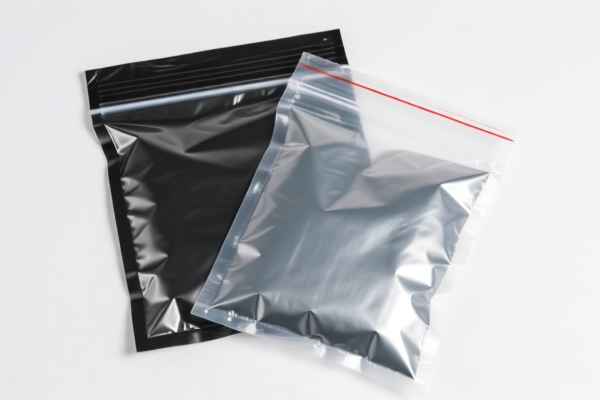


AI分析
🧳 Vacuum Storage Bags (Vacuum-Sealed Compression Sacks)
🌐 HS Code Reference & Customs Clearance Guide | 2026 Latest Tariff Analysis | Professional Compliance Strategy
📌 I. Product Definition & Classification: What Are "Vacuum Storage Bags"?
Vacuum storage bags are flexible plastic containers designed to remove air from enclosed items (typically clothing, bedding, or seasonal goods) to compress volume and protect against moisture, dust, and pests. In international trade, they are classified under Chapter 39: Plastics and Articles Thereof, specifically as Articles for the conveyance or packing of goods.
The critical distinction in classification lies in the closure mechanism and material composition. While most are made of polymers, the presence of specific reclosable features (like sliders) drastically changes the HS Code and the resulting tax liability.
⚠️ Key Classification Point:
- Standard Reclosable Bags (Zippers only): Often grouped under "Other" → 3923.21.00.30
- Reclosable Bags with Sliders: Specific sub-category → 3923.21.00.20
- Inflatable/Pneumatic Articles (if hollow/rigid structure): 3926.90.75.00 (Rare for typical soft bags)
- Rigid Tubes/Pipes: 3926.90.99.87 (Not applicable to flexible bags)
📦 II. HS Code Classification Details (2026 Latest Tariff Alignment)
Based on the provided data, here are the precise HS Codes and their applicability to Vacuum Storage Bags:
| HS Code | Product Description | Applicable Scenario | Closure Type |
|---|---|---|---|
3923.21.00.30 |
Sacks and bags, of polymers of ethylene. Reclosable, with integral extruded closure. Other. | Standard zip-lock vacuum bags without slider mechanisms. Most common generic bags. | ❌ No Slider |
3923.21.00.20 |
Sacks and bags, of polymers of ethylene. Reclosable, with integral extruded closure. With sliders that open or close the seal. | Premium vacuum bags featuring plastic sliders (roll-top or clip-style) for sealing. | ✅ With Slider |
3926.90.75.00 |
Other articles of plastics. Pneumatic mattresses and other inflatable articles. | Non-typical: Only if the bag is pre-inflated, rigid, or designed as a standalone inflatable cushion/mattress. | N/A |
3926.90.99.87 |
Other articles of plastics. Rigid tubes or pipes suitable for use as electrical conduit. | Not Applicable. Do not use this code for soft storage bags. | N/A |
🔍 Crucial Reminder:
- Do not confuse standard soft vacuum bags with pneumatic mattresses (3926.90.75.00). Even if the bag is "inflated" (vacuumed), if it is a flexible sack for packing goods, it belongs in 3923. - The presence of a slider is the defining feature for3923.21.00.20. If it’s a simple zip-lock track, it falls under3923.21.00.30.
💰 III. 2026 Latest Tariff Rate Breakdown (Including Additional Duties)
✅ Applicable Market: USA (US)
✅ Origin: China (CN)
✅ Effective Date: Current rates apply.
🎯 1. 3923.21.00.20 —— Reclosable Bags WITH Sliders
| Item | Content |
|---|---|
| Base Tariff | 3.0% (Most Favored Nation) |
| Section 301 Additional Tariff | 0.0% |
| Total Tax Rate | 3.0% |
| Tax Detail | Base: 3.0%, Additional: 0.0% |
| De Minimis Eligibility | ✅ Yes (If shipment value < $800, typically duty-free under Section 321) |
| Legal Basis | HTSUS 3923.21.00.20 |
📌 Explanation:
- This category benefits from a significant tariff advantage.
- Unlike many other plastic packaging items that face higher Section 301 duties, bags with sliders are listed with a 0.0% additional tariff.
- Total Cost Impact: Only the standard 3% duty applies. This is highly competitive.
🎯 2. 3923.21.00.30 —— Reclosable Bags WITHOUT Sliders (Other)
| Item | Content |
|---|---|
| Base Tariff | 3.0% (Most Favored Nation) |
| Section 301 Additional Tariff | 25.0% |
| Total Tax Rate | 28.0% |
| Tax Detail | Base: 3.0%, Additional: 25.0% |
| De Minimis Eligibility | ❌ No (Section 301 goods are generally excluded from de minimis duty-free entry) |
| Legal Basis | HTSUS 3923.21.00.30 |
📌 Explanation:
- This is the most common pitfall. Many standard zip-lock vacuum bags fall here.
- Total Cost Impact: A steep 28% duty. This makes standard bags significantly more expensive for US importers.
- Strategy: If possible, design the product with a slider mechanism to qualify for the lower 3% rate under3923.21.00.20.
🎯 3. 3926.90.75.00 —— Inflatable Articles (Pneumatic Mattresses, etc.)
| Item | Content |
|---|---|
| Base Tariff | 4.2% |
| Additional Tariff | 0.0% |
| Total Tax Rate | 4.2% |
| Tax Detail | Base: 4.2%, Additional: 0.0% |
📌 Note: Only applicable if the product is legally classified as an "inflatable article" rather than a "packing sack." Misclassification here can lead to penalties.
🎯 4. 3926.90.99.87 —— Rigid Tubes/Pipes (Electrical Conduit)
| Item | Content |
|---|---|
| Base Tariff | 0.0% |
| Additional Tariff | 0.0% |
| Total Tax Rate | 0.0% |
📌 Note: Irrelevant for vacuum storage bags. Do not use this code to avoid taxes; it is for rigid electrical conduits.
🛠️ IV. Customs Clearance Practical Advice (Avoiding Pitfalls)
✅ 1. Documentation Checklist (Essential for Clearance)
| Document | Requirement | Description |
|---|---|---|
| ✅ Commercial Invoice | ✔️ | Must clearly state: "Vacuum Storage Bags," Material (e.g., LDPE/HDPE), and Closure Type (Slider vs. Zip). |
| ✅ Packing List | ✔️ | List net/gross weight, number of bags per carton. |
| ✅ Product Photos | ✔️ | Show the closure mechanism clearly. A photo of the slider is critical for proving eligibility for 3923.21.00.20. |
| ✅ Material Certificate | ✔️ | Confirm polymer type (Ethylene polymers for 3923.21). |
| ✅ Declaration Statement | ✔️ | Explicitly declare: "Reclosable bags with integral extruded closure." |
✅ 2. Strategic Classification Tips (Cost-Saving Secrets)
🔥 Golden Rule: "Slider Saves Money, Zip Costs More!"
| Scenario | Recommended HS Code | Tax Rate | Action |
|---|---|---|---|
| Bag has a plastic slider | 3923.21.00.20 |
3.0% | Highlight the slider in invoice and photos. |
| Bag is simple zip-lock (no slider) | 3923.21.00.30 |
28.0% | Expect high duties. Consider redesigning to include a slider. |
| Bag is pre-inflated or rigid | 3926.90.75.00 |
4.2% | Only if it’s truly an inflatable article, not a flat sack. |
| Bag is rigid pipe/conduit | 3926.90.99.87 |
0.0% | Do not use for soft bags. Risk of audit. |
📌 Key Insight:
- A minor design change (adding a slider) can reduce tariffs from 28% to 3%.
- Ensure your supplier’s production line matches the declared HS Code. If you declare3923.21.00.20but customs inspects and finds no sliders, you will face back duties, penalties, and delays.
✅ 3. Special Cases & Warnings
| Situation | Handling Advice |
|---|---|
| Mixed Shipments (Slider + Non-Slider) | Do not mix in one line item. Declare separately to avoid misclassification penalties. |
| De Minimis (Under $800) | If using 3923.21.00.20 (Sliders), you may enter duty-free under Section 321. If using 3923.21.00.30 (Non-Sliders), duties still apply even under $800 due to Section 301 exclusions. |
| Material Composition | Must be "polymers of ethylene" (LDPE, HDPE, etc.). If made of PVC or other plastics, the HS Code changes entirely (e.g., 3923.29). |
🌍 V. Global Market Comparison (2026)
| Country/Region | Recommended HS Code | Tariff (China Origin) | Notes |
|---|---|---|---|
| 🇺🇸 USA | 3923.21.00.20 |
3.0% | Best rate if sliders are present. |
| 🇺🇸 USA | 3923.21.00.30 |
28.0% | High duty for standard zip bags. |
| 🇨🇳 China | 3923.21.00.00 |
0% - 5% | Varies by specific subheading; generally low. |
| 🇪🇺 EU | 3923.29.39 |
4.5% - 6.5% | EU classification differs slightly; no Section 301 equivalent. |
📌 Conclusion:
- The US market is highly sensitive to the slider feature.
- Designing with sliders is the most effective way to reduce import costs for Chinese-manufactured vacuum bags.
📌 VI. Common Mistakes & Pitfalls (Learn from Others' Errors)
❌ Mistake 1: Declaring all vacuum bags as 3923.21.00.30 without checking for sliders.
👉 Result: Paying 28% when you could have paid 3%. Loss of profit margin!
❌ Mistake 2: Declaring soft bags as 3926.90.75.00 (Inflatable) to get 4.2%.
👉 Result: Customs rejects it because it’s a "sack for packing goods," not an "inflatable article." Penalties + Retrospective Duty.
❌ Mistake 3: Ignoring Section 301 for non-slider bags under $800.
👉 Result: Assuming duty-free entry. Back taxes + fines because Section 301 goods are excluded from de minimis.
✅ Correct Approach:
"Vacuum Storage Bags, LDPE, Reclosable with Plastic Slider, for Clothing Storage, Model X"
🎯 VII. Conclusion: Optimize Design, Optimize Cost
🎯 Remember the Mantra:
🔹 "Slider = 3%, No Slider = 28%. Design matters!"
🔹 "Check the closure mechanism before declaring. One small part changes the tax bill."
📌 Pro Tip:
- If your product currently has no sliders, discuss with your manufacturer if adding a slider is feasible. The cost of a slider mechanism is often negligible compared to the 25% tariff savings.
- For US imports, always request a product photo with a close-up of the closure from your supplier to verify the HS Code accuracy.
📣 Take Action Now:
📞 Consult a Customs Broker to confirm the closure mechanism.
🚀 Redesign for Efficiency: Add sliders to unlock the 3% duty rate.
📦 Ship Smarter: Ensure your invoice accurately reflects the slider feature to avoid audits.
✨ Precise Classification Saves Money!
💼 Every dollar in duty saved is pure profit.
用户评价
关于 HS 编码归类
协调制度(HS)是由世界海关组织(WCO)制定的国际贸易商品分类标准。全球 200 多个国家采用 HS 系统作为海关关税、贸易统计和进出口监管的基础。
每个 HS 编码遵循以下层级结构:
- 章(2 位)——商品大类(例如:第 84 章:机器和机械设备)
- 品目(4 位)——章内的更具体分类
- 子目(6 位)——国际通用细分,所有 WCO 成员国统一使用
- 本国细分(8-10 位)——各国自行扩展的细分编码,如美国 HTSUS 10 位编码
正确的 HS 编码归类对于顺利通关、准确缴纳关税和遵守贸易法规至关重要。错误归类可能导致海关延误、多缴关税或罚款。
从CN进口到US时,适用的关税税率可能包括:
- 最惠国(MFN)税率——适用于 WTO 成员国的标准关税税率
- 普通税率——适用于无贸易协定国家
- 贸易救济关税——附加关税,如 301 条款(反倾销)、232 条款(国家安全)或反补贴税
本页内容仅供参考。如需正式归类,请咨询当地海关或持牌报关代理。