Vegetable Fiber Woven Rugs (Bathroom)
CN → US| HS编码 | 关税税率 | 原产国 | 目的国 | 文档 |
|---|---|---|---|---|
| 5705001000 | 35.0% | CN | US | 官方文档 |
| 5705002090 | 38.3% | CN | US | 官方文档 |
| 4602198000 | 37.3% | CN | US | 官方文档 |
| 4602191800 | 39.5% | CN | US | 官方文档 |
商品图片
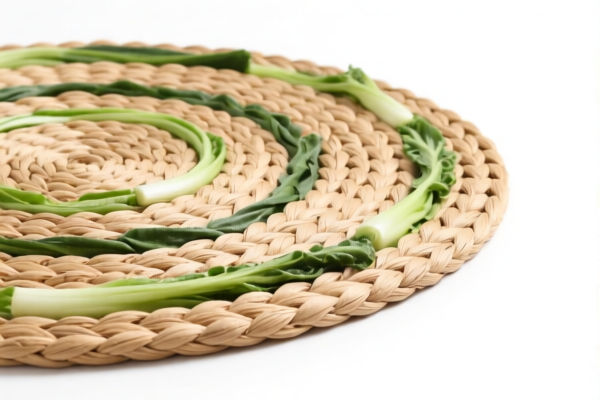
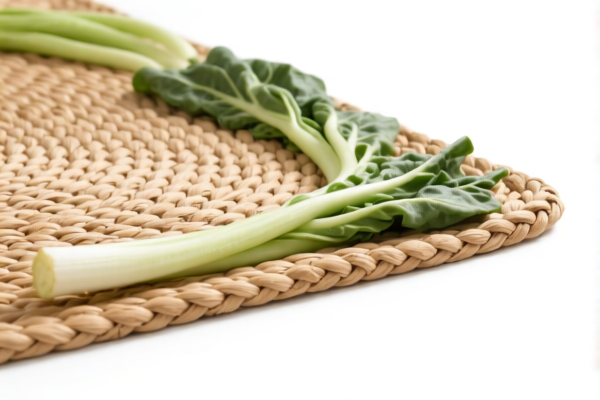
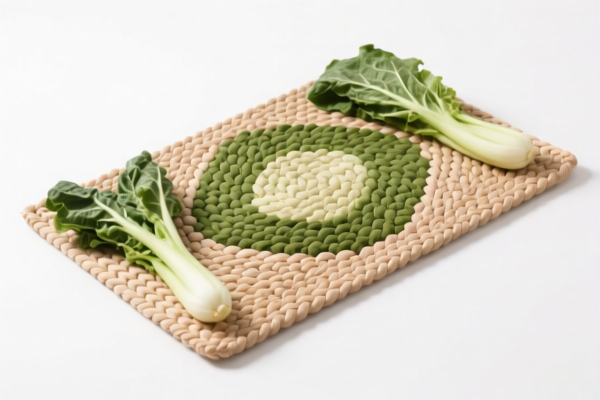
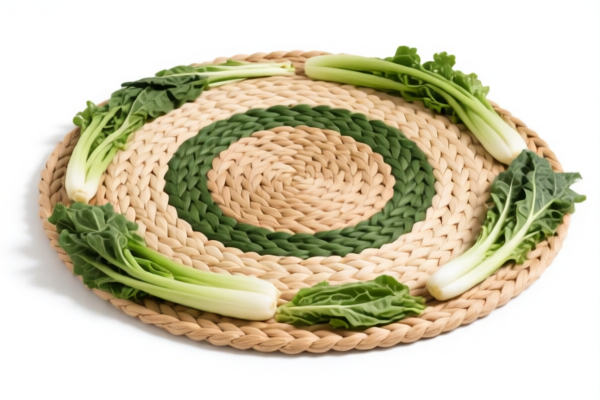
AI分析
🧶 Vegetable Fiber Woven Rugs (Bathroom Use)
🌐 HS Code Reference & Customs Clearance Guide | 2026 Latest Tariff Analysis | Professional Compliance Strategy
📌 I. Product Definition & Classification: Do You Truly Understand "Vegetable Fiber Rugs"?
Vegetable fiber woven rugs, particularly those designed for bathroom use, are distinct from traditional textile floor coverings due to their raw material composition. In international trade, they fall into two primary categories based on their manufacturing method and physical structure:
1. Woven Basketry/Artisanal Items (Chapter 46):
Products made from plant fibers (e.g., palm, raffia, seagrass, coconut coir) that are woven, plaited, or braided. These are often viewed as "woven goods" or "basketry" rather than textiles.
2. Textile Floor Coverings (Chapter 57):
Products that meet the definition of "textiles" due to specific construction methods or fiber processing, classified specifically as floor coverings.
⚠️ Critical Distinction Point:
- If the product is a loosely woven, handcrafted item retaining the natural structure of the plant fiber → Classify under Chapter 46 (Other Made-up Articles).
- If the product is a dense, manufactured carpet/rug where fibers are processed into yarns and tufted/woven as textile goods → Classify under Chapter 57 (Textile Floor Coverings).
📦 II. HS Code Classification Details (2026 Latest Tariff Authority Comparison)
Based on the provided data, here are the four potential HS Code classifications for Vegetable Fiber Woven Rugs. Note that while some codes repeat in the source data, the logic for each distinct classification path is explained below.
| HS Code | Product Description | Application Scenario | Key Classification Logic |
|---|---|---|---|
4602.19.80.00 |
Plant fiber woven rugs, woven articles | Handmade, basketry-style rugs; natural fiber mats | ✅ Woven Articles (Chapter 46) |
4602.19.18.00 |
Plant fiber woven rugs, floor coverings/rugs | Plant fiber rugs classified under "Other" fallback principles | ✅ Woven Articles (Chapter 46 - Specific Sub-fallback) |
5705.00.10.00 |
Plant fiber woven rugs, textile type (e.g., Coconut Coir) | Processed fiber rugs meeting textile definitions | ✅ Textile Floor Coverings (Chapter 57) |
5705.00.20.90 |
Plant fiber woven rugs, other textile floor coverings | General textile floor coverings not elsewhere specified | ✅ Textile Floor Coverings (Chapter 57 - Other) |
🔍 Key Reminder:
- Chapter 46 (4602.19...) generally applies to basketry and woven goods made from plaiting materials (like palm, rattan, bamboo). If the rug is stiff, hand-woven, and looks like a "mat" or "basket," it often falls here. - Chapter 57 (5705.00...) applies to textile floor coverings. If the "vegetable fiber" has been spun into yarn and woven/tufted like a typical carpet, it may be classified here. Note: Coconut coir (coir) rugs are frequently debated between these chapters but often lean toward Chapter 57 if processed into textile-like structures.
💰 III. 2026 Latest Tariff Rate Breakdown (Including Surtaxes & Policy Surcharges)
✅ Applicable Country: United States (US)
✅ Country of Origin: China (CN)
✅ Effective Date: 2025/2026 (Includes subsequent imports)
🎯 1. 4602.19.80.00 —— Plant Fiber Woven Articles (Woven Goods)
| Item | Content |
|---|---|
| Base Tariff Rate | 2.3% (ad valorem) |
| Section 301 Surtax | +25.0% (USITC Footnote 9903.88.01) |
| IEEPA Surtax | +10.0% (Against China/HK products, effective Nov 10, 2025) |
| Total Tariff Rate | 37.3% |
| Tax Calculation | CIF Value × 37.3% |
| De Minimis Eligibility | ❌ No (deny_de_minimis) |
| Legal Basis Path | IEEPA:9903.01.25 → IEEPA:9903.01.24 → USITC:4602.19.80.00 → FOOTNOTE:9903.88.01 |
📌 Explanation:
- The 25% Section 301 tax is applied because woven goods of vegetable materials are on the exclusion list or subject to general tariffs; however, data indicates the 25% surcharge applies. - The 10% IEEPA tax is a specific对华 (China) surcharge. - Total 37.3% is significant. This classification assumes the product is a "woven article" rather than a textile.
🎯 2. 4602.19.18.00 —— Plant Fiber Woven Rugs (Other)
| Item | Content |
|---|---|
| Base Tariff Rate | 4.5% (ad valorem) |
| Section 301 Surtax | +25.0% |
| IEEPA Surtax | +10.0% |
| Total Tariff Rate | 39.5% |
| Tax Calculation | CIF Value × 39.5% |
| De Minimis Eligibility | ❌ No (deny_de_minimis) |
| Legal Basis Path | IEEPA:9903.01.25 → IEEPA:9903.01.24 → USITC:4602.19.18.00 → FOOTNOTE:9903.88.01 |
📌 Note:
- This is a "catch-all" or fallback subheading within Chapter 46.
- The base rate (4.5%) is slightly higher than4602.19.80.00, leading to a higher total tax (39.5%). - Use this only if the product does not fit other specific descriptions in Chapter 46 but is clearly a woven plant-fiber product.
🎯 3. 5705.00.10.00 —— Plant Fiber Woven Rugs (Textile Type)
| Item | Content |
|---|---|
| Base Tariff Rate | 0.0% (ad valorem) |
| Section 301 Surtax | +25.0% |
| IEEPA Surtax | +10.0% |
| Total Tariff Rate | 35.0% |
| Tax Calculation | CIF Value × 35.0% |
| De Minimis Eligibility | ❌ No (deny_de_minimis) |
| Legal Basis Path | IEEPA:9903.01.25 → IEEPA:9903.01.24 → USITC:5705.00.10.00 → FOOTNOTE:9903.88.01 |
📌 Advantage:
- Lowest Total Tariff (35.0%) among all options due to 0% base rate. - This classification is optimal IF the product qualifies as a "Textile Floor Covering" (e.g., processed coir fiber rugs). - Risk: Customs may challenge this if the item is deemed "basketry" (Chapter 46). You must prove it meets textile definitions.
🎯 4. 5705.00.20.90 —— Other Textile Floor Coverings
| Item | Content |
|---|---|
| Base Tariff Rate | 3.3% (ad valorem) |
| Section 301 Surtax | +25.0% |
| IEEPA Surtax | +10.0% |
| Total Tariff Rate | 38.3% |
| Tax Calculation | CIF Value × 38.3% |
| De Minimis Eligibility | ❌ No (deny_de_minimis) |
| Legal Basis Path | IEEPA:9903.01.25 → IEEPA:9903.01.24 → USITC:5705.00.20.90 → FOOTNOTE:9903.88.01 |
📌 Note:
- This is the "Other" category for textile floor coverings.
- Total tax is 38.3%, which is higher than5705.00.10.00(35.0%).
- Use this if the product is a textile floor covering but does not fit the specific description of5705.00.10.00.
🛠️ IV. Customs Clearance Practical Advice (Battle-Tested Pitfall Avoidance)
✅ 1. Preparation Checklist (Non-Negotiable)
| Document | Required | Explanation |
|---|---|---|
| ✅ Product Specification Sheet | ✔️ | Details material (e.g., 100% Coconut Coir, Palm Leaf), dimensions, weight, and manufacturing process (woven vs. tufted). |
| ✅ Material Composition Proof | ✔️ | Lab report confirming "Vegetable Fiber" content. Crucial for distinguishing from synthetic rugs (Chapter 57/63). |
| ✅ Product Photos (Clear) | ✔️ | Show texture, backing (if any), and how it is constructed. Distinguish between "stiff mat" (Chapter 46) and "soft rug" (Chapter 57). |
| ✅ Commercial Invoice | ✔️ | Must state: "Vegetable Fiber Woven Rug, Bathroom Use, Model: XYZ, Country of Origin: China". |
| ✅ Packing List | ✔️ | Standard requirements. |
| ✅ Third-Party Test Reports | ✔️ | If applicable, any flammability or safety tests. |
✅ 2. Declaration Strategy (Key Mantras)
🔥 "Weave Type Dictates Chapter, Material Dictates Rate, Don't Split Shipment!"
| Scenario | Correct Declaration | Incorrect Practice |
|---|---|---|
| Hand-woven Palm Mat (Stiff) | 4602.19.80.00 (37.3%) |
Declare as 5705... (Textile) → Misclassification Risk |
| Processed Coir Rug (Soft/Textile-like) | 5705.00.10.00 (35.0%) |
Declare as 4602... → Higher Tax |
| Rug + Non-Slip Backing | Declare as Single Item | Split into Rug + Backing → Complexity & Delay |
| Sample Kit (Mixed Materials) | Separate HS Codes | Bundle under one code → Customs Audit Flag |
✅ 3. Special Situation Handling
| Situation | Handling Advice |
|---|---|
| Bathroom Specifics | Emphasize "Water-Resistant" or "Quick-Dry" if true. Avoid claiming "Synthetic" if it's plant fiber. |
| Mixed Fiber Content | If >50% is plant fiber, Chapter 46/57 may apply. If mixed with synthetics, Chapter 57 or 63 may be forced, changing rates entirely. |
| OEM/White Label | Provide client PO and design specs. Avoid generic "Rug" names. Use "Plant Fiber Floor Mat". |
| Customs Dispute on Chapter 46 vs 57 | Provide a Letter of Explanation from a production engineer detailing the weaving technique. If fibers are spun into yarn, lean toward Chapter 57. |
🌍 V. Global Market Clearance Comparison (2026 Latest)
| Country/Region | Recommended HS Code | Tariff Rate (China Origin) | Certification Requirements | Notes |
|---|---|---|---|---|
| 🇺🇸 USA | 5705.00.10.00 |
35.0% (Total) | None specific for fiber rugs | Cheapest option if Textile. 4602... is 37.3-39.5%. |
| 🇨🇳 China | 5705.00.10.00 |
~10-13% (Import) | None | Domestic production tax applies. |
| 🇪🇺 EU | 4602.19.80 or 5705... |
0-12% (Depends on Type) | CE (if applicable) | EU often favors Chapter 46 for natural woven mats. |
| 🇬🇧 UK | 4602.19.80 |
0-12% | UKCA (if applicable) | Post-Brexit rules similar to EU. |
📌 Conclusion:
- USA is the most critical market due to the 25% Section 301 + 10% IEEPA surcharges.
- Cost Optimization: Try to classify as5705.00.10.00(35.0%) if the product quality allows (i.e., it resembles a textile rug). This saves 2.3% - 4.5% compared to Chapter 46 codes.
- Risk: Misclassification penalties in the US are severe. Ensure the product genuinely fits the textile definition.
📌 VI. Common Errors & Pitfall Guide (Lessons Learned)
❌ Error 1: Declaring a "Stiff Palm Mat" as a "Textile Carpet" (5705...)
👉 Consequence: Customs may reject the textile classification and reclassify to 4602..., causing delay + potential penalty.
👉 Solution: Only use Chapter 57 if the fiber is processed/spun.
❌ Error 2: Under-declaring Value
👉 Consequence: Tariffs are ad valorem. Under-declaring by 10% means 35% tax on the declared value vs. real value → Severe Penalties.
👉 Solution: Declare FOB or CIF accurately.
❌ Error 3: Ignoring IEEPA 10% Surtax
👉 Consequence: Many importers only account for the 25% Section 301 tax. The additional 10% adds significant cost.
👉 Solution: Calculate budget based on Total Rate (35-39.5%), not just base + 25%.
❌ Error 4: Using "Rug" as the Only Description
👉 Consequence: Customs Brokers cannot determine Chapter 46 vs 57.
👉 Solution: Use "Vegetable Fiber Woven Floor Mat, Material: 100% Coconut Coir, Not Textile Yarn" or "Coconut Coir Carpet, Tufted".
✅ Correct Practice:
"Vegetable Fiber Woven Rug, Bathroom Use, Made of 100% Natural Palm Leaves, Hand-Woven, HS Code 4602.19.80.00"
OR
"Plant Fiber Floor Covering, Textile Type, Processed Coir Fiber, Woven, HS Code 5705.00.10.00"
🎯 VII. Conclusion: Precision in Classification Saves Money!
🎯 Remember the Mantra:
🔹 "Chapter 46 is Woven/Natural, Chapter 57 is Textile/Processed."
🔹 "35% is the Best Rate, 39.5% is the Worst, Don't Guess, Just Classify!"
🔹 "IEEPA 10% is Always Added, Total 35-39.5% is the Reality."
📌 Pro Tip:
If your product is made in Vietnam, Thailand, or Malaysia, you may qualify for IEEPA Exemptions, reducing the total tariff to 0-5%.
For China-origin goods, Apply for an Advance Ruling (Pre-classification) with US Customs (CBP) if the volume is high. This provides legal certainty for the 35% vs 37.3% decision.
📣 Immediate Action:
📞 Consult a licensed customs broker.
📸 Provide detailed photos of the fiber structure.
🚀 Accurate Classification = Lower Taxes + Faster Clearance!
✨ Professional Clearance Starts with Precise Classification!
💼 Every Cent of Tariff is Calculated with Precision!
用户评价
关于 HS 编码归类
协调制度(HS)是由世界海关组织(WCO)制定的国际贸易商品分类标准。全球 200 多个国家采用 HS 系统作为海关关税、贸易统计和进出口监管的基础。
每个 HS 编码遵循以下层级结构:
- 章(2 位)——商品大类(例如:第 84 章:机器和机械设备)
- 品目(4 位)——章内的更具体分类
- 子目(6 位)——国际通用细分,所有 WCO 成员国统一使用
- 本国细分(8-10 位)——各国自行扩展的细分编码,如美国 HTSUS 10 位编码
正确的 HS 编码归类对于顺利通关、准确缴纳关税和遵守贸易法规至关重要。错误归类可能导致海关延误、多缴关税或罚款。
从CN进口到US时,适用的关税税率可能包括:
- 最惠国(MFN)税率——适用于 WTO 成员国的标准关税税率
- 普通税率——适用于无贸易协定国家
- 贸易救济关税——附加关税,如 301 条款(反倾销)、232 条款(国家安全)或反补贴税
本页内容仅供参考。如需正式归类,请咨询当地海关或持牌报关代理。