Vegetable Processor
CN → US| HS编码 | 关税税率 | 原产国 | 目的国 | 文档 |
|---|---|---|---|---|
| 8438800000 | 35.0% | CN | US | 官方文档 |
| 8509400040 | 14.2% | CN | US | 官方文档 |
| 8509400025 | 14.2% | CN | US | 官方文档 |
| 8479820040 | 35.0% | CN | US | 官方文档 |
| 8479820080 | 35.0% | CN | US | 官方文档 |
商品图片
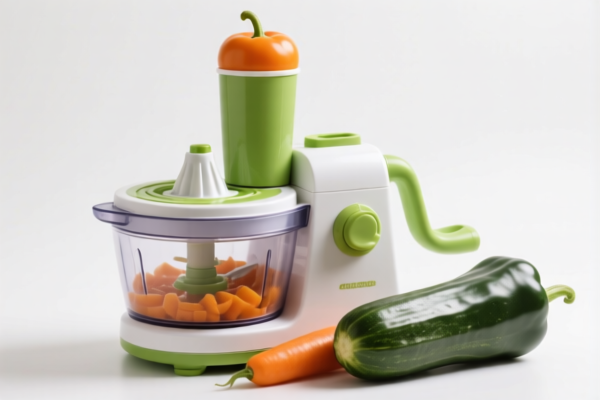
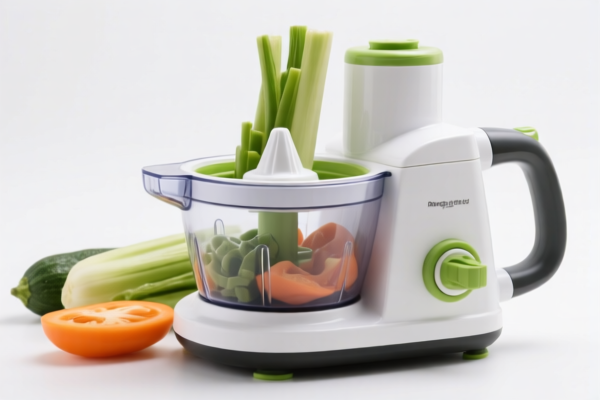
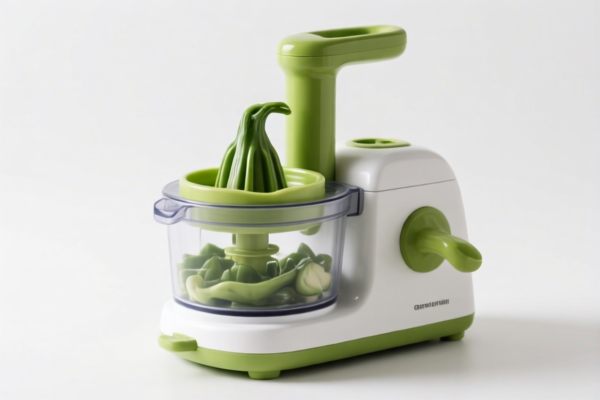
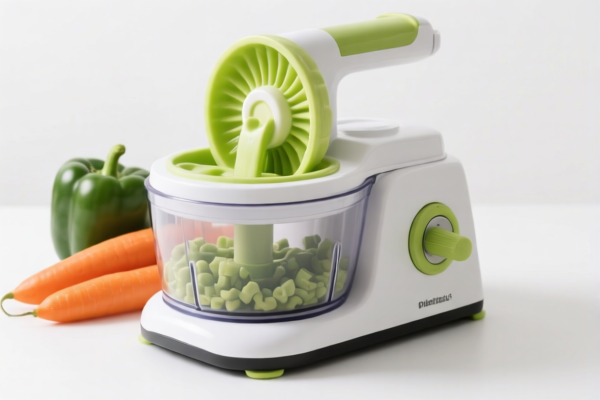
AI分析
🥗 Food Processors: HS Code Classification & 2026 Tariff Strategy
🌐 HS Code Reference & Customs Clearance Guide | 2026 Latest Tariff Analysis | Professional Compliance Strategy
📌 Part 1: Product Definition & Classification: What Exactly is a "Vegetable Processor"?
A Food Processor (often referred to as a vegetable processor in consumer contexts) is a mechanical device designed for the preparation, grinding, mixing, or processing of food items. In international trade, these appliances fall under two primary categories depending on their power source and mechanical nature:
- Electrical Household Appliances (HS Chapter 85): Most common consumer-grade food processors with motors for slicing, dicing, chopping, and mixing.
- Industrial/Mechanical Food Preparation Machines (HS Chapter 84): Larger, industrial-grade machines, or purely mechanical (non-electric) devices used for food manufacturing or processing.
⚠️ Critical Distinction:
- If the device is an electric household appliance (plug-in, motor-driven for home/kitchen use) → It generally falls under HS 8509 (Domestic Electric Appliances).
- If the device is industrial, or defined as a "machine for the industrial preparation of food" without being a standard household appliance → It falls under HS 8438 or HS 8479.
📦 Part 2: HS Code Classification Details (2026 Latest Tariff Data)
Based on the provided , here are the specific HS Codes associated with "Food Processors" and their corresponding tax implications. Note that HS 8509 codes are for electric domestic appliances, while HS 8438 and HS 8479 are for industrial/mechanical food preparation machines.
| HS Code | Product Description | Summary / Logic for Classification | Total Tax Rate (China to US) |
|---|---|---|---|
8509.40.00.40 |
Food Grinders and Processors | Direct Match: The product name and function ("Food Grinder/Processor") exactly match this subheading for electric domestic appliances. | 14.2% |
8509.40.00.25 |
Food Grinders and Processors | Functional Match: Belongs to the same category of electromechanical household appliances for food processing (grinding/mixing). | 14.2% |
8438.80.00.00 |
Machines for Industrial Food Preparation | Defined as machines for the industrial preparation or manufacturing of food/beverages. Used if the unit is classified as industrial rather than domestic. | 35.0% |
8479.82.00.40 |
Mixing, Kneading, or Blending Machines | Classified under "Machines with Individual Functions" for mixing/kneading. Often applies to specialized industrial mixers or non-standard food prep machinery. | 35.0% |
8479.82.00.80 |
Other Mixing/Kneading/Grinding Machines | A residual category for machines performing mixing, kneading, crushing, or grinding that do not fit more specific subheadings. | 35.0% |
🔍 Key Insight:
- Consumer/Electric Units: Aim for8509.40.00.40or8509.40.00.25. These have the lowest tariff (14.2%).
- Industrial/Mechanical Units: If classified under8438or8479, the tariff jumps to 35.0%.
- Why the difference? The US imposes higher "Section 301" and "IEEPA" additional tariffs on industrial/mechanical food equipment from China compared to standard household electric appliances.
💰 Part 3: 2026 Latest Tariff Rate Breakdown (Including Additional Duties & Policies)
✅ Applicable Country: United States (US)
✅ Origin: China (CN)
✅ Effective Time: Current regulations as of 2026
🎯 1. 8509.40.00.40 & 8509.40.00.25 —— Electric Food Processors (Lowest Tax)
| Item | Content |
|---|---|
| Base Tariff | 4.2% (Standard MFN rate) |
| Section 301 Add-on | 0.0% (Exempt or low impact for this specific subheading in current data) |
| IEEPA 122 Clause | +10.0% (Additional tariff on Chinese products) |
| Total Tax Rate | 14.2% |
| Tax Calculation | CIF Value × 14.2% |
| De Minimis Eligibility | ❌ No (Typically, Section 301/IEEPA tariffs apply even to small shipments if not exempted by specific rules, but usually de minimis ($800) is exempt from base duties, but Section 301/IEEPA rules can override this depending on enforcement. Note: The data implies these tariffs are applied.) |
| Legal Basis Path | IEEPA:9903.01.24 → USITC:8509.40.00.40 |
📌 Explanation:
- These codes represent household electric appliances.
- The 10% IEEPA tariff is applied, but notably, the Section 301 additional tariff is 0% in this specific dataset for8509.40, making it the most cost-effective choice.
- Total 14.2% is significantly lower than industrial counterparts.
🎯 2. 8438.80.00.00 —— Industrial Food Preparation Machines (High Tax)
| Item | Content |
|---|---|
| Base Tariff | 0.0% (May be duty-free under base MFN) |
| Section 301 Add-on | +25.0% (Heavy penalty for industrial machinery from China) |
| IEEPA 122 Clause | +10.0% |
| Total Tax Rate | 35.0% |
| Tax Calculation | CIF Value × 35.0% |
| De Minimis Eligibility | ❌ No |
| Legal Basis Path | IEEPA:9903.01.25 → USITC:8438.80.00.00 → FOOTNOTE:9903.88.01 |
📌 Explanation:
- Classified as "machines for industrial preparation."
- The 25% Section 301 tariff kicks in, leading to a high 35% total duty.
- Avoid this code for standard kitchen appliances unless they are explicitly industrial.
🎯 3. 8479.82.00.40 & 8479.82.00.80 —— Mechanical Mixing/Kneading Machines (High Tax)
| Item | Content |
|---|---|
| Base Tariff | 0.0% |
| Section 301 Add-on | +25.0% |
| IEEPA 122 Clause | +10.0% |
| Total Tax Rate | 35.0% |
| Tax Calculation | CIF Value × 35.0% |
| De Minimis Eligibility | ❌ No |
| Legal Basis Path | IEEPA:9903.01.25 → USITC:8479.82.00.40/80 |
📌 Explanation:
- These codes cover machines for mixing, kneading, or grinding.
- If your food processor is considered a "machine" rather than a "domestic appliance," it falls here.
- Same 35% high tariff as8438.
🛠️ Part 4: Customs Clearance Practical Advice (Real-World Pitfall Guide)
✅ 1. Documentation Checklist (Mandatory)
| Document | Required | Notes |
|---|---|---|
| Product Specification Sheet | ✔️ | Must clearly state: Voltage, Power, Capacity, Intended Use (Household vs. Industrial). |
| Product Photos | ✔️ | Include main unit, blades, bowls, and any labels. Show it looks like a household appliance. |
| Commercial Invoice | ✔️ | Description: "Electric Food Processor for Household Kitchen Use." Avoid words like "Industrial," "Factory," or "Manufacturing." |
| Packing List | ✔️ | Detail contents (base, blades, bowls) to show it's a complete unit. |
| FCC Certification | ✔️ | Mandatory for all electric appliances entering the US. |
| UL/ETL Report | ✔️ | Highly recommended for safety compliance, though not always legally mandatory for entry, it helps customs clearance. |
✅ 2. Declaration Strategy (Key Tips)
🔥 Golden Rule: "Electrify for 14%, Mechanize for 35%!"
| Scenario | Correct Declaration | Risk if Incorrect |
|---|---|---|
| Standard Kitchen Food Processor | Use 8509.40.00.40 or .25 |
If misclassified as 8438 or 8479 → Pay 35% instead of 14.2% (Loss of ~20.8% profit). |
| Industrial Blender/Processor | Use 8438.80.00.00 |
Cannot use 8509 codes. Must declare as industrial. |
| Non-Electric Manual Grinder | Check 8210 or 7323 |
Not covered in current , but likely lower risk if not electric. |
⚠️ Critical Warning:
- Do NOT describe the product as "Industrial Food Processor" or "Commercial Grade" if it is intended for home use.
- Use terms like "Domestic Electric Food Processor," "Kitchen Mixer," or "Home Food Chopper."
- Ensure the FCC ID is visible and matches the model number on the invoice.
✅ 3. Special Cases & Handling
| Case | Handling Advice |
|---|---|
| OEM for Retailer | Provide a letter of authorization from the brand owner. Ensure the label says "Made for [Brand]" not "Industrial Use Only." |
| Accessories (Blades/Bowls) | Ship separately if possible. Blades might fall under 8214 (Cutlery) or 7323 (Tableware), which may have different tariffs. However, if shipped with the main unit, they are usually included in the main HS code. |
| Smart Food Processors | If it has Wi-Fi/Bluetooth, ensure FCC Part 15 compliance is strictly met. Customs may ask for FCC registration proof. |
| Chinese Origin | Since the data shows IEEPA tariffs, all Chinese-origin goods are subject to the 10% IEEPA + 25% Section 301 (if applicable). There is no exemption for small shipments under de minimis if they fall under these specific tariff codes in current enforcement. |
🌍 Part 5: Global Market Comparison (2026 Update)
| Market | Recommended HS Code | Base Tariff | Additional Tariffs (China) | Total Effective Rate |
|---|---|---|---|---|
| 🇺🇸 USA | 8509.40.00.40 |
4.2% | +10% (IEEPA) | 14.2% |
| 🇺🇸 USA | 8438.80.00.00 |
0.0% | +25% (301) +10% (IEEPA) | 35.0% |
| 🇨🇳 China | 8509.40.00.40 |
4.2% | None | 4.2% |
| 🇪🇺 EU | 8509.40 |
0-6%* | None | ~0-6% |
| 🇬🇧 UK | 8509.40 |
0-6%* | None | ~0-6% |
📌 Note: The US has become increasingly protectionist for food processing equipment from China. Always choose the
8509code if your product is a household electric appliance.
📌 Part 6: Common Errors & Pitfalls (Lessons Learned)
❌ Error 1: Classifying a household electric food processor as 8438 (Industrial Machine).
👉 Result: You pay 35% tax instead of 14.2%. Overpayment by $20.8 per $100 value.
❌ Error 2: Describing the product as "Commercial Food Processor" on the invoice.
👉 Result: Customs may reject the 8509 code and force you into 8479 or 8438, triggering the 35% tariff and potential fines for misclassification.
❌ Error 3: Ignoring the IEEPA 10% tariff.
👉 Result: Even if Section 301 is 0% for 8509, the 10% IEEPA still applies. Do not assume "duty-free."
✅ Correct Approach:
"Domestic Electric Food Processor, 120V, 60Hz, for Home Kitchen Use, Model XYZ, FCC Certified."
🎯 Part 7: Conclusion: Optimize Your Clearance & Costs!
🎯 Key Takeaways:
1. Use 8509.40.00.40 for standard electric food processors.
2. Avoid 8438 and 8479 unless you are truly exporting industrial machinery.
3. Total Tax for Household Units: 14.2% (4.2% Base + 10% IEEPA).
4. Total Tax for Industrial Units: 35.0% (0% Base + 25% Section 301 + 10% IEEPA).
5. Documentation is Key: Ensure your invoice and FCC docs match the household appliance narrative.
📌 Pro Tip:
If you are shipping small quantities (< $800), check current de minimis rules for Section 301/IEEPA applicability. However, given the strict enforcement in 2026, it is safer to assume tariffs apply and budget accordingly. For bulk shipments, Apply for an Advance Ruling from US Customs (CBP) to lock in the 8509 classification and avoid audits.
📣 Action Plan:
- Verify your product is a household electric appliance.
- Use HS Code
8509.40.00.40or.25.- Label clearly: "Domestic Food Processor."
- Budget for 14.2% total duty.
- Attach FCC Certification to your shipping docs.
✨ Professional Clearance Starts with Precise Classification!
💼 Every cent saved in tariffs is pure profit.
用户评价
关于 HS 编码归类
协调制度(HS)是由世界海关组织(WCO)制定的国际贸易商品分类标准。全球 200 多个国家采用 HS 系统作为海关关税、贸易统计和进出口监管的基础。
每个 HS 编码遵循以下层级结构:
- 章(2 位)——商品大类(例如:第 84 章:机器和机械设备)
- 品目(4 位)——章内的更具体分类
- 子目(6 位)——国际通用细分,所有 WCO 成员国统一使用
- 本国细分(8-10 位)——各国自行扩展的细分编码,如美国 HTSUS 10 位编码
正确的 HS 编码归类对于顺利通关、准确缴纳关税和遵守贸易法规至关重要。错误归类可能导致海关延误、多缴关税或罚款。
从CN进口到US时,适用的关税税率可能包括:
- 最惠国(MFN)税率——适用于 WTO 成员国的标准关税税率
- 普通税率——适用于无贸易协定国家
- 贸易救济关税——附加关税,如 301 条款(反倾销)、232 条款(国家安全)或反补贴税
本页内容仅供参考。如需正式归类,请咨询当地海关或持牌报关代理。