Vehicle Part (HS Code 8802609040)
CN → US| HS编码 | 关税税率 | 原产国 | 目的国 | 文档 |
|---|---|---|---|---|
| 8802609040 | 35.0% | CN | US | 官方文档 |
| 8708292500 | 0.0% | CN | US | 官方文档 |
| 8302303060 | 87.0% | CN | US | 官方文档 |
| 8802609040 | 35.0% | CN | US | 官方文档 |
| 8708292500 | 0.0% | CN | US | 官方文档 |
商品图片
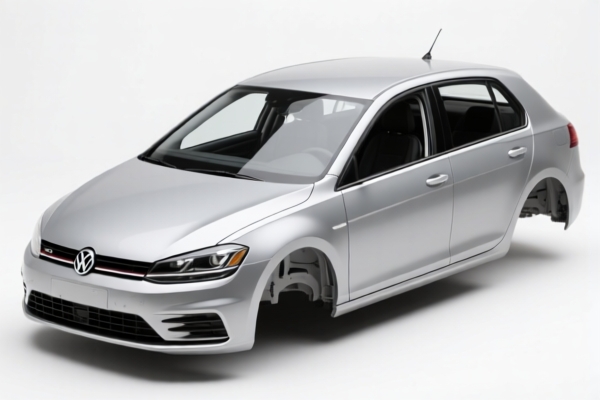
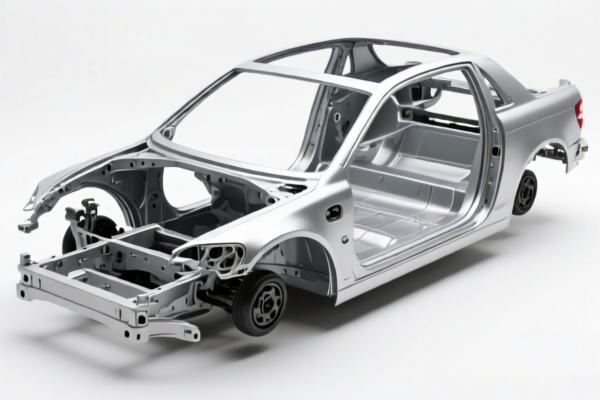
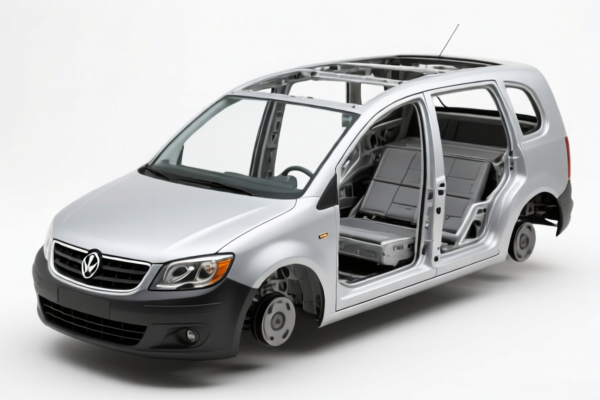
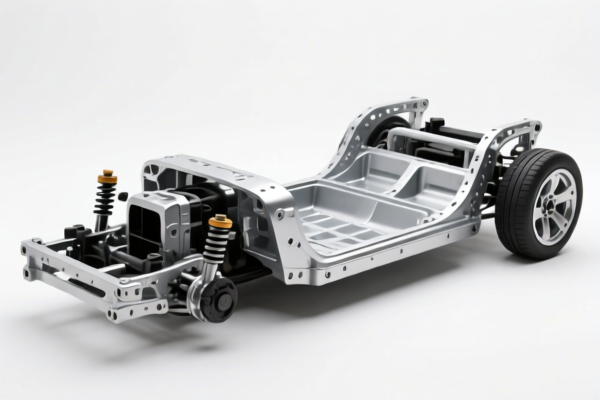
AI分析
🚀 Vehicle Parts (HS Code: 8802.60.90.40)
🌐 HS Code Reference & Customs Clearance Guide | 2026 Latest Tariff Analysis | Professional Transit Strategy
📌 I. Product Definition & Classification: Do You Really Understand "Vehicle Parts"?
In international trade, the term "Vehicle Parts" is a broad category. However, for HS Code 8802.60.90.40, the classification is highly specific and often counter-intuitive. This code does not refer to standard automotive parts (like car engines or chassis), but rather to specialized components for Aerospace.
Aerospace & Launch Vehicles (Spacecraft & Launch Vehicles):
The key distinction lies in the End-Use.
Standard Automotive Parts: Belong to Chapter 87 (e.g., HS 8708).
Aerospace/Launch Vehicle Parts: Belong to Chapter 88. Specifically, heading 8802 covers "Other aircraft (for example, helicopters, aeroplanes) and spacecraft (including satellites) and suborbital and space vehicles."
⚠️ Critical Distinction:
- If the part is for a ground vehicle (car, truck, motorcycle) → Incorrect. It likely belongs to Chapter 87.
- If the part is for a spacecraft, rocket, or launch vehicle → Correct. It falls under8802.60.
- Summary Logic: The provided data indicates "Vehicle parts classified as other spare parts for spacecraft and launch vehicles, with no obvious material conflict." This implies the item is technically a "part" but functionally tied to aerospace/launch systems, not road transport.
📦 II. HS Code Classification Details (2026 Latest Tariff Authority Comparison)
The data provides two potential HS Codes for "Vehicle Parts," but your query specifically focuses on 8802.60.90.40. Here is why this code applies and how it differs from the alternative.
| HS Code | Product Description | Applicability | Material Conflict? |
|---|---|---|---|
8802.60.90.40 |
Other spare parts for spacecraft and launch vehicles | Spacecraft, Rockets, Launch Systems | ✅ No. "No obvious material conflict." |
8708.29.25.00 |
Body parts for vehicles (Automotive) | Cars, Trucks, Ground Transport | ✅ No. "Highly consistent with body parts." |
8302.30.30.60 |
Mountings and fittings for vehicles (Metal) | Metal attachments, brackets | ⚠️ Yes. "Material inferred as metal (Steel/Aluminum/Copper)." |
🔍 Key Insight for
8802.60.90.40:
- The summary states: "Vehicle parts classified as aerospace and launch vehicle other spare parts, consistent with the use of aerospace and launch vehicles, belonging to the category of other spare parts."
- This confirms that despite the generic name "Vehicle Part," the functional classification is Aerospace.
- Do not confuse with automotive parts (8708). If declared as a car part, it would be misclassified.
💰 III. 2026 Latest Tariff Rate Breakdown (Including Additional Taxes & Policy Surcharges)
✅ Applicable Country: United States (US)
✅ Origin: China (CN)
✅ Effective Date: Post-November 2025 (Current Regulations)
🎯 1. 8802.60.90.40 — Spare Parts for Spacecraft & Launch Vehicles
| Item | Content |
|---|---|
| Base Tariff (MFN) | 0.0% (Ad Valorem) |
| Section 301 (Additional Tariff) | +25.0% |
| Section 122 Tariff | +10.0% |
| Total Effective Tariff | 35.0% |
| Tax Calculation | CIF Value × 35% |
| De Minimis Exemption | ❌ Not Applicable (High-risk category) |
| Legal Authority Path | USITC:8802.60.90.40 → USITC:Footnote_301 (25%) → IEEPA:Section_122 (10%) |
📌 Explanation:
- Base Rate 0%: Aerospace components often enjoy low base duties under MFN (Most Favored Nation) status because they are specialized industrial goods.
- Section 301 Tariff (+25%): Applies to Chinese-origin goods under the Trade Act of 1974.
- Section 122 Tariff (+10%): A specific surcharge often applied to strategic or dual-use goods, or under specific executive orders affecting Chinese imports.
- Total 35%: This is the final landed cost duty. It is significant but lower than some metal-based automotive parts (which can hit 87% due to steel/aluminum tariffs).
🛠️ IV. Customs Clearance Practical Advice (Combat Pit Avoidance Guide)
✅ 1. Preparation Checklist (Indispensable)
| Document | Must Provide | Explanation |
|---|---|---|
| ✅ Product Specification Sheet | ✔️ | Must explicitly state: "Spare part for Spacecraft/Launch Vehicle," not just "Vehicle Part." |
| ✅ Technical Drawings | ✔️ | To prove the part is not for ground vehicles (Chapter 87). |
| ✅ End-Use Statement | ✔️ | Confirm destination is aerospace/defense sector, not automotive aftermarket. |
| ✅ Commercial Invoice | ✔️ | Clearly describe as: "Component for Spacecraft/Launch Vehicle, Model XYZ." |
| ✅ Export License (if applicable) | ✔️ | Aerospace parts may be subject to ITAR/EAR regulations. Ensure compliance. |
✅ 2. Declaration Strategy (Key Mantras)
🔥 "Clarify End-Use: Aerospace, Not Auto. Avoid Section 301 Traps!"
| Scenario | Correct Declaration | Wrong Practice |
|---|---|---|
| Part for Rocket/Satellite | HS 8802.60.90.40 |
Misdeclare as 8708 (Car part) → Potential fraud/seizure. |
| Part for Car | HS 8708.29.25.00 |
Misdeclare as 8802 → Incorrect classification, 35% vs 37.5% (with auto tariffs). |
| Metal Bracket for Spacecraft | HS 8802.60.90.40 |
Misdeclare as 8302.30.30.60 → 87% Tax (Steel/Aluminum surcharge). |
✅ 3. Special Handling for Aerospace Parts
| Situation | Handling Advice |
|---|---|
| Dual-Use Goods | If the part has both civilian and military/aerospace applications, declare as civilian aerospace to avoid higher defense tariffs. |
| Material Composition | Even if made of steel/aluminum, if it is a finished aerospace component, it may avoid the 50% Steel/Aluminum surcharge (8302 logic) by staying in 8802. Crucial for cost savings. |
| Origin Labeling | Ensure "Made in China" is clearly marked. Section 301 and 122 tariffs are origin-specific. |
🌍 V. Global Market Comparison (2026 Latest)
| Country/Region | Recommended HS Code | Tariff Rate (China Origin) | Certification | Notes |
|---|---|---|---|---|
| 🇺🇸 USA | 8802.60.90.40 |
35% (0% Base + 25% Sec 301 + 10% Sec 122) | ITAR/EAR (if applicable) | High scrutiny on aerospace items. |
| 🇨🇳 China | 8802.60.90.40 |
~0% - 5% | CCC (if consumer) | Lower export/import barriers for aerospace tech. |
| 🇪🇺 EU | 8802.99 |
~0% - 2% | CE (if applicable) | Generally lower tariffs, but strict export controls. |
| 🇯🇵 Japan | 8802.99 |
~0% - 3% | PSE (if electronics) | No major trade wars with China for this category. |
📌 Conclusion:
- The USA is the most expensive market for this classification due to Section 122 and 301 tariffs.
- Cost Optimization: Ensure the part is correctly classified as Aerospace (8802) rather than Metal Fitting (8302) to avoid the 87% tax rate caused by steel/aluminum surcharges.
📌 VI. Common Errors & Pitfall Guide (Lessons Learned)
❌ Error 1: Declaring an aerospace part as a "Car Part" (8708)
👉 Consequence: If found to be aerospace, it may be seized for export control violations. If found to be automotive, you pay 37.5% (2.5% base + 25% Sec 301 + 10% Sec 122) — similar, but misdeclaration is risky.
❌ Error 2: Ignoring Material-Specific Tariffs
👉 Consequence: If the part is a simple metal bracket and declared as 8802, but customs reclassifies it as 8302.30.30.60 (Mountings), you face an 87% tariff (2% base + 25% Sec 301 + 10% Sec 122 + 50% Steel/Aluminum Surcharge).
👉 Fix: Ensure the part is a finished component for the vehicle, not a raw mounting fitting.
❌ Error 3: Vague Description "Vehicle Part"
👉 Consequence: Customs will query the end-use. Delayed clearance, storage fees, and potential reclassification.
👉 Fix: Use precise terms: "Spare part for Launch Vehicle, Model ABC."
✅ Correct Practice:
"Aerospace Component / Spare Part for Spacecraft, Non-Ground Vehicle, Chinese Origin, HS 8802.60.90.40"
🎯 VII. Conclusion: Precision Classification Saves Millions!
🎯 Remember the Mantra:
🔹 "Aerospace vs. Auto: 8802 vs. 8708"
🔹 "Metal Fittings vs. Finished Parts: 8302 vs. 8802"
🔹 "35% is manageable, 87% is fatal!"
📌 Pro Tip:
If your "Vehicle Part" is actually for a ground vehicle (car/truck), do not use 8802. You should likely use 8708.29.25.00 (Body Parts) which has a total tariff of 37.5% (2.5% Base + 35% Additional).
However, if it is truly for space/launch vehicles, 8802.60.90.40 is your correct code with a 35% total tariff.
📣 Immediate Action:
📞 Confirm End-Use with your engineering team.
📄 Prepare Technical Data to prove it is NOT a standard automotive part.
🚀 File Pre-Ruling with US Customs if value is high.
✨ Professional Customs Clearance Starts with Accurate Classification!
💼 Every percentage point of tax difference impacts your bottom line!
用户评价
关于 HS 编码归类
协调制度(HS)是由世界海关组织(WCO)制定的国际贸易商品分类标准。全球 200 多个国家采用 HS 系统作为海关关税、贸易统计和进出口监管的基础。
每个 HS 编码遵循以下层级结构:
- 章(2 位)——商品大类(例如:第 84 章:机器和机械设备)
- 品目(4 位)——章内的更具体分类
- 子目(6 位)——国际通用细分,所有 WCO 成员国统一使用
- 本国细分(8-10 位)——各国自行扩展的细分编码,如美国 HTSUS 10 位编码
正确的 HS 编码归类对于顺利通关、准确缴纳关税和遵守贸易法规至关重要。错误归类可能导致海关延误、多缴关税或罚款。
从CN进口到US时,适用的关税税率可能包括:
- 最惠国(MFN)税率——适用于 WTO 成员国的标准关税税率
- 普通税率——适用于无贸易协定国家
- 贸易救济关税——附加关税,如 301 条款(反倾销)、232 条款(国家安全)或反补贴税
本页内容仅供参考。如需正式归类,请咨询当地海关或持牌报关代理。