Vinyl Acetate Copolymer Emulsion
CN → US| HS编码 | 关税税率 | 原产国 | 目的国 | 文档 |
|---|---|---|---|---|
| 3905120000 | 39.0% | CN | US | 官方文档 |
| 3905210000 | 39.0% | CN | US | 官方文档 |
| 3506915000 | 37.1% | CN | US | 官方文档 |
| 3506990000 | 37.1% | CN | US | 官方文档 |
| 3901306000 | 40.3% | CN | US | 官方文档 |
商品图片
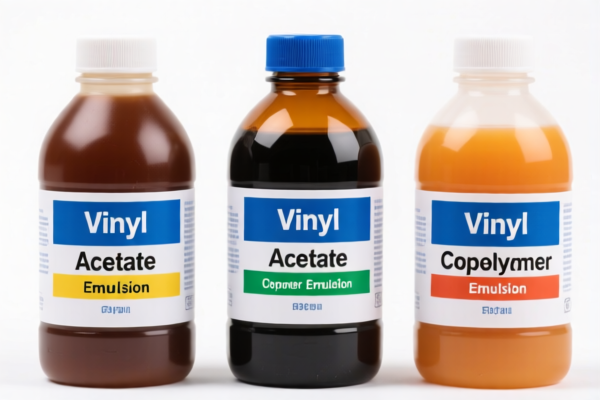


AI分析
🧪 Vinyl Acetate Copolymer Emulsion (VAC Emulsion)
🌐 HS Code Reference & Customs Clearance Guide | 2026 Latest Tariff Analysis | Professional Clearance Strategy
📌 I. Product Definition & Classification: Do You Truly Understand "Vinyl Acetate Emulsion"?
Vinyl Acetate Copolymer Emulsion (VAC Emulsion) is a critical industrial adhesive and binding agent, widely used in textiles, paper coating, construction adhesives, paints, and non-woven fabrics. In international trade, its classification depends on its chemical composition and polymerization state.
According to the provided data, VAC Emulsions are classified into four distinct HS Codes, primarily differentiated by: 1. Polymer Type: Polyvinyl acetate (PVAc) vs. Vinyl Acetate homopolymers vs. Copolymers with Ethylene/Methacrylic acid. 2. State: Aqueous dispersion (emulsion) vs. Prepared adhesive. 3. Tax Implications: Different base duties lead to different total tariff rates despite similar additive taxes.
⚠️ Key Distinction Point:
- If it is a homopolymer of vinyl acetate in aqueous dispersion → 3905.12.00.00 or 3905.21.00.00
- If it is a copolymer with ethylene (e.g., EVA/VA) → 3209.10.00.00
- If it is a prepared adhesive or specific polymer type not covered above → 3506.91.50.00 or 3506.99.00.00
📦 II. HS Code Classification Details (2026 Latest Tariff Authority对照)
| HS Code | Product Description | Application Scenario | Key Characteristic |
|---|---|---|---|
3905.12.00.00 |
Polyvinyl acetate emulsions, aqueous dispersion | Standard industrial adhesives, packaging glue | Polyvinyl acetate homopolymer |
3905.21.00.00 |
Vinyl acetate emulsions, aqueous dispersion | General purpose adhesives, paper coating | Vinyl acetate based dispersion |
3506.91.50.00 |
Polyvinyl acetate polymers, prepared adhesives | Specific formulated glues, mixed binders | Prepared adhesive / Specific polymer |
3506.99.00.00 |
Prepared polymer adhesives, not elsewhere specified | Custom mixtures, non-standard VAC blends | Generic prepared adhesive |
3209.10.00.00 |
Ethylene/Vinyl Acetate/Lauric acid copolymer emulsion | Specialty paints, coatings, advanced adhesives | Copolymer with Ethylene |
🔍 Critical Reminder:
- 3905.12 and 3905.21 are for raw polymer dispersions (basic chemical products).
- 3506.x codes are for prepared adhesives (chemical mixtures/adhesives).
- 3209.10 is for complex copolymers (e.g., EVA types), which have a higher base duty (5.1%).
- Misclassification Risk: Declaring a copolymer as a homopolymer (or vice versa) will lead to incorrect tax calculation and potential customs penalties.
💰 III. 2026 Latest Tariff Rate Breakdown (Including Surcharges, Policy Add-ons)
✅ Applicable Country: United States (US)
✅ Origin: China (CN)
✅ Effective Date: November 10, 2025 (and subsequent imports)
🎯 1. 3905.12.00.00 & 3905.21.00.00 —— Polyvinyl/Vinyl Acetate Emulsions (Homopolymers)
| Item | Detail |
|---|---|
| Base Duty | 4.0% |
| Section 301 Surcharge | +25.0% |
| 122 Clause Surcharge | +10.0% |
| Total Tax Rate | 39.0% |
| Tax Calculation | CIF Value × 39.0% |
| De Minimis Exemption | ❌ Not Applicable (High risk of audit) |
| Legal Basis Path | Section 301: 9903.01.25 → 122 Clause: 9903.01.24 → USITC: 3905.12.00.00 |
📌 Explanation:
- These are classified as basic polyvinyl acetate polymers.
- The base duty is 4%, which is moderate.
- However, with 25% (Section 301) + 10% (122 Clause) surcharges, the total cost increases significantly.
- Total Effective Rate: 39%.
🎯 2. 3506.91.50.00 & 3506.99.00.00 —— Prepared Polymer Adhesives
| Item | Detail |
|---|---|
| Base Duty | 2.1% |
| Section 301 Surcharge | +25.0% |
| 122 Clause Surcharge | +10.0% |
| Total Tax Rate | 37.1% |
| Tax Calculation | CIF Value × 37.1% |
| De Minimis Exemption | ❌ Not Applicable |
| Legal Basis Path | Section 301: 9903.01.25 → 122 Clause: 9903.01.24 → USITC: 3506.91.50.00 |
📌 Note:
- These are classified as prepared adhesives.
- The base duty is lower (2.1%) compared to homopolymers.
- However, the add-on taxes remain the same (25% + 10%).
- Total Effective Rate: 37.1%, which is 1.9% lower than the homopolymer rate.
- Strategy: If your product qualifies as a "prepared adhesive" rather than a raw polymer, this classification saves 1.9% on the CIF value.
🎯 3. 3209.10.00.00 —— Ethylene/Vinyl Acetate Copolymer Emulsion
| Item | Detail |
|---|---|
| Base Duty | 5.1% |
| Section 301 Surcharge | +25.0% |
| 122 Clause Surcharge | +10.0% |
| Total Tax Rate | 40.1% |
| Tax Calculation | CIF Value × 40.1% |
| De Minimis Exemption | ❌ Not Applicable |
| Legal Basis Path | Section 301: 9903.01.25 → 122 Clause: 9903.01.24 → USITC: 3209.10.00.00 |
📌 Warning:
- This code is for complex copolymers (e.g., EVA).
- It has the highest base duty (5.1%) among all listed codes.
- Total Effective Rate: 40.1%, which is 1.1% higher than homopolymers and 3.0% higher than prepared adhesives.
- Strategy: Ensure your product is not an ethylene-based copolymer if you want to avoid this higher rate.
🛠️ IV. Customs Clearance Practical Advice (Battlefield Avoidance Guide)
✅ 1. Preparation Checklist (Missing Documents Will Cause Delays)
| Document | Required | Description |
|---|---|---|
| ✅ Product Specification Sheet | ✔️ | Must clearly state: Chemical Name, Polymer Type (Homopolymer/Copolymer), Solid Content, Viscosity, pH. |
| ✅ Safety Data Sheet (SDS) | ✔️ | Must comply with GHS standards; confirms non-hazardous classification if applicable. |
| ✅ Certificate of Analysis (COA) | ✔️ | Third-party lab report confirming polymer composition and absence of prohibited substances. |
| ✅ Commercial Invoice | ✔️ | Must use precise English description: e.g., "Polyvinyl Acetate Emulsion, Aqueous Dispersion, for Adhesive Use." Avoid vague terms like "Glue" or "Liquid." |
| ✅ Packing List | ✔️ | Detail net/gross weight, number of drums, and packaging type (e.g., 200L plastic drums). |
| ✅ Origin Certificate | ✔️ | If applicable, to prove origin for potential exemption requests (though unlikely for VAC from China). |
✅ 2. Declaration Strategy (Key Mantra)
🔥 “Specify Polymer Type, Avoid Vague Terms, Match Base Duty, Save 1.9%!”
| Scenario | Correct Declaration | Wrong Approach |
|---|---|---|
| Raw PVAc Emulsion (Homopolymer) | 3905.12.00.00 or 3905.21.00.00 |
Misclassifying as 3506 → Potential penalty for under-declaring base duty if not actually a prepared adhesive. |
| Prepared Adhesive Blend | 3506.91.50.00 or 3506.99.00.00 |
Declaring as 3905 → Higher tax (39% vs 37.1%). Use this if qualified! |
| EVA/Copolymer Emulsion | 3209.10.00.00 |
Declaring as 3905 → Severe under-declaration (40.1% vs 39%). High risk of audit and fines. |
| Vague Description: "Chemical Liquid" | ❌ | Rejected by customs, delays shipment, potential seizure. |
✅ 3. Special Cases Handling
| Scenario | Handling Advice |
|---|---|
| Blended Products | If your product is a mixture of PVAc and other polymers, check if it qualifies as a "Prepared Adhesive" (3506) for lower base duty (2.1%). Provide formulation details. |
| Non-Water-Based Emulsions | If not aqueous dispersion, it may fall under different chapters. Ensure the description specifies "Aqueous Dispersion" for 3905 codes. |
| Sample Shipments | Even for samples, declare accurately. The 39-40% tax applies to all imports from China, regardless of value. |
| Re-imports | If returning goods, provide original entry documents to claim duty relief if applicable. |
🌍 V. Global Market Clearance Comparison (2026 Latest)
| Country/Region | Recommended HS Code | Tariff | Certification | Note |
|---|---|---|---|---|
| 🇺🇸 USA | 3905.12.00.00 / 3506.91.50.00 |
37.1% - 40.1% (China Origin) | SDS, COA | High tariffs due to Section 301 & 122 Clause. |
| 🇨🇳 China | 3905.12.00.00 |
4.0% - 5.0% | No special certs | Low base duty, no surcharges. |
| 🇪🇺 EU | 3905.12.00.00 |
6.5% (approx.) | REACH, SDS | No Section 301/122 surcharges. |
| 🇦🇺 Australia | 3905.12.00.00 |
5.0% | AICIS | No major surcharges. |
| 🇯🇵 Japan | 3905.12.00.00 |
5.0% | JIS | No major surcharges. |
📌 Conclusion:
- USA is the only market with punitive surcharges (35% total extra) on VAC Emulsions.
- EU, Japan, Australia, and China have much lower effective tariffs (5-10%).
- Strategy: If shipping to the US, optimize classification (e.g., aim for3506if possible) and accurately document to avoid misclassification penalties.
📌 VI. Common Mistakes & Pitfalls (Lessons Learned)
❌ Mistake 1: Using vague terms like "Glue" or "Adhesive" in the commercial invoice.
👉 Consequence: Customs may reject the classification, leading to delays and manual assessment.
❌ Mistake 2: Misclassifying an EVA Copolymer as a PVAc Homopolymer.
👉 Consequence: Under-declared duty (39% vs 40.1%). Penalties, back taxes, and potential audits.
❌ Mistake 3: Ignoring the 122 Clause (10%).
👉 Consequence: Under-paying taxes by 10% of CIF value. This is a separate surcharge from Section 301.
❌ Mistake 4: Assuming De Minimis (Section 321) applies to small shipments.
👉 Consequence: No exemption for Chinese-origin goods under these HS codes. Even 1kg shipments are taxed.
✅ Correct Approach:
"Polyvinyl Acetate Emulsion, Aqueous Dispersion, 50% Solid Content, for Industrial Adhesive Use, Model XYZ, SDS Attached"
🎯 VII. Conclusion: Precision in Classification, Cost Control, and Efficiency!
🎯 Remember the Mantra:
🔹 "Specify Polymer Type: Homopolymer (3905), Prepared Adhesive (3506), or Copolymer (3209)."
🔹 "Tax Difference: 39.0%, 37.1%, or 40.1%. Choose wisely!"
🔹 "Always pay attention to Section 301 (25%) and 122 Clause (10%)."
📌 Pro Tip:
If your product is a blended adhesive, consult with a customs broker to see if it can be classified under 3506.91.50.00 (37.1%) instead of 3905.12.00.00 (39.0%). This simple change saves 1.9% on the CIF value.
📣 Immediate Action:
📞 Contact a licensed customs broker + Provide Technical Data Sheet + Request HS Code Pre-ruling
🚀 Ensure your Vinyl Acetate Emulsion clears customs smoothly, efficiently, and with minimal tax leakage!
✨ Professional Clearance Starts with Accurate Classification!
💼 Every percentage point saved is profit earned!
用户评价
关于 HS 编码归类
协调制度(HS)是由世界海关组织(WCO)制定的国际贸易商品分类标准。全球 200 多个国家采用 HS 系统作为海关关税、贸易统计和进出口监管的基础。
每个 HS 编码遵循以下层级结构:
- 章(2 位)——商品大类(例如:第 84 章:机器和机械设备)
- 品目(4 位)——章内的更具体分类
- 子目(6 位)——国际通用细分,所有 WCO 成员国统一使用
- 本国细分(8-10 位)——各国自行扩展的细分编码,如美国 HTSUS 10 位编码
正确的 HS 编码归类对于顺利通关、准确缴纳关税和遵守贸易法规至关重要。错误归类可能导致海关延误、多缴关税或罚款。
从CN进口到US时,适用的关税税率可能包括:
- 最惠国(MFN)税率——适用于 WTO 成员国的标准关税税率
- 普通税率——适用于无贸易协定国家
- 贸易救济关税——附加关税,如 301 条款(反倾销)、232 条款(国家安全)或反补贴税
本页内容仅供参考。如需正式归类,请咨询当地海关或持牌报关代理。