Vinyl Acetate Copolymers Aqueous Dispersion for Leather Treatment
CN → US| HS编码 | 关税税率 | 原产国 | 目的国 | 文档 |
|---|---|---|---|---|
| 3905290000 | 39.0% | CN | US | 官方文档 |
| 3809100000 | 0.0% | CN | US | 官方文档 |
| 3905210000 | 39.0% | CN | US | 官方文档 |
| 5903902500 | 42.5% | CN | US | 官方文档 |
| 3905290000 | 39.0% | CN | US | 官方文档 |
商品图片


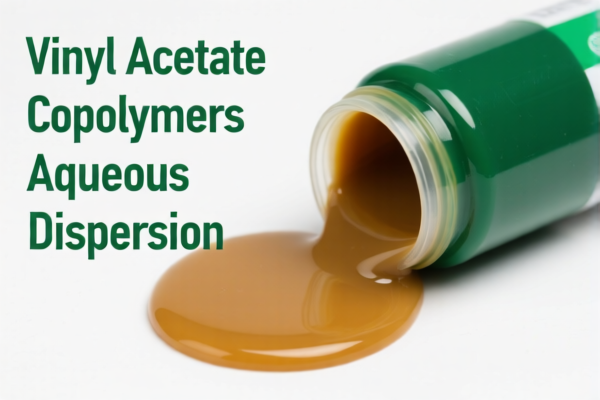
AI分析
🧪 Vinyl Acetate Copolymers Aqueous Dispersion (For Leather Treatment)
🌐 HS Code Reference & Customs Clearance Guide | 2026 Latest Tariff Analysis | Professional Clearance Strategy
📌 I. Product Definition & Classification: Do You Really Understand "Leather Treatment EVA"?
Vinyl Acetate Copolymers (VAE) Aqueous Dispersion is a key polymer emulsion used extensively in the textile and leather industries. When specified for Leather Treatment, it serves as a binder, softener, or finishing agent to enhance flexibility, appearance, and durability of leather goods.
In international trade, the classification depends heavily on: 1. Chemical Composition (Vinyl Acetate content) 2. Physical State (Aqueous dispersion/emulsion) 3. Specific Use (Leather treatment vs. general textile use)
⚠️ Key Distinction:
- If classified strictly as a polymer emulsion (primary chemical form) →归入 Chapter 39 (Plastics and Articles Thereof).
- If classified as a preparatory agent/finishing product (mixed with other substances for specific application) →归入 Chapter 38 (Miscellaneous Chemical Products) or Chapter 59 (Textile/Fabric Treatments).
📦 II. HS Code Classification Details (Based on Provided DATA)
| HS Code | Product Description | Application Scenario | Total Tax Rate | Tax Breakdown |
|---|---|---|---|---|
3905.29.00.00 |
Vinyl Acetate Copolymer Aqueous Dispersion (Textile Use) | General use, including leather, where classified as polymer | 39.0% | Base: 4.0%, Section 301: 25%, 122-Clause: 10% |
3809.10.00.00 |
Vinyl Acetate Copolymer Aqueous Dispersion (As Finishing Agent) | Specifically formulated for textile/leather finishing processes | 2.2¢/kg + 3% + 17.5% | Base: 2.2¢/kg + 3%, Section 301: 7.5%, 122-Clause: 10% |
3905.21.00.00 |
Vinyl Acetate Copolymer Aqueous Dispersion (Polymer Form) | Pure aqueous dispersion, consistent with "liquid polymer" form | 39.0% | Base: 4.0%, Section 301: 25%, 122-Clause: 10% |
5903.90.25.00 |
Vinyl Acetate Copolymer Aqueous Dispersion (Plastic/Resin Primary Form) | Classified under textile backing/resin coatings | 42.5% | Base: 7.5%, Section 301: 25%, 122-Clause: 10% |
3905.29.00.00 |
Vinyl Acetate Copolymer Aqueous Dispersion (Leather Treatment Use) | Directly labeled for leather processing | 39.0% | Base: 4.0%, Section 301: 25%, 122-Clause: 10% |
🔍 Critical Note:
-3905.29.00.00&3905.21.00.00: These fall under Chapter 39 (Plastics). They treat the product as a raw polymer emulsion. High tariff (39%) due to Section 301 and 122-Clause tariffs. -3809.10.00.00: Falls under Chapter 38 (Chemical Preparations). This is often the preferred classification for finished formulation used specifically as a finishing agent. Note the specific duty (2.2¢/kg) mixed with ad valorem rates. Total effective rate is lower if volume is high, but calculation is complex. -5903.90.25.00: Falls under Chapter 59 (Textile/Leather Treatments). Highest base tariff (7.5%) plus full add-ons = 42.5%. Least favorable unless specific product features mandate it.
💰 III. 2026 Latest Tariff Rate Breakdown (Including Add-Ons & Policy Surcharges)
✅ Applicable Country: United States (US)
✅ Country of Origin: China (CN)
✅ Effective Time: November 10, 2025 onwards (including subsequent imports)
🎯 1. 3905.29.00.00 / 3905.21.00.00 —— Vinyl Acetate Copolymers (Chapter 39)
| Item | Content |
|---|---|
| Base Tariff | 4.0% (ad valorem) |
| USITC Additional Tariff (Section 301) | +25% |
| IEEPA Additional Tariff (122-Clause) | +10% |
| Total Tariff Rate | 39.0% |
| Tax Calculation | CIF Value × 39% |
| De Minimis Eligibility | ❌ Not Eligible (deny_de_minimis) |
| Legal Basis Path | IEEPA:9903.01.25 → USITC:3905.29.00.00 / 3905.21.00.00 |
📌 Explanation:
- The 25% is from the Trade Act Section 301 retaliation against China.
- The 10% is the additional IEEPA tariff (122-Clause) specifically targeting certain Chinese chemical imports.
- Total 39% is a very high tariff for polymer emulsions. Must be factored into cost structure.
🎯 2. 3809.10.00.00 —— Finishing Agents/Preparations (Chapter 38)
| Item | Content |
|---|---|
| Base Tariff | 2.2 cents/kg OR 3% (whichever is higher) |
| USITC Additional Tariff (Section 301) | +7.5% (Note: Different from 25% for Chapter 39) |
| IEEPA Additional Tariff (122-Clause) | +10% |
| Total Tariff Rate | Complex (Specific + Ad Valorem) |
| Tax Calculation | (CIF × 3%) + (Weight × 2.2¢) + (CIF × 17.5%) |
| De Minimis Eligibility | ❌ Not Eligible (deny_de_minimis) |
| Legal Basis Path | IEEPA:9903.01.25 → USITC:3809.10.00.00 |
📌 Note:
- This classification applies if the product is formulated as a finishing agent rather than a pure polymer.
- The Section 301 rate is only 7.5% (not 25%), which can be significantly cheaper than Chapter 39 if the volume is low or the specific duty component is favorable.
- However, customs may challenge this if the product is essentially raw polymer emulsion. Proper documentation of "finishing formulation" is crucial.
🎯 3. 5903.90.25.00 —— Textile/Leather Resin Coatings (Chapter 59)
| Item | Content |
|---|---|
| Base Tariff | 7.5% |
| USITC Additional Tariff (Section 301) | +25% |
| IEEPA Additional Tariff (122-Clause) | +10% |
| Total Tariff Rate | 42.5% |
| Tax Calculation | CIF Value × 42.5% |
| De Minimis Eligibility | ❌ Not Eligible (deny_de_minimis) |
| Legal Basis Path | IEEPA:9903.01.25 → USITC:5903.90.25.00 |
📌 Warning:
- This is the highest tariff bracket in the provided data.
- Only applicable if the product is explicitly classified as a textile/leather backing or resin coating under Chapter 59.
- Generally not recommended for simple VAE dispersion unless it has unique textile-binding properties that fit Chapter 59 definitions.
🛠️ IV. Customs Clearance Practical Advice (Battle-Tested Pitfall Guide)
✅ 1. Required Documentation Checklist (Non-Negotiable)
| Document | Mandatory? | Description |
|---|---|---|
| ✅ Product Specification Sheet | ✔️ | Must detail VA content %, solid content, pH, viscosity. |
| ✅ Formula/Composition | ✔️ | For 3809.10.00.00, prove it is a "finishing agent" (mixed with other agents). For 3905, prove it is "polymer emulsion". |
| ✅ Product Photos | ✔️ | Label clearly shows "Vinyl Acetate Copolymer Aqueous Dispersion" and intended use (e.g., "For Leather Treatment"). |
| ✅ Safety Data Sheet (SDS) | ✔️ | Required for chemical import compliance. |
| ✅ Commercial Invoice | ✔️ | Must match HS code description precisely. |
| ✅ Certificate of Origin (CO) | ✔️ | If claiming any potential FTA benefits (though unlikely for China origin here). |
| ✅ Packing List | ✔️ | Clearly state net/gross weight for specific duty calculation (3809). |
✅ 2. Declaration Strategy (Key Mnemonics)
🔥 “Pure Polymer → Ch 39; Formulated Agent → Ch 38; Textile Resin → Ch 59. Choose wisely!”
| Scenario | Correct Declaration | Wrong Action |
|---|---|---|
| Raw VAE Emulsion (High VA content, minimal additives) | 3905.29.00.00 or 3905.21.00.00 |
Misdeclare as 3809 → Risk of penalty & reclassification to higher tariff. |
| Finishing Agent (Mixed with softeners, fixatives) | 3809.10.00.00 |
Declare as 3905 → Pay 39% instead of potentially lower 3809 rate. |
| Textile/Leather Coating Resin (Specific binding properties) | 5903.90.25.00 |
Avoid unless necessary. Highest tax burden. |
| General Purpose Polymer | 3905.29.00.00 |
Do not split shipment to avoid detection. |
✅ 3. Special Case Handling
| Scenario | Handling Advice |
|---|---|
| OEM Custom Formulation | Provide supplier’s technical data sheet proving it is a "finishing preparation" to justify 3809. |
| Bulk Chemical Import | For 3809, ensure weight is accurately declared for the 2.2¢/kg specific duty. |
| Leather Treatment Focus | Clearly state "For Leather Treatment" in invoice to align with user intent, but ensure chemical classification matches physical form. |
| High Volume, Low VA Content | Investigate if 3809 is still applicable. Lower VA content may push it towards other chemical preparations. |
🌍 V. Global Market Clearance Comparison (2026 Latest)
| Country/Region | Recommended HS Code | Tariff Rate | Certification Requirements | Remarks |
|---|---|---|---|---|
| 🇺🇸 USA | 3905.29.00.00 or 3809.10.00.00 |
39% or ~17.5%+specific | TSCA Compliance | Section 301 & 122-Clause apply heavily. |
| 🇨🇳 China | 3905.29.00.00 |
~5-10% | CCC (if applicable) | Lower import duties, no Section 301. |
| 🇪🇺 EU | 3905.29.00.00 |
~4-6% | REACH Registration | No high add-on tariffs, but REACH is strict. |
| 🇯🇵 Japan | 3905.29.00.00 |
~4-8% | JIS Standards | Moderate tariffs, focus on quality certs. |
📌 Conclusion:
- USA is the most challenging market due to Section 301 (25% or 7.5%) + 122-Clause (10%) tariffs.
- China origin products face double whammy: High base tariffs + aggressive punitive tariffs.
- EU/Japan are more favorable for VAE dispersion imports if REACH/JIS certs are in order.
📌 VI. Common Errors & Pitfall Guide (Lessons from Tears)
❌ Error 1: Misclassifying raw polymer as "finishing agent" to avoid 39% tariff.
👉 Consequence: Customs audit → Back taxes + fines + shipment delay.
❌ Error 2: Ignoring the 122-Clause 10% tariff.
👉 Consequence: Underpayment of duties → CIQ (Customs Inspection) hold.
❌ Error 3: Incorrect weight declaration for 3809 (specific duty).
👉 Consequence: Discrepancy in specific duty calculation → Additional payment or refund delay.
❌ Error 4: Using vague descriptions like "Leather Glue" instead of "Vinyl Acetate Copolymer Aqueous Dispersion".
👉 Consequence: Customs may reclassify to 5903 (42.5%) due to ambiguity.
✅ Correct Action:
“Vinyl Acetate Copolymer Aqueous Dispersion, 40% Solid Content, for Leather Finishing, TSCA Compliant, Model XYZ”
🎯 VII. Conclusion: Professional Declaration, Save Time & Money!
🎯 Remember the Mantra:
🔹 “Pure Polymer → 3905 (39%); Finishing Agent → 3809 (~17.5%+); Textile Resin → 5903 (42.5%).”
🔹 “122-Clause 10% is non-negotiable for China origin. Plan your cost accordingly!”
📌 Pro Tip:
If your product is a custom-formulated finishing agent, strive for
3809.10.00.00to mitigate the 25% Section 301 tariff (only 7.5% applies).
For raw emulsions, accept3905.29.00.00at 39% and focus on cost optimization elsewhere.
Pre-clearance ruling (Advance Ruling) is highly recommended for large shipments to avoid post-import audits.
📣 Immediate Action:
📞 Engage a licensed US customs broker.
📄 Prepare SDS + Technical Data Sheet.
🚀 Ensure accurate classification to avoid 42.5% or 39% shocks!
✨ Professional Clearance Starts with Precise Classification!
💼 Every percentage point of tariff difference matters in the leather industry!
用户评价
关于 HS 编码归类
协调制度(HS)是由世界海关组织(WCO)制定的国际贸易商品分类标准。全球 200 多个国家采用 HS 系统作为海关关税、贸易统计和进出口监管的基础。
每个 HS 编码遵循以下层级结构:
- 章(2 位)——商品大类(例如:第 84 章:机器和机械设备)
- 品目(4 位)——章内的更具体分类
- 子目(6 位)——国际通用细分,所有 WCO 成员国统一使用
- 本国细分(8-10 位)——各国自行扩展的细分编码,如美国 HTSUS 10 位编码
正确的 HS 编码归类对于顺利通关、准确缴纳关税和遵守贸易法规至关重要。错误归类可能导致海关延误、多缴关税或罚款。
从CN进口到US时,适用的关税税率可能包括:
- 最惠国(MFN)税率——适用于 WTO 成员国的标准关税税率
- 普通税率——适用于无贸易协定国家
- 贸易救济关税——附加关税,如 301 条款(反倾销)、232 条款(国家安全)或反补贴税
本页内容仅供参考。如需正式归类,请咨询当地海关或持牌报关代理。