Vinyl Chloride Rod
CN → US| HS编码 | 关税税率 | 原产国 | 目的国 | 文档 |
|---|---|---|---|---|
| 3916200010 | 40.8% | CN | US | 官方文档 |
| 3916200091 | 40.8% | CN | US | 官方文档 |
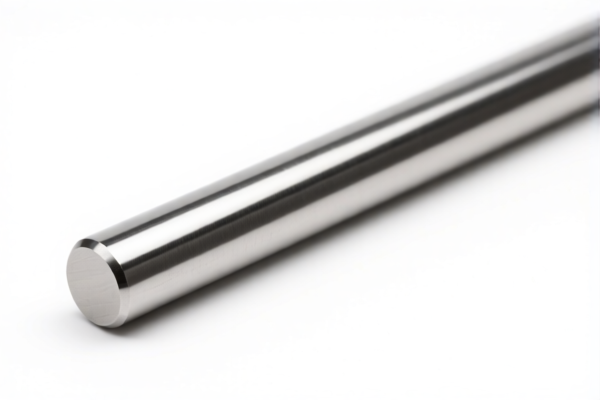
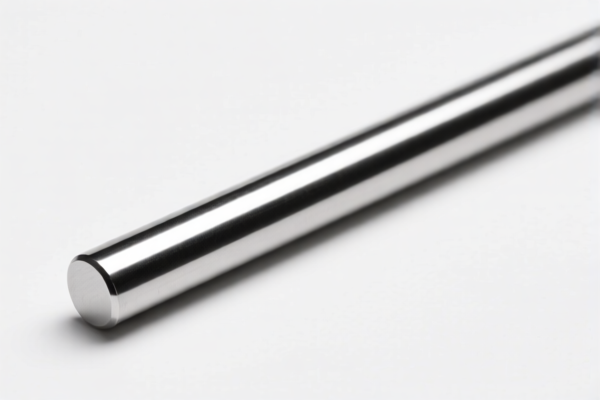
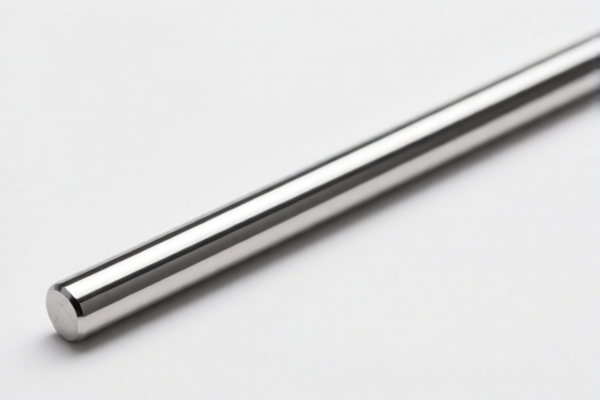
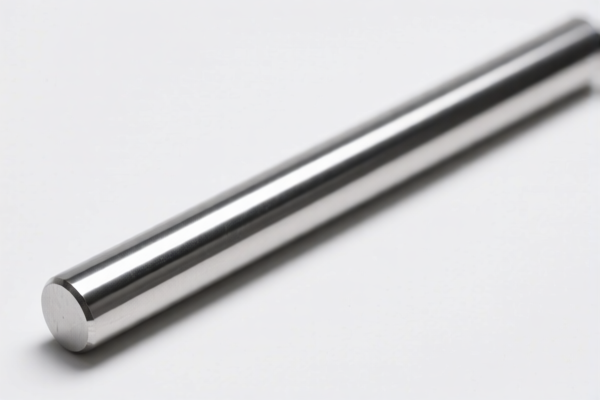
商品图片
AI分析
🏗️ Vinyl Chloride Rods & Profile Shapes (Plastics Siding)
🌐 HS Code Reference & Customs Clearance Guide | 2026 Latest Tariff Analysis | Professional Strategy
📌 I. Product Definition & Classification: What Exactly is a "Vinyl Chloride Rod"?
Polyvinyl Chloride (PVC) products are ubiquitous in construction, plumbing, and industrial applications. In international trade, "rods, sticks, and profile shapes" of plastics are strictly defined by their cross-sectional dimensions and degree of working.
For this specific commodity, we are dealing with Monofilaments or Profiles where any cross-sectional dimension exceeds 1 mm. This distinguishes them from thin films or fibers.
Two Primary Categories for PVC Profiles: 1. Siding for Exterior Use: Specifically shaped and finished for house or building exteriors (cladding). 2. Other Profiles: General-purpose rods, sticks, or un-specified profiles not designated as siding.
⚠️ Critical Distinction Point:
- If the product is Siding (exterior house cladding): It falls under 3916.20.00.10.
- If the product is a General Rod/Stick/Profile (not siding): It falls under 3916.20.00.91.
- Note: Both categories share the same tax structure in the provided data.
📦 II. HS Code Classification Details (2026 Latest Tariff Authority)
| HS Code | Product Description | Application Scenario | Key Characteristics |
|---|---|---|---|
3916.20.00.10 |
Monofilament/Rod/Profile of PVC: Siding for house or building exterior | Exterior wall cladding, vinyl siding, trim boards | ✅ Specifically designed for building exteriors |
3916.20.00.91 |
Monofilament/Rod/Profile of PVC: Other | Industrial rods, plumbing pipes (if not classified elsewhere), general plastic sticks | ✅ General purpose, not exterior siding |
🔍 Key Reminder:
- Both codes fall under Chapter 39 (Plastics and Articles Thereof), Heading 3916 (Monofilament, Rods, Sticks, and Profile Shapes).
- The distinction lies solely in the end-use application (Siding vs. Other).
- Surface Work: The product can be surface-worked (e.g., colored, textured) but must not be otherwise worked (e.g., drilled, assembled into finished goods). If assembled into a window frame, it would move to Chapter 39 or 76/73 depending on material, but raw profiles stay here.
💰 III. 2026 Latest Tariff Rate Breakdown (Including Surtaxes)
✅ Applicable Country: United States (US)
✅ Origin: China (CN)
✅ Effective Time: Current (as per provided data)
🎯 1. 3916.20.00.10 — PVC Siding for Exterior Walls
| Item | Content |
|---|---|
| Base Tariff Rate | 5.8% (Standard MFN/General Rate) |
| Section 301 Surcharge | +25.0% (Additional Tariff on Chinese Goods) |
| Total Tax Rate | 30.8% |
| Tax Calculation | CIF Value × 30.8% |
| Legal Basis | HTSUS 3916.20.00.10 + Section 301 Footnote |
📌 Explanation:
- The 5.8% is the standard duty for plastic rods/profiles of vinyl chloride.
- The 25% is the punitive tariff applied to most Chinese-origin PVC products under Trade Action 301.
- Total Burden: 30.8%. This is a high-cost commodity for importers.
🎯 2. 3916.20.00.91 — Other PVC Rods/Sticks/Profiles
| Item | Content |
|---|---|
| Base Tariff Rate | 5.8% (Standard MFN/General Rate) |
| Section 301 Surcharge | +25.0% (Additional Tariff on Chinese Goods) |
| Total Tax Rate | 30.8% |
| Tax Calculation | CIF Value × 30.8% |
| Legal Basis | HTSUS 3916.20.00.91 + Section 301 Footnote |
📌 Note:
- Despite being "Other" (general use), the tax rate is identical to siding in this dataset.
- Whether it’s a decorative rod or a structural stick, the 30.8% total tax applies.
🛠️ IV. Customs Clearance Practical Advice (Pitfall Avoidance Guide)
✅ 1. Documentation Checklist (Essential)
| Document | Required? | Purpose |
|---|---|---|
| ✅ Commercial Invoice | ✔️ | Must clearly state "PVC Rod" or "PVC Siding" and HS Code. |
| ✅ Packing List | ✔️ | Detail weight, dimensions, and quantity. |
| ✅ Product Specification Sheet | ✔️ | Crucial: Must confirm: 1. Material: 100% Polyvinyl Chloride (PVC). 2. Form: Monofilament/Rod/Profile. 3. Max Cross-section: >1 mm. |
| ✅ Photos of Product | ✔️ | Show cross-section to prove dimension >1mm. Show surface treatment (if any). |
| ✅ End-Use Declaration | ✔️ | Critical for Classification: - If for exterior building siding → Use 3916.20.00.10. - If for general industrial/other use → Use 3916.20.00.91. |
✅ 2. Classification Strategy (Key Rules)
🔥 “Dimension Matters, Use Defines Code”
| Scenario | Correct HS Code | Risk if Misclassified |
|---|---|---|
| PVC Siding for House Exterior | 3916.20.00.10 |
Low Risk (Same Tax), but must prove "Siding" design (e.g., interlocking profiles). |
| PVC Rod for Industrial Machining | 3916.20.00.91 |
Low Risk (Same Tax), but must prove it’s not siding (no interlocking, generic shape). |
| PVC Fiber (Cross-section ≤1mm) | Incorrect Code | ⚠️ High Risk: Will be reclassified to different heading (3911/54/55) with different tax. |
| Assembled Window Frame | Incorrect Code | ⚠️ High Risk: Will be reclassified to 3926 (Other Plastic Articles) or 70 (Glass) depending on structure. |
📌 Why This Matters:
While the tax rate is the same (30.8%) for both...10and...91in this dataset, misclassification can lead to:
1. Customs Audits: CBP may question if you are falsely claiming "Siding" to avoid different regulations (e.g., building codes).
2. Penalties: If the product is deemed "Siding" but declared as "Other," it may trigger building material compliance checks (e.g., Fire Rating, ASTM standards).
✅ 3. Special Considerations
| Situation | Handling Advice |
|---|---|
| Colored/Textured PVC | Allowed. The description says "whether or not surface-worked." Provide photos of color/texture. |
| PVC Pipes | If the product is a pipe (hollow cylinder), it may fall under 3917 (Tubes/Pipes). Do NOT classify as Rod (3916) unless it is solid. Check Cross-Section! |
| Mixed Shipments | If a shipment contains both Siding and General Rods, declare them separately on the line items, even if tax is the same. |
| Origin Fraud | Ensure the origin is correctly marked. If transshipped from Vietnam/Malaysia, ensure Substantial Transformation occurred. Otherwise, 30.8% still applies due to USMCA/CPTPP restrictions on PVC origin. |
🌍 V. Global Market Comparison (2026)
| Country/Region | Recommended HS Code | Base Tariff | Additional Tariff (China) | Total Tax | Notes |
|---|---|---|---|---|---|
| 🇺🇸 USA | 3916.20.00.10 / .91 |
5.8% | +25.0% | 30.8% | High barrier due to Section 301. |
| 🇨🇳 China | 3916.20.00.10 / .91 |
5.0% - 8.0% | None | ~5-8% | Import duty is lower; export from US to CN is rare for these items. |
| 🇪🇺 EU | 3916.20.00 |
0% - 4.5% | None | ~0-4.5% | Much lower cost. EU has free trade agreements with many neighbors. |
| 🇨🇦 Canada | 3916.20.00.10 / .91 |
5.0% | 0% | 5.0% | CUSMA (USMCA equivalent) may apply if originating in NA. |
📌 Conclusion:
- The US market is the most expensive for Chinese PVC rods/profiles due to the 25% surcharge.
- Importers should calculate landed cost carefully. A 30.8% tariff can erase margins for low-value plastic goods.
📌 VI. Common Errors & Pitfalls (Lessons Learned)
❌ Error 1: Declaring PVC Pipes as PVC Rods
👉 Consequence: CBP may reclassify to 3917.39 (Plastic Pipes). While tax might be similar, regulatory compliance for pipes (e.g., NSF for drinking water, ASTM for pressure) is stricter. Misdeclaration leads to delays.
❌ Error 2: Ignoring the 1mm Threshold
👉 Consequence: If the cross-section is ≤1mm, it is a Monofilament/Fiber, not a rod/profile. It may fall under Chapter 54 (Man-made Filaments) or 3907. Different tax, different rules.
❌ Error 3: Using Vague Descriptions like "Plastic Rod"
👉 Consequence: CBP will request clarification. Provide:
- Material: Polyvinyl Chloride (PVC)
- Form: Solid Rod / Hollow Profile
- Dimensions: Length x Width x Height
- Use: Siding / General Purpose
✅ Correct Declaration Example:
"PVC ROD, POLYVINYL CHLORIDE, SOLID, CROSS-SECTION >1MM, FOR EXTERIOR BUILDING SIDING APPLICATION, MODEL XYZ, MADE IN CHINA"
🎯 VII. Conclusion: Strategic Clearance for PVC Profiles
🎯 Key Takeaway:
🔹 Tax is Uniform: Both Siding (
...10) and Other (...91) face 30.8% total tax in the US.
🔹 Classification is Specific: You must accurately declare if it is Siding (building material) or Other (industrial rod) to avoid compliance audits.
🔹 Dimension is Key: Ensure cross-section is >1mm. If ≤1mm, the HS Code changes completely.
📌 Pro Tip:
If you are importing PVC Siding, ensure your supplier provides a Manufacturer’s Certificate confirming the product meets US Building Standards (e.g., ASTM D3679). CBP often partners with US Customs and Border Protection to verify building materials.
📣 Immediate Action:
📞 Consult a Customs Broker: Confirm if your PVC product is a Pipe (3917) or Rod (3916).
📄 Prepare Specs: Show cross-section measurement >1mm.
🚀 Plan for Tax: Budget for 30.8% total duty on CIF value.
✨ Precise Classification, Predictable Costs, Smooth Customs!
💼 Don’t let a 1mm difference cost you a shipment!
用户评价
关于 HS 编码归类
协调制度(HS)是由世界海关组织(WCO)制定的国际贸易商品分类标准。全球 200 多个国家采用 HS 系统作为海关关税、贸易统计和进出口监管的基础。
每个 HS 编码遵循以下层级结构:
- 章(2 位)——商品大类(例如:第 84 章:机器和机械设备)
- 品目(4 位)——章内的更具体分类
- 子目(6 位)——国际通用细分,所有 WCO 成员国统一使用
- 本国细分(8-10 位)——各国自行扩展的细分编码,如美国 HTSUS 10 位编码
正确的 HS 编码归类对于顺利通关、准确缴纳关税和遵守贸易法规至关重要。错误归类可能导致海关延误、多缴关税或罚款。
从CN进口到US时,适用的关税税率可能包括:
- 最惠国(MFN)税率——适用于 WTO 成员国的标准关税税率
- 普通税率——适用于无贸易协定国家
- 贸易救济关税——附加关税,如 301 条款(反倾销)、232 条款(国家安全)或反补贴税
本页内容仅供参考。如需正式归类,请咨询当地海关或持牌报关代理。