Voltage Detector
CN → US| HS编码 | 关税税率 | 原产国 | 目的国 | 文档 |
|---|---|---|---|---|
| 9030310000 | 35.0% | CN | US | 官方文档 |
| 9030333800 | 35.0% | CN | US | 官方文档 |
商品图片
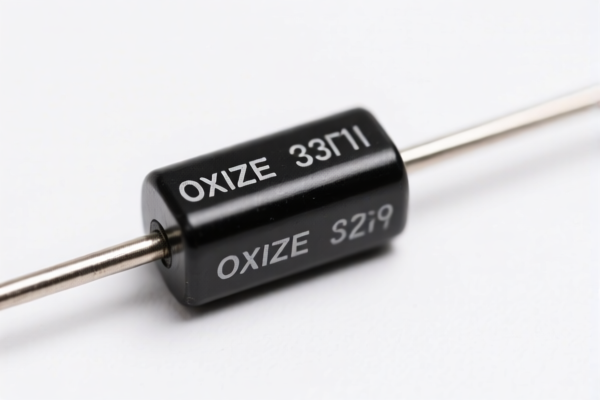
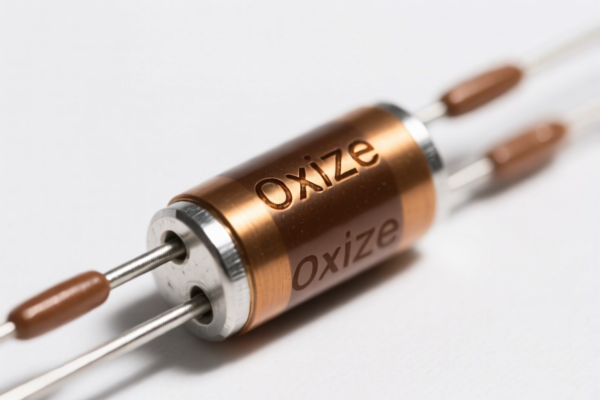
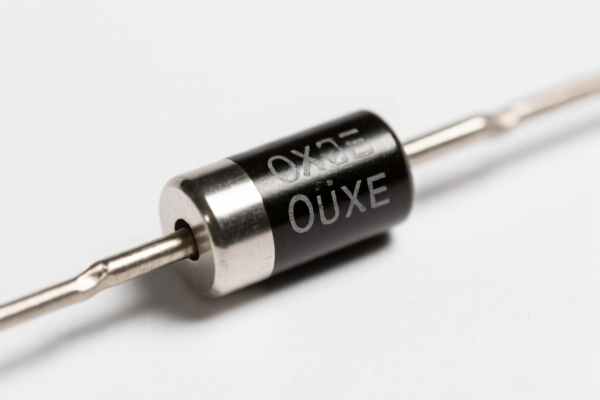
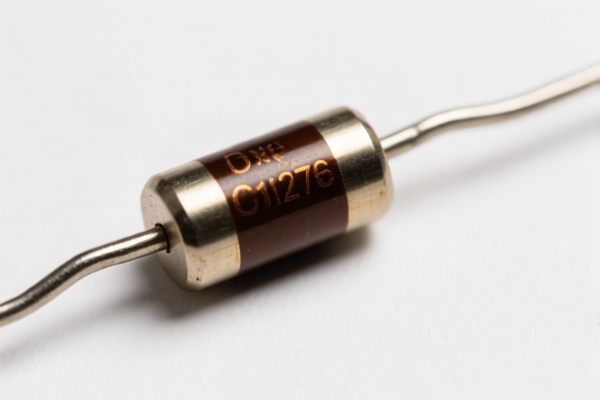
AI分析
⚡ Voltage Detector (Voltage Testing Instruments)
🌐 HS Code Reference & Clearance Guide | 2026 Latest Tariff Analysis | Professional Level Compliance Strategy
📌 I. Product Definition and Classification: Do You Really Understand a "Voltage Detector"?
A Voltage Detector is a handheld or fixed instrument used to determine the presence or magnitude of voltage in an electrical circuit. In international trade, the classification depends strictly on functionality and complexity:
1. Simple Presence Detectors (Non-Recording):
- Devices that simply indicate if voltage is present (e.g., neon testers, basic non-contact voltage testers) without displaying numerical values or recording data.
- Note: Many simple "pen testers" fall here if they do not measure specific quantities like voltage/current/resistance with precision.
2. Precision Measuring Instruments (Recording/Non-Recording):
- Devices that measure specific electrical quantities (voltage, current, resistance, power) and provide a readout (digital or analog).
- This category includes Multimeters, Clamp Meters, and Advanced Voltage Detectors that display numerical values (e.g., 120V, 240V).
- Crucial Distinction: If the device measures voltage (not just detects presence) and is not a meter of Heading 9028 (e.g., watt-hour meters), it generally falls under HS 9030.
⚠️ Key Classification Point:
- If the device is a simple indicator (lights/sounds) without numerical measurement → It might be classified elsewhere (e.g., 8543 for electric signals), but complex testers often go to 9030.
- If the device measures voltage (displaying values) and has no recording device → It falls under 9030.31 (Multimeters) or 9030.33 (Other instruments).
- Important Exclusion: Meters for measuring/checking electrical quantities of Heading 9028 (like energy meters) are excluded.
📦 II. HS Code Classification Details (2026 Latest Tariff Authority Comparison)
Based on the provided , the Voltage Detector is classified under two specific HS Codes depending on its specific features (whether it is a multimeter or other measuring apparatus).
| HS Code | Product Description | Applicable Scenario | Recording Device? |
|---|---|---|---|
9030.31.00.00 |
Multimeters, without a recording device | Digital multimeters (DMMs), analog multimeters that measure voltage/current/resistance | ❌ No |
9030.33.38.00 |
Other instruments and apparatus, for measuring/checking voltage, current, resistance, or power (without recording), Other | Specialized voltage detectors, clamp meters (if not classified as multimeters), oscilloscopes (basic), spectrum analyzers (if measuring electrical quantities) | ❌ No |
🔍 Critical Reminder:
- Both HS Codes in the provided data apply to instruments without a recording device.
- If your device records data (e.g., logs voltage over time with a memory card/USB), it may fall under 9030.84 or 9030.89, which are not in the provided and likely have different tariff rates.
- Do not classify simple "voltage presence testers" (neon screwdrivers) under these codes if they do not measure electrical quantities, as they may belong to Heading 8543. However, most professional "Voltage Detectors" used in industry are precision instruments and fall under 9030.
💰 III. 2026 Latest Tariff Rate Details (Including Additional Taxes)
✅ Applicable Country: United States (US)
✅ Origin: China (CN)
✅ Effective Date: 2025/2026 (Based on provided data)
🎯 1. 9030.31.00.00 —— Multimeters, Without a Recording Device
| Item | Content |
|---|---|
| Basic Tariff | 0.0% (Ad Valorem) |
| Additional Tariff (Section 301) | +25.0% |
| Total Tariff Rate | 25.0% |
| Tax Calculation | CIF Value × 25% |
| De Minimis Exemption? | ❌ Not Applicable (High value instrument, typically above de minimis limits for duty-free entry) |
| Legal Basis Path | USITC:9030.31.00.00 → Section 301: List 4 |
📌 Explanation:
- Although the basic MFN tariff is 0%, the 25% additional tariff applies to most electrical measuring instruments from China due to Section 301 trade actions.
- Total cost impact: 25% of the declared value.
🎯 2. 9030.33.38.00 —— Other Measuring Instruments (Voltage/Current/Resistance/Power), Without Recording
| Item | Content |
|---|---|
| Basic Tariff | 0.0% (Ad Valorem) |
| Additional Tariff (Section 301) | +25.0% |
| Total Tariff Rate | 25.0% |
| Tax Calculation | CIF Value × 25% |
| De Minimis Exemption? | ❌ Not Applicable |
| Legal Basis Path | USITC:9030.33.38.00 → Section 301: List 4 |
📌 Explanation:
- This code covers non-multimeter voltage detectors (e.g., specialized clamp meters, non-contact voltage sensors with display).
- Same 25% total duty as multimeters.
- Even if the product is a "simple" voltage detector, if it is classified under 9030.33 (Other instruments), the 25% surcharge still applies.⚠️ Important Note:
- The provided shows no additional IEEPA 10% tax for these specific codes. Only the 25% Section 301 tariff is listed.
- Do not assume 35% total; the total is 25% based on the provided data.
- Verify if your specific product is a "Multimeter" (9030.31) or "Other" (9030.33) to ensure correct HS Code usage, though the duty rate is identical (25%).
🛠️ IV. Clearance Practical Suggestions (实战避坑指南)
✅ 1. Required Documentation Checklist
| Document | Mandatory? | Description |
|---|---|---|
| ✅ Product Specification Sheet | ✔️ | Must clearly state: "Voltage Detector," "Multimeter," or "Testing Instrument." Include model, brand, and technical specs. |
| ✅ Circuit Diagram / Block Diagram | ✔️ | To prove it is an electrical measuring instrument (9030) and not a simple indicator (8543) or energy meter (9028). |
| ✅ Product Photos (Including Nameplate) | ✔️ | Show display screen (if any), input/output ports, and labels. |
| ✅ Declaration of No Recording Device | ✔️ | Explicitly state: "This device does NOT have a data recording function." (Critical for 9030.31/33). |
| ✅ Commercial Invoice | ✔️ | Accurate value, origin (China), and HS Code. |
| ✅ FCC Certification | ✔️ | Mandatory for US Import. Voltage detectors emit electromagnetic signals; FCC Part 15 certification is required. |
✅ 2. Declaration Tips (Key Rules)
🔥 "Declare Function, Not Just Name!"
| Scenario | Correct Declaration | Wrong Practice |
|---|---|---|
| Digital Multimeter | HS 9030.31.00.00 - "Digital Multimeter for Measuring Voltage, No Recording" |
Calling it "Voltage Detector" vaguely → May be questioned |
| Clamp Meter | HS 9030.33.38.00 - "Clamp Meter, Electrical Measuring, No Recording" |
Calling it "Current Tester" → May mislead customs |
| Non-Contact Voltage Detector (with display) | HS 9030.33.38.00 |
Calling it "Pen Tester" → If it measures, it's 9030 |
| Simple Neon Tester (No Display) | NOT 9030 | Do NOT use 9030.31/33. Likely 8543 or 8206. |
📌 Note: If the device only lights up when voltage is detected (no numbers), it may not be 9030.31/33. Check with customs if unsure. However, most professional "Voltage Detectors" with digital displays are 9030.
✅ 3. Special Considerations
| Situation | Handling Advice |
|---|---|
| FCC Compliance | Ensure your supplier provides an FCC ID or FCC Conformity Statement. Without it, goods will be detained at US customs. |
| Batteries | If the device uses Li-ion batteries, ensure proper UN38.3 testing and MSDS are provided for air/sea freight. |
| No Recording Feature | Clearly state in the invoice: "No data logging capability." This ensures classification under 9030.31/33 and avoids higher rates for recorded data devices (9030.84). |
| Origin Marking | Product must be marked "Made in China" or equivalent. |
🌍 V. Global Market Comparison (2026 Latest)
| Country/Region | Recommended HS Code | Tariff Rate (China Origin) | Certification Required | Notes |
|---|---|---|---|---|
| 🇺🇸 USA | 9030.31.00.00 / 9030.33.38.00 |
25% (Total) | FCC + RoHS | High duty due to Section 301 |
| 🇨🇳 China | 9030.31.00 / 9030.33.38 |
0-5% (Import Duty) | CCC (if applicable) | Low duty, strict quality checks |
| 🇪🇺 EU | 9030.31.00 / 9030.33.38 |
0% (Most MFN rates are 0%) | CE + RoHS | No additional tariffs for China origin in most cases |
| 🇬🇧 UK | 9030.31.00 / 9030.33.38 |
0% | UKCA + RoHS | Post-Brexit standards apply |
| 🇨🇦 Canada | 9030.31.00 / 9030.33.38 |
0% (CETA/General) | ISED (RSM) | No tariffs for Chinese origin in general |
📌 Conclusion:
- USA is the only major market in the list with a 25% additional tariff for these instruments.
- EU/UK/Canada offer 0% duty for most electrical measuring instruments from China.
- FCC (US) is the most critical certification for market entry.
📌 VI. Common Mistakes & Pitfalls (Blood Lessons)
❌ Mistake 1: Classifying a recording voltage detector (with USB/SD card) under 9030.31/33
👉 Consequence: Misclassification → Higher duties (e.g., 9030.84 may have different rates, plus penalties for misdeclaration).
✅ Fix: Declare as "With Recording Device" → Use 9030.84 or 9030.89 (if applicable).
❌ Mistake 2: Calling a simple neon screwdriver a "Voltage Detector" and using 9030.31
👉 Consequence: Customs may reject the classification, as simple indicators are not "measuring instruments" in 9030.
✅ Fix: Use HS 8543.70 or 8205.59 for simple tools, or consult customs.
❌ Mistake 3: Ignoring FCC Certification for US Import
👉 Consequence: Goods detained or destroyed at port.
✅ Fix: Ensure FCC ID is printed on the device and documentation is ready.
❌ Mistake 4: Assuming 0% Duty for US Imports
👉 Consequence: Underpayment of duties → Penalties + Back Taxes.
✅ Fix: Always apply the 25% Section 301 tariff for Chinese-origin instruments.
🎯 VII. Conclusion: Professional Declaration, Time-Saving, Cost-Efficiency!
🎯 Remember the Rules:
🔹 "No Recording? Use 9030.31/33."
🔹 "US Import? Add 25% Duty."
🔹 "FCC is Mandatory for USA."
🔹 "Multimeter vs. Other? Both 25% in US."
📌 Tips:
- If your voltage detector has data logging, do NOT use the provided HS Codes (9030.31/9030.33). They are for non-recording devices.
- For US imports, factor in the 25% duty in your pricing model.
- Always provide clear product descriptions and technical specs to customs brokers to avoid delays.
📣 Immediate Action:
📞 Contact your customs broker with:
1. Product Photos & Nameplate
2. Technical Specification Sheet (Highlight "No Recording")
3. FCC Certification Document
🚀 Ensure smooth clearance, avoid penalties, and maximize profit!
✨ Professional Clearance Starts with Accurate Classification!
💼 Every Dollar of Duty Counts!
用户评价
关于 HS 编码归类
协调制度(HS)是由世界海关组织(WCO)制定的国际贸易商品分类标准。全球 200 多个国家采用 HS 系统作为海关关税、贸易统计和进出口监管的基础。
每个 HS 编码遵循以下层级结构:
- 章(2 位)——商品大类(例如:第 84 章:机器和机械设备)
- 品目(4 位)——章内的更具体分类
- 子目(6 位)——国际通用细分,所有 WCO 成员国统一使用
- 本国细分(8-10 位)——各国自行扩展的细分编码,如美国 HTSUS 10 位编码
正确的 HS 编码归类对于顺利通关、准确缴纳关税和遵守贸易法规至关重要。错误归类可能导致海关延误、多缴关税或罚款。
从CN进口到US时,适用的关税税率可能包括:
- 最惠国(MFN)税率——适用于 WTO 成员国的标准关税税率
- 普通税率——适用于无贸易协定国家
- 贸易救济关税——附加关税,如 301 条款(反倾销)、232 条款(国家安全)或反补贴税
本页内容仅供参考。如需正式归类,请咨询当地海关或持牌报关代理。