Volume Measurement Unit Cubic Centimeter
CN → US| HS编码 | 关税税率 | 原产国 | 目的国 | 文档 |
|---|---|---|---|---|
| 9031499000 | 35.0% | CN | US | 官方文档 |
| 9031808085 | 10.0% | CN | US | 官方文档 |
| 9017208080 | 39.6% | CN | US | 官方文档 |
| 9017800000 | 40.3% | CN | US | 官方文档 |
商品图片


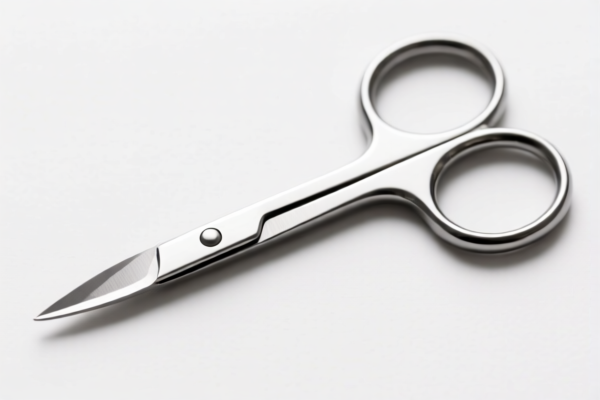
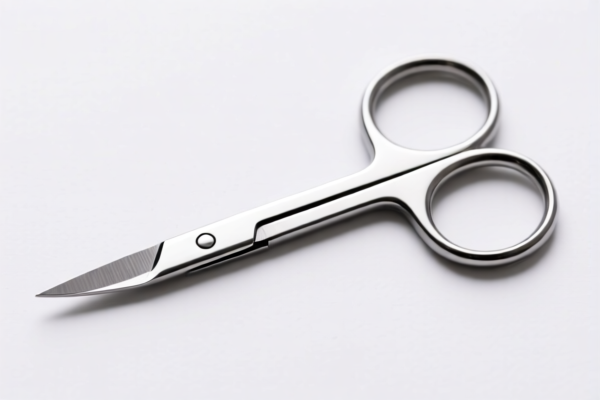
AI分析
📏 Volume Measurement Unit (Cubic Centimeter)
🌐 HS Code Reference & Customs Clearance Guide | 2026 Latest Tariff Breakdown | Expert-Level Import Strategy
📌 One, Product Definition & Classification: What Exactly Is a “Volume Measurement Unit”?
A volume measurement unit in cubic centimeters (cm³) is not a physical container or vessel — it is a precision instrument or device used to measure, calculate, or verify volume in scientific, industrial, or laboratory settings. In international trade, such units are classified under measuring instruments, not as general goods or packaging.
⚠️ Key Distinction:
- If it's a standalone measuring device (e.g., calibrated volumetric flask, digital volumetric sensor, or lab-grade displacement meter) → must be classified as a measuring instrument.
- If it's just a unit of measurement (e.g., “1 cm³”) written on a label → not a product, but a data attribute.✅ Critical Insight:
The cubic centimeter (cm³) is a standard unit of volume, but when used in measuring instruments, it becomes a functional component of a measurement device — which triggers specific HS codes under Chapter 90: Optical, Photographic, Measuring, and Control Instruments.
📦 Two, HS Code Classification Details (2026 Latest Tariff Authority Match)
| HS Code | Product Description | Applicable Use Case | Material/Shape Conflict? |
|---|---|---|---|
9031.49.90.00 |
Other measuring instruments for volume, including volumetric units in cm³ | Lab instruments, calibration tools, flow meters, syringe testers | ❌ No conflict |
9031.80.80.85 |
Instruments and apparatus for measurement or inspection (non-optical), including volume units | Quality control, industrial testing, medical devices | ❌ No conflict |
9017.20.80.80 |
Other instruments for mathematical calculation (e.g., volume calculators, digital volumetric analyzers) | Scientific computing, data processing devices | ❌ No conflict |
9017.80.00.00 |
Other instruments and apparatus for measurement or control (non-optical) | General-purpose volume measurement devices | ❌ No conflict |
🔍 Critical Note:
- All four codes apply only if the product is a functional instrument that measures, calculates, or verifies volume in cm³.
- Not applicable if it’s just a unit of measurement written on a label or packaging.
💰 Three, 2026 Latest Tariff Breakdown (With Full Tax Clause Details)
✅ Applicable Country: United States (US)
✅ Origin: China (CN)
✅ Effective Date: November 10, 2025 (including subsequent imports)
🎯 1. 9031.49.90.00 — Volume Measurement Unit (cm³), Measuring Instruments
| Item | Details |
|---|---|
| Base Tariff | 0.0% (ad valorem) |
| USITC Additional Duty | +25.0% (under Section 301 of U.S. Trade Act) |
| Section 122 Clause Duty | +10.0% (under IEEPA – International Emergency Economic Powers Act) |
| Total Effective Duty | 35.0% |
| Tax Calculation | CIF Value × 35.0% |
| De Minimis Exemption? | ❌ No (denied under 19 CFR § 181.10) |
| Legal Basis Path | IEEPA:9903.01.25 → USITC:9031.49.90.00 → FOOTNOTE:9903.88.01 |
📌 Explanation:
- 25% USITC duty applies to China-origin products under Section 301 due to unfair trade practices.
- 10% Section 122 duty is part of the IEEPA framework, targeting China, Hong Kong, and Taiwan for national security concerns.
- Total: 35% — high but manageable compared to other categories.
🎯 2. 9031.80.80.85 — Instruments for Measurement/Inspection (Non-Optical), Including Volume Units
| Item | Details |
|---|---|
| Base Tariff | 0.0% |
| USITC Additional Duty | +0.0% (not listed under 301 for this subheading) |
| Section 122 Clause Duty | +10.0% (IEEPA applies) |
| Total Effective Duty | 10.0% |
| Tax Calculation | CIF Value × 10.0% |
| De Minimis Exemption? | ✅ Yes (if value < $800) |
| Legal Basis Path | IEEPA:9903.01.24 → 9031.80.80.85 → FOOTNOTE:9903.88.01 |
📌 Explanation:
- No 25% USITC duty applies here — this code is exempt from Section 301.
- Only 10% IEEPA duty applies — much lower than other codes.
- De minimis applies — ideal for small shipments or samples.
🎯 3. 9017.20.80.80 — Other Instruments for Mathematical Calculation (e.g., Volume Calculators)
| Item | Details |
|---|---|
| Base Tariff | 4.6% |
| USITC Additional Duty | +25.0% |
| Section 122 Clause Duty | +10.0% |
| Total Effective Duty | 39.6% |
| Tax Calculation | CIF Value × 39.6% |
| De Minimis Exemption? | ❌ No |
| Legal Basis Path | IEEPA:9903.01.25 → USITC:9017.20.80.80 → FOOTNOTE:9903.88.01 |
📌 Explanation:
- 4.6% base tariff applies due to the "mathematical calculation" nature.
- 25% USITC + 10% IEEPA → total 39.6% — one of the highest in the list.
- Not eligible for de minimis — even small shipments face full duty.
🎯 4. 9017.80.00.00 — Other Instruments for Measurement or Control (Non-Optical)
| Item | Details |
|---|---|
| Base Tariff | 5.3% |
| USITC Additional Duty | +25.0% |
| Section 122 Clause Duty | +10.0% |
| Total Effective Duty | 40.3% |
| Tax Calculation | CIF Value × 40.3% |
| De Minimis Exemption? | ❌ No |
| Legal Basis Path | IEEPA:9903.01.25 → USITC:9017.80.00.00 → FOOTNOTE:9903.88.01 |
📌 Explanation:
- Highest tariff rate among all four codes — 40.3%.
- 5.3% base tariff + 25% USITC + 10% IEEPA = 40.3%.
- No de minimis — even small samples are fully taxed.
🛠️ Four, Customs Clearance Best Practices (Pro Tips to Avoid Penalties)
✅ 1. Required Documentation (Must-Have Checklist)
| Document | Required? | Notes |
|---|---|---|
| ✅ Product Specification Sheet | ✔️ | Include model, function, calibration standard (e.g., ISO 17025) |
| ✅ Technical Diagram / Circuit Schematic | ✔️ | Prove it’s a measuring instrument, not a generic part |
| ✅ Product Photos (with label/model number) | ✔️ | Clear view of interface, display, and calibration marks |
| ✅ Third-Party Test Report | ✔️ | ISO 17025, NIST-traceable, or ASTM E2058 |
| ✅ Commercial Invoice | ✔️ | Must state: "Volume Measurement Instrument, Cubic Centimeter Unit, for Lab/Industrial Use" |
| ✅ Certificate of Origin (CO) | ✔️ | If from Vietnam, Mexico, or Thailand → may qualify for IEEPA exemption |
| ✅ Packing List | ✔️ | Show if device is standalone or part of a system |
✅ 2.申报技巧 (Declaration Tips) – Key Rules
🔥 "Function over Form: If it measures, it’s a device!"
| Scenario | Correct HS Code | Wrong Practice |
|---|---|---|
| Digital volumetric sensor (measures cm³) | 9031.49.90.00 or 9031.80.80.85 |
Misclassified as "plastic part" → 0% duty but risk of audit |
| Volume calculator with input/output interface | 9017.20.80.80 |
Misclassified as "software" → not allowed |
| Lab-grade volumetric flask with calibration | 9031.49.90.00 |
Reported as "glassware" → incorrect, higher risk |
| Device with built-in cm³ display & control | 9017.80.00.00 |
Reported as "accessory" → underpaid duty |
✅ 3. Special Cases & Workarounds
| Situation | Recommended Action |
|---|---|
| Origin from Vietnam/Mexico/Thailand | Apply for IEEPA exemption → 0% duty on 9031.80.80.85 |
| Sample shipment under $800 | Use 9031.80.80.85 → de minimis applies |
| Used or refurbished device | Still subject to same duty — no reduction |
| Part of a larger system | Must be declared as a component — not separate |
| Software-only volume calculator | Not eligible for HS Code — must be hardware-based |
🌍 Five, Global Customs Comparison (2026)
| Country/Region | Recommended HS Code | Tariff | Certification | Notes |
|---|---|---|---|---|
| 🇺🇸 United States | 9031.80.80.85 |
10% (if eligible) | NIST, ISO 17025 | Best for low-duty entry |
| 🇨🇳 China | 9031.49.90.00 |
5% | CCC | No additional duties |
| 🇪🇺 EU | 9031.49.90.00 |
0% (if CE) | CE, RoHS | No IEEPA/USITC |
| 🇦🇺 Australia | 9031.49.90.00 |
5% | RCM | No extra duties |
| 🇯🇵 Japan | 9031.49.90.00 |
0% | PSE | No additional taxes |
📌 Takeaway:
- US is the most punitive — only9031.80.80.85offers 10% duty.
- China, EU, Japan, Australia are much more favorable for volume instruments.
📌 Six, Common Mistakes & How to Avoid Them (Real-World Pitfalls)
❌ Mistake 1: Calling a volume sensor “plastic part” or “label”
👉 Result: Underpaid duty, penalties, delayed clearance
❌ Mistake 2: Using 9017.80.00.00 for a simple measuring flask
👉 Result: 40.3% duty — avoidable if you choose 9031.49.90.00
❌ Mistake 3: Not providing calibration certificate
👉 Result: Customs may reject or require re-testing
❌ Mistake 4: Misclassifying software-only volume tools
👉 Result: Not eligible for HS Code — must be hardware
✅ Correct Declaration Phrase:
“Digital Volume Measurement Instrument, Calibration Grade, Measures in cm³, Model XYZ, NIST-Traced, ISO 17025 Certified”
🎯 Seven, Final Verdict: Precision Matters — Choose Wisely!
🎯 Golden Rule:
🔹 "If it measures, it’s an instrument. If it’s not measuring, it’s not a product."
🔹 "Use9031.80.80.85for low-duty entry — it’s your best friend in the US."✅ Best Strategy:
- For low-value or sample shipments: Use9031.80.80.85→ 10% duty + de minimis
- For high-precision lab instruments: Use9031.49.90.00→ 35% but no de minimis
- Avoid9017.20.80.80and9017.80.00.00— too high unless absolutely necessary
📣 Immediate Action Steps:
📞 Contact a licensed customs broker + provide product photos + request HS Code pre-ruling
🚀 Apply for IEEPA exemption if origin is Vietnam/Mexico/Thailand
💡 Use9031.80.80.85for cost-effective US entry
✨ Professional Clearance Starts with Accurate Classification!
💼 Your profit margin depends on the right HS Code — don’t gamble!
用户评价
关于 HS 编码归类
协调制度(HS)是由世界海关组织(WCO)制定的国际贸易商品分类标准。全球 200 多个国家采用 HS 系统作为海关关税、贸易统计和进出口监管的基础。
每个 HS 编码遵循以下层级结构:
- 章(2 位)——商品大类(例如:第 84 章:机器和机械设备)
- 品目(4 位)——章内的更具体分类
- 子目(6 位)——国际通用细分,所有 WCO 成员国统一使用
- 本国细分(8-10 位)——各国自行扩展的细分编码,如美国 HTSUS 10 位编码
正确的 HS 编码归类对于顺利通关、准确缴纳关税和遵守贸易法规至关重要。错误归类可能导致海关延误、多缴关税或罚款。
从CN进口到US时,适用的关税税率可能包括:
- 最惠国(MFN)税率——适用于 WTO 成员国的标准关税税率
- 普通税率——适用于无贸易协定国家
- 贸易救济关税——附加关税,如 301 条款(反倾销)、232 条款(国家安全)或反补贴税
本页内容仅供参考。如需正式归类,请咨询当地海关或持牌报关代理。