Vulcanized Cork Rubber Strips
CN → US| HS编码 | 关税税率 | 原产国 | 目的国 | 文档 |
|---|---|---|---|---|
| 4016931010 | 37.5% | CN | US | 官方文档 |
| 4504105000 | 35.0% | CN | US | 官方文档 |
| 4504101000 | 35.0% | CN | US | 官方文档 |
| 4016935010 | 37.5% | CN | US | 官方文档 |
| 4008210000 | 35.0% | CN | US | 官方文档 |
商品图片
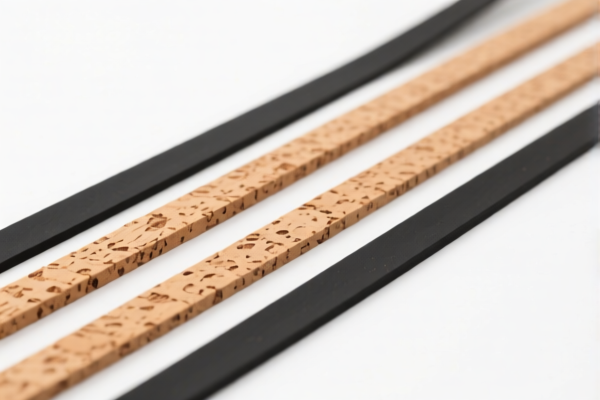
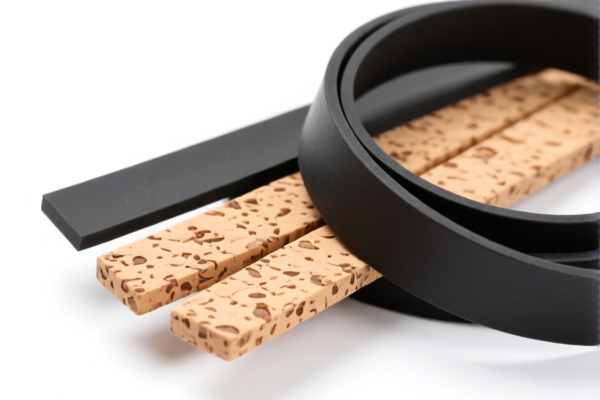
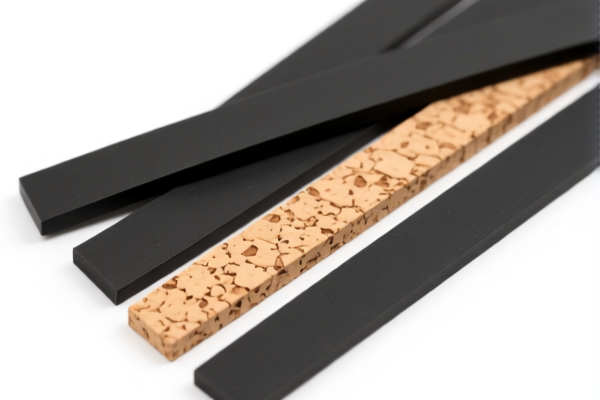
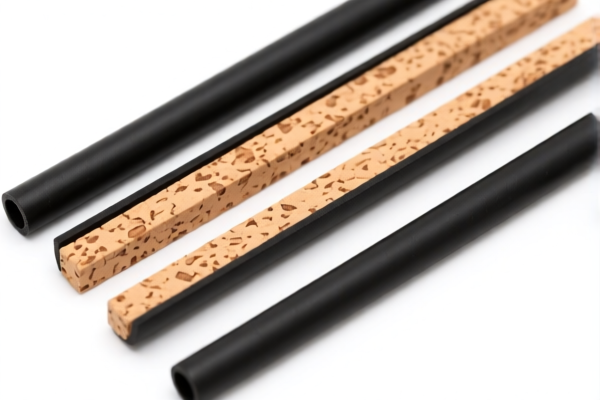
AI分析
🛢️ Vulcanized Cork Rubber Strips (Sealing Materials)
🌐 HS Code Reference & Clearance Guide | 2026 Latest Tariff Analysis | Professional Customs Strategy
📌 I. Product Definition & Classification: What Exactly Are "Vulcanized Cork Rubber Strips"?
These products are composite sealing materials primarily used in industrial machinery, automotive, and construction sectors to prevent leakage of air, water, or oil. In international trade, they fall into two main categories based on their primary material composition and manufacturing process:
1. Rubber-Dominant (4016 Series):
If the strip is made of vulcanized rubber with cork added as a filler or minor component, or if it is fundamentally a "rubber article," it is classified under Chapter 40. The key indicator is that the essential character is rubber.
2. Cork-Dominant (4504 Series):
If the strip is made of combined cork or granulated/crushed cork bound with rubber, or if the essential character is cork (with rubber as a binder), it is classified under Chapter 45. This often applies to "sponge cork" or "combined cork" sheets/plates used for sealing.
⚠️ Critical Distinction Point:
- If the product is described as "Vulcanized Rubber Sheet/Plate" with cork content → Chapter 40 (HS 4016/4008).
- If the product is described as "Combined Cork" or "Granulated Cork with Rubber" → Chapter 45 (HS 4504).
- Form Factor: Regardless of whether it is a "strip," "sheet," or "plate," the classification depends on the material composition, not just the shape. However, "Sealing Parts" (4016.93) is a specific subset for rubber articles.
📦 II. HS Code Classification Details (2026 Latest Tariff Concordance)
Based on the provided data, here are the five possible HS Codes for Vulcanized Cork Rubber Strips/Seals, along with their specific conditions and tax implications.
| HS Code | Product Description | Material/Form Basis | Key Classification Logic |
|---|---|---|---|
4016.93.10.10 |
Vulcanized Cork Rubber Sealing Discs/Strips | Material: Vulcanized Rubber Form: Sealing Disc/Strip |
Classified as Other Sealing Parts of vulcanized rubber. Focuses on the function (sealing) and material (rubber dominant). |
4016.93.50.10 |
Vulcanized Cork Rubber Sealing Discs/Strips | Material: Vulcanized Rubber Form: Sealing Disc/Strip |
Similar to above, falls under Other Sealing Parts. Note: May differ by specific rubber type or thickness standard in local nomenclature. |
4504.10.50.00 |
Vulcanized Cork Rubber Sealing Pieces | Material: Combined Cork Form: Pieces/Sheets |
Classified as Combined Cork. Focuses on the composite nature where cork is the primary component, bound by rubber. |
4504.10.10.00 |
Vulcanized Cork Rubber Plates/Sheets | Material: Ground/Crushed Cork + Rubber Form: Vulcanized Sheets/Plates |
Classified as Ground Cork with Binder. Used when the product is manufactured as a sheet/plate from granulated cork particles bound by rubber. |
4008.21.00.00 |
Vulcanized Rubber Plates/Sheets | Material: Vulcanized Rubber Form: Plates/Sheets |
Classified as Vulcanized Rubber Plates/Sheets. Used if the cork content is negligible or if the product is sold as a raw rubber plate with cork additive, rather than a finished "sealing part." Fully fits the classification explanation for rubber plates. |
🔍 Important Note:
- HS 4016 vs. 4504: If customs determines the cork gives the article its essential character, use 4504. If rubber gives the essential character, use 4016.
- Form Matters: "Strips" might be considered "parts" (4016.93) if shaped, or "sheets/plates" (4008/4504) if flat and unshaped.
💰 III. 2026 Latest Tariff Rate Breakdown (Including Additional Taxes, Policy Surcharges)
✅ Applicable Country: United States (US)
✅ Country of Origin: China (CN)
✅ Effective Date: From November 10, 2025 (including subsequent imports)
🎯 1. HS Code 4016.93.10.10 & 4016.93.50.10 — Rubber Sealing Parts
| Item | Content |
|---|---|
| Base Tariff Rate | 2.5% (ad valorem) |
| Section 301 Additional Tariff | +25% (USITC Footnote for rubber articles) |
| IEEPA Additional Tariff | +10% (Targeted at China/HK products, effective Nov 10, 2025) |
| Total Tariff Rate | 37.5% |
| Tax Calculation | CIF Value × 37.5% |
| De Minimis Exemption? | ❌ Not Eligible (deny_de_minimis) |
| Legal Basis Path | IEEPA:9903.01.25 → USITC:4016.93.10.10 → FOOTNOTE:301 |
📌 Explanation:
- The 2.5% is the standard MFN rate for rubber articles.
- The 25% is the Section 301 tariff on Chinese rubber products.
- The 10% is the new IEEPA surcharge added in late 2025.
- Total: 37.5%. This is a high-cost category for rubber-based seals.
🎯 2. HS Code 4504.10.50.00 & 4504.10.10.00 — Combined/Ground Cork Products
| Item | Content |
|---|---|
| Base Tariff Rate | 0.0% (ad valorem) |
| Section 301 Additional Tariff | +25% (USITC Footnote for cork articles) |
| IEEPA Additional Tariff | +10% (Targeted at China/HK products, effective Nov 10, 2025) |
| Total Tariff Rate | 35.0% |
| Tax Calculation | CIF Value × 35.0% |
| De Minimis Exemption? | ❌ Not Eligible (deny_de_minimis) |
| Legal Basis Path | IEEPA:9903.01.25 → USITC:4504.10.50.00 → FOOTNOTE:301 |
📌 Explanation:
- Cork products typically have a 0% base rate.
- However, the 25% Section 301 and 10% IEEPA surcharges still apply heavily.
- Total: 35.0%. This is 2.5% cheaper than the rubber-dominant classification (4016), making it a potential cost-saving angle if the product composition allows.
🎯 3. HS Code 4008.21.00.00 — Vulcanized Rubber Plates/Sheets
| Item | Content |
|---|---|
| Base Tariff Rate | 0.0% (ad valorem) |
| Section 301 Additional Tariff | +25% (USITC Footnote for rubber plates) |
| IEEPA Additional Tariff | +10% (Targeted at China/HK products, effective Nov 10, 2025) |
| Total Tariff Rate | 35.0% |
| Tax Calculation | CIF Value × 35.0% |
| De Minimis Exemption? | ❌ Not Eligible (deny_de_minimis) |
| Legal Basis Path | IEEPA:9903.01.25 → USITC:4008.21.00.00 → FOOTNOTE:301 |
📌 Explanation:
- If the product is declared as a raw rubber plate (not a finished "sealing part"), the base rate drops to 0%.
- Total: 35.0%. Same as the cork category. This requires careful product description to avoid being classified as a "part" (which has a 2.5% base rate).
🛠️ IV. Clearance Practical Advice (Battle-Tested Pitfall Avoidance Guide)
✅ 1. Documentation Checklist (Non-negotiable)
| Document | Required | Explanation |
|---|---|---|
| ✅ Product Specification Sheet | ✔️ | Must detail: Material composition (e.g., "90% Rubber, 10% Cork" or "Combined Cork"), Hardness, Density, and Shape. |
| ✅ Material Safety Data Sheet (MSDS) | ✔️ | To confirm vulcanization process and chemical composition. |
| ✅ Product Photos (Clear) | ✔️ | Show cross-section, surface texture, and any markings. Crucial for proving "Sealing Part" vs. "Raw Sheet." |
| ✅ Commercial Invoice | ✔️ | Description must match HS Code logic (e.g., "Vulcanized Rubber Sealing Gasket" vs. "Cork Composite Sheet"). |
| ✅ Packing List | ✔️ | Standard export packaging details. |
| ✅ Country of Origin Certificate | ✔️ | Essential for proving Chinese origin to apply/add surcharges correctly. |
✅ 2. Declaration Strategy (Key Mantras)
🔥 “Material Defines Code, Function Defines Subheading, Shape Defines Form!”
| Scenario | Correct Declaration | Consequence of Error |
|---|---|---|
| Finished Sealing Gaskets/Rings | 4016.93.10.10 (Rubber Part) |
Risk: If customs sees "Cork," they might shift to 4504. If you declare 4504 but it's rubber-dominant, they shift to 4016 (37.5% vs 35%). Save 2.5% by proving Cork-Dominance if possible. |
| Raw Sheets/Plates | 4008.21.00.00 or 4504.10.10.00 |
If declared as "Sealing Part" but looks like a sheet, customs may reject it as incomplete. |
| Combined Cork Product | 4504.10.50.00 |
Best for Cost Saving: 35% total tariff. Ensure the description emphasizes "Combined Cork" not just "Rubber with Cork." |
✅ 3. Special Handling Tips
| Situation | Handling Advice |
|---|---|
| Mixed Materials | If the product is 50/50 Rubber/Cork, argue for 4504 (Cork) to save 2.5% on the base rate. Provide lab tests showing cork mass percentage. |
| Custom Shapes | If cut into specific seal shapes, 4016.93 is safer. Generic strips might be considered 4008 or 4504 plates. |
| High Value | With a 35-37.5% tariff, consider the landed cost carefully. Is the margin sufficient? |
| Pre-Ruling | Apply for an Advance Ruling if the material composition is borderline. This provides legal certainty. |
🌍 V. Global Market Clearance Comparison (2026 Latest)
| Country/Region | Recommended HS Code | Total Tariff (China Origin) | Certification | Notes |
|---|---|---|---|---|
| 🇺🇸 USA | 4504.10.50.00 (Preferred) |
35.0% | None specific | Cheapest option if material allows. 4016 is 37.5%. |
| 🇨🇳 China | 4504.10.50.00 |
~0-5% | CCC (if applicable) | Low import duty, no surcharges. |
| 🇪🇺 EU | 4016.93.10 |
0-6.5% | REACH, RoHS | No Section 301/IEEPA equivalents. |
| 🇬🇧 UK | 4016.93.10 |
0-6.5% | UKCA | Post-Brexit standards apply. |
📌 Conclusion:
- The US market is the most expensive due to Section 301 (25%) + IEEPA (10%).
- Strategy: Aim for HS 4504.10.50.00 or 4008.21.00.00 to achieve the 35.0% rate instead of 37.5%.
- Action: Work with your supplier to adjust material labeling or composition reports to favor the Cork/Plate classification if legally justifiable.
📌 VI. Common Mistakes & Pitfalls (Lessons Learned)
❌ Mistake 1: Declaring "Rubber Seals" when they are "Combined Cork"
👉 Consequence: Overpaying 2.5% on base rate.
👉 Fix: Provide material composition proof (cork > rubber by mass).
❌ Mistake 2: Ignoring the 10% IEEPA Surcharge
👉 Consequence: Budget miscalculation. The total tariff is not just 25% or 37.5%, but 35-37.5% including IEEPA.
👉 Fix: Update all cost models to include the 10% IEEPA factor.
❌ Mistake 3: Declaring "Strips" as "Parts" without shaping proof
👉 Consequence: Customs may reclassify from 4016.93 (Parts) to 4008 (Plates), causing delays.
👉 Fix: Ensure the product description matches the physical reality (e.g., "Cut to Shape" vs. "Sheet").
❌ Mistake 4: Missing the De Minimis Exemption Trap
👉 Consequence: Assuming small shipments are tax-free.
👉 Fix: NO de minimis exemption for these HS codes from China. All shipments are taxed.
✅ Correct Approach:
“Vulcanized Combined Cork Sealing Strips, 95% Cork / 5% Rubber Binder, Unshaped Sheets Cut to Length, For Industrial Gaskets, Made in China”
🎯 VII. Conclusion: Professional Declaration Saves Money!
🎯 Remember the Mantra:
🔹 “Cork-Dominant is Cheaper (35%), Rubber-Dominant is Higher (37.5%)!”
🔹 “No De Minimis for China! Tax is Mandatory on Every Shipment!”
🔹 “IEEPA 10% + Section 301 25% = 35-37.5% Total Cost!”
📌 Pro Tip:
If your product can legally be described as “Combined Cork” (Chapter 45), use HS 4504.10.50.00. It saves 2.5% on the base tariff compared to rubber-based seals. Even a small percentage difference adds up significantly on large volumes.
📣 Immediate Action:
📞 Contact Your Customs Broker + Provide Material Composition Report + Apply for Advance Ruling if Ambiguous
🚀 Optimize Your HS Code to ensure you pay 35.0% instead of 37.5%!
✨ Professional Clearance Starts with Precise Classification!
💼 Every Percent Saved is Profit Gained!
用户评价
关于 HS 编码归类
协调制度(HS)是由世界海关组织(WCO)制定的国际贸易商品分类标准。全球 200 多个国家采用 HS 系统作为海关关税、贸易统计和进出口监管的基础。
每个 HS 编码遵循以下层级结构:
- 章(2 位)——商品大类(例如:第 84 章:机器和机械设备)
- 品目(4 位)——章内的更具体分类
- 子目(6 位)——国际通用细分,所有 WCO 成员国统一使用
- 本国细分(8-10 位)——各国自行扩展的细分编码,如美国 HTSUS 10 位编码
正确的 HS 编码归类对于顺利通关、准确缴纳关税和遵守贸易法规至关重要。错误归类可能导致海关延误、多缴关税或罚款。
从CN进口到US时,适用的关税税率可能包括:
- 最惠国(MFN)税率——适用于 WTO 成员国的标准关税税率
- 普通税率——适用于无贸易协定国家
- 贸易救济关税——附加关税,如 301 条款(反倾销)、232 条款(国家安全)或反补贴税
本页内容仅供参考。如需正式归类,请咨询当地海关或持牌报关代理。