Wall Scanner
CN → US| HS编码 | 关税税率 | 原产国 | 目的国 | 文档 |
|---|---|---|---|---|
| 8543709500 | 35.0% | CN | US | 官方文档 |
| 8543708800 | 10.0% | CN | US | 官方文档 |
| 9031499000 | 35.0% | CN | US | 官方文档 |
| 9031909195 | 85.0% | CN | US | 官方文档 |
商品图片
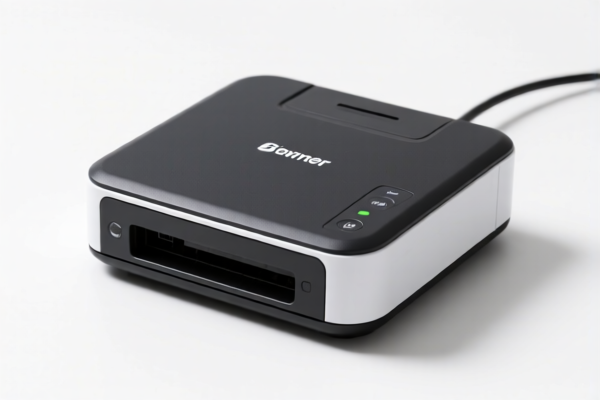
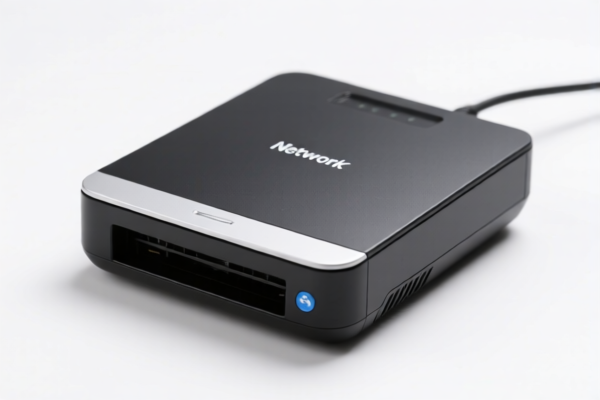
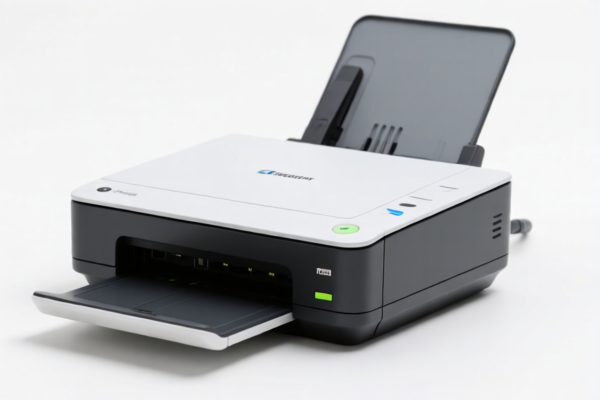
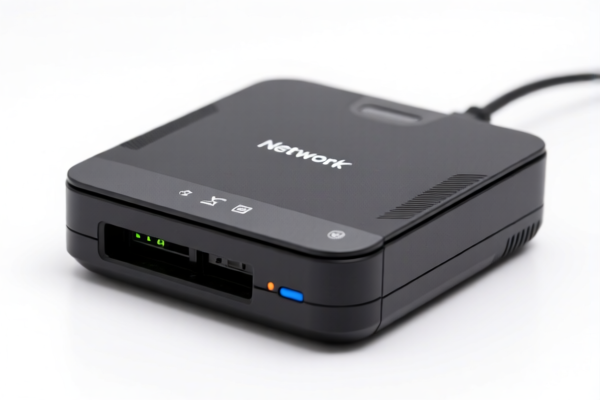
AI分析
🔍 Wall Scanner (Stud & Pipe Finder)
🌐 HS Code Reference & Customs Clearance Guide | 2026 Latest Tariff Analysis | Professional Entry Strategies
📌 I. Product Definition & Classification: What Exactly is a "Wall Scanner"?
A Wall Scanner, often referred to as a Stud Finder or Multi-Scanner, is a handheld electronic device used to detect hidden objects within walls, such as wooden/metal studs, pipes, and electrical wires. In international trade, the classification depends heavily on the underlying technology and primary function:
1. Optical/Profile Scanning Devices:
- Devices that use laser profile projection or optical sensors to map surface irregularities.
- Note: These are typically classified under Chapter 90 (Optical Instruments).
2. Electronic Detection Devices (Capacitive/Electromagnetic):
- Most common consumer-grade scanners that detect density changes (capacitive) or magnetic fields (electromagnetic).
- Note: These are often classified under Chapter 85 (Electrical Machinery) or Chapter 90 if they meet specific "measuring" criteria.
⚠️ Key Distinction Point:
- If the device uses optical projection or precise dimensional measurement → Classify under 9031 (Measuring Instruments).
- If the device is a simple presence detector (e.g., touch-sensitive interface for display apparatus) or generic electronic machine → Classify under 8543 (Electrical Machines).
- Parts are classified separately under 9031.90 or 8543.70/90.
📦 II. HS Code Classification Details (2026 Latest Tariff Authority Match)
Based on the provided data, the Wall Scanner is split into four potential classifications depending on its specific technical implementation:
| HS Code | Product Description | Applicable Scenario | Technology Type |
|---|---|---|---|
9031.49.90.00 |
Other optical instruments and appliances; Measuring instruments not specified elsewhere | Scanners using optical projection, laser profiling, or precise dimensional checking tools | 🔭 Optical/Profile |
9031.90.91.95 |
Parts and accessories of measuring instruments; Other other other | Spare parts or accessories for the above optical/measuring scanners | 🔧 Parts (Optical) |
8543.70.95.00 |
Electrical machines with individual functions; Touch-sensitive data input devices (touch screens) without display capabilities | Scanners that function as touch-sensitive input devices for other apparatus (e.g., integrated into a larger system via touch sensing) | ⚡ Electrical/Touch-Sensitive |
8543.70.88.00 |
Electrical machines; Translation/dictionary functions or Video game console controllers | Scanners disguised as or functioning as game controllers or specific electronic input devices | 🎮 Electrical/Input Device |
🔍 Critical Warning:
- Most standard stud finders that are simple handheld detectors do not fit neatly into "Optical Instruments" (9031) unless they are professional-grade profile projectors.
- However, consumer-grade electronic scanners often fall under 8543 (Miscellaneous Electrical Machines) if they are considered "other electrical machines with individual functions."
- If the scanner has a touchscreen interface but no display of its own (connected to another device), it may fall under 8543.70.95.00.
- Parts are strictly classified under 9031.90.91.95 if associated with optical/measuring instruments.
💰 III. 2026 Latest Tariff Rate Breakdown (Including Surtaxes)
✅ Applicable Country: United States (US)
✅ Origin: China (CN)
✅ Effective Date: Current trade policies (Section 301 & IEEPA)
🎯 1. 9031.49.90.00 —— Optical/Profile Wall Scanners (Measuring Instruments)
| Item | Content |
|---|---|
| Base Tariff | 0% (ad valorem) |
| Section 301 Surtax | +25% |
| IEEPA Surtax | +0% (No additional IEEPA surtax listed for this code in data) |
| Total Tariff | 25.0% |
| Tax Calculation | CIF Value × 25% |
| De Minimis Exemption | ❌ Not Applicable (Standard for Section 301 goods) |
| Legal Basis Path | USITC:9031.49.90.00 → FOOTNOTE:301.00 |
📌 Explanation:
- Optical wall scanners are treated as measuring instruments.
- They are subject to the standard 25% Section 301 tariff on Chinese goods.
- No additional IEEPA surtax is applied in this specific data entry.
🎯 2. 9031.90.91.95 —— Parts & Accessories for Optical Scanners
| Item | Content |
|---|---|
| Base Tariff | 0% |
| Section 301 Surtax | +25% |
| Steel/Aluminum/Copper Surtax | +50% (If made of steel, aluminum, or copper) |
| Total Tariff | 75.0% (If metallic) or 25.0% (If non-metallic) |
| Tax Calculation | CIF Value × 75% (Metallic) / 25% (Non-metallic) |
| De Minimis Exemption | ❌ Not Applicable |
| Legal Basis Path | USITC:9031.90.91.95 → FOOTNOTE:301.00 + Metal Surcharge |
📌 Crucial Note:
- If the parts are made of steel, aluminum, or copper, an additional 50% is added, bringing the total to 75%.
- This makes importing scanner components (e.g., metal casings, sensor mounts) highly costly.
🎯 3. 8543.70.95.00 —— Touch-Sensitive Input Devices (Non-Display)
| Item | Content |
|---|---|
| Base Tariff | 0% |
| Section 301 Surtax | +25% |
| IEEPA Surtax | +0% |
| Total Tariff | 25.0% |
| Tax Calculation | CIF Value × 25% |
| De Minimis Exemption | ❌ Not Applicable |
| Legal Basis Path | USITC:8543.70.95.00 → FOOTNOTE:301.00 |
📌 Explanation:
- If the wall scanner is designed as a touch-sensitive input device for integration into other apparatus (e.g., a smart home control panel component), it falls here.
- Subject to the standard 25% Section 301 tariff.
🎯 4. 8543.70.88.00 —— Other Electrical Machines (e.g., Game Controllers, Translation Devices)
| Item | Content |
|---|---|
| Base Tariff | 0% |
| Section 301 Surtax | +0% |
| IEEPA Surtax | +0% |
| Total Tariff | 0.0% |
| Tax Calculation | CIF Value × 0% |
| De Minimis Exemption | ✅ Potentially Applicable (If under $800 and not on excluded list) |
| Legal Basis Path | USITC:8543.70.88.00 → Exempt |
📌 Strategic Insight:
- This code offers a 0% tariff.
- However, misclassification risk is high. Customs will reject this if the device is clearly a "measuring instrument" (9031) or a standard "electrical machine" (not a game controller).
- Only use if the device functions as a game controller or has translation/dictionary functions (unlikely for wall scanners).
🛠️ IV. Customs Clearance Practical Advice (Real-World Pitfall Guide)
✅ 1. Documentation Checklist (Essential for Smooth Clearance)
| Document | Must Provide | Notes |
|---|---|---|
| ✅ Product Specification Sheet | ✔️ | Detail detection range, power supply, technology (optical vs. capacitive). |
| ✅ Circuit Diagrams/Schematics | ✔️ | Prove whether it contains optical projection (9031) or simple electronic sensors (8543). |
| ✅ Product Photos (Label & View) | ✔️ | Show model number, brand, and any "Touch Screen" labeling. |
| ✅ Third-Party Test Reports | ✔️ | FCC (for US), CE, RoHS. |
| ✅ Commercial Invoice | ✔️ | Clearly state: "Wall Scanner, Model XYZ, Optical/Capacitive Detection." |
| ✅ Country of Origin Certificate | ✔️ | Critical for determining surtax eligibility. |
| ✅ Packing List | ✔️ | Separate parts from main units if shipping together. |
✅ 2. Declaration Tips (Key Mnemonics)
🔥 "Optical = 25%, Metallic Parts = 75%, Electrical Input = 25%, Game Controller = 0% (Risk!)"
| Scenario | Correct Declaration | Incorrect Practice |
|---|---|---|
| Professional Profile Scanner | 9031.49.90.00 |
Misclassify as 8543 → Penalty |
| Standard Home Stud Finder | Likely 9031.49.90.00 or 8543.70.95.00 depending on tech. Consult ruling. |
Assume 8543.70.88.00 → High audit risk |
| Metal Casing Parts | 9031.90.91.95 (75% Tax) |
Declare as plastic → Fraud |
| Scanner with Touch Interface | 8543.70.95.00 |
Declare as 9031 → Overpayment (if 0% was possible, but it's not here) |
✅ 3. Special Case Handling
| Scenario | Handling Advice |
|---|---|
| Mixed Material Parts | If a part has both metal and non-metal components, the metal surtax (50%) likely applies to the whole part. |
| OEM Custom Scanners | Provide client design docs to prove function. If it’s a "touch input" device, argue for 8543.70.95.00. |
| Game Controller-Style Scanner | Only use 8543.70.88.00 if it actually connects to a console and controls a game. Otherwise, it’s a measuring tool. |
| Small Samples (De Minimis) | If the device qualifies as 8543.70.88.00 (0% tax) and value <$800, it might enter duty-free under Section 321, but optical/measuring instruments (9031) are excluded from de minimis exemptions. |
🌍 V. Global Market Comparison (2026 Latest)
| Country/Region | Recommended HS Code | Tariff Rate | Certification | Remarks |
|---|---|---|---|---|
| 🇺🇸 USA | 9031.49.90.00 or 8543.70.95.00 |
25% (Section 301) | FCC + RoHS | Avoid 9031.90.91.95 for metal parts (75%)! |
| 🇨🇳 China | 9031.49.90.00 |
5% - 10% | CCC | No Section 301 surtax. |
| 🇪🇺 EU | 9031.49 |
0% - 4% | CE + RoHS | No major surtaxes on electronics. |
| 🇬🇧 UK | 9031.49 |
0% - 4% | UKCA + RoHS | Post-Brexit rules apply. |
📌 Conclusion:
- The USA is the most challenging market due to the 25% Section 301 tariff.
- Metal parts are particularly penalized (75%). Consider plastic/non-metal alternatives for accessories.
- Optical instruments are strictly regulated; ensure accurate documentation.
📌 VI. Common Mistakes & Pitfalls (Lessons Learned)
❌ Mistake 1: Declaring a wall scanner as a "Game Controller" (8543.70.88.00) to avoid 25% tax.
👉 Consequence: Customs will seize goods, impose double tariffs, and blacklist the importer.
❌ Mistake 2: Shipping metal sensor components under 9031.90.91.95 without declaring metal content.
👉 Consequence: 75% tariff instead of 25%, causing massive cost overruns.
❌ Mistake 3: Ignoring the De Minimis Exclusion for optical instruments.
👉 Consequence: Even small shipments under $800 may be taxed because 9031 items are excluded from Section 321.
✅ Correct Approach:
"Wall Scanner, Model XYZ, Optical Profiling Technology, Plastic Housing, USB-C Powered, FCC Certified"
🎯 VII. Conclusion: Professional Declaration, Cost Savings, Risk Reduction
🎯 Remember the Mnemonic:
🔹 "Optical = 25%, Metal Parts = 75%, Touch Input = 25%, Game Controller = 0% (Risky!)"
🔹 "HS Code defines fate, 25% vs 75% is a huge gap, wrong declaration costs double!"
📌 Pro Tip:
If your wall scanner uses capacitive technology (not optical), try to argue for classification under 8543.70.95.00 (25% tax) or seek a Pre-Ruling from US Customs.
For metal parts, consider switching to plastic or composite materials to avoid the 50% metal surtax.
📣 Immediate Action:
📞 Contact a licensed customs broker + Provide technical schematics + Apply for ISF Filing + Advance Ruling
🚀 Ensure your wall scanners clear US customs smoothly, avoid 75% penalties, and maximize profit margins!
✨ Professional Customs Clearance Starts with Accurate Classification!
💼 Every cent of tariff savings is pure profit!
用户评价
关于 HS 编码归类
协调制度(HS)是由世界海关组织(WCO)制定的国际贸易商品分类标准。全球 200 多个国家采用 HS 系统作为海关关税、贸易统计和进出口监管的基础。
每个 HS 编码遵循以下层级结构:
- 章(2 位)——商品大类(例如:第 84 章:机器和机械设备)
- 品目(4 位)——章内的更具体分类
- 子目(6 位)——国际通用细分,所有 WCO 成员国统一使用
- 本国细分(8-10 位)——各国自行扩展的细分编码,如美国 HTSUS 10 位编码
正确的 HS 编码归类对于顺利通关、准确缴纳关税和遵守贸易法规至关重要。错误归类可能导致海关延误、多缴关税或罚款。
从CN进口到US时,适用的关税税率可能包括:
- 最惠国(MFN)税率——适用于 WTO 成员国的标准关税税率
- 普通税率——适用于无贸易协定国家
- 贸易救济关税——附加关税,如 301 条款(反倾销)、232 条款(国家安全)或反补贴税
本页内容仅供参考。如需正式归类,请咨询当地海关或持牌报关代理。