Walnut Wood Decorative Wood
CN → US| HS编码 | 关税税率 | 原产国 | 目的国 | 文档 |
|---|---|---|---|---|
| 4418999195 | 38.2% | CN | US | 官方文档 |
| 4409295100 | 35.0% | CN | US | 官方文档 |
| 4418919195 | 38.2% | CN | US | 官方文档 |
| 4409299100 | 35.0% | CN | US | 官方文档 |
| 4420908000 | 38.2% | CN | US | 官方文档 |
商品图片
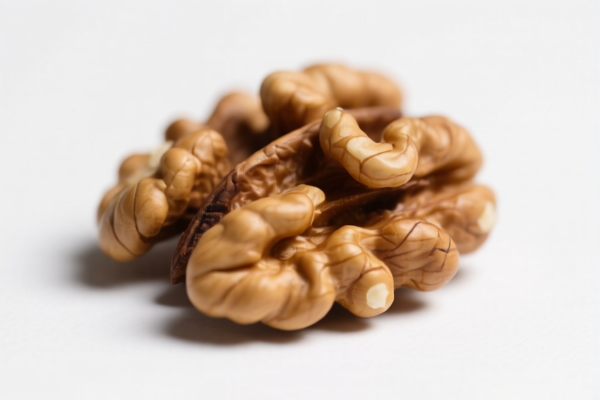
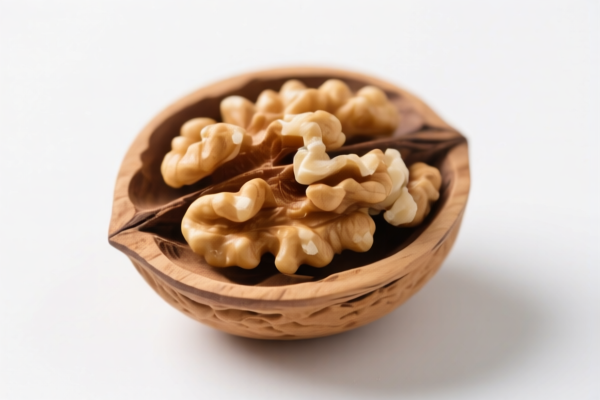
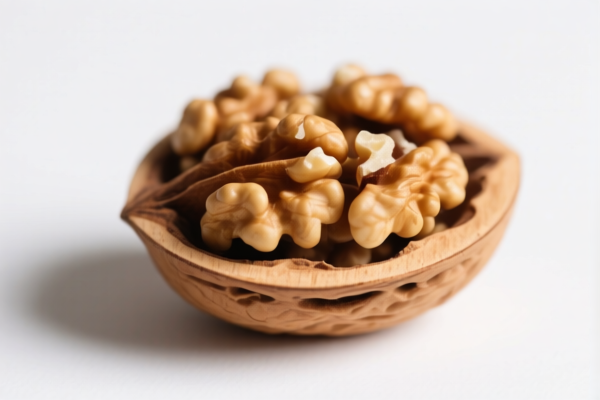
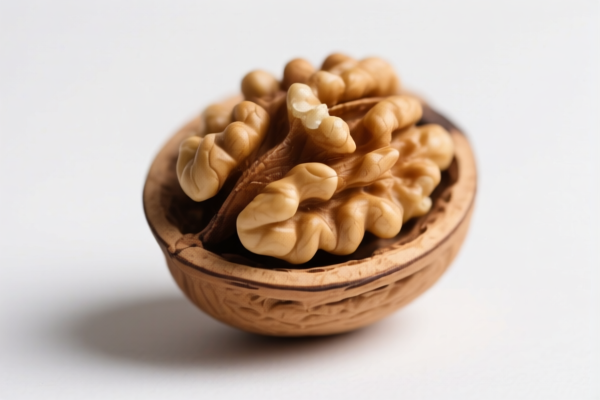
AI分析
🪵 Walnut Wood Decorative Wood (Walnut Wood Trim/Profile)
🌐 HS Code Reference & Customs Clearance Guide | 2026 Latest Tariff Analysis | Professional Clearance Strategy
📌 I. Product Definition & Classification: What Exactly is "Walnut Wood Decorative Wood"?
"Walnut Wood Decorative Wood" refers to processed wooden items made from walnut (a non-coniferous hardwood), primarily used for interior decoration, furniture embellishment, or architectural molding. In international trade, its classification hinges on two key factors:
1. Shape/Processing Method: Is it a continuous shaped profile (like crown molding/baseboard) or a general decorative component?
2. End-Use: Is it specifically for construction/building purposes or general decoration?
⚠️ Key Distinction Points:
- If the wood is continuously shaped (e.g., curved edges, grooves, beads) and used as molding/trims → Classified under Chapter 4409 (Continuously Shaped Wood).
- If it is cut to shape but not continuously profiled, or used as general decorative panels/components → Classified under Chapter 4418 (Builders' Carpentry) or Chapter 4420 (Wooden Ornamental Articles).
- Material Note: Walnut is a non-coniferous wood, affecting specific subheadings within these chapters.
📦 II. HS Code Classification Details (2026 Latest Tariff Authority Comparison)
| HS Code | Product Description | Applicable Scenario | Tax Rate (Total) |
|---|---|---|---|
4418.99.91.95 |
Other builders' carpentry and joinery (non-specific excluded categories) | General walnut decorative wood components not specifically molded as trims; used in building construction | 38.2% |
4409.29.51.00 |
Continuously shaped non-coniferous wood (other than floor coverings) | Walnut wood profiles/moldings with continuous shaping (e.g., baseboards, crown molding, skirting boards) | 35.0% |
4418.91.91.95 |
Other wooden builders' carpentry and joinery | Walnut decorative wood used in construction contexts, without specific material conflicts | 38.2% |
4409.29.91.00 |
Other continuously shaped non-coniferous wood | Walnut wood strips/boards processed via continuous shaping for decorative purposes | 35.0% |
4420.90.80.00 |
Wooden ornamental articles (other than furniture parts) | Walnut wood decorative items (e.g., ornamental panels, carvings, decorative blocks) not used as structural building materials | 38.2% |
🔍 Key Reminder:
- Chapter 4409 applies only if the wood has been continuously shaped along its length (e.g., grooves, beads, rabbets). If it's just cut to size but lacks continuous profiling, it falls under 4418 or 4420.
- Chapter 4418 covers builders' carpentry (fixtures for buildings). If the decorative wood is installed as part of a building’s interior structure (e.g., wall paneling, door frames), it likely belongs here.
- Chapter 4420 is for decorative articles not classified elsewhere (e.g., standalone ornamental pieces, veneered items). Avoid this if the item is clearly for construction (4418) or molding (4409).
💰 III. 2026 Latest Tariff Rate Breakdown (Including Surtaxes & Policy Add-ons)
✅ Applicable Country: United States (US)
✅ Country of Origin: China (CN)
✅ Effective Date: November 10, 2025 (and subsequent imports)
🎯 1. 4418.99.91.95 & 4418.91.91.95 & 4420.90.80.00 — Non-Molded Decorative/Construction Wood
| Item | Details |
|---|---|
| Base Tariff | 3.2% (ad valorem) |
| USITC Surtax | +25% (Section 301 Tariff) |
| Section 122 Tariff | +10% (Specific USITC Footnote for Wood Products) |
| Total Rate | 38.2% |
| Tax Calculation | CIF Value × 38.2% |
| De Minimis Exemption Available? | ❌ No (deny_de_minimis) |
| Legal Authority Path | USITC:4418.99.91.95 → USITC:4418.91.91.95 → USITC:4420.90.80.00 → FOOTNOTE:Section 122 |
📌 Explanation:
- Base Tariff (3.2%): Standard MFN rate for wood products under Chapters 4418/4420.
- Section 301 Surtax (+25%): Imposed on Chinese-origin goods under U.S. Trade Act Section 301.
- Section 122 Tariff (+10%): Specific additional duty for certain wood products imported from China.
- Total 38.2%: This is a high tariff, significantly impacting profit margins. Must be factored into pricing strategies.
🎯 2. 4409.29.51.00 & 4409.29.91.00 — Continuously Shaped Walnut Moldings/Trims
| Item | Details |
|---|---|
| Base Tariff | 0.0% (ad valorem) |
| USITC Surtax | +25% (Section 301 Tariff) |
| Section 122 Tariff | +10% (Specific USITC Footnote for Wood Products) |
| Total Rate | 35.0% |
| Tax Calculation | CIF Value × 35.0% |
| De Minimis Exemption Available? | ❌ No (deny_de_minimis) |
| Legal Authority Path | USITC:4409.29.51.00 → USITC:4409.29.91.00 → FOOTNOTE:Section 122 |
📌 Note:
- Base Tariff (0.0%): Favorable MFN rate for continuously shaped wood (moldings). This is the key advantage of classifying under 4409.
- Surtaxes Still Apply: Despite the 0% base, the 35% total (25% + 10%) remains high. However, it is 3.2% lower than non-molded classifications (4418/4420).
- Strategic Implication: If your product can be technically classified as "continuously shaped," always prefer 4409 codes to minimize duties.
🛠️ IV. Customs Clearance Practical Advice (实战避坑指南)
✅ 1. Required Documentation Checklist (Mandatory)
| Document | Mandatory? | Description |
|---|---|---|
| ✅ Product Specification Sheet | ✔️ | Must detail wood species (Walnut/Non-coniferous), dimensions, processing method (continuously shaped vs. cut-to-size). |
| ✅ Product Photos (Including Labels) | ✔️ | Clear images showing profile shape (e.g., curved edges for 4409 classification). |
| ✅ Commercial Invoice | ✔️ | Must explicitly state: "Walnut Wood Decorative Wood, Non-Coniferous, HS Code: [Insert Code]". Avoid vague terms like "Wood Trim." |
| ✅ Packing List | ✔️ | Detail contents to prove item consistency (e.g., all items are continuously shaped moldings). |
| ✅ Country of Origin Certificate | ✔️ | Required for origin verification. |
| ✅ Third-Party Inspection Report | ✔️ | Optional but recommended for wood quality and species verification. |
✅ 2. Declaration Strategy (Key Mantra)
🔥 “Continuous Shape = 4409 (35%); Cut-to-Size = 4418/4420 (38.2%). Precision in description saves 3.2%!”
| Scenario | Correct Declaration | Wrong Approach |
|---|---|---|
| Walnut baseboards with grooved profiles | 4409.29.51.00 or 4409.29.91.00 |
Misdeclare as "decorative panel" → 38.2% |
| Walnut decorative blocks/carvings | 4420.90.80.00 |
Misdeclare as "molding" → If not continuously shaped, incorrect classification |
| Walnut wall paneling sheets | 4418.99.91.95 or 4418.91.91.95 |
Misdeclare as "ornament" → May trigger inspection delays |
| Mixed shipment (moldings + panels) | Split Declaration | Combine under one code → Audit risk & penalties |
✅ 3. Special Cases Handling
| Situation | Handling Advice |
|---|---|
| OEM Custom Profiles | Provide design drawings showing continuous shaping. Must match 4409 definition. |
| Walnut Veneer on MDF Core | If >50% wood by volume, may still qualify as wood product. Verify core material. |
| Pre-finished vs. Raw | Finish type does not change HS code, but must be declared accurately for valuation. |
| Partial Assembly | If sold as kits, declare based on essential character. Usually follows the main component (wood). |
🌍 V. Global Market Clearance Comparison (2026 Latest)
| Country/Region | Recommended HS Code | Tariff | Certification Requirements | Notes |
|---|---|---|---|---|
| 🇺🇸 USA | 4409.29.51.00 (if molded) |
35.0% | None specific for wood | High surtaxes apply. Split declaration if mixed products. |
| 🇨🇳 China | 4409.29.51.00 |
0%~5% | None | Export-friendly. Low duty for imports into China. |
| 🇪🇺 EU | 4409.29.90 |
0% | FSC/PEFC (Voluntary) | No Section 301 equivalent. Lower overall cost. |
| 🇬🇧 UK | 4409.29.90 |
0%~5% | FSC/PEFC (Voluntary) | Post-Brexit rules align closely with EU for wood. |
| 🇦🇺 Australia | 4409.29.90 |
5% | None | Standard MFN rates apply. No major surtaxes. |
📌 Conclusion:
- USA is the most challenging market due to 35–38.2% effective tariffs.
- EU/UK/Australia offer significantly better duty structures (0–5%).
- Strategy: If exporting to the US, ensure products are technically continuously shaped to qualify for the 35% rate (4409) rather than 38.2% (4418/4420).
📌 VI. Common Errors & Pitfalls (Lessons Learned)
❌ Error 1: Declaring "Walnut Wood" without specifying "Continuously Shaped"
👉 Consequence: Customs may downgrade to 4418/4420 (38.2%) due to lack of proof of shaping.
❌ Error 2: Using "Decorative Wood" as a generic description
👉 Consequence: Ambiguity leads to valuation audits or delays. Must specify HS Code in invoice.
❌ Error 3: Mixing molded and non-molded items in one shipment without separate entries
👉 Consequence: Audit risk. Each item must be classified correctly. Mixed shipments require split line items.
❌ Error 4: Assuming "Walnut" qualifies for wood exemptions
👉 Consequence: No exemptions for Chinese-origin wood under current Section 301/122 rules. All wood products face surtaxes.
✅ Correct Approach:
"Walnut Wood Baseboard, Continuously Shaped, Non-Coniferous, 1.5m Length, Raw Finish, HS Code: 4409.29.51.00"
🎯 VII. Conclusion: Precision in Classification = Cost Savings!
🎯 Remember This Mantra:
🔹 “Continuous Shape → 4409 (35%); Cut-to-Size → 4418/4420 (38.2%).”
🔹 “Specify ‘Walnut’ and ‘Non-Coniferous’. Vague terms = Delays.”
🔹 “USA Tariffs are High. Optimize for 4409 to Save 3.2% Per Unit.”
📌 Pro Tip:
If your walnut wood items are not continuously shaped, consider redesigning to include decorative profiling (e.g., simple grooves/beads) to qualify for Chapter 4409 and reduce duties by 3.2%. Even minor shaping can unlock significant savings.
📣 Immediate Action:
📞 Engage a licensed customs broker for Pre-Ruling Application in the US.
📸 Submit product photos showing profile details to justify 4409 classification.
📄 Ensure Commercial Invoices explicitly state HS Codes and product specifications.
✨ Professional clearance starts with accurate classification!
💼 Every 3.2% saved is pure profit!
用户评价
关于 HS 编码归类
协调制度(HS)是由世界海关组织(WCO)制定的国际贸易商品分类标准。全球 200 多个国家采用 HS 系统作为海关关税、贸易统计和进出口监管的基础。
每个 HS 编码遵循以下层级结构:
- 章(2 位)——商品大类(例如:第 84 章:机器和机械设备)
- 品目(4 位)——章内的更具体分类
- 子目(6 位)——国际通用细分,所有 WCO 成员国统一使用
- 本国细分(8-10 位)——各国自行扩展的细分编码,如美国 HTSUS 10 位编码
正确的 HS 编码归类对于顺利通关、准确缴纳关税和遵守贸易法规至关重要。错误归类可能导致海关延误、多缴关税或罚款。
从CN进口到US时,适用的关税税率可能包括:
- 最惠国(MFN)税率——适用于 WTO 成员国的标准关税税率
- 普通税率——适用于无贸易协定国家
- 贸易救济关税——附加关税,如 301 条款(反倾销)、232 条款(国家安全)或反补贴税
本页内容仅供参考。如需正式归类,请咨询当地海关或持牌报关代理。