Warning Paper Label
CN → US| HS编码 | 关税税率 | 原产国 | 目的国 | 文档 |
|---|---|---|---|---|
| 4821902000 | 35.0% | CN | US | 官方文档 |
| 4823906700 | 35.0% | CN | US | 官方文档 |
| 4821104000 | 35.0% | CN | US | 官方文档 |
| 4823908680 | 35.0% | CN | US | 官方文档 |
| 3926909989 | 22.8% | CN | US | 官方文档 |
商品图片
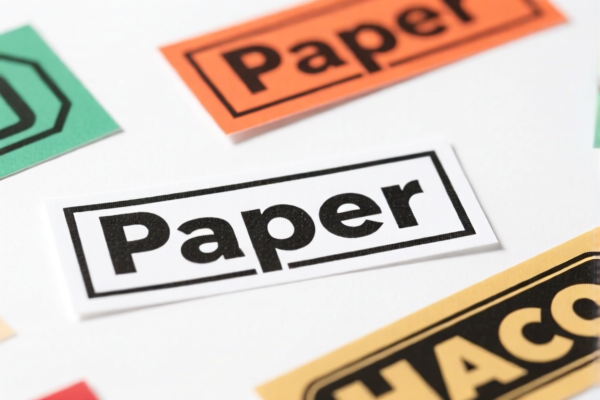
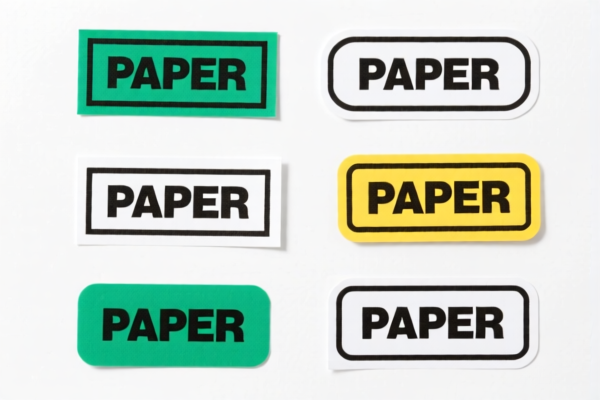
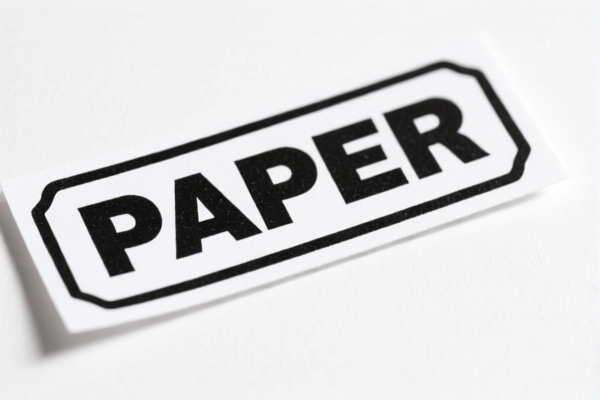
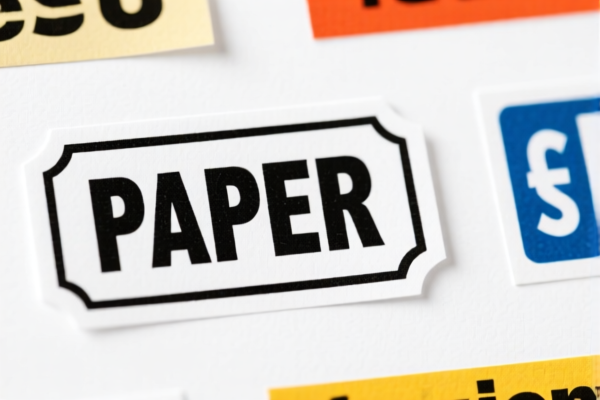
AI分析
🏷️ Warning Paper Label (警告纸质标签)
🌐 HS Code Reference & Customs Clearance Guide | 2026 Latest Tariff Analysis | Professional Compliance Strategy
📌 I. Product Definition & Classification: What Exactly is a "Warning Paper Label"?
A Warning Paper Label is a critical component in industrial safety, logistics, and consumer protection. It serves to communicate hazards, instructions, or compliance information to end-users. In international trade, its classification depends heavily on its material composition, format, and specific function.
While the name implies "Paper," customs authorities may scrutinize whether it is a simple paper sticker, a printed document attached to packaging, or a composite material (e.g., paper with plastic backing). This distinction directly impacts the HS Code and, consequently, the tariff burden.
⚠️ Key Distinction Point:
- If it is purely paper (sticker, roll, cut shape) → Falls under Chapter 48 (Paper Products).
- If it is a finished article (e.g., a warning label affixed to a plastic container, or made of mixed materials acting as a "finished product") → May fall under Chapter 39 (Plastics/Other Materials) as a residual category.
📦 II. HS Code Classification Details (2026 Latest Tariff Authority对照)
Based on the provided data, here are the four possible classifications for "Warning Paper Label," ranging from standard paper products to residual categories.
| HS Code | Product Description | Application Scenario | Material/State |
|---|---|---|---|
4821.90.20.00 |
Paper Labels, Other | General paper labels, stickers, or rolls not specified elsewhere. Matches 'Paper' and 'Label'. | ✅ Pure Paper |
4823.90.67.00 |
Other Paper Items, Cut to Shape | Paper labels cut into specific shapes (not in rolls). 'Label' corresponds to the cut shape. | ✅ Pure Paper (Cut) |
4821.10.40.00 |
Printed Labels (Other) | Labels where printing is the primary characteristic. Matches 'Printed' nature of warning labels. | ✅ Paper + Print |
3926.90.99.89 |
Other Plastic/Non-Paper Articles | Residual Category: If classified as a "finished warning label" made of mixed materials or where paper is secondary to the "plastic/mixed" nature. | ⚠️ Mixed/Plastic Backing |
🔍 Critical Note:
- Codes4821.90.20.00,4823.90.67.00, and4821.10.40.00are all Paper-based and carry the highest tariff rate in this dataset. - Code3926.90.99.89is a "Other Materials" residual category. While the tax rate is lower, it requires careful justification to ensure the product doesn't strictly meet the definition of a paper product. Misclassification can lead to severe penalties.
💰 III. 2026 Latest Tariff Rate Breakdown (Including Surcharges & Policy Add-ons)
✅ Applicable Country: United States (US)
✅ Origin: China (CN)
✅ Effective Time: 2025/2026 Import Cycle
🎯 1. Paper-Based Labels (4821.90.20.00, 4823.90.67.00, 4821.10.40.00)
These three codes share the identical tax structure due to their classification under Chapter 48 (Paper Products) subject to specific trade measures.
| Item | Content |
|---|---|
| Base Tariff | 0.0% (Ad Valorem) |
| Section 301 Tariff (25%) | +25% (USITC Footnote: Additional Duty) |
| Section 122 Tariff (10%) | +10% (Specific Policy Add-on) |
| Total Tax Rate | 35.0% |
| Calculation | CIF Value × 35% |
| De Minimis Exemption | ❌ Not Eligible (High value/specific goods often excluded) |
| Legal Path | Section 301:9903.01.25 → Section 122 → HS:4821/4823 |
📌 Explanation:
- The 0% base rate might seem attractive, but the 35% total effective rate is substantial. - Section 301 (25%): Standard retaliatory tariff on Chinese goods. - Section 122 (10%): A specific administrative tariff added to this category. - Combined Impact: For every $10,000 of labels, you pay $3,500 in duties.
🎯 2. Mixed Material/Residual Label (3926.90.99.89)
This code applies if the label is considered a "finished article" made of other materials (e.g., plastic-backed warning labels) and does not strictly fit the paper definitions.
| Item | Content |
|---|---|
| Base Tariff | 5.3% (Ad Valorem) |
| Section 301 Tariff (7.5%) | +7.5% (Reduced rate for this specific residual code) |
| Section 122 Tariff (10%) | +10% (Still applies) |
| Total Tax Rate | 22.8% |
| Calculation | CIF Value × 22.8% |
| De Minimis Exemption | ❌ Check Specific Rules (Often stricter for plastics) |
| Legal Path | Section 301:9903.01.24 → Section 122 → HS:3926 |
📌 Explanation:
- Lower Rate: 22.8% vs. 35.0%. This is a 12.2% saving. - Risk: You must prove the product is not a pure paper label. If it has a strong plastic backing or adhesive layer that defines its character as "plastic," this code may be defensible. However, if it is purely paper, using this code is misclassification.
🛠️ IV. Customs Clearance Practical Advice (Real-World Pitfall Avoidance)
✅ 1. Documentation Checklist (Must-Haves)
| Document | Required | Description |
|---|---|---|
| ✅ Product Specification Sheet | ✔️ | Detail material composition (e.g., "100% Paper, 50gsm," or "Paper Face with Plastic Backing"). |
| ✅ High-Resolution Photos | ✔️ | Show the label close-up, the back (adhesive), and the label on the product. |
| ✅ Bill of Lading & Invoice | ✔️ | Clearly state "Warning Paper Label" and quantity. |
| ✅ Composition Declaration | ✔️ | Explicitly state: "Made of 100% Paper" OR "Composite Material: Paper Face + Plastic Backing." |
| ✅ Print Sample | ✔️ | Show the warning text and symbols to confirm it is indeed a "label" and not a pamphlet. |
✅ 2. Classification Strategy (Key Mantra)
🔥 “Paper = 35%, Mixed = 22.8%. Material is King!”
| Scenario | Recommended HS Code | Tax Rate | Why? |
|---|---|---|---|
| Pure Paper Sticker/Label | 4821.90.20.00 or 4821.10.40.00 |
35.0% | Matches definition of paper label. No plastic content. |
| Cut Paper Shape (Not Roll) | 4823.90.67.00 |
35.0% | Paper material, cut shape. Same tax as rolls. |
| Paper Label with Plastic Backing | 3926.90.99.89 |
22.8% | If plastic backing defines the character, this may apply. Requires strong justification. |
| Warning Pamphlet/Brochure | Not Listed | N/A | Not a label. Different chapter. Do not use label codes. |
✅ 3. Special Case Handling
| Situation | Advice |
|---|---|
| High-Volume Import | Negotiate with your supplier to provide a Material Composition Test Report. If it can be proven to have significant plastic content, try for 3926.90.99.89 to save 12.2% in duties. |
| Customs Audit | If audited, prove that the label is not a "printed document" but a "label" by showing its adhesive nature and small size. |
| De Minimis (Section 321) | Be aware that high-value or specific goods (like labels) may be excluded from the $800 de minimis exemption. Check current CBP rulings. |
| Warning Content | Ensure the warning content complies with US regulations (e.g., OSHA, CPSC). Incorrect warnings can lead to product rejection, regardless of HS Code. |
🌍 V. Global Market Comparison (2026 Update)
| Country/Region | Recommended HS Code | Tariff (China Origin) | Notes |
|---|---|---|---|
| 🇺🇸 USA | 4821.90.20.00 |
35.0% | High tariffs on paper labels. |
| 🇺🇸 USA | 3926.90.99.89 |
22.8% | Lower rate, but higher classification risk. |
| 🇨🇳 China | 4821.90.20.00 |
~5-10% | Lower import duty for domestic production. |
| 🇪🇺 EU | 4821.10.40.00 |
~4-6% | Standard EU duty for paper labels. |
| 🇬🇧 UK | 4821.90.20.00 |
~4-6% | Post-Brexit tariff structure similar to EU. |
📌 Conclusion:
- The US market is the most expensive due to Section 301 and Section 122 tariffs. - Paper labels face a 35% effective duty. This is a significant cost driver. - Optimization Opportunity: If your labels have any plastic component (e.g., vinyl backing, laminated plastic film), consider if3926.90.99.89is a valid alternative to save 12.2%.
📌 VI. Common Mistakes & Pitfalls (Lessons Learned)
❌ Mistake 1: Calling it "Plastic Label" when it's Paper.
👉 Result: Customs rejects the 3926 code, applies 4821 + penalties.
❌ Mistake 2: Ignoring Section 122.
👉 Result: Underpaying duties by 10%. Customs audit leads to back taxes + interest.
❌ Mistake 3: Using "Label" too broadly.
👉 Result: If the item is a "poster" or "flyer," it may fall under different headings. Ensure it is a label (attached to a product).
✅ Best Practice:
"Warning Label, 2x3 inch, Matte Paper, Self-Adhesive, Printed with OSHA Symbols, Roll of 10,000 pcs."
Include material spec: "100% Paper Face, Rubber Adhesive."
🎯 VII. Conclusion: Professional Classification, Cost Optimization!
🎯 Remember the Mantra:
🔹 “Paper = 35%, Mixed = 22.8%. Prove the material to save the dollars!”
🔹 “HS Code determines cost, 35% is high, 22.8% is better, but compliance comes first!”
📌 Pro Tip:
If your supply chain allows, consider importing from Vietnam or Mexico if available, as these countries may have lower or zero tariffs under USMCA or GSP schemes.
For Chinese origin, consult a customs broker to evaluate if your specific label composition qualifies for the lower 3926 rate.
📣 Take Action Now:
📞 Contact a licensed customs broker.
📸 Provide clear photos and material specs.
📝 Request a Binding Ruling if the shipment value is high.
🚀 Optimize your duty cost, ensure smooth clearance, and protect your margins!
✨ Professional Customs Clearance Starts with Accurate Classification!
💼 Your every cent counts, calculate it precisely!
用户评价
关于 HS 编码归类
协调制度(HS)是由世界海关组织(WCO)制定的国际贸易商品分类标准。全球 200 多个国家采用 HS 系统作为海关关税、贸易统计和进出口监管的基础。
每个 HS 编码遵循以下层级结构:
- 章(2 位)——商品大类(例如:第 84 章:机器和机械设备)
- 品目(4 位)——章内的更具体分类
- 子目(6 位)——国际通用细分,所有 WCO 成员国统一使用
- 本国细分(8-10 位)——各国自行扩展的细分编码,如美国 HTSUS 10 位编码
正确的 HS 编码归类对于顺利通关、准确缴纳关税和遵守贸易法规至关重要。错误归类可能导致海关延误、多缴关税或罚款。
从CN进口到US时,适用的关税税率可能包括:
- 最惠国(MFN)税率——适用于 WTO 成员国的标准关税税率
- 普通税率——适用于无贸易协定国家
- 贸易救济关税——附加关税,如 301 条款(反倾销)、232 条款(国家安全)或反补贴税
本页内容仅供参考。如需正式归类,请咨询当地海关或持牌报关代理。