Waste Paper
CN → US| HS编码 | 关税税率 | 原产国 | 目的国 | 文档 |
|---|---|---|---|---|
| 4707900000 | 35.0% | CN | US | 官方文档 |
| 4707300040 | 35.0% | CN | US | 官方文档 |
| 4706200000 | 35.0% | CN | US | 官方文档 |
| 4706930100 | 35.0% | CN | US | 官方文档 |
| 4823908680 | 35.0% | CN | US | 官方文档 |
商品图片


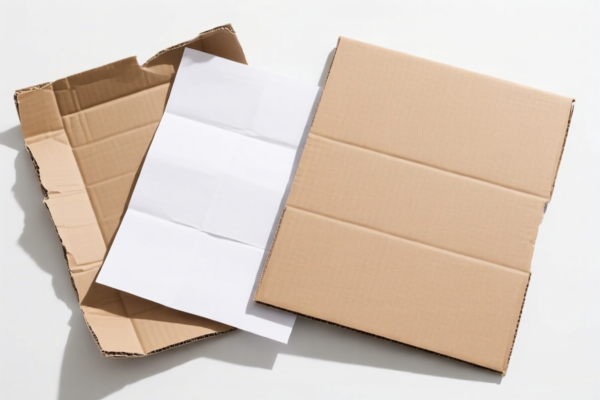

AI分析
♻️ Waste Paper (Scrap Paper & Cardboard)
🌐 HS Code Reference & Customs Clearance Guide | 2026 Latest Tariff Analysis | Professional Clearance Strategy
📌 I. Product Definition & Classification: Do You Really Understand "Waste Paper"?
Waste paper is not a single, unified commodity in international trade. It is a broad category encompassing recycled waste, unsorted cardboard, and primary fibers. In customs classification, the specific physical form (sorted vs. unsorted, baled vs. loose) and processing stage determine the correct HS Code. Misclassification can lead to severe penalties, as all codes below trigger significant additional tariffs due to US-China trade tensions.
⚠️ Key Distinction Point: - Unsorted/Mixed Waste: Falls under Chapter 47 (Paper Pulp) or specific waste chapters. - Recycled/Processed Paper: May fall under Chapter 48 (Paper & Paperboard) if processed into specific secondary forms. - Critical Alert: All HS Codes in the provided data reflect a 35% Total Tax Rate, combining Base (0%), Section 301 (25%), and Section 122 (10%) tariffs.
📦 II. HS Code Classification Details (Based on Provided Data)
The following table details the specific HS Codes for waste paper as provided in the dataset, explaining why each applies.
| HS Code | Product Description & Logic | Summary Explanation (From Data) |
|---|---|---|
4707.90.00.00 |
Waste Paper of Unsorted Kind | Summary: Waste paper classified as recycled waste paper and cardboard; this code applies to unsorted waste paper and paper scraps. Logic: Used for mixed, unsorted recycled materials. |
4707.30.00.40 |
Unsorted Waste Paper (Other Category) | Summary: Unsorted waste paper fits into other category attributes, with no material or morphological conflict. Logic: Applies to specific unsorted waste types that do not fit more specific subheadings but lack physical conflicts. |
4706.20.00.00 |
Recycled Waste & Fibrous Scraps | Summary: Waste paper acts as recycled waste, fibrous scraps, or cardboard fragments, meeting the characteristics of recycling purposes. Logic: Focuses on the "fibrous/fragment" nature of the waste, suitable for recycling input. |
4706.93.01.00 |
Primary Fiber Form Waste | Summary: Waste paper belongs to the primary fiber morphology, fitting the "other category" catch-all logic. Logic: Applies when the waste is in a raw, primary fiber state, often used as a兜底 (catch-all) classification for specific fiber types. |
4823.90.86.80 |
Other Paper Products (Processed Waste) | Summary: Waste paper treated as other paper products, meeting material and form requirements. Logic: Applies if the waste has been processed or shaped into a specific "other paper product" form rather than raw waste. |
4823.90.10.00 |
Paper Pulp-Based Other Categories | Summary: Waste paper as other categories made from paper pulp, meeting the raw material attribute of unsorted waste paper. Logic: Bridges the gap between raw waste and pulp-based products, emphasizing the raw material origin. |
🔍 Important Note: - All codes above are subject to the same total tax rate due to their origin (China) and trade policy status. - The distinction lies in customs verification: You must prove whether the material is "unsorted waste," "fibrous scrap," or "processed paper product" through physical inspection and documentation.
💰 III. 2026 Latest Tariff Rate Breakdown (Including Surcharges)
✅ Applicable Country: United States (US)
✅ Country of Origin: China (CN)
✅ Total Effective Tax Rate: 35.0%
✅ Effective Date: Ongoing (Based on Section 301 & 122 provisions)
🎯 Universal Tariff Structure for All Listed HS Codes
| Item | Detail |
|---|---|
| Base MFN Tariff | 0.0% (Most Favored Nation rate for these waste categories) |
| Section 301 Surcharge | +25.0% (Additional tariff imposed on Chinese goods under US Trade Law) |
| Section 122 Surcharge | +10.0% (Additional tariff under Section 122 provisions) |
| Total Tax Rate | 35.0% |
| Tax Calculation | CIF Value × 35% |
| De Minimis Exemption | ❌ NOT APPLICABLE (All items are subject to full duty) |
| Legal Authority Path | Base: 0% → Section 301: +25% → Section 122: +10% → Total: 35% |
📌 Explanation: - The 0% base rate suggests that "waste paper" itself is not inherently taxed by the US, but... - The +25% Section 301 tariff is the major cost driver, targeting Chinese industrial and raw materials. - The +10% Section 122 tariff adds further burden, often applied to strategic or surplus materials. - Result: Regardless of whether you classify it as
4707.90.00.00or4823.90.86.80, you will pay 35% of the CIF value in tariffs alone. This is a high-cost category for importers.
🛠️ IV. Customs Clearance Practical Advice (Avoid Pitfalls)
✅ 1. Required Documentation Checklist (Non-Negotiable)
| Document | Mandatory? | Purpose |
|---|---|---|
| ✅ Commercial Invoice | ✔️ Must Specify Type | Clearly state: "Waste Paper," "Unsorted," "Baled," or "Fibrous Scraps." Avoid vague terms like "Recycled Material." |
| ✅ Packing List | ✔️ Critical | Detail weight, bale size, and material composition. Must match the invoice exactly. |
| ✅ Certificate of Origin (CO) | ✔️ Required | To confirm origin is China (triggering the 35% tax). |
| ✅ Product Photos (Bales/Loose) | ✔️ Highly Recommended | Show the physical state: Is it baled? Is it loose? Is it mixed with plastic/non-paper items? |
| ✅ Declaration of Composition | ✔️ Critical | Specify percentages of cardboard, office paper, newsprint, etc. to justify the specific HS Code. |
| ✅ EPA/Environmental Compliance Docs | ✔️ If Applicable | If imported for recycling, ensure compliance with US environmental regulations. |
✅ 2. Declaration Tips (Key Mnemonics)
🔥 "Match Form, Declare Type, Pay 35%, No Surprises!"
| Scenario | Correct Declaration Strategy | Incorrect Action |
|---|---|---|
| Unsorted Mixed Waste | Use 4707.90.00.00 or 4707.30.00.40. Declare as "Unsorted Waste Paper & Cardboard." |
Declaring as "Recycled Paper Products" → Misclassification penalty. |
| Fibrous Scraps/Slivers | Use 4706.20.00.00. Declare as "Fibrous Scrap Paper." |
Declaring as "Cardboard" →海关 will reject if no cardboard structure. |
| Processed/Baled Secondary Material | Use 4823.90.86.80 or 4823.90.10.00. Declare as "Processed Paper Waste." |
Declaring as "Raw Waste" → If processed, it may be scrutinized for value dumping. |
| Any Waste Paper | Expect 35% Tariff. | Expecting 0% duty → Financial loss. |
✅ 3. Special Circumstances
| Situation | Handling Advice |
|---|---|
| Mixed with Non-Paper | If plastic/metal content >10%, customs may classify as "Mixed Waste" or "Scrap," potentially altering the HS Code and tariff. Ensure purity. |
| Contaminated Waste | If waste contains food, chemicals, or hazardous materials, it may be rejected by US Customs and Border Protection (CBP) or EPA. Provide a Contamination-Free Certificate. |
| High-Value Recovered Pulp | If the "waste" is actually high-grade recovered pulp ready for re-use, consider 4706.20.00.00 but provide lab tests proving fiber quality. |
| Baled vs. Loose | Baled paper is easier to classify as 4707.90.00.00. Loose, shredded paper may be classified as 4706.20.00.00. Consistency in packaging is key. |
🌍 V. Global Market Comparison (2026)
| Country/Region | Recommended HS Code | Est. Tariff | Notes |
|---|---|---|---|
| 🇺🇸 USA | 4707.90.00.00 / 4707.30.00.40 |
35.0% | High barrier due to Section 301 & 122. Strict environmental controls. |
| 🇨🇳 China | 4707.90.00.00 |
~0-5% | China imports waste paper, but has tightened regulations. Check latest import bans. |
| 🇪🇺 EU | 4707.90.00.00 |
~0-6.5% | EU has strict waste shipment regulations (Basel Convention). Requires extensive paperwork. |
| 🇻🇳 Vietnam | 4707.90.00.00 |
~0-5% | Lower tariffs, but increasing inspection intensity for Chinese-origin waste. |
📌 Conclusion: - The US market is the most expensive for importing waste paper from China due to the 35% combined tariff. - Environmental compliance is as important as the tariff. Ensure no contamination. - Documentation accuracy is critical to avoid delays. CBP closely inspects paper waste for misclassification.
📌 VI. Common Mistakes & Pitfalls (Blood & Tears Lessons)
❌ Mistake 1: Calling all waste paper "Recycled Paper" without specifying "Unsorted" or "Fibrous"
👉 Consequence: Customs may reject the declaration for lack of detail, leading to delays and storage fees.
❌ Mistake 2: Expecting 0% duty because the base tariff is 0%
👉 Consequence: Pay 35% unexpectedly. Always account for Section 301 and 122 surcharges.
❌ Mistake 3: Mixing clean paper with contaminated materials (e.g., plastic films, food residue)
👉 Consequence: Shipment rejected or destroyed by CBP/EPA. High cost of disposal.
❌ Mistake 4: Using wrong HS Code for "Processed" vs. "Raw" waste
👉 Consequence: Even if the tax rate is the same (35%), misclassification can lead to audits, fines, or blacklisting for repeat offenders.
✅ Correct Approach:
"Unsorted Waste Paper, Baled, 100% Fiber, No Plastic, Origin China, HS 4707.90.00.00, 35% Duty Paid."
🎯 VII. Conclusion: Smart Classification, Cost Control, and Smooth Clearance!
🎯 Remember the Key Points:
🔹 "All listed HS Codes = 35% Total Tax" (0% Base + 25% Sec 301 + 10% Sec 122). 🔹 "Form Determines Code": Unsorted (
4707), Fibrous (4706), or Processed (4823). 🔹 "No De Minimis": Small shipments do NOT escape tariffs. 🔹 "Clean & Documented": Contamination leads to rejection; poor documentation leads to delays.
📌 Pro Tip:
If you are exporting waste paper to the US, factor in the 35% tariff in your pricing model. Consider alternative markets (e.g., Vietnam, India) if margins are thin, but be aware of their increasing scrutiny of Chinese-origin waste. Always request an Advance Ruling from CBP if the material form is ambiguous (e.g., semi-processed bales).
📣 Immediate Action:
📞 Consult a licensed customs broker + Provide detailed material specs + Prepare environmental compliance docs. 🚀 Avoid 35% surprise costs and keep your supply chain moving!
✨ Professional Clearance Starts with Accurate Classification! 💼 Every Percent Counts in Waste Paper Trade!
用户评价
关于 HS 编码归类
协调制度(HS)是由世界海关组织(WCO)制定的国际贸易商品分类标准。全球 200 多个国家采用 HS 系统作为海关关税、贸易统计和进出口监管的基础。
每个 HS 编码遵循以下层级结构:
- 章(2 位)——商品大类(例如:第 84 章:机器和机械设备)
- 品目(4 位)——章内的更具体分类
- 子目(6 位)——国际通用细分,所有 WCO 成员国统一使用
- 本国细分(8-10 位)——各国自行扩展的细分编码,如美国 HTSUS 10 位编码
正确的 HS 编码归类对于顺利通关、准确缴纳关税和遵守贸易法规至关重要。错误归类可能导致海关延误、多缴关税或罚款。
从CN进口到US时,适用的关税税率可能包括:
- 最惠国(MFN)税率——适用于 WTO 成员国的标准关税税率
- 普通税率——适用于无贸易协定国家
- 贸易救济关税——附加关税,如 301 条款(反倾销)、232 条款(国家安全)或反补贴税
本页内容仅供参考。如需正式归类,请咨询当地海关或持牌报关代理。