Waste Paper Cardboard (Industrial Grade)
CN → US| HS编码 | 关税税率 | 原产国 | 目的国 | 文档 |
|---|---|---|---|---|
| 4707900000 | 35.0% | CN | US | 官方文档 |
| 4707100000 | 35.0% | CN | US | 官方文档 |
| 4707900000 | 35.0% | CN | US | 官方文档 |
| 4707100000 | 35.0% | CN | US | 官方文档 |
| 4707100000 | 35.0% | CN | US | 官方文档 |
商品图片
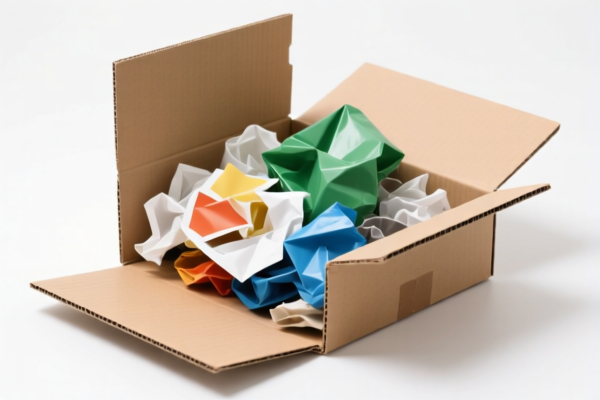
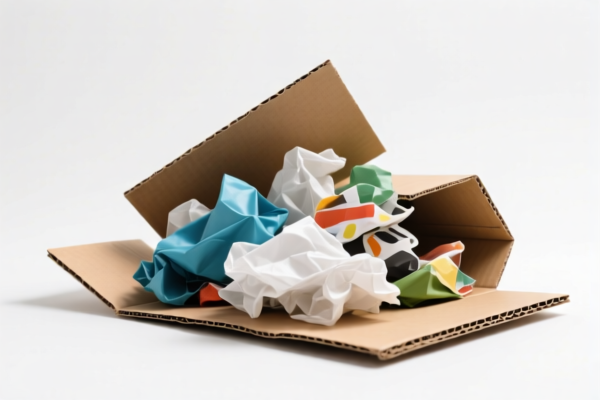

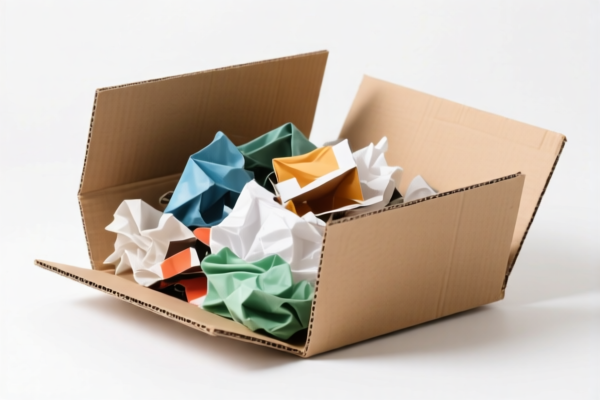
AI分析
📦 Waste Paper Cardboard (Industrial Grade)
🌐 HS Code Reference & Customs Clearance Guide | 2026 Latest Tariff Analysis | Professional Strategy for Recycling Materials
📌 1. Product Definition & Classification: Understanding Industrial Waste Paperboard
Waste paperboard, particularly in its industrial grade, is a critical raw material for the recycling sector. In international trade, it is categorized based on its material composition (paper/paperboard) and its state (waste/recycled).
Key Characteristics: * Material: Paperboard (thick, stiff paper usually used for packaging). * State: Waste/Scrap (not suitable for original packaging purposes). * Grade: Industrial grade implies bulk, potentially compressed or baled, intended for pulp recycling rather than direct consumer use.
⚠️ Key Distinction:
- If the material is primarily cardboard (corrugated or solid board) → It falls under specific recycling codes within Chapter 47.
- The term "Industrial Grade" confirms it is waste/scrap, not new products.
- Core Logic: The classification hinges on whether it is predominantly "paper" or "paperboard." Given the name "Waste Paper Cardboard," customs authorities often look at the dominant physical structure. However, the provided data suggests alignment with both 4707.10 (Cardboard) and 4707.90 (Other Paper/Paperboard).
📊 2. HS Code Classification Details (2026 Latest Tariff Authority Comparison)
Based on the provided data, the product "Waste Paper Cardboard (Industrial Grade)" matches two primary HS Codes due to slight variations in description interpretation ("Waste paperboard" vs. "Waste paper for cardboard").
| HS Code | Product Description | Match Logic from Data |
|---|---|---|
4707.10.00.00 |
Cardboard Waste/Scrap | Matches "Waste paperboard." The term 'industrial grade' confirms the 'waste' attribute. Material and form align perfectly with recycled cardboard. |
4707.90.00.00 |
Other Waste Paper/Paperboard | Matches "Waste paper" material requirement. 'For cardboard' indicates the end-use or form. Falls under the 'Other' category for waste paper/paperboard not specified elsewhere. |
🔍 Critical Note:
- Both codes relate to Chapter 47 (Pulp of Wood or of Other Fibrous Cellulosic Material; Waste and Scrap Paper or Paperboard).
- The distinction between.10(Cardboard) and.90(Other) can be subtle..10is specifically for cardboard waste, while.90is a catch-all for other waste paper/paperboard.
- Data Consistency: Both codes result in the same total tax rate due to identical tariff structures for Chinese-origin goods under current US trade policies.
💰 3. 2026 Latest Tariff Rate Breakdown (Including Surcharges & Policy Add-ons)
✅ Applicable Country: United States (US)
✅ Origin: China (CN) (Assumed based on "122 Clause" and typical tariff context for Chinese waste materials)
✅ Effective Time: Current (2025-2026 regime)
🎯 1. HS Code 4707.10.00.00 —— Waste Cardboard
| Item | Content |
|---|---|
| Base Tariff | 0.0% (ad valorem) |
| Section 301 Surcharge | +25.0% (Additional tariffs under USITC Footnote 9903.88.01) |
| Section 122 Clause Tariff | +10.0% (Specific provision for certain waste/recycled materials or trade remedies) |
| Total Tax Rate | 35.0% |
| Tax Calculation | CIF Value × 35% |
| De Minimis Eligibility | ❌ Not Eligible (Waste materials are generally excluded from de minimis thresholds) |
| Legal Path | USITC:4707.10.00.00 → Section 301: 25% → Section 122: 10% |
📌 Explanation:
- Base Rate 0%: Waste paper/cardboard often has low base duties to encourage recycling.
- 25% Surcharge: Part of the ongoing trade measures affecting Chinese industrial goods.
- 10% Clause 122: Specific additional duty applied to this category.
- Total 35%: This is a significant cost factor. Importers must budget for this fully.
🎯 2. HS Code 4707.90.00.00 —— Other Waste Paper/Paperboard
| Item | Content |
|---|---|
| Base Tariff | 0.0% |
| Section 301 Surcharge | +25.0% |
| Section 122 Clause Tariff | +10.0% |
| Total Tax Rate | 35.0% |
| Tax Calculation | CIF Value × 35% |
| De Minimis Eligibility | ❌ Not Eligible |
| Legal Path | USITC:4707.90.00.00 → Section 301: 25% → Section 122: 10% |
📌 Note:
- Despite the different HS code suffix (.90 vs .10), the effective tax burden is identical.
- This consistency simplifies financial planning but requires accurate physical description to avoid customs scrutiny over misclassification.
🛠️ 4. Customs Clearance Practical Advice (Actionable Pitfall Avoidance)
✅ 1. Required Documentation Checklist (Non-Negotiable)
| Document | Mandatory | Details |
|---|---|---|
| ✅ Commercial Invoice | ✔️ | Must clearly state: "Waste Paper Cardboard," "Industrial Grade," and "HS Code." |
| ✅ Packing List | ✔️ | Detail weight, baling size, and quantity. Must match invoice. |
| ✅ Bill of Lading (B/L) | ✔️ | Ensure consignee and notify party details are correct. |
| ✅ Certificate of Origin (CO) | ✔️ | Prove origin (e.g., China) to apply correct tariffs. |
| ✅ Material Composition Statement | ✔️ | Declare % of paper vs. cardboard, and confirm no hazardous contaminants. |
| ✅ Third-Party Inspection Report | ✔️ | Crucial for Waste: Confirm no foreign objects, plastics, or hazardous waste mixed in. |
📌 Critical Reminder:
- Contamination: US Customs and EPA strictly regulate waste imports. Any presence of plastic, metal, or hazardous waste can lead to rejection, destruction, or heavy fines.
- Cleanliness: The material must be "clean waste" as per recycling standards.
✅ 2. Declaration Tips (Key Mnemonics)
🔥 “Pure Waste, Clear Label, No Mixing, Lower Risk!”
| Scenario | Correct Declaration | Wrong Action |
|---|---|---|
| Mixed Paper/Cardboard | Declare as "Waste Paperboard" if >50% by volume/weight → 4707.10 |
Mixing in small amounts of mixed waste paper without declaration → Seizure |
| Industrial Grade Bales | Specify "Baled" and "Compressed" | Describing as "loose" → Discrepancy in volume/weight → Delay |
| "Industrial Grade" | Use exactly this phrase | Omitting grade → Customs may classify as lower-quality waste with different restrictions |
| Origin Declaration | Clearly state "Made in China" | Ambiguous origin → Loss of tariff certainty |
✅ 3. Special Handling Advice
| Situation | Recommendation |
|---|---|
| High Moisture Content | Ensure moisture content is within acceptable limits (<15-20%) to prevent mold classification or rejection. |
| Mixed Grades | If the shipment contains both high-grade and low-grade waste, separate them or declare the dominant grade. |
| Customs Examination | Be prepared for physical inspection. Keep samples accessible. |
| Tariff Engineering | Since both .10 and .90 result in 35%, focus on accurate physical description rather than tax optimization through code switching. |
🌍 5. Global Market Comparison (2026 Context)
| Country/Region | Recommended HS Code | Tariff (China Origin) | Key Requirements | Notes |
|---|---|---|---|---|
| 🇺🇸 USA | 4707.10.00.00 or 4707.90.00.00 |
35% (0% Base + 25% Sec 301 + 10% Cl 122) | EPA Compliance, Clean Waste Declaration | High barrier due to tariffs and strict waste rules. |
| 🇨🇳 China | 4707.10.00.00 |
0% - 5% | GB Standards for Recycled Paper | Major importer of such waste for recycling. |
| 🇪🇺 EU | 4707.10 or 4707.90 |
Varies (0-6%) | Strict Green Deal, No Hazardous Waste | Banning of plastic contamination is strict. |
| 🇮🇳 India | 4707.10 |
Varies | BIS Certification | Increasing restrictions on mixed waste. |
📌 Conclusion:
- The US market is currently the most expensive due to the 35% effective tariff.
- Compliance with waste standards is as important as the tariff itself. Misclassification can lead to penalties far exceeding the tax savings.
📌 6. Common Errors & Pitfalls (Lessons Learned)
❌ Error 1: Declaring as "Recycled Cardboard Sheets" instead of "Waste"
👉 Consequence: Misclassification. "Recycled sheets" might be a finished good with different HS codes and taxes.
✅ Fix: Always use "Waste," "Scrap," or "Recovery" keywords.
❌ Error 2: Ignoring the "Industrial Grade" implication
👉 Consequence: Customs may suspect contamination if grade isn't specified.
✅ Fix: Provide certification of industrial grade cleanliness.
❌ Error 3: Assuming De Minimis Applies
👉 Consequence: Packages cleared under $800 threshold will be seized.
✅ Fix: Waste materials are never eligible for de minimis in the US.
❌ Error 4: Inconsistent Weight/Volume Declaration
👉 Consequence: Discrepancy between B/L and Invoice leads to fines.
✅ Fix: Ensure Packing List matches B/L exactly.
🎯 7. Conclusion: Precision in Recycling Trade
🎯 Key Takeaway:
🔹 "Waste Paper Cardboard" is a high-surcharge category.
🔹 35% Total Duty is unavoidable for Chinese-origin goods to the US.
🔹 Documentation is Key: Cleanliness and origin proof are as vital as the HS Code.
📌 Pro Tip:
If possible, consider pre-processing the waste into pulp chips or further refined materials in a third country (if origin rules allow) to potentially alter classification, though this is complex.
Best Practice: Partner with a licensed waste recycling importer who has experience with EPA and CBP inspections.
📣 Immediate Action:
📞 Verify EPA Standards for the specific shipment.
📄 Prepare Clean, Accurate Documentation.
🚀 Plan for 35% Duty Costs in your pricing model.
✨ Smart Importing, Start with Accurate Classification!
💼 Your Profit Margin Depends on Precise Customs Strategy!
用户评价
关于 HS 编码归类
协调制度(HS)是由世界海关组织(WCO)制定的国际贸易商品分类标准。全球 200 多个国家采用 HS 系统作为海关关税、贸易统计和进出口监管的基础。
每个 HS 编码遵循以下层级结构:
- 章(2 位)——商品大类(例如:第 84 章:机器和机械设备)
- 品目(4 位)——章内的更具体分类
- 子目(6 位)——国际通用细分,所有 WCO 成员国统一使用
- 本国细分(8-10 位)——各国自行扩展的细分编码,如美国 HTSUS 10 位编码
正确的 HS 编码归类对于顺利通关、准确缴纳关税和遵守贸易法规至关重要。错误归类可能导致海关延误、多缴关税或罚款。
从CN进口到US时,适用的关税税率可能包括:
- 最惠国(MFN)税率——适用于 WTO 成员国的标准关税税率
- 普通税率——适用于无贸易协定国家
- 贸易救济关税——附加关税,如 301 条款(反倾销)、232 条款(国家安全)或反补贴税
本页内容仅供参考。如需正式归类,请咨询当地海关或持牌报关代理。