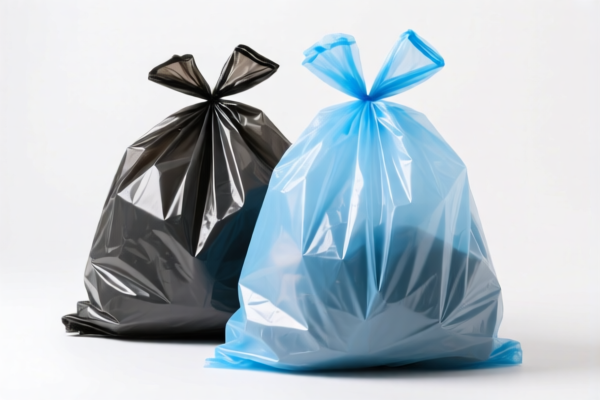
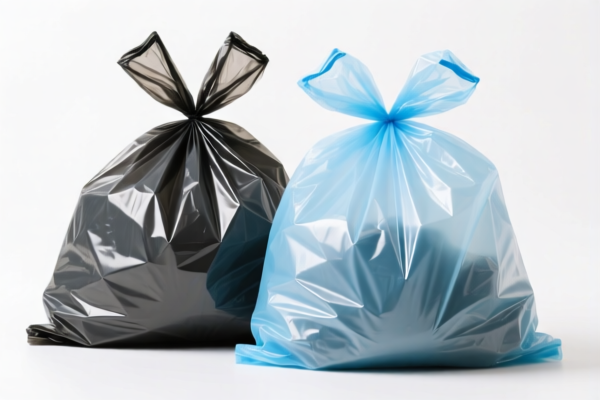
Waste Plastic Garbage
CN → US| HS编码 | 关税税率 | 原产国 | 目的国 | 文档 |
|---|---|---|---|---|
| 3915900090 | 35.0% | CN | US | 官方文档 |
| 3926909989 | 22.8% | CN | US | 官方文档 |
| 3915100000 | 35.0% | CN | US | 官方文档 |
| 7020004000 | 41.6% | CN | US | 官方文档 |
| 7020006000 | 40.0% | CN | US | 官方文档 |
商品图片


AI分析
🗑️ Waste Plastic Garbage (Plastic Scrap & Waste)
🌐 HS Code Reference & Customs Clearance Guide | 2026 Latest Tariff Analysis | Professional Compliance Strategy
📌 I. Product Definition & Classification: What is "Waste Plastic" really?
Plastic waste, often referred to as "garbage" in informal contexts, refers to discarded plastic materials, shavings, flakes, or scrap generated from manufacturing processes, consumption, or recycling facilities. In international trade, these materials are strictly regulated under Chapter 39 (Plastics and Articles Thereof), specifically heading 3915 (Waste, Parings and Scrap, of Plastics).
However, not all plastic waste is created equal. The classification depends heavily on: 1. Polymer Type: Is it Polyethylene (PE), Polypropylene (PP), Polystyrene (PS), Polyethylene Terephthalate (PET), or mixed/other plastics? 2. Physical Form: Is it loose scrap, granules, or compacted bales? 3. Contamination Level: Is it clean industrial scrap or contaminated municipal waste?
⚠️ Key Distinction:
- If the waste is specifically PET (Polyethylene Terephthalate) bottles or flakes, it falls under a different subheading than general mixed or other plastic waste.
- If the material is deemed "waste" but retains significant polymer integrity, it may be classified under 3915.10 (if PE/PP) or 3915.90 (if other).
- Note: Some customs authorities may classify heavily contaminated or mixed plastic waste under 3926 (Other articles of plastics) if it is considered a finished "article" rather than raw material, though this is less common for pure scrap.
📦 II. HS Code Classification Details (2026 Latest Tariff Authority Match)
Based on the provided data, here are the three applicable HS Codes for Waste Plastic, along with their specific criteria and tax implications.
| HS Code | Product Description | Key Classification Criteria | Total Tax Rate (China Origin → US) |
|---|---|---|---|
3915.90.00.90 |
Other Plastic Waste/Scrap | General plastic waste not specified elsewhere. Does not include PET. Fits broad "waste/scrap" morphology without specific polymer conflict (other than PET). | 35.0% |
3926.90.99.89 |
Other Plastic Articles | Treated as "Plastic Articles" rather than raw scrap. No specific polymer conflict noted. Often used for mixed or processed plastic waste that doesn't fit standard 3915 subheadings perfectly. | 22.8% |
3915.10.00.00 |
Waste of Polyethylene (PE) | Must be Polyethylene (PE) or Polypropylene (PP) waste. Fits "waste, parings, and scrap" morphology specifically for these polymers. | 35.0% |
🔍 Critical Note:
-3915.10.00.00is strictly for PE/PP waste. If your plastic is PE or PP, this is the most accurate code but carries the highest tariff.
-3915.90.00.90is the default for non-PET, non-PE/PP plastic waste (e.g., PS, PVC, mixed plastics).
-3926.90.99.89is a lower-tariff alternative if the product can be argued as a "plastic article" rather than raw scrap, but requires strong justification that it doesn't fit 3915 categories or is processed into a form resembling an article.
💰 III. 2026 Latest Tariff Rate Breakdown (Including Surcharges & Policy Adjustments)
✅ Applicable Country: United States (US)
✅ Origin: China (CN)
✅ Effective Date: Current rates apply (Section 301 & IEEPA provisions active)
🎯 1. 3915.90.00.90 —— Other Plastic Waste/Scrap (Non-PET)
| Item | Content |
|---|---|
| Base Tariff | 0.0% (ad valorem) |
| Section 301 Surcharge | +25.0% (Standard additional duty) |
| Section 122 (IEEPA) Surcharge | +10.0% (Targeting Chinese imports) |
| Total Tax Rate | 35.0% |
| Tax Calculation | CIF Value × 35% |
| De Minimis Exemption | ❌ Not Available (deny_de_minimis) |
| Legal Authority Path | Section 301:3915.90.00.90 → IEEPA:9903.01.24 → USITC:3915.90.00.90 → FOOTNOTE:122 |
📌 Explanation:
- This code represents general plastic scrap (excluding PE/PP and PET).
- While the base tariff is low (0%), the 35% combined tariff is significant.
- No de minimis exemption applies, meaning even small shipments are subject to full tax calculation.
🎯 2. 3926.90.99.89 —— Other Plastic Articles (Alternative Classification)
| Item | Content |
|---|---|
| Base Tariff | 5.3% |
| Section 301 Surcharge | +7.5% |
| Section 122 (IEEPA) Surcharge | +10.0% |
| Total Tax Rate | 22.8% |
| Tax Calculation | CIF Value × 22.8% |
| De Minimis Exemption | ❌ Not Available (deny_de_minimis) |
| Legal Authority Path | Section 301:3926.90.99.89 → IEEPA:9903.01.24 → USITC:3926.90.99.89 → FOOTNOTE:122 |
📌 Explanation:
- This is the most cost-effective option at 22.8%.
- However, it requires careful classification justification. You must demonstrate that the plastic waste is treated as an "article" (e.g., processed pellets, baled recyclables ready for reuse) rather than raw waste.
- Risk: If customs determines it is raw scrap, they may reclassify it to 3915, leading to back taxes and penalties.
🎯 3. 3915.10.00.00 —— Waste of Polyethylene (PE) or Polypropylene (PP)
| Item | Content |
|---|---|
| Base Tariff | 0.0% |
| Section 301 Surcharge | +25.0% |
| Section 122 (IEEPA) Surcharge | +10.0% |
| Total Tax Rate | 35.0% |
| Tax Calculation | CIF Value × 35% |
| De Minimis Exemption | ❌ Not Available (deny_de_minimis) |
| Legal Authority Path | Section 301:3915.10.00.00 → IEEPA:9903.01.24 → USITC:3915.10.00.00 → FOOTNOTE:122 |
📌 Explanation:
- This code is mandatory if your plastic waste is exclusively PE or PP.
- Despite being a "cleaner" waste type, it faces the highest tariff (35%).
- Do not misclassify PE/PP waste as "other plastic" (3915.90) to avoid higher scrutiny, as chemical analysis can easily disprove this.
🛠️ IV. Customs Clearance Practical Advice (Real-World Pitfall Guide)
✅ 1. Required Documentation Checklist
| Document | Mandatory | Notes |
|---|---|---|
| ✅ Commercial Invoice | ✔️ | Must specify "Plastic Waste/Scrap" and polymer type (e.g., "PE Waste") |
| ✅ Packing List | ✔️ | Detail weight, volume, and packaging type (bales, bulk) |
| ✅ Certificate of Composition | ✔️ | Crucial: Lab test or manufacturer certificate stating polymer makeup (PE, PP, PS, Mixed, etc.) |
| ✅ Waste Manifest | ✔️ | For cross-border movement of waste, ensure compliance with Basel Convention if applicable |
| ✅ Photos of Cargo | ✔️ | Show material state (flakes, pellets, bales) to support classification |
| ✅ Declaration of Non-Hazardous | ✔️ | Confirm no hazardous contaminants (chemicals, batteries, etc.) |
✅ 2. Classification Strategy & Declaration Tips
🔥 Golden Rule: "Material Defines Code, Form Defines Subheading, Tax Defines Strategy!"
| Scenario | Recommended HS Code | Why? |
|---|---|---|
| Mixed Plastic Waste (PS, PVC, Mixed) | 3915.90.00.90 |
Default for non-PE/PP, non-PET waste. Safe but high tax (35%). |
| Pure PE or PP Waste | 3915.10.00.00 |
Mandatory for PE/PP. No choice. High tax (35%). |
| Processed Plastic Recyclables (e.g., clean bales/pellets) | 3926.90.99.89 |
Try to argue as "articles" for lower tax (22.8%). Requires strong evidence of processing. |
| PET Bottle Flakes | NOT Listed in Data | Typically 3915.30.00.00 or similar. Not covered in provided data. Handle separately. |
⚠️ Warning:
- Do NOT misdeclare PE waste as "other plastic" to avoid the 35% tariff. Customs can perform FTIR tests to identify polymers. Misclassification leads to seizure, fines, and blacklisting.
- Do NOT declare mixed waste as3926unless it is clearly processed into a usable form. If it's loose scrap, it will be rejected as 3926 and reassigned to 3915.
✅ 3. Special Cases & Mitigation
| Situation | Handling Advice |
|---|---|
| High Tax Burden (35%) | Consider sourcing from non-China origins (e.g., Vietnam, Mexico) if possible. These may qualify for IEEPA exemptions or lower Section 301 rates. |
| Mixed Plastic Waste | Separate waste streams if feasible. Pure PE/PP goes to 3915.10. Pure PET goes to PET-specific codes. Mixed stays at 3915.90. |
| Pre-Clearance Ruling | Highly Recommended: Submit an Advance Ruling to CBP with samples and composition reports to lock in the HS Code and avoid post-clearance audits. |
🌍 V. Global Market Comparison (2026)
| Country/Region | Recommended HS Code (Example) | Estimated Tariff (China Origin) | Notes |
|---|---|---|---|
| 🇺🇸 USA | 3915.10.00.00 / 3915.90.00.90 |
35.0% | High due to Section 301 + IEEPA. |
| 🇨🇳 China (Import) | 3915.10.00.00 / 3915.90.00.00 |
0%~5% | Often zero duty for recycled material, but strict environmental import controls. |
| 🇪🇺 EU | 3915.10.00.00 / 3915.90.00.00 |
0% (if recyclable) | CBAM may apply. Strict Basel Convention compliance required. |
| 🇯🇵 Japan | 3915.10.00.00 / 3915.90.00.00 |
0%~5% | Depends on waste type and recycling status. |
📌 Conclusion:
- The USA is the most expensive market for Chinese-origin plastic waste due to 35% total tariffs.
- Cost optimization should focus on supply chain diversification (non-China origin) or classification accuracy to ensure no penalties.
📌 VI. Common Mistakes & Pitfalls (Learn from Others' Errors)
❌ Mistake 1: Declaring PE/PP waste as "Other Plastic Waste" (3915.90)
👉 Result: CBP performs FTIR test, finds PE/PP, reassigned to 3915.10, applies 35% tax + penalties.
❌ Mistake 2: Declaring Mixed Waste as "Plastic Articles" (3926.90)
👉 Result: CBP rejects as "scrap," forces reclassification to 3915.90, delays shipment by weeks.
❌ Mistake 3: Ignoring IEEPA 10% Surcharge
👉 Result: Underpayment of duties, leading to back taxes and interest upon audit.
❌ Mistake 4: Using "Garbage" as a Product Name
👉 Result: Vague description leads to customs queries. Use precise terms: "Recycled Polyethylene (PE) Plastic Scrap, Clean Flakes."
✅ Correct Practice:
"Plastic Waste: Polyethylene (PE) Granules, Recycled, Non-Hazardous, Baled, HS Code: 3915.10.00.00"
🎯 VII. Conclusion: Precision in Classification Saves Money!
🎯 Remember:
🔹 "Material Matters: PE/PP = 3915.10 (35%), Mixed = 3915.90 (35%), Articles = 3926.90 (22.8%)"
🔹 "35% Tax is High; Justify 22.8% with Processed Articles"
🔹 "Always Declare Polymer Type; Ambiguity Leads to Audits"
📌 Pro Tip:
If your plastic waste is not from China (e.g., from Southeast Asia), you may exempt the 10% IEEPA surcharge, reducing the total tax burden significantly.
Recommendation:
📞 Consult a Licensed Customs Broker + Submit Sample for FTIR Analysis + Apply for CBP Advance Ruling
🚀 Avoid Audits, Ensure Smooth Clearance, Maximize Profit Margins!
✨ Expert Customs Clearance Starts with Accurate Classification!
💼 Every Percent of Tax Saved is Pure Profit!
用户评价
关于 HS 编码归类
协调制度(HS)是由世界海关组织(WCO)制定的国际贸易商品分类标准。全球 200 多个国家采用 HS 系统作为海关关税、贸易统计和进出口监管的基础。
每个 HS 编码遵循以下层级结构:
- 章(2 位)——商品大类(例如:第 84 章:机器和机械设备)
- 品目(4 位)——章内的更具体分类
- 子目(6 位)——国际通用细分,所有 WCO 成员国统一使用
- 本国细分(8-10 位)——各国自行扩展的细分编码,如美国 HTSUS 10 位编码
正确的 HS 编码归类对于顺利通关、准确缴纳关税和遵守贸易法规至关重要。错误归类可能导致海关延误、多缴关税或罚款。
从CN进口到US时,适用的关税税率可能包括:
- 最惠国(MFN)税率——适用于 WTO 成员国的标准关税税率
- 普通税率——适用于无贸易协定国家
- 贸易救济关税——附加关税,如 301 条款(反倾销)、232 条款(国家安全)或反补贴税
本页内容仅供参考。如需正式归类,请咨询当地海关或持牌报关代理。