Waste Printed Paper
CN → US| HS编码 | 关税税率 | 原产国 | 目的国 | 文档 |
|---|---|---|---|---|
| 4707900000 | 35.0% | CN | US | 官方文档 |
| 4707100000 | 35.0% | CN | US | 官方文档 |
| 4707300040 | 35.0% | CN | US | 官方文档 |
商品图片
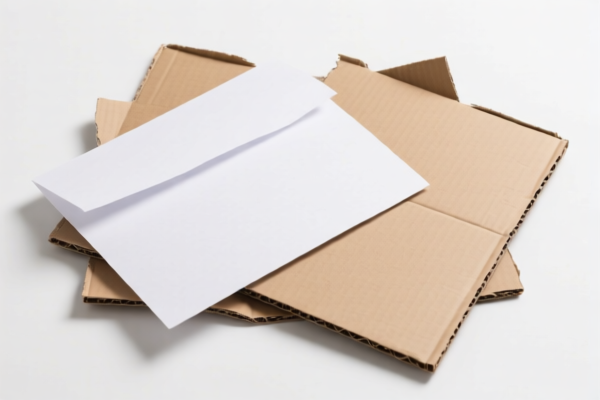
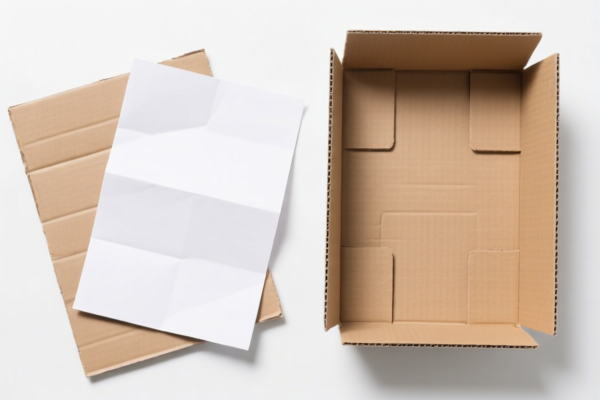
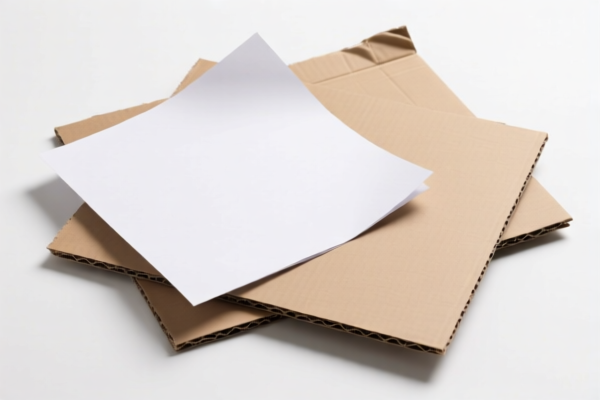
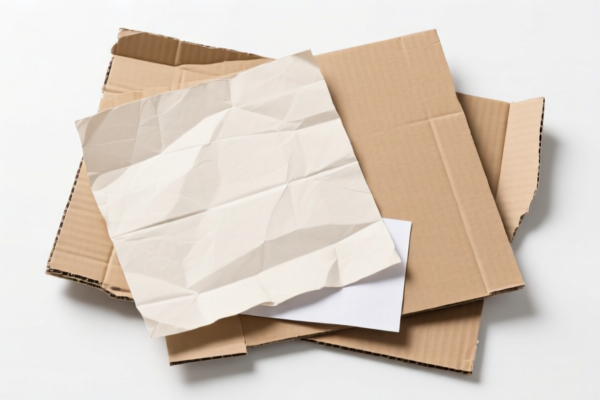
AI分析
🗑️ Waste Printed Paper (Recycled Paper & Paperboard)
🌐 HS Code Reference & Customs Clearance Guide | 2026 Latest Tariff Analysis | Professional Entry Strategy
📌 I. Product Definition & Classification: What Exactly Is "Waste Printed Paper"?
Waste Printed Paper refers to discarded or recycled paper products that have previously been used for printing, writing, or packaging. In international trade, this category is strictly regulated due to environmental concerns and trade restrictions on solid waste. It is generally classified under Chapter 47 of the Harmonized System, specifically within the subheadings for waste paper and paperboard.
The classification depends on the origin, condition, and material composition of the waste: * Unbleached Kraft Paper/Cardboard Waste: Includes old corrugated containers (OCC) and brown kraft paper. * Mixed/Odd Waste Paper: Includes used office paper, newspapers, and other printed materials not covered by specific subheadings. * General Waste Paper: A catch-all for unclassified paper waste.
⚠️ Critical Distinction:
- If the paper is unbleached and primarily consists of Kraft or corrugated fibers, it falls under specific subheadings (e.g., 4707.10).
- If it is mixed, bleached, or unclassified, it falls under general waste categories (e.g., 4707.90 or 4707.30).
- Note: Strict environmental regulations apply. Ensure the waste meets the "non-hazardous" criteria for recycling.
📦 II. HS Code Classification Details (2026 Latest Tariff Authority对照)
| HS Code | Product Description | Application Scenario | Material/Condition |
|---|---|---|---|
4707.10.00.00 |
Waste and scrap of unbleached kraft paper or of corrugated paper or paperboard | Old Corrugated Containers (OCC), Brown Kraft waste, Unbleached Packaging Board | ✅ Unbleached, Kraft/Corrugated |
4707.30.00.40 |
Waste and scrap of other paper or paperboard (not specified elsewhere) | Mixed Printed Paper, Office Paper Waste, Non-Kraft Printed Waste | ✅ Mixed/Other |
4707.90.00.00 |
Waste and scrap of paper and paperboard (not elsewhere specified) | Unclassified Waste Paper, General Recycled Paper Scraps | ✅ Unclassified/General |
🔍 Key Reminder:
-4707.10is for Unbleached materials (Brown/Kraft). If the paper is white/bleached but classified as "waste," it does not fit here.
-4707.30and4707.90cover the rest. The distinction between 30 and 90 often depends on the specific national tariff line granularity. In this dataset, both incur the same high tariff structure.
- Recycling Purpose: These HS codes are for materials destined for recycling/reprocessing, not for reuse as printing medium.
💰 III. 2026 Latest Tariff Rate Detailed Analysis (Including Surtaxes & Policy Add-ons)
✅ Applicable Country: United States (US)
✅ Origin: China (CN)
✅ Effective Date: November 10, 2025 (and subsequent imports)
🎯 1. 4707.10.00.00 – Waste of Unbleached Kraft or Corrugated Paper
| Item | Content |
|---|---|
| Base Tariff Rate | 0% (ad valorem) |
| USITC Surtax (Section 301) | +25% (Add-on Tariff) |
| Section 122 Tariff | +10% (Specific Clause for Paper Waste) |
| Total Tax Rate | 35.0% |
| Tax Calculation | CIF Value × 35% |
| De Minimis Eligibility | ❌ No (Cannot use $800 de minimis exemption) |
| Legal Basis Path | Section 301: 9903.88.01 → Section 122: 9903.01.24 → USITC: 4707.10.00.00 |
📌 Explanation:
- "Base 0%": Standard Most Favored Nation (MFN) duty is often low or zero for raw recyclable materials.
- "25% Section 301": This is the major trade war tariff on Chinese goods.
- "10% Section 122": A specific additional duty applied to certain paper products to protect domestic recycling industries.
- Total 35%: This is a high effective tariff. It significantly reduces the profitability of importing waste paper from China to the US for recycling.
🎯 2. 4707.30.00.40 – Other Waste of Paper or Paperboard
| Item | Content |
|---|---|
| Base Tariff Rate | 0% |
| USITC Surtax (Section 301) | +25% |
| Section 122 Tariff | +10% |
| Total Tax Rate | 35.0% |
| Tax Calculation | CIF Value × 35% |
| De Minimis Eligibility | ❌ No |
| Legal Basis Path | Section 301: 9903.88.01 → Section 122: 9903.01.24 → USITC: 4707.30.00.40 |
📌 Note:
- Same tax structure as4707.10.
- Applies to mixed printed paper, office waste, and other non-Kraft waste.
- Environmental compliance (e.g., EPA standards for solid waste) is critical here.
🎯 3. 4707.90.00.00 – Waste of Paper and Paperboard (Unclassified)
| Item | Content |
|---|---|
| Base Tariff Rate | 0% |
| USITC Surtax (Section 301) | +25% |
| Section 122 Tariff | +10% |
| Total Tax Rate | 35.0% |
| Tax Calculation | CIF Value × 35% |
| De Minimis Eligibility | ❌ No |
| Legal Basis Path | Section 301: 9903.88.01 → Section 122: 9903.01.24 → USITC: 4707.90.00.00 |
📌 Note:
- This is the fallback category for waste paper that doesn't fit specific descriptions.
- Risk: Misclassification is common. If you declare "Mixed Waste" but it's actually clean OCC, you might face penalties or audits.
- Cost Impact: The 35% tax applies uniformly, making cost control essential.
🛠️ IV. Customs Clearance Practical Advice (Real-World Pitfall Guide)
✅ 1. Required Documentation Checklist (Non-Negotiable)
| Document | Must Provide | Description |
|---|---|---|
| ✅ Commercial Invoice | ✔️ | Clearly state "Waste Paper," HS Code, Origin, and CIF Value. |
| ✅ Packing List | ✔️ | Detail bale weights, dimensions, and number of bales. |
| ✅ Certificate of Origin | ✔️ | Crucial for determining eligibility for surtaxes. |
| ✅ Environmental Compliance Certificate | ✔️ | Proof that waste is non-hazardous and meets EPA standards. |
| ✅ Bill of Lading (B/L) | ✔️ | Must match invoice and packing list exactly. |
| ✅ Supplier Declaration | ✔️ | Confirm material composition (e.g., % Kraft, % Mixed). |
✅ 2. Declaration Tips (Key Mantras)
🔥 "Classify by Material, Declare by Volume, Avoid Misclassification!"
| Scenario | Correct Declaration | Wrong Practice |
|---|---|---|
| Old Corrugated Containers (OCC) | 4707.10.00.00 |
Misdeclaring as 4707.90 → Audit Risk |
| Mixed Office Paper Waste | 4707.30.00.40 |
Misdeclaring as 4707.10 → Rejection |
| Unclassified General Waste | 4707.90.00.00 |
No clear description → Delay |
| Clean vs. Dirty Paper | Specify cleanliness | Hiding contamination → Customs Hold |
✅ 3. Special Circumstances Handling
| Situation | Handling Advice |
|---|---|
| Contaminated Paper | Must declare explicitly. If contaminated with plastic/food, it may be classified as solid waste and banned. |
| Baled vs. Loose | Ensure bales are secure and labeled. Loose paper may be rejected for hygiene/safety reasons. |
| Origin Tracing | If paper is mixed from multiple sources, the primary origin determines the tariff. |
| Environmental Checks | Be prepared for EPA inspections. Non-compliance leads to deportation or destruction. |
🌍 V. Global Market Clearance Comparison (2026 Latest)
| Country/Region | Recommended HS Code | Tariff (China Origin) | Certification Requirements | Remarks |
|---|---|---|---|---|
| 🇺🇸 USA | 4707.10.00.00 / 4707.30.00.40 / 4707.90.00.00 |
35% (Total) | EPA Compliance | High surtaxes; strict waste rules |
| 🇨🇳 China | 4707.10 / 4707.30 |
0-5% | GB Standards | Import restrictions on solid waste |
| 🇪🇺 EU | 4707.10 / 4707.30 |
0% (Often) | REACH, Waste Shipment Reg. | Strict eco-labels; ban on non-recyclables |
| 🇯🇵 Japan | 4707.10 / 4707.30 |
0-5% | JIS Standards | High quality standards for recycled pulp |
📌 Conclusion:
- USA imposes a 35% total tariff on Chinese waste paper, making it expensive.
- EU and Japan have lower or zero tariffs but stricter environmental certifications.
- Profitability depends on the price difference between domestic recycled pulp and imported waste paper after the 35% tax.
📌 VI. Common Mistakes & Pitfall Guide (Lessons Learned)
❌ Mistake 1: Declaring "Waste Paper" as "New Paper" to avoid tariffs
👉 Consequence: Severe penalties, fines, and blacklisting. Customs can detect material age and contamination.
❌ Mistake 2: Mixing different types of waste paper in one shipment without clear separation
👉 Consequence: Classification ambiguity. May be forced into the highest-tariff or most-restricted category.
❌ Mistake 3: Ignoring Section 122 Tariff
👉 Consequence: Underpayment. The 10% add-on is specific and often overlooked.
❌ Mistake 4: Failing to provide Environmental Compliance Docs
👉 Consequence: Cargo held at port. EPA may reject shipment as hazardous waste.
✅ Correct Approach:
"Unbleached Kraft Paper Waste, Baled, Recycled Material, Origin: China, EPA Compliant, HS: 4707.10.00.00"
🎯 VII. Conclusion: Professional Declaration, Cost Control, Efficiency!
🎯 Remember the Mantra:
🔹 "Classify by Fiber, Declare by Volume, Tax is 35%, Avoid Hazards!"
🔹 "HS Code Determines Cost, 35% is the Floor, Misclassification Means Doom!"
📌 Pro Tip:
If your waste paper is cleaner or processed (e.g., pre-shredded), ensure it still meets the "waste" definition. Some processed materials might be reclassified, potentially changing the tariff.
Recommendation:
📞 Consult a Customs Broker + Provide Sample Analysis + Verify EPA Status
🚀 Ensure Smooth Clearance, Compliant Trade, and Profit Margins!
✨ Professional Clearance Starts with Accurate Classification!
💼 Every Percent of Tariff Counts in the Recycling Business!
用户评价
关于 HS 编码归类
协调制度(HS)是由世界海关组织(WCO)制定的国际贸易商品分类标准。全球 200 多个国家采用 HS 系统作为海关关税、贸易统计和进出口监管的基础。
每个 HS 编码遵循以下层级结构:
- 章(2 位)——商品大类(例如:第 84 章:机器和机械设备)
- 品目(4 位)——章内的更具体分类
- 子目(6 位)——国际通用细分,所有 WCO 成员国统一使用
- 本国细分(8-10 位)——各国自行扩展的细分编码,如美国 HTSUS 10 位编码
正确的 HS 编码归类对于顺利通关、准确缴纳关税和遵守贸易法规至关重要。错误归类可能导致海关延误、多缴关税或罚款。
从CN进口到US时,适用的关税税率可能包括:
- 最惠国(MFN)税率——适用于 WTO 成员国的标准关税税率
- 普通税率——适用于无贸易协定国家
- 贸易救济关税——附加关税,如 301 条款(反倾销)、232 条款(国家安全)或反补贴税
本页内容仅供参考。如需正式归类,请咨询当地海关或持牌报关代理。