Waste Rubber and Solvent Mixture
CN → US| HS编码 | 关税税率 | 原产国 | 目的国 | 文档 |
|---|---|---|---|---|
| 4005200000 | 35.0% | CN | US | 官方文档 |
| 3915900090 | 35.0% | CN | US | 官方文档 |
| 3824994900 | 41.5% | CN | US | 官方文档 |
| 3824992900 | 41.5% | CN | US | 官方文档 |
| 3825490000 | 35.0% | CN | US | 官方文档 |
商品图片
AI分析
🧪 Waste Rubber and Solvent Mixture (Industrial Chemical Waste/By-product)
🌐 HS Code Classification Guide & Customs Clearance Strategy | 2026 Tariff Analysis | Professional Compliance
📌 I. Product Definition: What is this "Mixture"?
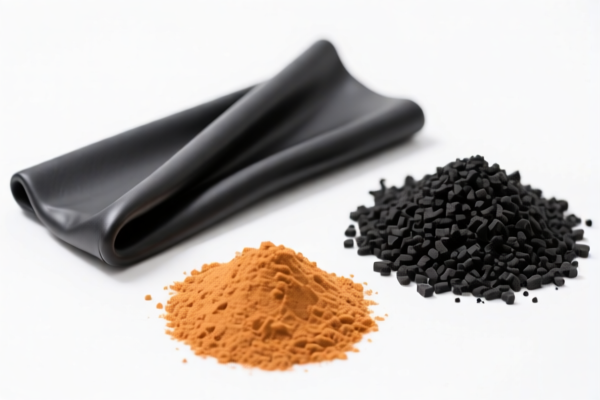
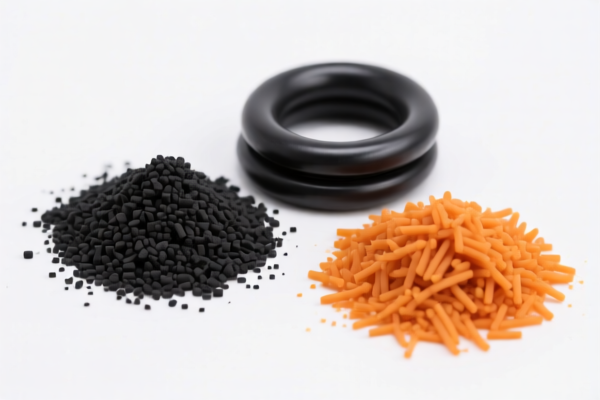
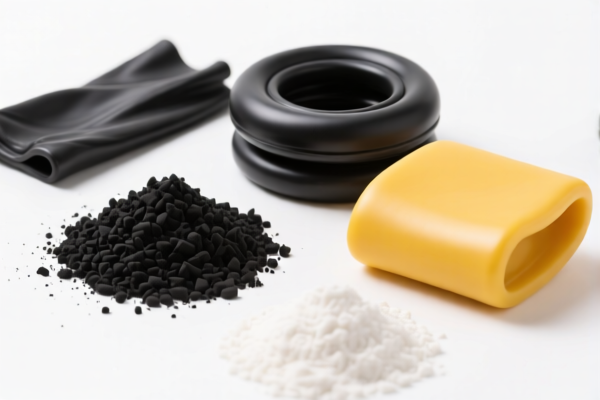
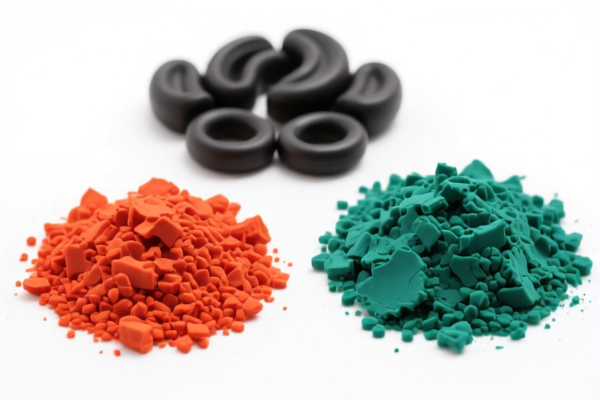
This product is a complex industrial residue consisting of a mixture of waste rubber materials (unvulcanized or vulcanized scrap) and solvent residues (hydrocarbon mixtures or organic solvents). It is not a usable consumer good but a chemical industrial by-product or waste material requiring specific hazardous or non-hazardous chemical classification depending on its exact composition and state.
⚠️ Key Classification Challenge:
The HS Code depends heavily on the dominant characteristic of the mixture: - Is it primarily waste rubber being processed for recovery? → Rubber Category
- Is it primarily solvent waste contaminated with rubber particles? → Waste Solvent Category
- Is it a generic chemical mixture without clear dominance? → General Chemical Category
📦 II. HS Code Classification Breakdown (2026 Latest Tariff Schedule)
Based on the provided data, there are five potential HS Codes for this mixture. The correct choice depends on the specific material dominance and chemical nature.
| HS Code | Product Description | Match Logic (Why this code?) | Material Conflict? |
|---|---|---|---|
4005.20.00.00 |
Rubber Compounds, Unvulcanized | Matches if the mixture is primarily unvulcanized rubber compounds (rubber chemicals + raw rubber). Classified under "Rubber Mixtures." | ❌ No conflict. Fits "unvulcanized rubber compounds." |
3915.90.00.90 |
Plastic Waste, Other | Matches if the "rubber" component is actually plastic waste or if the mixture is dominated by plastic scrap containing solvents. | ❌ No conflict. Fits "plastic waste mixture." |
3824.99.49.00 |
Other Chemical Products, Not Elsewhere Specified | Matches if the mixture is a hydrocarbon mixture or generic chemical blend that doesn’t fit specific waste categories. Uses "catch-all" logic. | ❌ No conflict. Fits "hydrocarbon mixtures." |
3824.99.29.00 |
Other Chemical Preparations, Not Elsewhere Specified | Matches if the mixture is a chemical industry preparation (e.g., binders, additives, mixtures) not specifically listed elsewhere. | ❌ No conflict. Fits "chemical industry mixtures." |
3825.49.00.00 |
Waste Solvents (Organic) | Matches if the key component is waste solvent (organic) with rubber residues. Specifically for "chemical industry residues and waste organic solvents." | ❌ No conflict. Fits "waste solvent characteristics." |
🔍 Critical Note:
- If the product is primarily waste rubber,4005.20.00.00is the most logical fit if it’s an unvulcanized compound.
- If the product is primarily waste solvent,3825.49.00.00is the most precise fit.
- If the composition is ambiguous or a generic chemical mix,3824.99.49.00or3824.99.29.00are the "catch-all" options.
- Do not misclassify as pure plastic waste (3915) unless it is indeed plastic, not rubber.
💰 III. 2026 Tariff Rate Details (Detailed Breakdown)
✅ Applicable Country: United States (US)
✅ Origin: China (CN)
✅ Effective Date: November 10, 2025 (for subsequent imports)
✅ Tariff Structure: Includes Base Tariff + Section 301 Tariff (25%) + IEEPA Tariff (10%)
🎯 1. 4005.20.00.00 – Unvulcanized Rubber Compounds
| Item | Details |
|---|---|
| Base Tariff | 0.0% |
| Section 301 Tariff | 25.0% |
| IEEPA Tariff | 10.0% |
| Total Tax Rate | 35.0% |
| Calculation | CIF Value × 35% |
| De Minimis Exemption | ❌ Not Eligible (Deny de minimis) |
| Legal Basis | IEEPA:9903.01.25 → USITC:4005.20.00.00 → FOOTNOTE:301 |
📌 Explanation:
- Rubber compounds are subject to Section 301 tariffs (25%) and IEEPA tariffs (10%) due to their origin in China.
- Total duty burden is 35%, which is significant for bulk chemical/rubber imports.
🎯 2. 3915.90.00.90 – Plastic Waste, Other
| Item | Details |
|---|---|
| Base Tariff | 0.0% |
| Section 301 Tariff | 25.0% |
| IEEPA Tariff | 10.0% |
| Total Tax Rate | 35.0% |
| Calculation | CIF Value × 35% |
| De Minimis Exemption | ❌ Not Eligible |
| Legal Basis | IEEPA:9903.01.25 → USITC:3915.90.00.90 → FOOTNOTE:301 |
📌 Explanation:
- Even though it’s "plastic waste," the China-origin tariff still applies.
- Same 35% total rate as rubber compounds.
🎯 3. 3824.99.49.00 – Other Chemical Products (Hydrocarbon Mixtures)
| Item | Details |
|---|---|
| Base Tariff | 6.5% |
| Section 301 Tariff | 25.0% |
| IEEPA Tariff | 10.0% |
| Total Tax Rate | 41.5% |
| Calculation | CIF Value × 41.5% |
| De Minimis Exemption | ❌ Not Eligible |
| Legal Basis | IEEPA:9903.01.25 → USITC:3824.99.49.00 → FOOTNOTE:301 |
📌 Explanation:
- Higher base tariff (6.5%) compared to rubber/plastic waste.
- Total rate is 41.5%, making it the most expensive option among the five.
- Use this only if the mixture is clearly a generic chemical product not fitting other categories.
🎯 4. 3824.99.29.00 – Other Chemical Preparations
| Item | Details |
|---|---|
| Base Tariff | 6.5% |
| Section 301 Tariff | 25.0% |
| IEEPA Tariff | 10.0% |
| Total Tax Rate | 41.5% |
| Calculation | CIF Value × 41.5% |
| De Minimis Exemption | ❌ Not Eligible |
| Legal Basis | IEEPA:9903.01.25 → USITC:3824.99.29.00 → FOOTNOTE:301 |
📌 Explanation:
- Same 41.5% total rate as3824.99.49.00.
- Apply if the mixture is a chemical preparation (e.g., binder, additive) not specifically listed as waste.
🎯 5. 3825.49.00.00 – Waste Solvents (Organic)
| Item | Details |
|---|---|
| Base Tariff | 0.0% |
| Section 301 Tariff | 25.0% |
| IEEPA Tariff | 10.0% |
| Total Tax Rate | 35.0% |
| Calculation | CIF Value × 35% |
| De Minimis Exemption | ❌ Not Eligible |
| Legal Basis | IEEPA:9903.01.25 → USITC:3825.49.00.00 → FOOTNOTE:301 |
📌 Explanation:
- If the product is primarily waste solvent, this is the correct and most specific classification.
- 35% total rate, same as rubber/plastic waste.
- Recommended if the solvent content is dominant.
🛠️ IV. Customs Clearance Practical Advice
✅ 1. Required Documentation (Mandatory)
| Document | Must Provide? | Notes |
|---|---|---|
| ✅ Material Safety Data Sheet (MSDS/SDS) | ✔️ | Critical for chemical/waste classification. Must detail composition, hazards, and solvent content. |
| ✅ Commercial Invoice | ✔️ | Clearly describe as "Waste Rubber and Solvent Mixture" – avoid vague terms like "industrial sludge." |
| ✅ Packing List | ✔️ | Detail net/gross weight, number of packages, and container type. |
| ✅ Certificate of Composition | ✔️ | Third-party lab report proving the ratio of rubber to solvent. |
| ✅ Waste Export Permit | ✔️ | If classified as waste, may require export license from origin country. |
| ✅ Hazmat Declaration | ✔️ | If solvents are flammable or hazardous, declare accordingly. |
✅ 2. Declaration Strategy (Key Tips)
🔥 "Declare the Dominant Characteristic, Not the Name!"
| Scenario | Correct HS Code | Incorrect HS Code | Risk |
|---|---|---|---|
| High solvent content (>50%) | 3825.49.00.00 |
4005.20.00.00 |
Customs may reclassify → 35% → 41.5% or penalties |
| High rubber content, unvulcanized | 4005.20.00.00 |
3915.90.00.90 |
Misclassification → potential duty underpayment |
| Ambiguous chemical mix | 3824.99.49.00 |
Vague "chemical waste" | High base tariff (6.5%) → 41.5% total |
| Plastic waste (not rubber) | 3915.90.00.90 |
4005.20.00.00 |
Wrong material → fines |
📌 Golden Rule:
- Do NOT use generic terms like "waste" or "sludge" in the HS description.
- DO specify: "Unvulcanized rubber compounds containing solvent residues" or "Waste organic solvents with rubber particulates."
✅ 3. Special Cases & Pitfalls
| Situation | Handling Advice |
|---|---|
| Hazardous Waste | If solvents are flammable (e.g., acetone, toluene), declare as Hazmat. Additional handling fees apply. |
| Recycled Material Claim | If claiming as "recycled rubber," provide recycling process documentation. Otherwise, classified as waste. |
| Misclassification Risk | If customs suspects misclassification, they may impose penalties + back duties. Always have SDS ready. |
| De Minimis Exemption | ❌ Not available. All five HS codes are subject to Section 301 + IEEPA tariffs. Do not attempt to ship under $800 to avoid duties. |
🌍 V. Global Market Comparison (2026)
| Market | Recommended HS Code | Tariff (China Origin) | Notes |
|---|---|---|---|
| 🇺🇸 USA | 3825.49.00.00 or 4005.20.00.00 |
35% (or 41.5% for 3824 codes) | Highest duty burden. SDS mandatory. |
| 🇪🇺 EU | 3825.40.00 (Waste Solvents) |
Varies (0-6%) | Requires EAW (European Waste Catalogue) code. |
| 🇨🇳 China | 3825.49.00 or 4005.20.00 |
0% (if imported for recycling) | May require import license for waste. |
| 🇯🇵 Japan | 3825.40.00 |
Varies (0-10%) | Strict environmental controls. |
📌 Conclusion:
- USA has the highest effective tariff (35-41.5%) due to Section 301 and IEEPA.
- EU and Japan focus on environmental compliance rather than high tariffs.
- China may allow duty-free import if for recycling purposes with proper licenses.
📌 VI. Common Mistakes & Pitfalls (Learn from Others’ Failures)
❌ Mistake 1: Declaring as "Scrap Rubber" without mentioning solvents
👉 Consequence: Customs reclassifies as chemical waste → Higher duties + fines.
❌ Mistake 2: Using "Plastic Waste" for rubber-containing mixture
👉 Consequence: Misclassification → Penalties + seizure.
❌ Mistake 3: Not providing SDS
👉 Consequence: Shipment detained at customs. No clearance possible.
❌ Mistake 4: Assuming De Minimis ($800) applies
👉 Consequence: Duties applied retroactively + penalties. Chemicals are exempt from de minimis.
✅ Correct Approach:
"Waste Rubber Solvent Mixture, Unvulcanized, Containing Hydrocarbon Solvents, MSDS Provided, For Recycling Purposes"
🎯 VII. Conclusion: Precision in Classification Saves Money!
🎯 Key Takeaways:
🔹 "Know your dominant component: Rubber? →
4005.20.00.00. Solvent? →3825.49.00.00. Ambiguous? →3824.99.49.00(higher duty)."
🔹 "Always provide SDS. No SDS = No Clearance."
🔹 "35% is the baseline duty. 41.5% is the penalty zone. Choose wisely."
📌 Pro Tip:
- If you have recycling licenses in the US, apply for Exemption Codes if available.
- Pre-classify with a customs broker using Sample SDS and Lab Reports.
- Document everything. Customs audits for chemical waste are frequent.
📣 Act Now:
📞 Contact a licensed customs broker → Provide MSDS → Pre-apply for HS Code ruling.
🚀 Avoid delays, fines, and seizures. Clear customs smoothly!
✨ Professional Clearance Starts with Accurate Classification!
💼 Every Dollar Saved is a Dollar Earned!
用户评价
关于 HS 编码归类
协调制度(HS)是由世界海关组织(WCO)制定的国际贸易商品分类标准。全球 200 多个国家采用 HS 系统作为海关关税、贸易统计和进出口监管的基础。
每个 HS 编码遵循以下层级结构:
- 章(2 位)——商品大类(例如:第 84 章:机器和机械设备)
- 品目(4 位)——章内的更具体分类
- 子目(6 位)——国际通用细分,所有 WCO 成员国统一使用
- 本国细分(8-10 位)——各国自行扩展的细分编码,如美国 HTSUS 10 位编码
正确的 HS 编码归类对于顺利通关、准确缴纳关税和遵守贸易法规至关重要。错误归类可能导致海关延误、多缴关税或罚款。
从CN进口到US时,适用的关税税率可能包括:
- 最惠国(MFN)税率——适用于 WTO 成员国的标准关税税率
- 普通税率——适用于无贸易协定国家
- 贸易救济关税——附加关税,如 301 条款(反倾销)、232 条款(国家安全)或反补贴税
本页内容仅供参考。如需正式归类,请咨询当地海关或持牌报关代理。