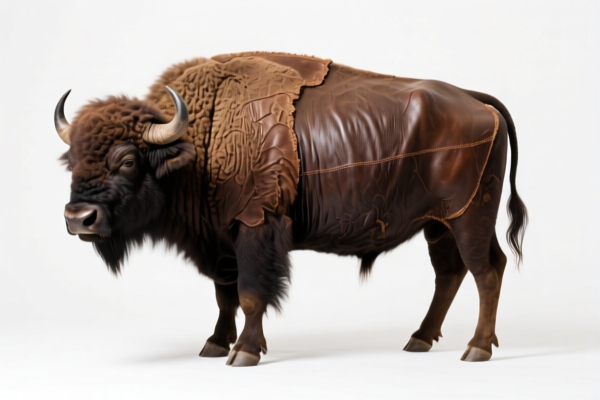
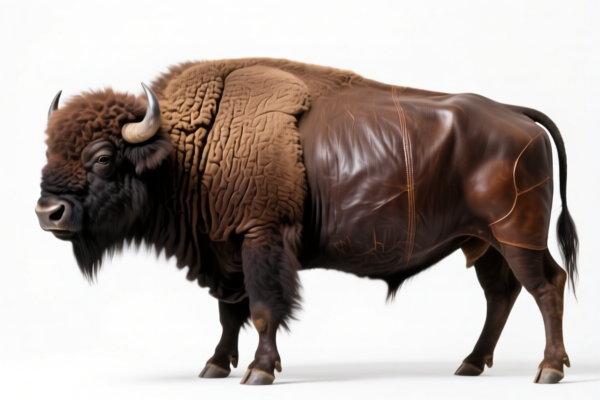
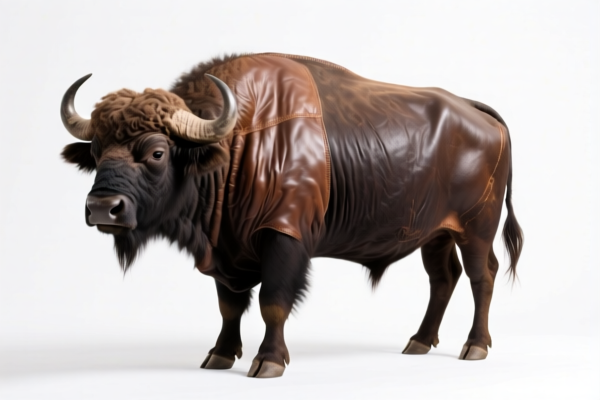
Water Buffalo Full Grain Leather Sheets for Shoe Making
CN → US| HS编码 | 关税税率 | 原产国 | 目的国 | 文档 |
|---|---|---|---|---|
| 4107116010 | 13.3% | CN | US | 官方文档 |
| 4107111020 | 35.0% | CN | US | 官方文档 |
| 4114100000 | 38.2% | CN | US | 官方文档 |
| 4114207000 | 36.6% | CN | US | 官方文档 |
| 4104113060 | 12.4% | CN | US | 官方文档 |
商品图片
AI分析
🐃 Water Buffalo Full Grain Leather Sheets (For Shoe Making)
🌐 HS Code Reference & Customs Clearance Guide | 2026 Latest Tariff Analysis | Professional Clearance Strategy
📌 I. Product Definition & Classification: Understanding "Water Buffalo Leather"
Water Buffalo leather is a premium raw material widely used in footwear manufacturing due to its durability, distinct grain pattern, and breathability. In international trade, it is classified under Chapter 41 (Animal Skin and Fur), specifically heading 4104 (Bovine leather, including buffalo leather) or 4114 (Prepared leather further processed).
The key distinction lies in the finishing process and specific application: * Wet Blue (Wet-Blue): Leather that has been tanned but not yet finished/dyed. It is an intermediate product. * Fully Processed/Finished Leather: Leather that has been dried, drummed, and finished, ready for immediate cutting and sewing.
⚠️ Key Classification Point:
- If the leather is unfinished ("wet blue") and intended for shoe uppers → Often classified under 4107 (Wet-blue or chrome-tanned leather).
- If the leather is fully processed (crusted or finished) → Classified under 4114 or 4104 depending on specific processing steps.
- The HS Code determines the tariff burden significantly, as some codes attract "Section 301" (25%) and "122 Clause" (10%) additional duties.
📦 II. HS Code Classification Details (Based on Provided Data)
| HS Code | Product Description | Material & State | Usage | Total Tax Rate | Tax Breakdown |
|---|---|---|---|---|---|
| 4107.11.60.10 | Wet-blue Bovine Full-Grain Leather for Shoe Uppers | Cow/H Buffalo Leather, Unfinished (Wet-Blue) | Shoe Uppers | 13.3% | Base: 3.3% + 122 Clause: 10% |
| 4107.11.10.20 | Wet-blue Bovine Full-Grain Leather for Shoe Uppers | Cow/H Buffalo Leather, Unfinished (Wet-Blue) | Shoe Uppers | 35.0% | Base: 0.0% + Section 301: 25% + 122 Clause: 10% |
| 4114.10.00.00 | Water Buffalo Full-Grain Leather Sheets (De-haired) | Water Buffalo Leather, Processed | Handicrafts/General | 38.2% | Base: 3.2% + Section 301: 25% + 122 Clause: 10% |
| 4114.20.70.00 | Water Buffalo Full-Grain Leather Sheets (De-haired) | Water Buffalo Leather, Processed | Handicrafts/General | 36.6% | Base: 1.6% + Section 301: 25% + 122 Clause: 10% |
| 4104.11.30.60 | Water Buffalo Full-Grain Leather Sheets (De-haired) | Water Buffalo Leather, Processed | Handicrafts/General | 12.4% | Base: 2.4% + 122 Clause: 10% |
🔍 Critical Observation:
- Codes 4107.11.xxxxxx refer to "Wet-Blue" (unfinished) leather.
- Codes 4114/4104 refer to further processed or finished leather sheets.
- Tax Rates Vary Dramatically: From 12.4% to 38.2% depending on the specific subheading and the presence of Section 301 tariffs.
💰 III. 2026 Latest Tariff Rate Details (Including Additional Duties)
✅ Applicable Country: USA (US)
✅ Origin: China (CN) (Implied by Section 301 and 122 Clause references)
✅ Effective Date: Ongoing (Check latest USITC updates)
🎯 1. 4107.11.60.10 — Wet-Blue Leather for Shoe Uppers (Lowest Duty)
| Item | Content |
|---|---|
| Base Tariff | 3.3% |
| Section 301 Tariff | 0.0% (Exempt or Not Applicable) |
| 122 Clause Tariff | +10% |
| Total Rate | 13.3% |
| Tax Calculation | CIF Value × 13.3% |
| De Minimis Exemption | ❌ Not Applicable (Textiles/Apparel typically excluded) |
| Legal Path | USITC: 4107.11.60.10 → 122 Clause: 10% |
📌 Explanation:
- This code appears to be exempt from the 25% Section 301 tariff, making it the most cost-effective option for wet-blue leather.
- However, it still carries the 10% 122 Clause tariff.
- Suitability: Best if you are importing unfinished (wet-blue) leather and have further finishing capabilities or are selling to tanners.
🎯 2. 4107.11.10.20 — Wet-Blue Leather for Shoe Uppers (High Duty)
| Item | Content |
|---|---|
| Base Tariff | 0.0% |
| Section 301 Tariff | +25% |
| 122 Clause Tariff | +10% |
| Total Rate | 35.0% |
| Tax Calculation | CIF Value × 35.0% |
| De Minimis Exemption | ❌ Not Applicable |
| Legal Path | USITC: 4107.11.10.20 → Section 301: 25% → 122 Clause: 10% |
📌 Explanation:
- Despite being the same "Wet-Blue" category, this specific subheading attracts the full 25% Section 301 tariff.
- Why the difference? Subheadings are often updated. Ensure you are using the correct subheading (60.10 vs 10.20) based on current USITC lists. Misclassification leads to underpayment and penalties.
🎯 3. 4114.10.00.00 & 4114.20.70.00 — Processed Leather (Highest Duties)
| Item | Content |
|---|---|
| Base Tariff | 3.2% (4114.10) / 1.6% (4114.20) |
| Section 301 Tariff | +25% |
| 122 Clause Tariff | +10% |
| Total Rate | 38.2% (4114.10) / 36.6% (4114.20) |
| Tax Calculation | CIF Value × 38.2% / 36.6% |
| De Minimis Exemption | ❌ Not Applicable |
📌 Explanation:
- If the leather is fully processed (not just wet-blue), it falls under 4114.
- All 4114 subheadings attract the 25% Section 301 tariff.
- This is the most expensive option for imported leather.
🎯 4. 4104.11.30.60 — Processed Leather (Low Duty)
| Item | Content |
|---|---|
| Base Tariff | 2.4% |
| Section 301 Tariff | 0.0% (Exempt or Not Applicable) |
| 122 Clause Tariff | +10% |
| Total Rate | 12.4% |
| Tax Calculation | CIF Value × 12.4% |
| De Minimis Exemption | ❌ Not Applicable |
| Legal Path | USITC: 4104.11.30.60 → 122 Clause: 10% |
📌 Explanation:
- Similar to 4107.60.10, this code is exempt from Section 301.
- Suitability: Best for fully processed leather if this specific subheading is applicable to your product description.
🛠️ IV. Customs Clearance Practical Advice (Avoiding Pitfalls)
✅ 1. Preparation Checklist (Essential Documents)
| Document | Required | Notes |
|---|---|---|
| ✅ Commercial Invoice | ✔️ | Must clearly state: "Water Buffalo Leather, Full Grain, Wet-Blue/Finished", HS Code, CIF Value. |
| ✅ Packing List | ✔️ | Detail weight, dimensions, and number of hides/sheets. |
| ✅ Certificate of Origin (CO) | ✔️ | Essential for proving origin (China). May affect Section 301 applicability. |
| ✅ Product Specifications | ✔️ | Include: Thickness, grain type, tanning method (Chrome/Veg), finish status (Wet-Blue vs. Finished). |
| ✅ Photo of Product | ✔️ | Clear photos of the hide/sheet, label, and any markings. |
| ✅ Tariff Classification Ruling | ✔️ | Strongly Recommended: Apply for an Advance Ruling from US CBP to confirm the correct HS Code (4107.60.10 vs 4107.10.20). |
✅ 2. Declaration Strategy (Key Tips)
🔥 "Status Matters: Wet-Blue vs. Finished"
| Scenario | Correct Declaration | Risk if Incorrect |
|---|---|---|
| Unfinished (Wet-Blue) | Use 4107 codes | Using 4104/4114 → Higher duty (38% vs 13%) |
| Finished Leather | Use 4104 or 4114 codes | Using 4107 → Lower duty, but CBP may audit and penalize for underpayment |
| Specific Subheading | Match exact 10-digit code | Using a generic 8-digit code → Delayed clearance, potential audits |
✅ 3. Special Considerations
| Situation | Advice |
|---|---|
| Origin | If the leather is not from China (e.g., Brazil, Italy), Section 301 (25%) does not apply. Total duty drops significantly! |
| Section 301 Exclusion | Check if the specific HS Code was ever excluded from Section 301 tariffs. Some leather codes have been excluded in the past. |
| 122 Clause | This 10% tariff applies to most leather products from China. Budget for it regardless of Section 301. |
| Hydroponic/Chemical Treatment | Ensure all tanning agents comply with REACH (if exporting to EU) or US EPA regulations. |
🌍 V. Global Market Comparison (2026)
| Country/Region | Recommended HS Code | Est. Duty (China Origin) | Key Requirements |
|---|---|---|---|
| 🇺🇸 USA | 4107.11.60.10 / 4104.11.30.60 | 13.3% or 12.4% (Avoid 301 if possible) | Section 301 (25%) if misclassified, 122 Clause (10%) |
| 🇨🇳 China | 4107 / 4104 | 5% - 8% | Standard Import Duty + VAT (13%) |
| 🇪🇺 EU | 4107 / 4104 | 4.7% | CE/REACH Compliance, EORI Number |
| 🇬🇧 UK | 4107 / 4104 | 4.7% | UKCA Marking (if applicable), EORI |
📌 Conclusion:
- USA has the most complex tariff structure due to Section 301 and 122 Clause.
- Minimizing duty: Aim for HS Codes that are exempt from Section 301 (like 4107.11.60.10 and 4104.11.30.60) by ensuring proper classification of "Wet-Blue" vs. "Finished".
- Non-China Origin: If sourcing from Brazil or Italy, avoid Section 301 entirely, reducing duty to base rates only.
📌 VI. Common Mistakes & Pitfalls
❌ Mistake 1: Classifying Finished Leather as Wet-Blue (4107) to avoid Section 301.
👉 Consequence: CBP audit → Back taxes + Penalties (up to 30% of value).
❌ Mistake 2: Using a generic 8-digit HS Code instead of the specific 10-digit US HTS.
👉 Consequence: Delayed clearance, customs holds, and potential misclassification errors.
❌ Mistake 3: Ignoring the 122 Clause (10%).
👉 Consequence: Underpayment of duty. This tax applies to most leather goods from China, regardless of Section 301 status.
❌ Mistake 4: Incorrectly describing the product as "Raw Hide" instead of "Leather".
👉 Consequence: "Raw Hide" has different duties and restrictions. Misdescription leads to compliance issues.
✅ Correct Practice:
"Water Buffalo Leather, Full Grain, Wet-Blue, Chrome Tanned, for Shoe Uppers, HS 4107.11.60.10, Origin China"
🎯 VII. Conclusion: Smart Classification Saves Money
🎯 Key Takeaway:
🔹 "Wet-Blue vs. Finished" is the key to duty savings.
🔹 Target HS Codes: 4107.11.60.10 (13.3%) and 4104.11.30.60 (12.4%) to avoid the 25% Section 301 tariff.
🔹 Avoid 4114 codes (36-38%) unless necessary for finished goods.
📌 Pro Tip:
If you are importing finished leather, check if you can source from non-China origins (e.g., Brazil, India) to bypass Section 301 and 122 Clause duties entirely.
For Chinese-origin leather, consult a customs broker to apply for an Advance Ruling to confirm the correct 10-digit HS Code before shipment.
📣 Action Plan:
📞 Contact a Licensed Customs Broker
📄 Prepare Product Specs (Wet-Blue/Finished, Thickness, Grain)
📊 Compare Duty Rates: 4107.60.10 (13.3%) vs. 4107.10.20 (35.0%)
🚀 Ship Smart, Pay Less, Clear Faster!
✨ Precision in Classification, Profit in Your Pocket!
💼 Your Leather, Your Rules, Your Tariff Strategy!
用户评价
关于 HS 编码归类
协调制度(HS)是由世界海关组织(WCO)制定的国际贸易商品分类标准。全球 200 多个国家采用 HS 系统作为海关关税、贸易统计和进出口监管的基础。
每个 HS 编码遵循以下层级结构:
- 章(2 位)——商品大类(例如:第 84 章:机器和机械设备)
- 品目(4 位)——章内的更具体分类
- 子目(6 位)——国际通用细分,所有 WCO 成员国统一使用
- 本国细分(8-10 位)——各国自行扩展的细分编码,如美国 HTSUS 10 位编码
正确的 HS 编码归类对于顺利通关、准确缴纳关税和遵守贸易法规至关重要。错误归类可能导致海关延误、多缴关税或罚款。
从CN进口到US时,适用的关税税率可能包括:
- 最惠国(MFN)税率——适用于 WTO 成员国的标准关税税率
- 普通税率——适用于无贸易协定国家
- 贸易救济关税——附加关税,如 301 条款(反倾销)、232 条款(国家安全)或反补贴税
本页内容仅供参考。如需正式归类,请咨询当地海关或持牌报关代理。