Water Inflatable Products
CN → US| HS编码 | 关税税率 | 原产国 | 目的国 | 文档 |
|---|---|---|---|---|
| 4016940000 | 39.2% | CN | US | 官方文档 |
| 3926907500 | 14.2% | CN | US | 官方文档 |
| 9503000011 | 10.0% | CN | US | 官方文档 |
| 4016950000 | 21.7% | CN | US | 官方文档 |
| 4016950000 | 21.7% | CN | US | 官方文档 |
商品图片


AI分析
🎈 Water Inflatable Products (Inflatable Toys & Equipment)
🌐 HS Code Reference & Customs Clearance Guide | 2026 Latest Tariff Analysis | Professional Clearance Strategy
📌 I. Product Definition & Classification: What Exactly Are "Water Inflatable Products"?
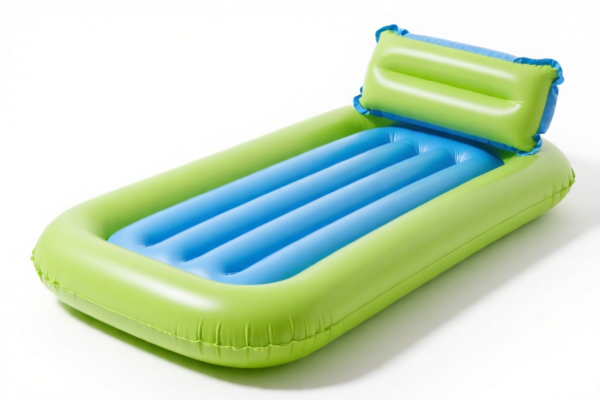
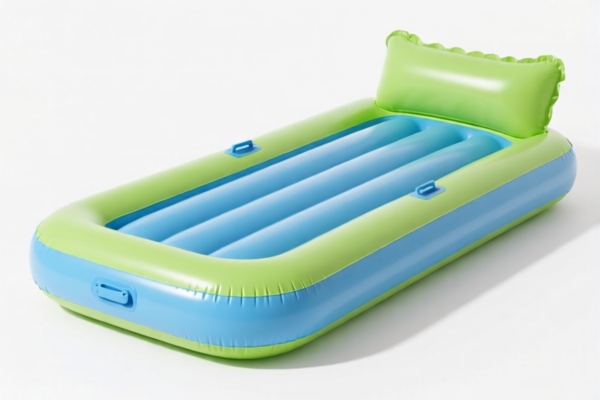
Water inflatable products encompass a wide range of air-filled recreational items used in pools, lakes, oceans, and beaches. These include swim rings, inflatable boats, rafts, water slides, floating loungers, and inflatable toys.
In international trade, classification depends heavily on two factors: 1. Material Composition: Is it made of rubber (vulcanized) or plastic/synthetic materials? 2. Primary Use & Form: Is it considered a "toy," a "general rubber article," or a specific "inflation appliance"?
⚠️ Key Distinction Point:
- If made of Rubber → Likely falls under Chapter 40 (Rubber and articles thereof).
- If made of Plastic/PVC → Likely falls under Chapter 39 (Plastics and articles thereof) or Chapter 95 (Toys).
- Critical Risk: Many inflatables from China face Additional Tariffs under Section 301 and IEEPA, significantly impacting cost.
📦 II. HS Code Classification Details (Based on Provided Data)
Below are the four potential HS Codes derived from the input data, along with their specific tax implications.
| HS Code | Product Description & Summary | Material Inference | Total Tax Rate* |
|---|---|---|---|
| 4016.94.00.00 | Inflatable products, material is vulcanized rubber, fits the description of inflatable forms regardless of airiness. | Rubber | 39.2% |
| 3926.90.75.00 | Inflatable products, material is plastic/synthetic, fits the usage characteristics of inflatable articles. | Plastic/Synthetic | 14.2% |
| 9503.00.00.11 | Inflatable products, form is inflatable, initially judged as rubber or plastic material. Preliminary judgment as Toy. | Rubber/Plastic | 10.0% |
| 4016.95.00.00 | Inflatable products, form matches inflatable articles, material inferred as rubber class. | Rubber | 21.7% |
🔍 Important Note:
- 4016.95.00.00 appears twice in the data: once for general "inflatable products" and once specifically for "Inflatable Toys" made of rubber/plastic. Both carry the same tax rate of 21.7%. - The "Total Tax" includes Basic Tariff, Additional Tariffs (Section 301), and "122 Clause" Tariffs (IEEPA).
💰 III. Detailed Tariff Breakdown (2026 Latest Rates)
✅ Applicable Country: United States (US)
✅ Origin: China (CN) (Implied by "122 Clause" and Section 301 context)
✅ Effective Date: Post-2025 policies (Section 301 + IEEPA)
🎯 1. 4016.94.00.00 —— Rubber Inflatable Articles
| Item | Details |
|---|---|
| Basic Tariff | 4.2% |
| Section 301 Additional Tariff | 25.0% |
| "122 Clause" (IEEPA) Tariff | 10.0% |
| Total Tax Rate | 39.2% |
| Calculation Basis | CIF Value × 39.2% |
| De Minimis Exemption | ❌ Not Eligible |
📌 Explanation:
- Vulcanized rubber inflatables are classified as general rubber articles.
- They face the highest combined tariff (39.2%) due to the 25% Section 301 duty plus the 10% IEEPA surcharge.
- Cost Impact: High. Suitable only for high-margin industrial or specialized rubber inflatables.
🎯 2. 3926.90.75.00 —— Plastic/Synthetic Inflatable Articles
| Item | Details |
|---|---|
| Basic Tariff | 4.2% |
| Section 301 Additional Tariff | 0.0% |
| "122 Clause" (IEEPA) Tariff | 10.0% |
| Total Tax Rate | 14.2% |
| Calculation Basis | CIF Value × 14.2% |
| De Minimis Exemption | ❌ Not Eligible |
📌 Explanation:
- Plastic/synthetic inflatables fall under "Other articles of plastics."
- Crucially, they are exempt from the 25% Section 301 tariff.
- Only the 10% IEEPA tariff applies.
- Cost Impact: Moderate. This is often the most cost-effective classification for standard PVC/Plastic inflatables.
🎯 3. 9503.00.00.11 —— Inflatable Toys
| Item | Details |
|---|---|
| Basic Tariff | 0.0% |
| Section 301 Additional Tariff | 0.0% |
| "122 Clause" (IEEPA) Tariff | 10.0% |
| Total Tax Rate | 10.0% |
| Calculation Basis | CIF Value × 10.0% |
| De Minimis Exemption | ❌ Not Eligible |
📌 Explanation:
- If the product is explicitly marketed and used as a toy (e.g., swim rings, pool floats for children, inflatable balls), it may qualify for this toy classification.
- Lowest Tariff Option: Only 10% IEEPA applies.
- Risk: Customs may challenge this if the item is deemed "industrial" or "large equipment" (e.g., inflatable boats, large rafts).
- Strategic Tip: Clearly label as "Toy" and provide age recommendations to support this classification.
🎯 4. 4016.95.00.00 —— Rubber Inflatable Toys/Articles
| Item | Details |
|---|---|
| Basic Tariff | 4.2% |
| Section 301 Additional Tariff | 7.5% |
| "122 Clause" (IEEPA) Tariff | 10.0% |
| Total Tax Rate | 21.7% |
| Calculation Basis | CIF Value × 21.7% |
| De Minimis Exemption | ❌ Not Eligible |
📌 Explanation:
- This code applies to rubber inflatables that are either general articles or toys.
- It benefits from a reduced Section 301 rate of 7.5% (instead of 25%) compared to4016.94.00.00.
- Cost Impact: Moderate-High. Better than4016.94but worse than plastic (3926.90.75) or toy (9503).
🛠️ IV. Customs Clearance Practical Advice (Avoiding Pitfalls)
✅ 1. Documentation Checklist (Essential for Accurate Classification)
| Document | Required | Purpose |
|---|---|---|
| ✅ Product Specifications | ✔️ | Detail material (Rubber vs. PVC), thickness, volume |
| ✅ Product Photos | ✔️ | Show shape, usage context (Pool? Beach?), size |
| ✅ Intended Use Statement | ✔️ | Explicitly state "For Recreational Toy Use" to support 9503 |
| ✅ Material Safety Certificate | ✔️ | CE, EN71, CPSIA (if for US children) to prove safety standards |
| ✅ Commercial Invoice | ✔️ | Describe as "Inflatable Pool Toy" or "PVC Inflatable Raft" |
| ✅ Packing List | ✔️ | Include pumps, patches, and bags if sold together |
✅ 2. Classification Strategy (Key Decision Tree)
🔥 “Material Determines Chapter, Use Determines Code!”
| Scenario | Recommended HS Code | Reason | Total Tax |
|---|---|---|---|
| Child’s Swim Ring / Pool Float | 9503.00.00.11 |
Primary use is Toy; material may be PVC or Rubber, but toy classification offers 0% Section 301. | 10.0% |
| Large PVC Inflatable Boat / Raft | 3926.90.75.00 |
Material is Plastic; not primarily a toy (larger size, adult use). Exempt from 25% Section 301. | 14.2% |
| Rubber Inflatable Dinghy | 4016.95.00.00 |
Material is Rubber; benefits from reduced 7.5% Section 301 for toys/articles. | 21.7% |
| Industrial Rubber Inflatable Part | 4016.94.00.00 |
Pure Rubber article, not a toy. Highest Section 301 burden. | 39.2% |
⚠️ Warning:
- Do not misclassify a large inflatable boat as a "Toy" (9503) if it is clearly intended for adult recreation or transport. Customs may audit and impose penalties.
- Do not classify PVC products as "Rubber" (4016) just to avoid taxes. Material test reports are required.
✅ 3. Special Considerations for 2026
| Issue | Recommendation |
|---|---|
| Section 301 Exemptions | Check if specific PVC inflatable products are on the exclusion list. If not, 3926.90.75.00 (14.2%) is better than 4016.94.00.00 (39.2%). |
| IEEPA 10% Tariff | Applies to all Chinese-origin inflatables regardless of HS Code. Budget for this 10% cost. |
| Material Declaration | Be precise: "PVC Tarpaulin," "Vinyl," "Vulcanized Rubber." Vague terms like "Plastic" may lead to customs reclassification. |
| Toys vs. Articles | If marketing as a toy, ensure compliance with CPSIA (Children’s Product Certificate) for US entry. Non-compliance can lead to seizure even if tax rate is low. |
🌍 V. Global Market Comparison (2026)
| Market | Recommended HS Code | Est. Total Tax (China Origin) | Key Requirement |
|---|---|---|---|
| 🇺🇸 USA | 9503.00.00.11 (Toy) or 3926.90.75.00 (Plastic) |
10.0% (Toy) or 14.2% (Plastic) | CPSIA, FTC Labeling, Section 301/IEEPA Compliance |
| 🇨🇳 China | 9503.00.00.11 |
~5-10% | No Section 301. Standard import duties. |
| 🇪🇺 EU | 9503.00.30 (Toys) |
0% (Most) | CE Marking, EN71 Safety Standard |
| 🇬🇧 UK | 9503.00.30 (Toys) |
0-5% | UKCA Marking |
📌 Conclusion:
- The USA is the most complex market due to Section 301 and IEEPA tariffs.
- Plastic inflatables (3926.90.75.00) and Toys (9503.00.00.11) are the most tax-efficient options.
- Rubber inflatables face significantly higher tariffs unless classified as toys with reduced Section 301 rates.
📌 VI. Common Errors & Pitfalls (Blood & Tears Lessons)
❌ Error 1: Classifying PVC Rafts as Rubber (4016) to avoid plastic taxes.
👉 Consequence: Customs rejects, demands material tests, delays clearance, potential fines.
❌ Error 2: Classifying Large Adult Inflatable Boats as Toys (9503).
👉 Consequence: Customs reclassifies as 3926 or 4016, charging higher duties + penalties for misdeclaration.
❌ Error 3: Ignoring IEEPA 10% Tariff.
👉 Consequence: Unexpected cost increase of 10% on all Chinese-origin inflatables. Budget accordingly!
❌ Error 4: Missing CPSIA Certification for toy inflatables.
👉 Consequence: Product seized at US border, destroyed, and company blacklisted.
✅ Correct Approach:
- For Kids’ Pool Toys: Use
9503.00.00.11+ CPSIA. Tax: 10%.- For Adult PVC Rafts: Use
3926.90.75.00. Tax: 14.2%.- For Rubber Inflatable Toys: Use
4016.95.00.00. Tax: 21.7%.- For Industrial Rubber Inflatibles: Use
4016.94.00.00. Tax: 39.2%.
🎯 VII. Conclusion: Strategic Clearance for Profit Maximization
🎯 Remember the Key Rule:
🔹 “Plastic avoids Section 301, Toys avoid both, Rubber pays the price!”
🔹 “Always declare material correctly, and use ‘Toy’ status if legally applicable!”
📌 Pro Tip:
If your product is 100% PVC and used by adults, prioritize 3926.90.75.00 (14.2%) over rubber codes.
If your product is clearly a toy (child-sized, colorful, recreational), fight for 9503.00.00.11 (10.0%) with proper CPSIA docs.
📣 Immediate Action:
📞 Contact a licensed customs broker.
📄 Prepare Material Safety Data Sheets (MSDS) and Usage Documentation.
🚀 Optimize your supply chain to handle the 10% IEEPA tariff in your cost model.
✨ Professional clearance starts with precise classification!
💼 Every percentage point matters in your profit margin!
用户评价
关于 HS 编码归类
协调制度(HS)是由世界海关组织(WCO)制定的国际贸易商品分类标准。全球 200 多个国家采用 HS 系统作为海关关税、贸易统计和进出口监管的基础。
每个 HS 编码遵循以下层级结构:
- 章(2 位)——商品大类(例如:第 84 章:机器和机械设备)
- 品目(4 位)——章内的更具体分类
- 子目(6 位)——国际通用细分,所有 WCO 成员国统一使用
- 本国细分(8-10 位)——各国自行扩展的细分编码,如美国 HTSUS 10 位编码
正确的 HS 编码归类对于顺利通关、准确缴纳关税和遵守贸易法规至关重要。错误归类可能导致海关延误、多缴关税或罚款。
从CN进口到US时,适用的关税税率可能包括:
- 最惠国(MFN)税率——适用于 WTO 成员国的标准关税税率
- 普通税率——适用于无贸易协定国家
- 贸易救济关税——附加关税,如 301 条款(反倾销)、232 条款(国家安全)或反补贴税
本页内容仅供参考。如需正式归类,请咨询当地海关或持牌报关代理。