Water Quality Detector
CN → US| HS编码 | 关税税率 | 原产国 | 目的国 | 文档 |
|---|---|---|---|---|
| 9027894530 | 35.0% | CN | US | 官方文档 |
| 9027102000 | 35.0% | CN | US | 官方文档 |
| 9027504015 | 35.0% | CN | US | 官方文档 |
| 8421990140 | 35.0% | CN | US | 官方文档 |
| 8421210000 | 35.0% | CN | US | 官方文档 |
商品图片
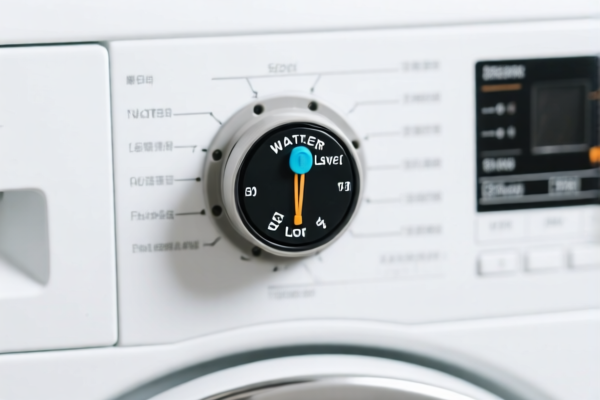
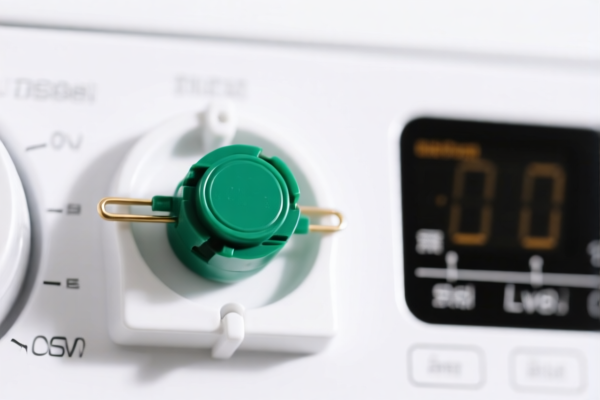
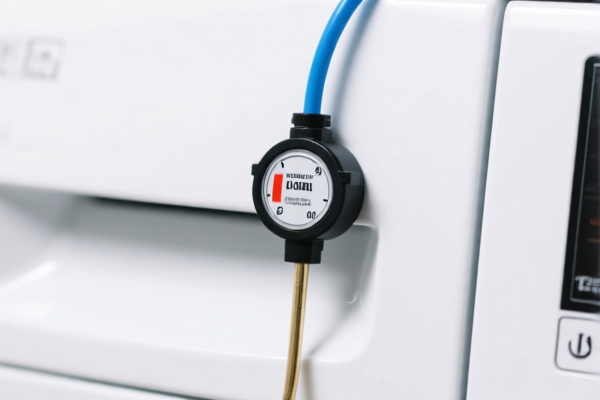
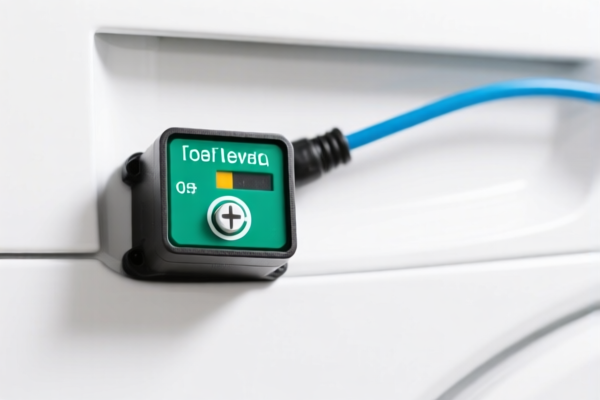
AI分析
💧 Water Quality Detector (水质分析仪/检测仪)
🌐 HS Code Reference & Customs Clearance Guide | 2026 Latest Tariff Analysis | Professional Entry Strategy
📌 I. Product Definition & Classification: What Exactly Is a "Water Quality Detector"?
A Water Quality Detector is an instrument used to analyze the chemical or physical properties of water. In international trade, its classification depends heavily on how it functions and whether it is part of a filtration system.
Two Main Categories:
- Chemical Analysis Instruments (9027 Series):
If the device measures parameters like pH, conductivity, turbidity, dissolved oxygen, or specific chemical concentrations using sensors/electronic circuits. It is considered an electrical instrument for chemical analysis. - Water Treatment/Filtering Components (8421 Series):
If the device is primarily a monitoring component attached to a water filtration/purification machine, or if it functions as part of the physical filtration/purification process itself.
⚠️ Key Distinction Point:
- If it is a standalone analyzer for lab or field use → Likely Chapter 90 (9027).
- If it is a sensor/module integrated into a water purifier/filter machine → Likely Chapter 84 (8421).
📦 II. HS Code Classification Details (2026 Latest Tariff Authority对照)
Based on the provided data, here are the four most likely HS Codes with their corresponding tax structures.
| HS Code | Product Description | Use Case / Logic | Tax Rate (Total) |
|---|---|---|---|
9027.89.45.30 |
Electrical instruments for physical/chemical analysis (Other) | Used for chemical property analysis. Matches "Electrical instruments for chemical analysis." | 35.0% |
9027.10.20.00 |
Instruments for physical/chemical analysis (Gas/Liquid) | General analysis instrument. Since specific analyte is not provided, it defaults to the broad category of analysis instruments. | 35.0% |
9027.50.40.15 |
Chromatographs & Electrophoresis Instruments | Explicitly matches "Water Quality Testing" use case. Fits "Used for chemical analysis" definition without material/form conflicts. | 35.0% |
8421.99.01.40 |
Parts of machinery for filtering/purifying liquids | Purpose is "Water Quality Testing," highly matching "Parts/components for water filtration or purification machinery." | 35.0% |
8421.21.00.00 |
Machinery for filtering/purifying drinking water | Purpose matches "Water Quality Testing," logically consistent with "Water treatment monitoring or purification equipment." | 35.0% |
🔍 Critical Note:
- All 5 HS Codes above carry the same total tax rate of 35.0% in the provided dataset.
- However, misclassification can lead to customs delays, penalties, or incorrect duty assessment if the physical nature of the good (standalone vs. part) differs.
💰 III. 2026 Latest Tariff Rate Breakdown (Detailed Tax Clauses)
✅ Applicable Country: United States (US)
✅ Origin: China (CN)
✅ Total Tax Rate: 35.0% across all listed codes
🎯 Tax Structure Breakdown (Applicable to ALL Listed HS Codes)
| Tax Component | Rate | Legal Basis / Description |
|---|---|---|
| Basic Duty (MFN) | 0.0% | Most Favored Nation rate for these categories is often 0% or low. |
| Section 301 Add-on (Trade War) | +25.0% | USITC Footnote 9903.88.01 / HTSUS Chapter 99. Applied to Chinese origin goods. |
| IEEPA Section 122 (China Specific) | +10.0% | Additional tariff under International Emergency Economic Powers Act for specific Chinese imports. |
| TOTAL EFFECTIVE RATE | 35.0% | Sum of Basic (0%) + 301 (25%) + 122 (10%). |
📌 Explanation of Clauses:
- "Basic Duty 0.0%": The base tariff for analytical instruments or water treatment parts is minimal.
- "Add-on Tariff 25.0%": This is the significant penalty from the US-China trade war (Section 301). It applies regardless of the specific subheading within these chapters.
- "Section 122 Tariff 10%": An additional surcharge specifically targeting goods from China under IEEPA provisions.
- No De Minimis Exemption: These high-value analytical or industrial instruments cannot utilize the $800 de minimis exemption. They must be formally entered.
🛠️ IV. Customs Clearance Practical Advice (Anti-Pitfall Guide)
✅ 1. Preparation Checklist (Must-Have Documents)
| Document | Required? | Explanation |
|---|---|---|
| ✅ Product Specification Sheet | ✔️ | Must detail: Measured parameters (pH, TDS, etc.), Accuracy, Power Supply, Interface Type. |
| ✅ Technical Manual / Schematic | ✔️ | To prove if it is a standalone analyzer (HS 9027) or a component/part (HS 8421). |
| ✅ Commercial Invoice | ✔️ | Must clearly state "Water Quality Analyzer" or "Water Testing Instrument." Avoid vague terms like "Sensor" without context. |
| ✅ Packing List | ✔️ | List all components. If it includes probes, cables, and a display unit, declare as a complete instrument. |
| ✅ Country of Origin Certificate | ✔️ | Crucial for applying the 35% tariff correctly and verifying Chinese origin. |
| ✅ Declaration Statement | ✔️ | Confirm if the device is used for lab analysis (9027) or integrated into a filtration system (8421). |
✅ 2. Classification Strategy (Key Rules)
🔥 "Function First, Form Second: Analyze vs. Filter"
| Scenario | Correct HS Code | Risk if Wrong |
|---|---|---|
| Standalone Device (e.g., handheld pH meter, benchtop water analyzer) | 9027.xx.xx.xx (e.g., 9027.89.45.30) |
Misclassifying as a "part" may trigger questions about why it's not declared with a machine. |
| Integrated Part (e.g., a sensor module embedded in a RO machine) | 8421.99.01.40 or 8421.21.00.00 |
Misclassifying as a standalone "analyzer" may lead to rejection if it doesn't function independently. |
| Mixed Shipment (Analyzer + Filter Pump) | Split Declaration | Must separate into 9027 (Analyzer) and 8421 (Pump/Filter) to avoid incorrect duty application. |
📌 Important: Even though the total tax rate is identical (35%) for all five codes in this dataset, correct classification is vital for:
1. Regulatory Compliance: Ensuring the correct FDA/EPA if applicable (for drinking water).
2. Audits: Customs audits scrutinize whether a "part" was declared as a "machine" or vice versa.
3. Future Rate Changes: If tariffs change for Chapter 84 but not Chapter 90 (or vice versa), your classification determines your cost sensitivity.
✅ 3. Special Handling Tips
| Situation | Recommendation |
|---|---|
| OEM/ODM Products | Ensure the brand name on the invoice matches the product labeling. Discrepancies can cause hold-ups. |
| New Technology | If the device uses AI or non-standard sensors, provide a detailed technical explanation to justify 9027.89 (Other) rather than a more specific subheading. |
| Kit Assemblies | If imported as a "kit" (probe + cable + handheld unit), declare as a complete instrument under 9027, not as separate parts. |
| Usage Declaration | Clearly state "For Laboratory Use" or "For Water Treatment Monitoring" to support the chosen HS code. |
🌍 V. Global Market Comparison (Contextual Note)
| Market | Likely HS Code | Est. Duty (China Origin) | Notes |
|---|---|---|---|
| 🇺🇸 USA | 9027.xx or 8421.xx |
35.0% | Includes 25% (301) + 10% (IEEPA). |
| 🇪🇺 EU | 9027.80 |
~0% - 2.5% | No 301 tariffs. Requires CE marking. |
| 🇨🇳 China | 9027.80 |
~5% - 10% | Standard MFN rate. |
| 🇯🇵 Japan | 9027.89 |
~0% - 3.5% | Low base duty. No major add-ons for China. |
📌 Conclusion for US Importers:
The 35% total tax burden is fixed regardless of which of the five HS codes is chosen in this specific dataset. Therefore, accuracy in description and technical documentation is more important than tariff shopping. Choose the code that best describes the physical nature of the good to ensure smooth clearance.
📌 VI. Common Mistakes & Pitfalls (Lessons Learned)
❌ Mistake 1: Calling it a "Water Filter" when it is an "Analyzer"
👉 Consequence: Incorrect classification, potential audit for misdeclaration of purpose.
❌ Mistake 2: Under-declaring value
👉 Consequence: With a 35% tax, even small value errors result in significant duty discrepancies and penalties.
❌ Mistake 3: Ignoring the "Parts" vs. "Machine" distinction
👉 Consequence: If the device is a part of a larger filtration system, declaring it as a standalone machine might lead to it being flagged for lacking required safety certifications for standalone equipment.
❌ Mistake 4: Assuming "De Minimis" applies
👉 Consequence: This is an industrial/scientific instrument, not a low-value consumer good. Do not use $800 exemption.
✅ Correct Approach:
"Water Quality Analyzer, Model XYZ, Measures pH/TDS/Conductivity, AC 110V, For Laboratory Use. HS Code: 9027.89.45.30. Origin: China."
🎯 VII. Conclusion: Precision Saves Money and Time
🎯 Remember:
🔹 "35% is the floor, not the ceiling – but for these codes, it’s the flat rate."
🔹 "Classify by Function: Analysis (9027) vs. Filtration Support (8421)."
🔹 "Documentation is Key: Technical specs justify your HS Code choice."
📌 Pro Tip:
If you are importing these in large volumes, consider applying for an Advance Ruling (CBP Ruling) from U.S. Customs and Border Protection. This provides a legally binding determination of the correct HS Code, protecting you from future audits and penalties, even if the tax rate is currently uniform.
📣 Immediate Action:
📞 Consult with a licensed customs broker.
📄 Prepare detailed technical datasheets.
🚀 Ensure your commercial invoice clearly defines the product’s primary function to align with 9027 or 8421 appropriately.
✨ Professional clearance starts with precise classification!
💼 Every 1% of error costs more than 1 hour of expert review!
用户评价
关于 HS 编码归类
协调制度(HS)是由世界海关组织(WCO)制定的国际贸易商品分类标准。全球 200 多个国家采用 HS 系统作为海关关税、贸易统计和进出口监管的基础。
每个 HS 编码遵循以下层级结构:
- 章(2 位)——商品大类(例如:第 84 章:机器和机械设备)
- 品目(4 位)——章内的更具体分类
- 子目(6 位)——国际通用细分,所有 WCO 成员国统一使用
- 本国细分(8-10 位)——各国自行扩展的细分编码,如美国 HTSUS 10 位编码
正确的 HS 编码归类对于顺利通关、准确缴纳关税和遵守贸易法规至关重要。错误归类可能导致海关延误、多缴关税或罚款。
从CN进口到US时,适用的关税税率可能包括:
- 最惠国(MFN)税率——适用于 WTO 成员国的标准关税税率
- 普通税率——适用于无贸易协定国家
- 贸易救济关税——附加关税,如 301 条款(反倾销)、232 条款(国家安全)或反补贴税
本页内容仅供参考。如需正式归类,请咨询当地海关或持牌报关代理。