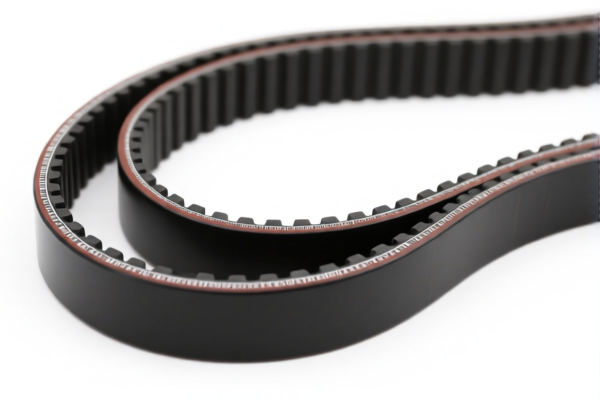
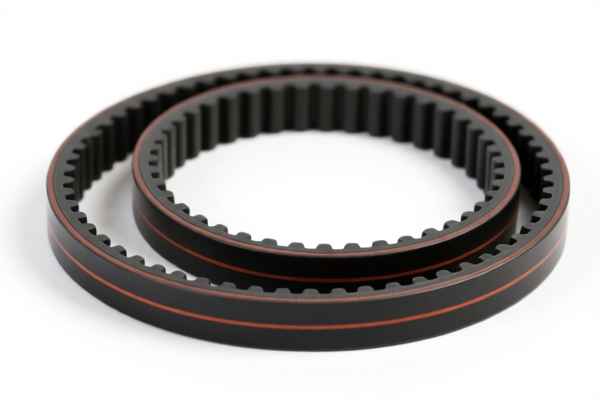
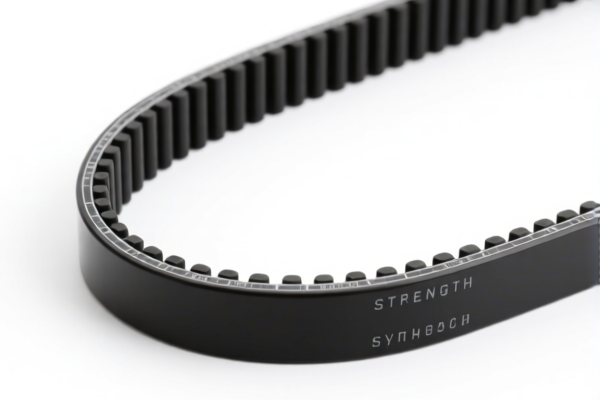
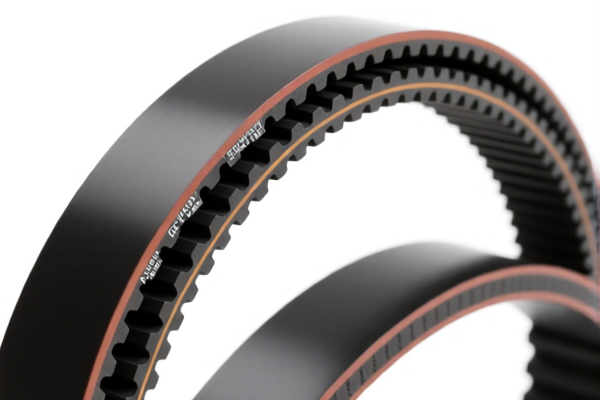
Wear resistant Extra wide Synchronous Belt
CN → US| HS编码 | 关税税率 | 原产国 | 目的国 | 文档 |
|---|---|---|---|---|
| 4010394100 | 43.0% | CN | US | 官方文档 |
| 4010354100 | 43.0% | CN | US | 官方文档 |
| 3926906010 | 39.2% | CN | US | 官方文档 |
商品图片
AI分析
⚙️ Synchronous Belt (Transmission Drives)
🌐 HS Code Reference & Customs Clearance Guide | 2024/2025 Latest Tariff Analysis | Professional Clearance Strategy
📌 I. Product Definition & Classification: What Exactly is a "Synchronous Belt"?
A Synchronous Belt (also known as a timing belt) is a positive drive belt with teeth on the inside surface that mesh with grooves in pulleys. In international trade, classification hinges on three critical factors:
1. Material: Is it Rubber (Chapter 40) or Plastic/Other (Chapter 39)?
2. Form: Is it "Endless" (seamless/continuous) or Cut-length?
3. Dimensions: Specifically, the width. In HS Code 4010, "Extra Wide" specifically refers to belts with a width exceeding 20 cm.
⚠️ Key Classification Point:
- If the material is Rubber and Width > 20cm → Focus on 4010.35/4010.39.
- If the material is inferred as Plastic/Composite (or non-rubber) → Focus on 3926.90.
- "Wear Resistant" is a performance attribute, not a primary HS classifier. It usually falls under the material’s general description.
📦 II. HS Code Classification Details (Based on Provided Data)
Based on the specific attributes: "Wear resistant," "Extra wide," "Synchronous Belt," here are the three most likely HS Codes derived from the analysis data.
| HS Code | Product Description | Matching Logic from Data | Key Attribute |
|---|---|---|---|
4010.35.41.00 |
Conveyor Belts & Transmission Belts: Of rubber or textile materials, other than conveyor belts of heading 4010, Endless (Seamless) Transmission Belts, Width > 20 cm | Exact Match: Material = Rubber/Textile; Form = Endless/Seamless; Width = Extra Wide (>20cm). | Primary Candidate for Rubber Belts |
4010.39.41.00 |
Conveyor Belts & Transmission Belts: Other, Endless (Seamless) Transmission Belts, Width > 20 cm | Strong Match: "Extra wide" corresponds to width > 20cm. "Synchronous" is a type of transmission belt. Material inferred as Vulcanized Rubber + Synthetic Fiber Reinforcement. | Alternative for Rubber/Fiber Composite |
3926.90.60.10 |
Other Articles of Plastics: Other, Transmission Belts (Plastic/Composite) | Inference Match: Usage is Synchronous Belt. Wear-resistant attributes fit "Plastic Transmission Belt" characteristics. Material inferred as Plastic/Rubber Composite. | Candidate if Material is Primarily Plastic/Composite |
🔍 Critical Distinction:
- 4010.35/39 vs 4010.39: The difference often lies in the specific subheading nuances regarding "rubber vs. other materials" or "textile reinforcement."
- 4010 (Rubber) vs 3926 (Plastic): If the belt is a hybrid composite where plastic dominates,3926might apply. If rubber dominates,4010applies. The data suggests4010is the stronger fit for "Rubber/Textile" materials.
💰 III. 2024/2025 Tariff Rate Breakdown (Including Surtaxes & Policy Add-ons)
✅ Applicable Country: USA (US)
✅ Origin: China (CN) (Implied by "122-Clause Tariff")
✅ Effective Time: Current (2024/2025 Period)
🎯 1. 4010.35.41.00 & 4010.39.41.00 —— Rubber/Textile Seamless Synchronous Belts (Width > 20cm)
| Item | Content |
|---|---|
| Base Tariff | 8.0% (Ad Valorem) |
| Section 301 Surcharge | +25.0% (USITC Footnote for China-origin goods) |
| 122-Clause Tariff | +10.0% (Specific surcharge for certain Chinese imports, often linked to trade remedy or specific policy sections) |
| Total Tax Rate | 43.0% |
| Tax Calculation | CIF Value × 43% |
| De Minimis Exemption | ❌ Not Applicable (Section 301 and 122 Clause goods are generally excluded from de minimis thresholds) |
| Legal Basis Path | HTSUS:4010.35/39 → Section 301: 17 CFR 122 → 122-Clause: Specific Tariff Code |
📌 Explanation:
- The 43% rate is extremely high.
- The 25% is the standard Section 301 tariff for most Chinese industrial goods.
- The 10% is an additional layer, often applied to specific categories to counter unfair trade practices.
- Warning: Do not confuse "Section 122" with "Section 301". They are additive.
🎯 2. 3926.90.60.10 —— Plastic/Composite Wear-Resistant Synchronous Belts
| Item | Content |
|---|---|
| Base Tariff | 4.2% (Ad Valorem) |
| Section 301 Surcharge | +25.0% (USITC Footnote for China-origin goods) |
| 122-Clause Tariff | +10.0% (Specific surcharge for certain Chinese imports) |
| Total Tax Rate | 39.2% |
| Tax Calculation | CIF Value × 39.2% |
| De Minimis Exemption | ❌ Not Applicable |
| Legal Basis Path | HTSUS:3926.90 → Section 301 → 122-Clause |
📌 Explanation:
- Slightly lower total rate (39.2%) compared to rubber versions (43.0%).
- However, classification risk is higher. If Customs determines the belt is primarily Rubber/Textile (not plastic), they will reclassify it to4010, increasing the duty to 43% + potential penalties.
- Strategic Note: Use this code ONLY if you have strong evidence (material composition reports) that the belt is predominantly plastic or a non-rubber composite.
🛠️ IV. Customs Clearance Practical Advice (Avoid Pitfalls)
✅ 1. Document Checklist (Essential)
| Document | Required | Purpose |
|---|---|---|
| ✅ Product Specification Sheet | ✔️ | Must explicitly state: Material (Rubber/Plastic/Textile), Width (in cm/inches), Structure (Seamless/Endless vs. Cut). |
| ✅ Technical Drawing | ✔️ | Show tooth profile, width, and length. Prove it is a "Synchronous" belt (teeth) not a smooth V-belt. |
| ✅ Material Composition Report | ✔️ | CRITICAL: A third-party lab report detailing the % of Rubber vs. Textile vs. Plastic. This determines 4010 vs. 3926. |
| ✅ Photo of Product & Label | ✔️ | Show the "Seamless/Endless" joint (or lack thereof) and width measurement. |
| ✅ Commercial Invoice | ✔️ | Describe as "Seamless Synchronous Transmission Belt, Rubber/Textile, Width >20cm". Avoid generic terms like "Belt". |
| ✅ Certificate of Origin | ✔️ | To verify Country of Origin (China triggers surcharges). |
✅ 2. Declaration Tips (Key Mnemonics)
🔥 "Width > 20cm is Key, Material Dictates Code, Seamless Means 4010!"
| Scenario | Correct Declaration | Risk of Wrong Declaration |
|---|---|---|
| Rubber Belt, >20cm, Seamless | 4010.35.41.00 or 4010.39.41.00 |
Misclassifying as 4010.19 (non-seamless) may lead to audit; misclassifying as 3926 leads to penalty. |
| Plastic/Composite Belt | 3926.90.60.10 |
If it contains significant rubber, CBP will reject and assess higher duty + penalties. |
| Width < 20cm | Different Subheadings (e.g., 4010.31/33) | DO NOT declare >20cm if width is actually <20cm. This is fraud. |
| Cut-Length Belt | Different Subheadings (4010.31/33/35) | "Synchronous Belt" can be cut or endless. "Endless" is specific to 4010.35/39. |
✅ 3. Special Considerations for "Wear Resistant" & "Extra Wide"
- "Extra Wide" Definition: Ensure the width is strictly greater than 20 cm (approx. 7.87 inches). If it is 19.9 cm, it does NOT qualify for the ">20cm" subheadings.
- "Seamless/Endless": Verify the manufacturing process. If the belt is glued or vulcanized into a loop, it is "Endless." If it is a long strip cut to size, it is NOT "Endless."
- Composite Materials: If the belt has a fabric core (textile) and rubber cover, it is still classified under 4010 (Rubber). Only if the plastic content is the primary characteristic (rare for heavy-duty synchronous belts) should you consider 3926.
🌍 V. Global Market Comparison (2024/2025)
| Country/Region | Recommended HS Code | Estimated Duty (China Origin) | Notes |
|---|---|---|---|
| 🇺🇸 USA | 4010.35.41.00 / 3926.90.60.10 |
39.2% – 43.0% | Includes 25% Sec 301 + 10% 122-Clause. High cost. |
| 🇨🇳 China | 4010.35.41.00 |
~5-8% (Import Duty) | No surtaxes. |
| 🇪🇺 EU | 4010.39.00 (approx.) |
3.5% (MFN) + Anti-dumping? | Check for specific anti-dumping duties on rubber belts from China. |
| 🇬🇧 UK | 4010.39.00 |
3.5% (MFN) | Post-Brexit rules apply. |
| 🇻🇳 Vietnam | 4010.39.00 |
0-2% (if assembled locally) | Supply chain shift strategy. |
📌 Conclusion:
- The USA market is the most expensive for these goods due to layered surcharges.
- Accurate classification is vital to avoid penalties.
- If the belt is Rubber/Textile,4010is the safest and most accurate code.
- If you can prove it is Plastic-dominant,3926offers a 3.8% savings but carries higher classification risk.
📌 VI. Common Mistakes & Pitfalls (Lessons Learned)
❌ Mistake 1: Ignoring the ">20 cm" width threshold.
👉 Consequence: Wrong subheading, potential duty underpayment, resulting in fines.
❌ Mistake 2: Calling it a "Transmission Belt" without specifying "Seamless/Endless".
👉 Consequence: CBP may classify it as a cut-length belt (different tax rate) or demand additional documentation to prove it is endless.
❌ Mistake 3: Assuming "Wear Resistant" allows for a different HS Code.
👉 Consequence: No such code exists. "Wear Resistant" is a feature, not a material. Stick to Material (Rubber/Plastic).
❌ Mistake 4: Misclassifying Rubber-Textile belts as Plastic (3926).
👉 Consequence: CBP will reclassify to 4010, charging the higher 43% duty + back taxes + interest.
✅ Correct Declaration Example:
"Seamless Synchronous Transmission Belt, Rubber and Textile Construction, Width 25cm, Wear Resistant, for Industrial Machinery, Made in China."
🎯 VII. Conclusion: Precision in Classification Saves Money!
🎯 Remember the Mantra:
🔹 "Rubber + Textile = 4010"
🔹 "Plastic = 3926"
🔹 "Width > 20cm = 41.xx"
🔹 "25% + 10% = 35% Surcharges on Top!"
📌 Pro Tip:
If you are importing large volumes, consider Supply Chain Diversification (e.g., manufacturing in Vietnam or Thailand) to potentially avoid Section 301 and 122 Clause surcharges, provided the goods meet Rules of Origin. Alternatively, apply for an Exclusion if applicable, though availability is limited.
📣 Action Required:
📞 Consult a Customs Broker with your Product Spec Sheet and Material Report.
🚀 Declare Accurately: "Seamless," "Rubber/Textile," "Width >20cm."
✨ Professional Clearance Starts with Precise Classification!
💼 Every Percentage Point of Duty Counts in the Age of Trade Wars!
用户评价
关于 HS 编码归类
协调制度(HS)是由世界海关组织(WCO)制定的国际贸易商品分类标准。全球 200 多个国家采用 HS 系统作为海关关税、贸易统计和进出口监管的基础。
每个 HS 编码遵循以下层级结构:
- 章(2 位)——商品大类(例如:第 84 章:机器和机械设备)
- 品目(4 位)——章内的更具体分类
- 子目(6 位)——国际通用细分,所有 WCO 成员国统一使用
- 本国细分(8-10 位)——各国自行扩展的细分编码,如美国 HTSUS 10 位编码
正确的 HS 编码归类对于顺利通关、准确缴纳关税和遵守贸易法规至关重要。错误归类可能导致海关延误、多缴关税或罚款。
从CN进口到US时,适用的关税税率可能包括:
- 最惠国(MFN)税率——适用于 WTO 成员国的标准关税税率
- 普通税率——适用于无贸易协定国家
- 贸易救济关税——附加关税,如 301 条款(反倾销)、232 条款(国家安全)或反补贴税
本页内容仅供参考。如需正式归类,请咨询当地海关或持牌报关代理。