Welding Electrode Core Material
CN → US| HS编码 | 关税税率 | 原产国 | 目的国 | 文档 |
|---|---|---|---|---|
| 8311306000 | 35.0% | CN | US | 官方文档 |
| 8311303000 | 35.0% | CN | US | 官方文档 |
| 7502200000 | 35.0% | CN | US | 官方文档 |
| 7502100000 | 35.0% | CN | US | 官方文档 |
| 7403190000 | 36.0% | CN | US | 官方文档 |
商品图片
AI分析
⚡ Welding Electrode Core Material (Soldering/Brazing Wire & Rods)
🌐 HS Code Reference & Customs Clearance Guide | 2026 Latest Tariff Analysis | Professional Clearance Strategy
📌 I. Product Definition & Classification: Do You Truly Understand "Welding Core Materials"?
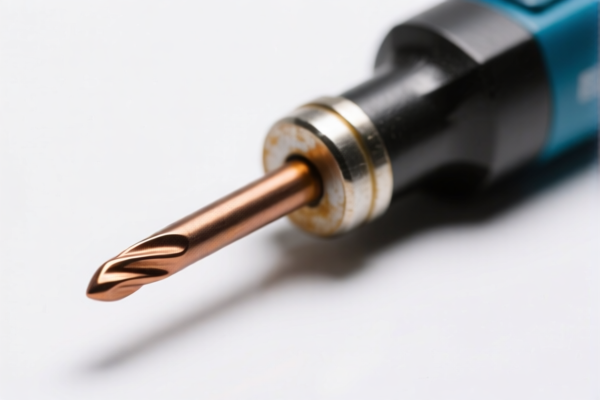
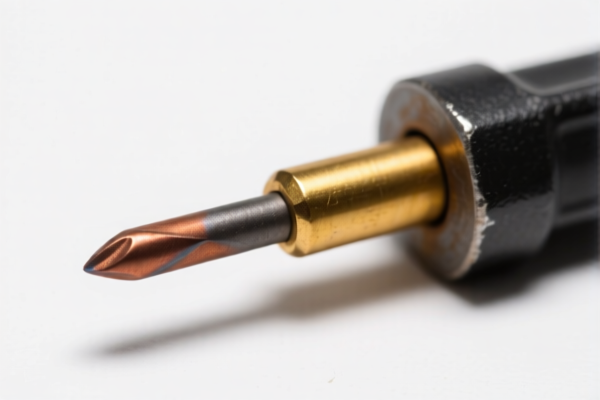
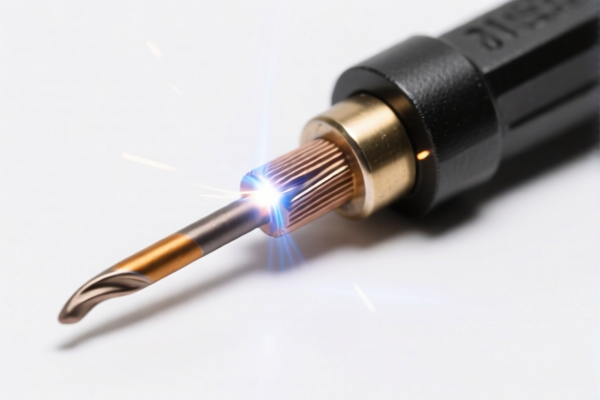
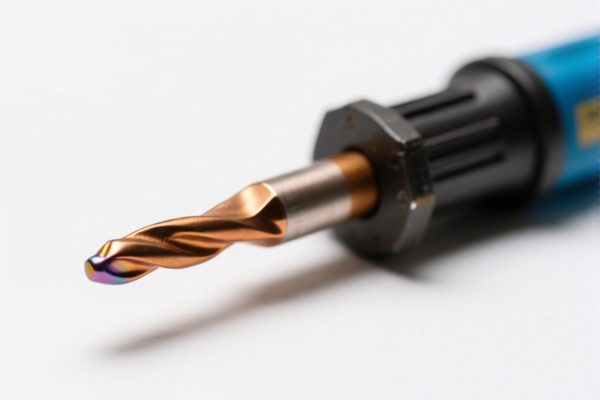
Welding electrode core materials, often referred to in international trade as soldering/brazing wires, flux-cored wires, or filler metals, are essential consumables used in joining metals. They are not "electrodes" in the electrical sense (like carbon rods) but rather filler materials that melt to form the joint.
In the context of US Customs and Border Protection (CBP), these materials are primarily classified based on their base metal composition and physical form. The data provided indicates a high probability of classification under Chapter 83 (Miscellaneous Articles of Base Metal) or Chapter 75/74 (Nickel/Copper Alloys), specifically for brazing/soldering applications.
⚠️ Key Distinction Point:
- If the material is braze wire/rod or flux-cored wire intended for brazing/soldering, it typically falls under HS 8311 (Base Metal Filler Materials).
- If it is a raw metal alloy (nickel/copper) in wire/rod form not specifically designed as a brazing alloy (but rather a general-purpose alloy wire), it may fall under HS 7502 (Nickel) or HS 7403 (Copper).
- Crucial: The summary explicitly states "Inferred as Base Metal Material" and "Consistent with Brazing Use," pointing strongly towards HS 8311 or unalloyed base metal forms in 7502/7403 if no specific brazing alloy classification applies.
📦 II. HS Code Classification Details (2026 Latest Tariff Authority Comparison)
| HS Code | Product Description | Application Scenario | Material Inference |
|---|---|---|---|
8311.30.60.00 |
Brazing/Soldering Wire & Rods, Other, Other (Base Metal) | General base metal brazing wires/rods (e.g., bronze, brass, steel-core) | ✅ Base Metal (General) |
8311.30.30.00 |
Brazing/Soldering Wire & Rods, Other, Other (Base Metal) | Similar to above; often used for specific base metal filler consumables | ✅ Base Metal (General) |
7502.20.00.00 |
Nickel Alloys, in Unwrought Forms (Other) | Nickel-based filler metals or nickel alloy wire/rod not specifically brazing alloys | ✅ Nickel/Copper/Silver Alloy (Unwrought) |
7502.10.00.00 |
Nickel, Unwrought (Including Powder) | Raw nickel material or semi-finished nickel metal products | ✅ Nickel Base Metal (Raw/Semi) |
7403.19.00.00 |
Refined Copper & Copper Alloys, Unwrought (Other) | Copper-based filler materials or copper alloy wire/rod (unwrought) | ✅ Copper Alloy (Refined/Unwrought) |
🔍 Important Note:
- The data suggests a strong inference towards "Base Metal" (贱金属) for the first two codes.
- The latter three codes (7502,7403) represent specific alloy bases (Nickel/Copper) which may apply if the product is a raw alloy wire not specifically classified as a "brazing filler" under 8311.
- All listed codes carry a high total tax rate of 35%-36% due to US trade policies.
💰 III. 2026 Latest Tariff Rate Breakdown (Including Surtaxes & Policy Add-ons)
✅ Applicable Country: United States (US)
✅ Country of Origin: China (CN)
✅ Effective Date: November 10, 2025 onwards (including subsequent imports)
🎯 1. HS Codes: 8311.30.60.00 & 8311.30.30.00 — Base Metal Brazing/Soldering Materials
| Item | Content |
|---|---|
| Base Duty Rate | 0.0% (Ad Valorem) |
| USITC Surcharge | +25.0% (Under USITC Footnote 9903.88.01 / Section 301) |
| IEEPA Surcharge | +10.0% (Against China/HK products, effective Nov 10, 2025) |
| Total Tax Rate | 35.0% |
| Tax Calculation | CIF Value × 35% |
| De Minimis Exemption | ❌ Not Eligible (deny_de_minimis) |
| Legal Basis Path | IEEPA:9903.01.25 → IEEPA:9903.01.24 → USITC:8311.30.x0.00 → FOOTNOTE:9903.88.01 |
📌 Explanation:
- "0% Base Duty": The Harmonized Tariff Schedule (HTSUS) base rate for these brazing materials is nominally zero.
- "25% USITC Surcharge": This is the standard Section 301 tariff applied to many Chinese-origin goods.
- "10% IEEPA Surcharge": This is the additional tariff imposed under the International Emergency Economic Powers Act, specifically targeting Chinese imports from Nov 2025.
- Total 35%: This is a significant cost burden. Even though the base duty is 0%, the surcharges make it expensive.
🎯 2. HS Code: 7403.19.00.00 — Refined Copper & Copper Alloys (Unwrought)
| Item | Content |
|---|---|
| Base Duty Rate | 1.0% |
| USITC Surcharge | +25.0% |
| IEEPA Surcharge | +10.0% |
| Total Tax Rate | 36.0% |
| Tax Calculation | CIF Value × 36% |
| De Minimis Exemption | ❌ Not Eligible |
| Legal Basis Path | IEEPA:9903.01.25 → IEEPA:9903.01.24 → USITC:7403.19.00.00 |
📌 Note:
- Slightly higher than the 8311 codes due to the 1% base duty on refined copper.
- Applies if the product is classified as copper alloy wire/rod rather than a "brazing filler."
🎯 3. HS Codes: 7502.10.00.00 & 7502.20.00.00 — Nickel & Nickel Alloys (Unwrought)
| Item | Content |
|---|---|
| Base Duty Rate | 0.0% |
| USITC Surcharge | +25.0% |
| IEEPA Surcharge | +10.0% |
| Total Tax Rate | 35.0% |
| Tax Calculation | CIF Value × 35% |
| De Minimis Exemption | ❌ Not Eligible |
| Legal Basis Path | IEEPA:9903.01.25 → IEEPA:9903.01.24 → USITC:7502.10.00.00 / 7502.20.00.00 |
📌 Note:
- If the core material is nickel-based (e.g., Inconel, Monel wire) and not specifically a "brazing alloy" (which might have different subheadings), it falls here.
- Same 35% total rate as 8311.
🛠️ IV. Customs Clearance Practical Advice (Battle-Tested Pitfall Avoidance)
✅ 1. Required Documentation Checklist (Non-Negotiable)
| Document | Must Provide | Description |
|---|---|---|
| ✅ Product Specification Sheet | ✔️ | Detailed composition (Cu%, Ni%, Zn%, etc.), diameter, tensile strength, melting point. |
| ✅ Application Statement | ✔️ | Explicitly state: "Used for brazing/soldering applications" or "General purpose alloy wire." |
| ✅ Product Photos | ✔️ | Clear images of spools, rods, packaging, and labels showing material content. |
| ✅ Commercial Invoice | ✔️ | Must clearly state "Welding Filler Metal" or "Brazing Wire" and HS Code. |
| ✅ Packing List | ✔️ | Weight, dimensions, number of spools/boxes. |
| ✅ Certificate of Origin (CO) | ✔️ | To prove Chinese origin (if applicable for surcharge calculation). |
✅ 2. Declaration Tips (Key Mnemonic)
🔥 "Material First, Use Second, Don't Split, Don't Guess!"
| Scenario | Correct Declaration | Wrong Practice |
|---|---|---|
| Flux-Cored Wire | Declare as "Brazing/Soldering Wire" → 8311.30.60.00 |
Declare as "Copper Wire" → 7403.19.00.00 (Risk of misclassification audit) |
| Solid Braze Rod | Declare as "Brazing Rod, Base Metal" → 8311.30.30.00 |
Declare as "Steel Rod" → Wrong Chapter |
| Nickel Alloy Wire | Declare as "Nickel Alloy, Unwrought" → 7502.20.00.00 |
Declare as "Electrode" → Vague, leads to 7502/7503 audit |
| Copper Alloy Wire | Declare as "Copper Alloy, Unwrought" → 7403.19.00.00 |
Declare as "Electrical Wire" → Wrong Chapter |
📌 Critical Warning:
- Do NOT declare as "Welding Electrode" if it is a filler metal. In US CBP terms, "Electrode" often refers to consumable metal rods for arc welding (which may fall under 8515 or other categories depending on type). If it is a filler for brazing/soldering, HS 8311 is the most accurate.
- If the product is not a "brazing/soldering" specific alloy but a general metal wire, use 7502 (Nickel) or 7403 (Copper).
✅ 3. Special Case Handling
| Scenario | Handling Advice |
|---|---|
| OEM Custom Alloy | Provide chemical analysis report from a third-party lab. This supports the specific HS Code (e.g., proving it's 80% Cu, 20% Zn → Copper Alloy). |
| Mixed Packaging | If braze wire and non-braze wire are mixed, do not mix declarations. Split the shipment or declare the dominant purpose. Mixed declaration = High risk of seizure. |
| Flux-Cored vs. Solid | Both fall under 8311. Ensure the description mentions "Flux-Cored" if applicable, as it confirms the "brazing/soldering" use case. |
| Small Value Shipments | ❌ No De Minimis Exemption. Even if under $800, the 35% tax applies. Do not try to ship via informal entry. |
🌍 V. Global Market Customs Comparison (2026 Latest)
| Country/Region | Recommended HS Code | Total Tariff | Certification Required | Notes |
|---|---|---|---|---|
| 🇺🇸 USA | 8311.30.60.00 / 7502.20.00.00 |
35% - 36% | N/A (General) | High Tax Due to USITC + IEEPA. No de minimis. |
| 🇨🇳 China | 8311 / 7502 |
0% - 5% | CCC (if applicable) | Low duty, but need to check import quotas. |
| 🇪🇺 EU | 8311 / 7502 |
0% - 6.5% | CE (if component), RoHS | Generally low duty for industrial consumables. |
| 🇦🇺 Australia | 8311 / 7502 |
5% | RCM | Moderate duty, no surcharges. |
| 🇯🇵 Japan | 8311 / 7502 |
0% - 2% | PSE (if electrical) | Very low duty, free trade agreement benefits possible. |
📌 Conclusion:
- The US is the most expensive market for this product due to the 35% total tariff.
- EU, Australia, Japan are significantly more cost-effective.
- Strategic Recommendation: If exporting to the US, ensure precise HS Code classification to avoid penalties. Consider supply chain diversification if tariffs impact margin significantly.
📌 VI. Common Errors & Pitfall Guide (Blood & Tears Lessons)
❌ Error 1: Declaring "Welding Electrode" without specifying "Brazing/Soldering"
👉 Consequence: CBP may classify under general base metal or electrical articles, leading to misclassification penalties and potential 100% duty reassessment.
❌ Error 2: Trying to use De Minimis (<$800) to avoid tax
👉 Consequence: Denied entry. The 10% IEEPA surcharge explicitly denies de minimis for Chinese-origin goods in these categories. Total loss of shipment.
❌ Error 3: Incorrectly labeling as "Copper Wire" for a Nickel-Alloy product
👉 Consequence: Customs Audit. If chemical analysis reveals Ni > Cu, you will be charged for Nickel Alloy (7502) + penalties. Back taxes + fines.
❌ Error 4: Ignoring the "Base Metal" inference in the summary
👉 Consequence: Using a wrong HS Code like 8515 (Welding Machines) or 8516 (Heating Elements) → Immediate rejection.
✅ Correct Practice:
"Flux-Cored Brazing Wire, Copper-Zinc-Nickel Alloy, Diameter 1.0mm, For Auto Repair, Model XYZ, Origin: China"
HS Code:8311.30.60.00
🎯 VII. Conclusion: Precision in Classification Saves Money!
🎯 Remember the Mnemonic:
🔹 "Brazing = 8311 (35%), Nickel = 7502 (35%), Copper = 7403 (36%)"
🔹 "No De Minimis, No Excuses, 35% is the Price You Choose!"
🔹 "Describe the Metal, Not the Machine, or Face the Fine!"
📌 Pro Tip:
If your product is not made in China (e.g., Vietnam, Mexico), you may avoid the 10% IEEPA surcharge, reducing the total to 25%.
Always apply for an Advance Ruling from US CBP if the classification is ambiguous. This provides legal protection against retrospective duty changes.
📣 Immediate Action:
📞 Contact a Licensed Customs Broker
📄 Provide Material Safety Data Sheet (MSDS) + Chemical Composition Report
🚀 Ensure Compliance from Day 1 to Avoid Seizure!
✨ Professional Clearance Starts with Accurate Classification!
💼 Every Percent of Tariff is Your Profit Margin. Protect It!
用户评价
关于 HS 编码归类
协调制度(HS)是由世界海关组织(WCO)制定的国际贸易商品分类标准。全球 200 多个国家采用 HS 系统作为海关关税、贸易统计和进出口监管的基础。
每个 HS 编码遵循以下层级结构:
- 章(2 位)——商品大类(例如:第 84 章:机器和机械设备)
- 品目(4 位)——章内的更具体分类
- 子目(6 位)——国际通用细分,所有 WCO 成员国统一使用
- 本国细分(8-10 位)——各国自行扩展的细分编码,如美国 HTSUS 10 位编码
正确的 HS 编码归类对于顺利通关、准确缴纳关税和遵守贸易法规至关重要。错误归类可能导致海关延误、多缴关税或罚款。
从CN进口到US时,适用的关税税率可能包括:
- 最惠国(MFN)税率——适用于 WTO 成员国的标准关税税率
- 普通税率——适用于无贸易协定国家
- 贸易救济关税——附加关税,如 301 条款(反倾销)、232 条款(国家安全)或反补贴税
本页内容仅供参考。如需正式归类,请咨询当地海关或持牌报关代理。