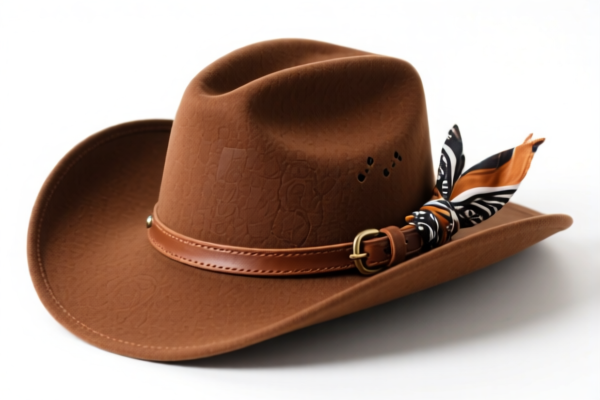
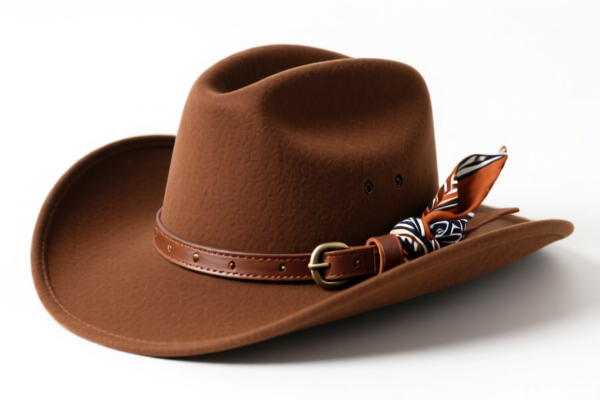
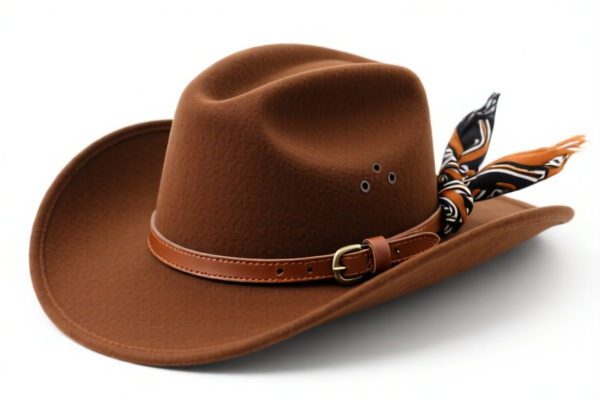
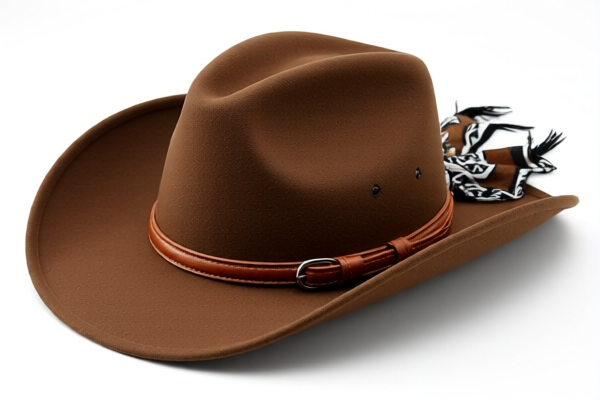
Western Cowboy Hat
CN → US| HS编码 | 关税税率 | 原产国 | 目的国 | 文档 |
|---|---|---|---|---|
| 6504009015 | 41.8% | CN | US | 官方文档 |
| 6506910060 | 35.0% | CN | US | 官方文档 |
| 6504009045 | 41.8% | CN | US | 官方文档 |
| 6506996000 | 43.5% | CN | US | 官方文档 |
| 6504009015 | 41.8% | CN | US | 官方文档 |
商品图片
AI分析
🤠 Western Cowboy Hat Classification & U.S. Customs Clearance Guide (2026)
🌐 HS Code Reference & Customs Strategy | Latest Tariff Analysis for 2026 | Professional Clearance Strategy
📌 I. Product Definition & Classification: Do You Really Know a "Cowboy Hat"?
The Western Cowboy Hat is not merely a head accessory; it is a distinct cultural symbol and functional gear for rodeo, ranching, and fashion. In international trade, the classification hinges on two critical factors: Material Composition (Felt vs. Woven/Other) and Construction Logic (Sewn/Bonded vs. Knitted/Crocheted).
Under the Harmonized Tariff Schedule (HTS), hats are broadly split into: 1. Headgear of felt or furskin (Chapter 65.04): Typically dense, molded, and stitched. 2. Other headgear (Chapter 65.06): Typically woven, knitted, or used as "catch-all" categories for non-standard materials.
⚠️ Key Distinction Point:
- If the hat is made of dense material (wool felt, synthetic felt) and follows a sewn/constructed logic → Look to 6504.
- If the hat is made of lighter fabric (cotton, canvas, synthetic blends) or fits a "other" category without specific felt characteristics → Look to 6506.
📦 II. Detailed HS Code Breakdown (2026 Latest Tariff Authority)
Based on the provided data, here are the five most likely classification codes for Western Cowboy Hats, along with their specific tax implications.
| HS Code | Product Description & Logic | Material Inference | Total Tax Rate (US/CN) |
|---|---|---|---|
6504.00.90.15 |
Headgear of felt or furskin, other Summary: Western cowboy hat classified as hat class, material inferred as felt or synthetic fiber, conforms to sewing logic. |
Felt / Synthetic Fiber | 41.8% |
6506.91.00.60 |
Other hats & headgear, knitted or crocheted Summary: Matches headwear form and use, material inferred as fabric or synthetic, fits catch-all logic. |
Fabric / Synthetic Material | 35.0% |
6504.00.90.45 |
Headgear of felt or furskin, other Summary: Fits headwear purpose, material is cotton, canvas, or man-made fiber, belongs to "other" category with sewing logic. |
Cotton / Canvas / Man-made Fiber | 41.8% |
6506.99.60.00 |
Other hats and headgear, other Summary: Hat form, material inferred as cotton or canvas fabric, fits other hat catch-all classification. |
Cotton / Canvas Fabric | 43.5% |
6504.00.90.15 |
Headgear of felt or furskin, other Summary: Western cowboy hat fits headwear form, material is cotton or synthetic fiber woven/sewn, within reasonable inference range. |
Cotton / Synthetic Fiber (Woven/Sewn) | 41.8% |
🔍 Critical Insight:
- The majority of potential classifications (6504.00.90.15and6504.00.90.45) carry a 41.8% total tax rate.
- The lowest possible rate in this dataset is 35.0% (6506.91.00.60), but it requires proving the item is "knitted or crocheted" or fits the specific fabric criteria of 6506.91.
- The highest rate is 43.5% (6506.99.60.00), applied when the material is generic cotton/canvas but classified under "other" headgear.
💰 III. 2026 Detailed Tariff Rate Analysis (Including Additional Duties)
✅ Applicable Country: United States (US)
✅ Country of Origin: China (CN)
✅ Effective Date: 2025/2026 (Current Enforcement)
🎯 1. 6504.00.90.15 & 6504.00.90.45 —— Felt/Synthetic Headgear (Most Likely)
Total Tax Rate: 41.8%**
| Item | Detail |
|---|---|
| Base Tariff | 6.8% (Ad Valorem) |
| Section 301 Tariff | +25.0% (Additional duty on Chinese goods) |
| Section 122 Tariff | +10.0% (Specific duty for certain goods) |
| Total Effective Rate | 41.8% |
| Tax Calculation | CIF Value × 41.8% |
| De Minimis Exemption | ❌ NOT APPLICABLE (Section 301 and 122 duties usually override de minimis) |
| Legal Basis Path | USITC:6504.00.90.15/45 → Section 301: 25% → Section 122: 10% |
📌 Explanation:
- Base Tariff (6.8%): The standard MFN rate for hats of felt or furskin.
- Section 301 (25%): The major tariff imposed by the U.S. Trade Representative on Chinese imports. This is the largest component.
- Section 122 (10%): A specific additional duty often applied to certain textile/apparel items or specific trade enforcement actions.
- Combined: These tariffs stack, resulting in a high total duty burden.
🎯 2. 6506.91.00.60 —— Other Headgear (Fabric/Synthetic)
Total Tax Rate: 35.0%**
| Item | Detail |
|---|---|
| Base Tariff | 0.0% |
| Section 301 Tariff | +25.0% |
| Section 122 Tariff | +10.0% |
| Total Effective Rate | 35.0% |
| Tax Calculation | CIF Value × 35.0% |
| De Minimis Exemption | ❌ NOT APPLICABLE |
| Legal Basis Path | USITC:6506.91.00.60 → Section 301: 25% → Section 122: 10% |
📌 Note:
- This code offers the lowest total tax rate (35%) among the options.
- However, the base tariff is 0%, meaning it likely applies to specific knitted/crocheted fabrics or non-felt materials.
- Risk: If customs determines the hat is actually felt (sewn/molded), they will reclassify it to6504, raising the rate to 41.8% and potentially imposing penalties.
🎯 3. 6506.99.60.00 —— Other Headgear (Cotton/Canvas)
Total Tax Rate: 43.5%**
| Item | Detail |
|---|---|
| Base Tariff | 8.5% |
| Section 301 Tariff | +25.0% |
| Section 122 Tariff | +10.0% |
| Total Effective Rate | 43.5% |
| Tax Calculation | CIF Value × 43.5% |
| De Minimis Exemption | ❌ NOT APPLICABLE |
| Legal Basis Path | USITC:6506.99.60.00 → Section 301: 25% → Section 122: 10% |
📌 Warning:
- This is the highest tax rate in the dataset.
- It applies to "other" headgear made of cotton or canvas that doesn't fit the6506.91(knitted) or6504(felt) categories perfectly.
- Avoid this classification if possible due to the high 8.5% base tariff.
🛠️ IV. Customs Clearance Practical Advice (Actionable Pitfall Guide)
✅ 1. Preparation Checklist (Non-Negotiable)
| Document | Required? | Explanation |
|---|---|---|
| ✅ Product Specifications | ✔️ | Must explicitly state Material Composition (e.g., "100% Wool Felt" vs. "Cotton Canvas"). This is the #1 factor for classification. |
| ✅ Construction Diagram | ✔️ | Show how the hat is assembled (stitched, bonded, woven). Proves "Sewing Logic" for 6504 vs. "Knitting" for 6506.91. |
| ✅ High-Res Photos | ✔️ | Show the crown, brim, and interior label. Clear view of material texture. |
| ✅ Commercial Invoice | ✔️ | Description must match the HS Code rationale (e.g., "Felt Cowboy Hat" for 6504). |
| ✅ Origin Certificate | ✔️ | Essential for applying Section 301 rates correctly. |
✅ 2. Declaration Strategy (Key Tips)
🔥 "Material First, Logic Second, Name Precise, Tax Optimized!"
| Scenario | Correct Declaration | Incorrect Declaration |
|---|---|---|
| Felt Hat (Wool/Synthetic Felt) | 6504.00.90.15Desc: "Felt Cowboy Hat, Sewn" |
6506.99.60.00Desc: "Hat" → Higher Tax (43.5%) |
| Canvas/Cotton Hat (Non-Felt) | 6506.91.00.60 (If Knitted) OR 6506.99.60.00 (If Woven) |
6504.00.90.15Desc: "Felt Hat" → Misclassification Risk |
| Mixed Material | Provide detailed % breakdown. If >50% felt, lean toward 6504. |
Vague terms like "Headwear" |
✅ 3. Special Cases & Mitigation
| Situation | Recommendation |
|---|---|
| OEM Custom Hats | Provide design specs to prove material and construction. Custom labels must match the declared HS Code. |
| "Felt-Look" Fabric | If the material is printed to look like felt but is actually woven fabric, classify under 6506 to potentially save on base tariffs, but be prepared for customs scrutiny. |
| Accessories | If the hat includes leather bands, metal buckles, or feathers, declare them as part of the hat if they are integral. Do not split unless the accessory is significantly more valuable. |
🌍 V. Global Clearance Comparison (2026 Snapshot)
| Country/Region | Recommended HS Code | Base Tariff | Section 301/Additional | Total Est. Rate | Remarks |
|---|---|---|---|---|---|
| 🇺🇸 USA | 6504.00.90.15 |
6.8% | +35% (301+122) | 41.8% | High duty burden. |
| 🇺🇸 USA | 6506.91.00.60 |
0.0% | +35% (301+122) | 35.0% | Lowest possible rate if material qualifies. |
| 🇨🇳 China | 6504.00.90.15 |
~10-14% | N/A | ~10-14% | Lower duties, focus on quality. |
| 🇪🇺 EU | 6504.00.90.15 |
8% | N/A | 8% | No Section 301 equivalent. |
| 🇬🇧 UK | 6504.00.90.15 |
12% | N/A | 12% | Post-Brexit standard rate. |
📌 Conclusion:
- The US is the most expensive market for Chinese cowboy hats due to the 35% additional tariff layer.
- Optimization Opportunity: If your product can be certified as knitted/crocheted fabric (not felt), you can reduce the total tax from 41.8% to 35.0%. This requires precise material engineering and documentation.
📌 VI. Common Errors & Pitfalls (Lessons Learned)
❌ Error 1: Calling all hats "Felt" regardless of material
👉 Consequence: If the hat is cotton/canvas but declared as felt, customs may flag it for inspection. If found incorrect, you face penalties and back taxes.
❌ Error 2: Ignoring Section 122 Tariff
👉 Consequence: Declaring only the 25% Section 301 rate. Customs will add the 10% Section 122, resulting in unexpected additional costs.
❌ Error 3: Vague Description "Cowboy Hat"
👉 Consequence: CBP (Customs and Border Protection) will use their own judgment, often defaulting to the highest applicable base tariff or the most common classification (6504), leaving you with no advantage.
❌ Error 4: Splitting Hat and Belt/Buckle
👉 Consequence: If sold as a set, they must be classified together. Splitting can lead to misclassification of the accessory, causing delays.
✅ Correct Practice:
"Western Style Cowboy Hat, 100% Wool Felt, Crown Height 4.5", Brim Width 3.5", Black, Sewn Construction, Model XYZ"
🎯 VII. Conclusion: Precision Saves Money!
🎯 Remember the Formula:
🔹 "Felt = 41.8%, Fabric (Knitted) = 35.0%, Fabric (Woven) = 43.5%"
🔹 "Material Proof is King. Without it, you pay the highest rate."
🔹 "Always include Section 301 + Section 122 in your Landed Cost Calculation!"
📌 Pro Tip:
If your volume is high, consider applying for a Binding Ruling from US CBP. This provides legal certainty on the HS Code and tax rate before shipment, protecting you from future audits and back-taxes.
📣 Immediate Action:
📞 Audit Your Material Specs Now.
📄 Confirm if Your Hat is "Felt" (Sewn) or "Fabric" (Knitted/Woven).
🚀 Optimize Your Declaration to Aim for6506.91.00.60if possible, to save 6.8% on base tariffs!
✨ Professional Clearance Starts with Accurate Classification!
💼 Every Percent of Tax Saved is Pure Profit!
用户评价
关于 HS 编码归类
协调制度(HS)是由世界海关组织(WCO)制定的国际贸易商品分类标准。全球 200 多个国家采用 HS 系统作为海关关税、贸易统计和进出口监管的基础。
每个 HS 编码遵循以下层级结构:
- 章(2 位)——商品大类(例如:第 84 章:机器和机械设备)
- 品目(4 位)——章内的更具体分类
- 子目(6 位)——国际通用细分,所有 WCO 成员国统一使用
- 本国细分(8-10 位)——各国自行扩展的细分编码,如美国 HTSUS 10 位编码
正确的 HS 编码归类对于顺利通关、准确缴纳关税和遵守贸易法规至关重要。错误归类可能导致海关延误、多缴关税或罚款。
从CN进口到US时,适用的关税税率可能包括:
- 最惠国(MFN)税率——适用于 WTO 成员国的标准关税税率
- 普通税率——适用于无贸易协定国家
- 贸易救济关税——附加关税,如 301 条款(反倾销)、232 条款(国家安全)或反补贴税
本页内容仅供参考。如需正式归类,请咨询当地海关或持牌报关代理。