Western Red Cedar Timber
CN → US| HS编码 | 关税税率 | 原产国 | 目的国 | 文档 |
|---|---|---|---|---|
| 4407190069 | 35.0% | CN | US | 官方文档 |
| 4403250155 | 35.0% | CN | US | 官方文档 |
| 4403260155 | 35.0% | CN | US | 官方文档 |
| 4408100145 | 35.0% | CN | US | 官方文档 |
商品图片
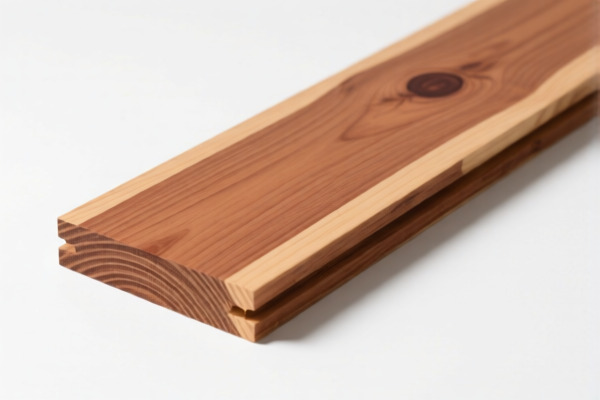
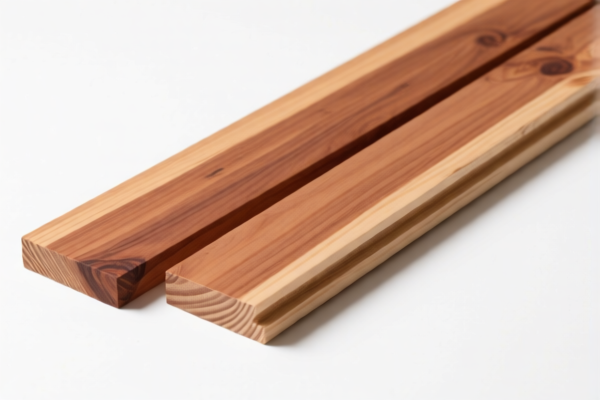
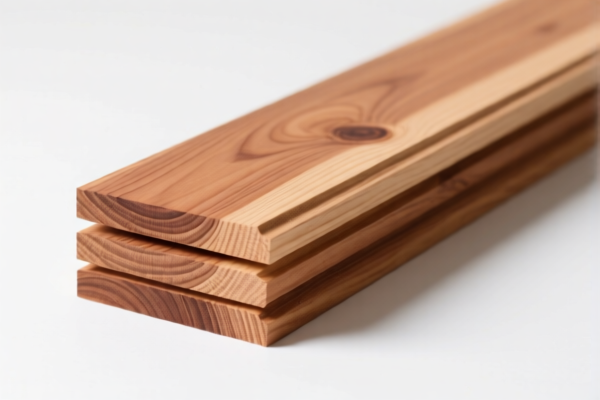
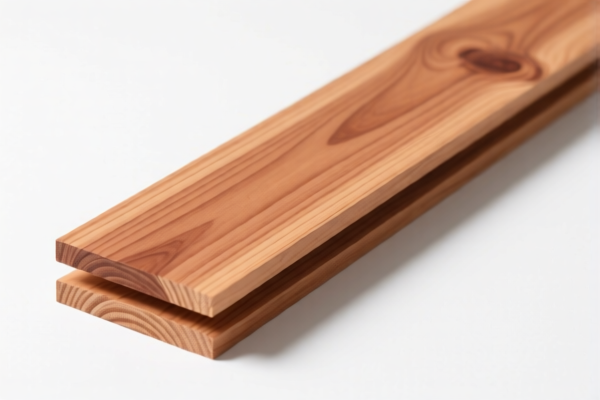
AI分析
🌲 Western Red Cedar Timber (Thuja plicata)
🌐 HS Code Reference & Customs Clearance Guide | 2026 Latest Tariff Analysis | Strategic Import Strategy
📌 I. Product Definition & Classification: Do You Really Know "Western Red Cedar"?
Western Red Cedar (WRC) is a premium softwood known for its natural resistance to decay, insects, and moisture. In international trade, it is strictly classified under Coniferous Timber. Its classification depends heavily on its processing level: whether it is raw log, rough-sawn, or further processed (like planed or sliced).
⚠️ Key Distinction Points:
- If the wood is in its raw, unprocessed, or merely debarked state → Classified as Logs/Ingot (Chapter 44.03).
- If the wood is sawn or chipped lengthwise (rough sawn, planed, etc.) → Classified as Sawn Wood (Chapter 44.07 or 44.08).
- Crucial Note: WRC is always considered "Coniferous" (Softwood), regardless of its reddish appearance.
📦 II. HS Code Classification Details (2026 Latest Tariff Authority Comparison)
| HS Code | Product Description | Application Scenario | Processing State |
|---|---|---|---|
4403.25.01.55 |
Western Red Cedar, Coniferous Wood | Raw Logs / Ingot / Roughly trimmed | ❌ Raw/Unprocessed |
4403.26.01.55 |
Western Red Cedar, Coniferous Timber | Sawn/Lumber (Rough or Planed) | ✅ Processed (Sawn) |
4407.19.00.69 |
Western Red Cedar Wood | Further Processed Sawn Wood (Non-standard) | ✅ Deep Processed |
4408.10.01.45 |
Red Cedar Veneer Sheets | Veneer / Thin Slices (for Plywood/Furniture) | ✅ Sliced/Laminated |
🔍 Key Reminder:
- All listed HS Codes for Western Red Cedar from China attract a Total Tax Rate of 35.0%.
- Misclassifying raw logs as sawn wood (or vice versa) can lead to customs delays, re-inspection, or penalties, even if the tax rate remains similar.
-4403covers "Wood freshly felled... roughly squared";4407covers "Wood sawn or chipped lengthwise";4408covers "Veneer sheets".
💰 III. 2026 Latest Tariff Rate Breakdown (Including Surtaxes & Policy Add-ons)
✅ Applicable Country: USA (US)
✅ Origin: China (CN)
✅ Effective Time: 2025-Nov-10 (For all subsequent imports)
✅ Total Effective Tax Rate: 35.0% (Fixed for all WRC codes in this dataset)
🎯 1. Base Tariff & Surtax Structure
| Component | Rate | Legal Basis | Description |
|---|---|---|---|
| Base Tariff | 0.0% | HTSUS General | No basic import duty for most coniferous timber |
| Section 301 Surtax | +25.0% | USITC Footnote 9903.88.01 | Trade war surcharge on Chinese goods |
| Section 122 / IEEPA Surtax | +10.0% | IEEPA:9903.01.25 | Emergency economic powers surcharge |
| TOTAL EFFECTIVE RATE | 35.0% | Sum of All | Apply to CIF Value |
📌 Explanation:
- 0% Base: Coniferous timber often has zero base duty to encourage construction material imports.
- 25% Section 301: The standard trade war tariff on Chapter 44 (Wood) from China.
- 10% Section 122/IEEPA: Additional national security/emergency surcharge effective from Nov 2025.
- Total 35%: This is a high-cost import category. Profit margins must account for this significant tax burden.
🛠️ IV. Customs Clearance Practical Advice (Avoid Pitfalls)
✅ 1. Required Documentation Checklist (Mandatory)
| Document | Required | Purpose |
|---|---|---|
| ✅ Phytosanitary Certificate | ✔️ Critical | Issued by origin country authority; proves wood is pest-free (ISPM 15 compliance). |
| ✅ Commercial Invoice | ✔️ | Must clearly state: "Western Red Cedar (Thuja plicata)", HS Code, Country of Origin. |
| ✅ Packing List | ✔️ | Detailed dimensions, weight, and volume (CBM). |
| ✅ Bill of Lading/Air Waybill | ✔️ | Standard shipping document. |
| ✅ Species Declaration | ✔️ | Explicitly name the species to avoid confusion with other cedars (e.g., Eastern Red Cedar). |
| ✅ Fumigation Certificate | ✔️ | If not heat-treated, must show chemical fumigation. |
✅ 2. Declaration Tips (Key Mnemonics)
🔥 “Species Clear, Process Defined, Phytosanitary Ready, Taxes Paid!”
| Scenario | Correct HS Code | Risk if Misclassified |
|---|---|---|
| Raw Logs with bark | 4403.25.01.55 |
Risk of "Incomplete Declaration" → Delay |
| Sawn Lumber (2x4, etc.) | 4403.26.01.55 or 4407.19.00.69 |
Risk of wrong duty calculation |
| Veneer Sheets (Thin) | 4408.10.01.45 |
Risk of misfitting "Wood" vs "Veneer" |
| Mixed Species Loads | Split Declaration | High risk of audit if not separated |
✅ 3. Special Handling Cases
| Situation | Handling Advice |
|---|---|
| ISPM 15 Marking | Ensure all wooden pallets/crating are marked with IPPC logo. Unmarked wood = Rejection/Re-export. |
| Moisture Content | Declare moisture content (e.g., "Air-Dried" vs "Kiln-Dried"). Affects grading but not HS code directly. |
| Value Declaration | Ensure CIF value includes freight and insurance. Customs may verify Landed Cost vs Invoice Value. |
| End-Use Declaration | Specify if for "Construction," "Fencing," or "Garden Use." Some uses may require additional EPA/FDA notes (if treated with chemicals). |
🌍 V. Global Market Customs Comparison (2026 Update)
| Country/Region | Recommended HS Code | Tariff Rate (China Origin) | Key Certification | Notes |
|---|---|---|---|---|
| 🇺🇸 USA | 4403.26.01.55 / 4407.19.00.69 |
35.0% | Phytosanitary + Fumigation | Highest Cost due to 301 + 122 clauses |
| 🇨🇳 China | 4403.26.01.55 |
Varies (Import Duty) | Phytosanitary | Domestic use common |
| 🇪🇺 EU | 4403.25 / 4407.10 |
0% - 4.7% | Phytosanitary (Reg 1078/2008) | No Section 301 tariffs. More Favorable |
| 🇬🇧 UK | 4403.25 |
0% - 5% | Phytosanitary | Post-Brexit rules apply |
| 🇨🇦 Canada | 4403.25 |
0% | CFIA Phytosanitary | Nearshoring advantage; low tariffs |
| 🇦🇺 Australia | 4403.25 |
5% - 10% | Biosecurity Permit | Strict biosecurity rules |
📌 Conclusion:
- USA is the most expensive market for WRC due to 35% total tariffs.
- EU/UK/Canada offer significantly lower or zero tariffs. Consider supply chain diversification if targeting non-US markets.
- Biosecurity is the #1 hurdle globally for wood products, not just tariffs.
📌 VI. Common Mistakes & Pitfall Guide (Lessons Learned)
❌ Mistake 1: Forgetting the Phytosanitary Certificate
👉 Consequence: Cargo held in quarantine, fumigated at importer’s cost, or returned. No Phytosanitary = No Entry.
❌ Mistake 2: Misidentifying Species (e.g., calling WRC "Cedar Wood" vaguely)
👉 Consequence: Customs may classify it under a higher-duty or restricted category. Always use "Thuja plicata".
❌ Mistake 3: Ignoring Section 301 & 122 Surprises
👉 Consequence: Unexpected 35% tax bill erodes profit. Plan cash flow accordingly.
❌ Mistake 4: Mixing Raw Logs and Sawn Wood in One Container
👉 Consequence: Separate declarations required. Mixed loads cause administrative delays.
✅ Correct Practice:
"Western Red Cedar (Thuja plicata), Sawn and Planed, Kiln-Dried, ISPM 15 Compliant Crating, HS Code 4403.26.01.55, Origin China"
🎯 VII. Conclusion: Professional Declaration, Cost Control, Risk Reduction
🎯 Key Takeaways:
🔹 "Phytosanitary is King, HS Code is Queen, Tariffs are the Court."
🔹 "35% Total Tax in US – Factor it into FOB Pricing."
🔹 "Never Ship Wood Without a Phytosanitary Certificate."
📌 Pro Tip:
If your WRC is sourced from Canada or USA (not China), tariffs drop to 0% in the US (USMCA).
For European imports, ensure EUTR (EU Timber Regulation) compliance to avoid legal risks.
📣 Immediate Action:
📞 Engage a licensed customs broker + Verify Phytosanitary status + Calculate Landed Cost with 35% Tax
🚀 Ensure smooth clearance, avoid detention, and protect your margins!
✨ Precision in Classification Saves Time and Money!
💼 Every CBM counts – optimize your wood supply chain today!
用户评价
关于 HS 编码归类
协调制度(HS)是由世界海关组织(WCO)制定的国际贸易商品分类标准。全球 200 多个国家采用 HS 系统作为海关关税、贸易统计和进出口监管的基础。
每个 HS 编码遵循以下层级结构:
- 章(2 位)——商品大类(例如:第 84 章:机器和机械设备)
- 品目(4 位)——章内的更具体分类
- 子目(6 位)——国际通用细分,所有 WCO 成员国统一使用
- 本国细分(8-10 位)——各国自行扩展的细分编码,如美国 HTSUS 10 位编码
正确的 HS 编码归类对于顺利通关、准确缴纳关税和遵守贸易法规至关重要。错误归类可能导致海关延误、多缴关税或罚款。
从CN进口到US时,适用的关税税率可能包括:
- 最惠国(MFN)税率——适用于 WTO 成员国的标准关税税率
- 普通税率——适用于无贸易协定国家
- 贸易救济关税——附加关税,如 301 条款(反倾销)、232 条款(国家安全)或反补贴税
本页内容仅供参考。如需正式归类,请咨询当地海关或持牌报关代理。