Wet Blue Leather Lining
CN → US| HS编码 | 关税税率 | 原产国 | 目的国 | 文档 |
|---|---|---|---|---|
| 4107111040 | 35.0% | CN | US | 官方文档 |
| 4107121040 | 35.0% | CN | US | 官方文档 |
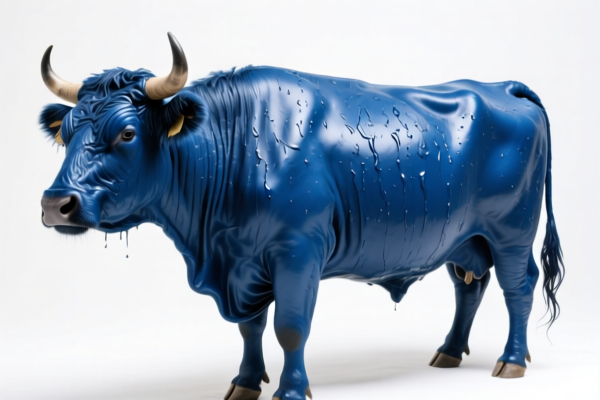
商品图片


AI分析
🐂 Wet Blue Lining Leather (Bovine/Equine)
🌐 HS Code Reference & Customs Clearance Guide | 2024/2025 Latest Tariff Analysis | Professional Clearance Strategy
📌 I. Product Definition & Classification: What is "Wet Blue Lining Leather"?
Wet Blue Leather refers to leather that has been tanned using chrome salts but has not yet undergone final finishing (dyeing, fatliquoring, drying, or drumming). It is semi-processed and typically sold in a "wet" state.
Lining Leather specifically denotes hides or skins intended for use as an inner layer in footwear, bags, or garments.
In international trade, the classification hinges on two critical factors:
1. Surface Area: Is the unit surface area ≤ 2.6 m² (28 sq ft)?
2. Type: Is it "Upper Leather/Lining Leather" or "Grain Split"?
3. State: Is it without hair on (tanned)?
⚠️ Key Distinction:
- If the leather is whole hide/skin (not split) or is split leather used for lining, it falls under Heading 4107.
- The term "Wet Blue" implies it is tanned but not fully finished. However, HS Code 4107 covers "Leather further prepared after tanning or crusting," which includes semi-finished states like wet blue if they are classified as "lining leather."
- Critical Threshold: The unit surface area must not exceed 28 square feet (2.6 m²) for the specific subheadings provided in the data.
📦 II. HS Code Classification Details (Based on Provided Data)
| HS Code | Product Description | Key Characteristics | Surface Area Limit |
|---|---|---|---|
4107.11.10.40 |
Whole hides and skins: Full grains, unsplit: Of bovines... Upper leather; lining leather | Unsplit bovine leather (including buffalo) or equine. No hair on. Tanned (e.g., Wet Blue). Used for lining. | ≤ 2.6 m² (28 sq ft) |
4107.12.10.40 |
Whole hides and skins: Grain splits: Of bovines... Upper leather; lining leather | Split leather (grain split) of bovine/equine. No hair on. Tanned. Used for lining. | ≤ 2.6 m² (28 sq ft) |
🔍 Focus Reminder:
- 4107.11.10.40 applies to unsplit hides/skins (full grain or top split from unsplit) where the surface area is small.
- 4107.12.10.40 applies specifically to grain splits (the fleshy layer split from the back) where the surface area is small.
- Both require the leather to be without hair on and intended as lining leather.
💰 III. 2024/2025 Latest Tariff Rate Details (Including Additional Duties)
✅ Applicable Country: United States (US)
✅ Origin: China (CN) (Inferred from the 25% additional duty structure typical of Section 301 tariffs)
✅ Effective Date: Current (Subject to ongoing trade policy)
🎯 1. 4107.11.10.40 —— Bovine/Equine Whole Hides/Skins, Full Grain, Unsplit, Lining Leather
| Item | Detail |
|---|---|
| Basic Tariff Rate | 0.0% |
| Additional Duty (Section 301) | 0.0% |
| Total Tax Rate | 0.0% |
| Tax Calculation | CIF Value × 0% = $0 |
| Legislative Basis | Standard HTSUS 4107.11.10.40 |
📌 Explanation:
- This classification enjoys a duty-free status for imported goods.
- Unlike many electronic or industrial goods, certain raw or semi-processed leather linings from bovine/equine sources (under 28 sq ft) are not subject to the heavy Section 301 additional tariffs in this specific subheading.
- Advantage: Significant cost savings for importers compared to other leather categories or larger hides.
🎯 2. 4107.12.10.40 —— Bovine/Equine Grain Splits, Lining Leather
| Item | Detail |
|---|---|
| Basic Tariff Rate | 0.0% |
| Additional Duty (Section 301) | +25.0% |
| Total Tax Rate | 25.0% |
| Tax Calculation | CIF Value × 25% |
| Legislative Basis | HTSUS 4107.12.10.40 + USITC Footnote/Section 301 Order |
📌 Explanation:
- While the basic tariff is 0%, this specific subheading (Grain Splits) is subject to a 25% additional duty.
- This highlights a critical difference in trade policy: Unsplit leather (4107.11) may be duty-free, while split leather (4107.12) may incur significant penalties.
- Risk Factor: Misclassifying a split leather as unsplit can lead to severe customs penalties (fraud allegation), but misclassifying unsplit as split leads to overpayment. Accuracy is paramount.
🛠️ IV. Customs Clearance Practical Advice (Avoiding Pitfalls)
✅ 1. Essential Documentation Checklist
| Document | Requirement | Purpose |
|---|---|---|
| ✅ Product Specification Sheet | ✔️ Must specify: Species (Bovine/Equine), Tanning Method (Chrome/Wet Blue), Use (Lining), Unit Surface Area | To prove compliance with the ≤ 28 sq ft limit |
| ✅ Commercial Invoice | ✔️ Clearly state "Wet Blue Lining Leather, Bovine, Unsplit/Split" | For tariff classification verification |
| ✅ Packing List | ✔️ Detailed weight and dimensions | To calculate average unit surface area if not sold by count |
| ✅ Certificate of Origin | ✔️ Required if claiming preferential treatment (though rates here are 0% or 25% standard) | To verify origin for Section 301 applicability |
| ✅ Photos of Goods | ✔️ Show cross-section (to confirm split vs. unsplit) and label | To visually verify classification |
📌 Key Tip:
- "Wet Blue" is not an HS Code. You must classify based on the physical state (split/unsplit) and species.
- Ensure the invoice explicitly mentions "Lining Leather" to justify the subheading ending in.40.
✅ 2. Classification Strategy & Verification
| Scenario | Correct HS Code | Why? |
|---|---|---|
| Bovine hide, unsplit, ≤ 28 sq ft, for lining | 4107.11.10.40 |
Matches "Full grains, unsplit" and "Lining leather" |
| Bovine hide, split (grain split), ≤ 28 sq ft, for lining | 4107.12.10.40 |
Matches "Grain splits" and "Lining leather" |
| Hide > 28 sq ft | ❌ Do NOT use above codes | Must use larger hide subheadings (e.g., 4107.21/22/24) which have different tax rates |
| Hair-on leather | ❌ Do NOT use above codes | Heading 4107 requires "without hair on". Use Heading 4101/4102 for raw/unprocessed |
🔥 Golden Rule:
"Split vs. Unsplit is the Deciding Factor for Tariff Shock!"
- Unsplit (4107.11) = 0%
- Split (4107.12) = 25%
- One millimeter difference in processing determines a $250 tax per $1,000 shipment!
✅ 3. Special Considerations for "Wet Blue"
| Issue | Solution |
|---|---|
| Moisture Content | Wet blue leather is heavy due to water. Ensure CIF Value is declared correctly. Do not exclude water weight from duty calculation basis unless specific rules allow. |
| Preservation | Wet blue leather can spoil. Ensure export/import permits are ready. Customs may inspect for odor/mold, which could delay clearance. |
| Split Verification | If the supplier claims "unsplit" but it is actually split, you risk 25% underpayment. Request a mill certificate or lab test to confirm the cross-section structure. |
🌍 V. Global Market Comparison (Contextual)
| Region | HS Code (Approx.) | Typical Duty | Note |
|---|---|---|---|
| 🇺🇸 USA | 4107.11.10.40 / 4107.12.10.40 |
0% / 25% | High sensitivity to split/unsplit classification. |
| 🇪🇺 EU | 4107 21/22/24 | Varies (0-6%) | EU does not use the exact 28 sq ft rule; uses different subheadings for unprocessed/processed. |
| 🇨🇳 China | 4107 11/12 | ~10% | Import duties differ; China is often an exporter of such leather. |
📌 Conclusion:
- The US market presents a binary risk: 0% vs. 25% based purely on the structural integrity (split vs. unsplit) of the bovine hide.
- Section 301 tariffs apply specifically to the split category in this data set.
📌 VI. Common Errors & Pitfalls (Blood & Tears Lessons)
❌ Error 1: Classifying Split Leather as Unsplit to avoid the 25% tariff
👉 Consequence: Customs audit finds split structure → Back taxes + 25% penalty + potential fraud investigation.
❌ Error 2: Ignoring the 28 sq ft (2.6 m²) limit
👉 Consequence: If hides are larger, the code is invalid → Incorrect classification → Duty recalculation + delays.
❌ Error 3: Declaring "Leather" generically without specifying "Lining"
👉 Consequence: Customs may classify as "Upper Leather" (different subheading) → Different tax rate or rejection.
❌ Error 4: Assuming "Wet Blue" has a specific tariff
👉 Consequence: "Wet Blue" is a processing state, not a classification criterion. Must classify by species + split status + use.
✅ Correct Action:
"Bovine Wet Blue Lining Leather, Unsplit, Unit Area ≤ 2.6 m², Chrome Tanned, Model: WB-LINE-01"
🎯 VII. Conclusion: Precision Saves Money
🎯 Remember the Mantra:
🔹 "Unsplit Lining? Zero Duty! Split Lining? 25% Hit!"
🔹 "Under 28 Sq Ft is the Key! Bigger Hides Need Different Codes!"
📌 Pro Tip:
If your supplier mixes sizes or types, pre-classify each lot.
For high-volume shipments, consider Applying for a Binding Ruling from US Customs to confirm if your specific "Wet Blue" product qualifies under 4107.11.10.40 vs 4107.12.10.40.
📣 Immediate Action:
📞 Verify Split Status: Ask your supplier for a cross-section photo.
📦 Measure Unit Area: Ensure every hide/skin is ≤ 28 sq ft.
📄 Document Use: Explicitly label as "Lining Leather" on the invoice.
✨ Accurate Classification is the First Step to Profit!
💼 Don't let a 25% tariff erase your margin!
用户评价
关于 HS 编码归类
协调制度(HS)是由世界海关组织(WCO)制定的国际贸易商品分类标准。全球 200 多个国家采用 HS 系统作为海关关税、贸易统计和进出口监管的基础。
每个 HS 编码遵循以下层级结构:
- 章(2 位)——商品大类(例如:第 84 章:机器和机械设备)
- 品目(4 位)——章内的更具体分类
- 子目(6 位)——国际通用细分,所有 WCO 成员国统一使用
- 本国细分(8-10 位)——各国自行扩展的细分编码,如美国 HTSUS 10 位编码
正确的 HS 编码归类对于顺利通关、准确缴纳关税和遵守贸易法规至关重要。错误归类可能导致海关延误、多缴关税或罚款。
从CN进口到US时,适用的关税税率可能包括:
- 最惠国(MFN)税率——适用于 WTO 成员国的标准关税税率
- 普通税率——适用于无贸易协定国家
- 贸易救济关税——附加关税,如 301 条款(反倾销)、232 条款(国家安全)或反补贴税
本页内容仅供参考。如需正式归类,请咨询当地海关或持牌报关代理。