Wet Tanned Sheep Skins
CN → US商品图片
AI分析
🐑 Wet Tanned Sheep Skins (Leather)
🌐 HS Code Reference & Clearance Guide | 2026 Latest Tariff Analysis | Professional Clearance Strategy
📌 I. Product Definition & Classification: Do You Know "Wet Tanned Sheep Skins"?
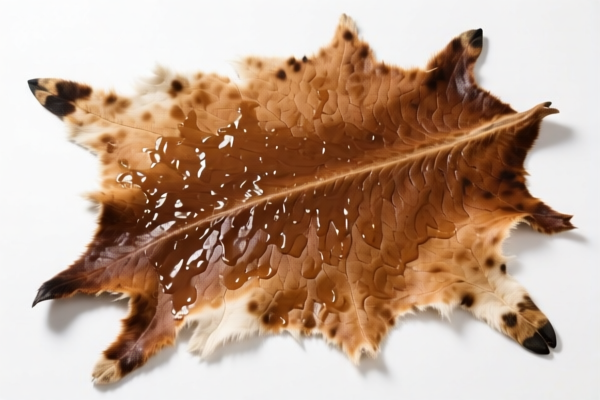
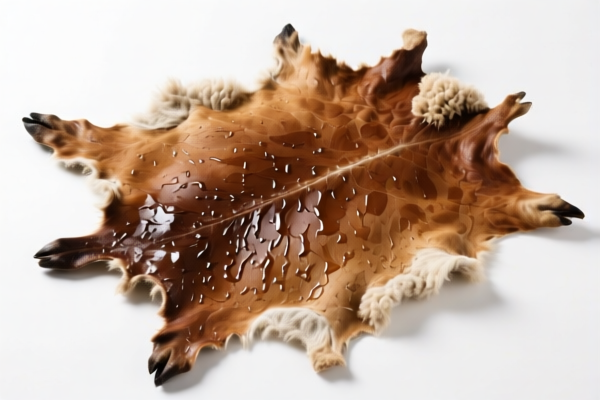
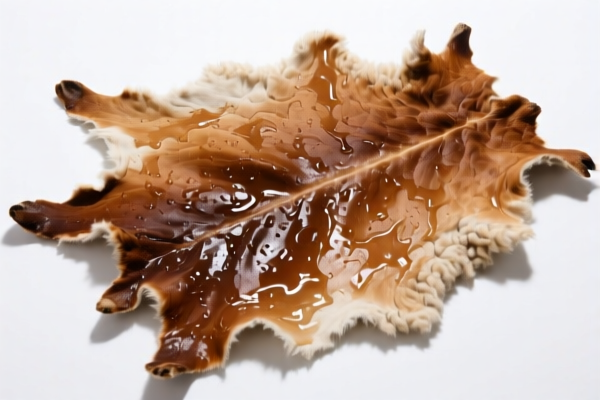
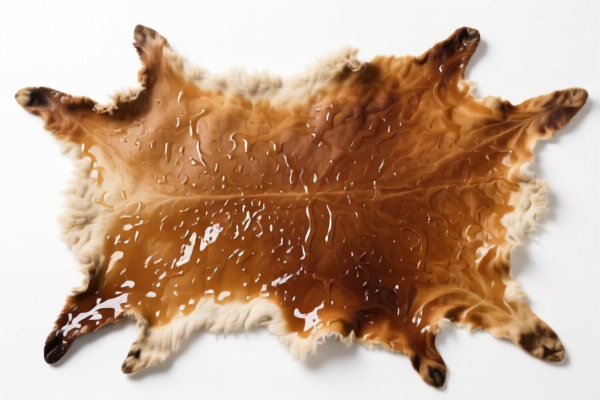
Wet Tanned Sheep Skins refer to sheep hides or skins that have undergone the tanning process but are still moist, supple, and have not yet been dried, fleshed, or finished into final leather goods. They are the intermediate semi-finished products in the leather industry.
In international trade, they are strictly distinguished from: * Dried/Fleshed Skins (Chrome Tanned): Already processed and ready for further finishing or shoe upper manufacturing. * Finished Leather: Fully processed, colored, and coated leather ready for end-use. * Raw Hides: Untreated, salted, or fresh skins.
⚠️ Key Distinction Point:
- If the skin is tanned (e.g., chrome-tanned) but still wet/moist and not fully dried/fleshed → It falls under Chapter 41 (Leather).
- If it is untreated (raw/salted) → It falls under Chapter 02 (Meat) or Chapter 41 depending on preservation method, but "Wet Tanned" specifically implies the tanning process is complete.
- If it is dried and fleshed → It is still Chapter 41, but the subheading may differ based on thickness and finish.
📦 II. HS Code Classification Details (2026 Latest Tariff Authority Comparison)
| HS Code | Product Description | Applicable Scenario | Tanning Method | Moisture State |
|---|---|---|---|---|
4104.41.10.00 |
Chrome-tanned sheep/pigskin, wet, not further processed | Wet chrome-tanned sheep skins, supple, moist | ✅ Chrome | ✅ Wet |
4104.41.90.00 |
Other chrome-tanned sheep/pigskin, wet | Non-standard chrome tanning, mixed batches | ✅ Chrome | ✅ Wet |
4104.51.10.00 |
Vegetable-tanned sheep/pigskin, wet | Veg-tanned sheep skins (less common for sheep) | ✅ Vegetable | ✅ Wet |
4105.10.10.00 |
Chrome-tanned sheepskins, dried, fleshed | Not applicable to wet skins, but common competitor | ✅ Chrome | ❌ Dry |
4106.21.10.00 |
Other skins, tanned, wet | If not sheep/pig (e.g., goat), but question specifies sheep | N/A | ✅ Wet |
🔍 Key Reminder:
- Sheepskins are specifically classified under 4104 (if chrome-tanned) or 4105 (if vegetable-tanned or other).
- Wet Tanned means the tanning agent (usually chromium salts) has penetrated, but the skin has not been dried or drum-dried. It is heavy, heavy, and prone to spoilage if not transported properly.
- Do NOT classify as "Finished Leather" (4107) or "Raw Hides" (4102).
💰 III. 2026 Latest Tariff Rate Details (Including Surtaxes, Policy Surcharges)
✅ Applicable Country: United States (US)
✅ Country of Origin: China (CN)
✅ Effective Date: November 10, 2025 onwards (including subsequent imports)
🎯 1. 4104.41.10.00 – Chrome-Tanned Sheepskins, Wet
| Item | Content |
|---|---|
| Base Rate | 3.8% (ad valorem) |
| USITC Surtax | +25% (under USITC Footnote 9903.02.22 for certain leather goods) |
| IEEPA Surtax | +10% (for Chinese/Hong Kong products, effective Nov 10, 2025) |
| Total Rate | 38.8% |
| Tax Calculation | CIF Value × 38.8% |
| De Minimis Eligibility | ❌ No (deny_de_minimis applies to leather products from China) |
| Legal Basis Path | IEEPA:9903.01.25 → IEEPA:9903.01.24 → USITC:4104.41.10.00 → FOOTNOTE:9903.02.22 |
📌 Explanation:
- "USITC Surtax 25%" comes from the Section 301 tariffs on specific leather items. Note: Some raw hides may have different footnotes, but tanned skins often fall under higher surtaxes.
- "IEEPA 10%" is the IEEPA tariff for Chinese-origin goods.
- Total 38.8% is a high tariff, making cost calculation critical.
🎯 2. 4105.10.10.00 – Chrome-Tanned Sheepskins, Dried & Fleshed (For Comparison)
| Item | Content |
|---|---|
| Base Rate | 3.2% |
| USITC Surtax | +25% |
| IEEPA Surtax | +10% |
| Total Rate | 38.2% |
| Tax Calculation | CIF Value × 38.2% |
| De Minimis Eligibility | ❌ No |
📌 Note:
- Even if dried, sheepskins from China face similar high surtaxes.
- Wet skins are heavier (higher weight), so freight costs may be higher, but the duty rate is comparable.
🛠️ IV. Clearance Practical Advice (Real-World Pitfall Guide)
✅ 1. Preparation Checklist (Essential)
| Material | Must Provide | Explanation |
|---|---|---|
| ✅ Product Specification | ✔️ | Tanning method (Chrome/Veg), moisture content, weight, dimensions |
| ✅ Tanning Certificate | ✔️ | Proof of tanning process, chromium content compliance |
| ✅ HS Code Declaration | ✔️ | Must specify "Wet Tanned Sheepskins" not "Finished Leather" |
| ✅ Commercial Invoice | ✔️ | Clearly state "Chrome-Tanned Sheepskins, Wet, Not Further Processed" |
| ✅ Packing List | ✔️ | Weight must be accurate; wet skins are heavy |
| ✅ Phytosanitary Certificate | ❓ | Usually not required for tanned leather, but check if raw materials were inspected |
| ✅ Environmental Compliance Doc | ✔️ | ETP (Effluent Treatment Plant) certificate may be requested for environmental audits |
✅ 2. Declaration Tips (Key Mantra)
🔥 "Wet is Wet, Dry is Dry, Chrome is Chrome, Veg is Veg!"
| Scenario | Correct Declaration | Incorrect Practice |
|---|---|---|
| Wet, Chrome-Tanned Sheepskins | 4104.41.10.00 |
Declare as "Finished Leather" → 10%+25%+10%=45% (Higher risk of penalty) |
| Dried, Chrome-Tanned Sheepskins | 4105.10.10.00 |
Declare as "Wet" → Misclassification |
| Raw, Salted Sheepskins | 4102.21.00.00 |
Declare as "Tanned" → Major violation |
| Mixed Batches (Sheep & Goat) | Split Declaration | Combine → Wrong HS Code |
✅ 3. Special Situation Handling
| Situation | Handling Advice |
|---|---|
| High Moisture Content | Ensure packaging is waterproof and labeled "Keep Dry" to prevent mold during transit |
| Chromium VI Compliance | Provide test reports proving Cr(VI) < 3 ppm (REACH/EU standard) even for US imports, as many US buyers require it |
| OEM/Custom Tanning | Provide customer specs to prove it's not a "general commodity" but a custom semi-finished good |
| Transshipment via Vietnam | If shipped via Vietnam, ensure no "substantial transformation" occurred; otherwise, origin may be questioned |
🌍 V. Global Market Clearance Comparison (2026 Latest)
| Country/Region | Recommended HS Code | Tariff | Certification Requirements | Notes |
|---|---|---|---|---|
| 🇺🇸 USA | 4104.41.10.00 |
38.8% (CN origin) | None specific, but Cr(VI) test recommended | High surtaxes apply |
| 🇨🇳 China | 4104.41.10.00 |
12% (Import Duty) + VAT 13% | N/A for import | If exporting from China, no duty |
| 🇪🇺 EU | 4104.41.00 |
6.5% | REACH (Cr(VI) test mandatory) | Strict environmental rules |
| 🇦🇺 Australia | 4104.41.00 |
5% | None specific | Low tariff |
| 🇯🇵 Japan | 4104.41.00 |
3.2% | None specific | Low tariff |
📌 Conclusion:
- USA has the highest total tariff (38.8%) for Chinese-origin wet tanned sheepskins.
- EU requires REACH compliance, which is a significant barrier for smaller tanneries.
- Asia markets (Japan, Australia) offer lower tariffs, making them competitive for Chinese suppliers.
📌 VI. Common Errors & Pitfall Guide (Lessons Learned)
❌ Error 1: Declaring "Wet Tanned Sheepskins" as "Finished Leather"
👉 Consequence: Wrong HS Code → Duty may be higher (up to 45% for some leather goods) + Penalty
❌ Error 2: Ignoring Moisture Content in Weight Declaration
👉 Consequence: Freight costs miscalculated → Profit margin erosion
❌ Error 3: Failing to Provide Chromium Test Reports
👉 Consequence: Rejection by US buyers or customs if environmental audits are triggered
❌ Error 4: Mixing Raw and Tanned Skins in One Shipment
👉 Consequence: Customs may demand separate declarations for each HS Code → Delay
✅ Correct Practice:
"Chrome-Tanned Sheepskins, Wet, Not Further Processed, Cr(VI) Compliant, Model XYZ, Bulk Packed, CIF Value $X, Country of Origin: China"
🎯 VII. Conclusion: Professional Classification, Cost Control!
🎯 Remember the Mantra:
🔹 "Wet Tanned Sheepskins, HS 4104.41.10.00. Duty 38.8% for China. Dry is 4105.10.10.00. Don't Mix!"
🔹 "Cr(VI) Test is a Must. Wet Skins Are Heavy. Declare Accurately."
📌 Tips:
- If your sheepskins are originally from New Zealand or Australia, they may qualify for preferential tariffs under USMCA or GSP (if applicable), but note that IEEPA tariffs still apply to Chinese-origin goods.
- For US imports, consider Advance Ruling to confirm HS Code and tariff liability before shipping.
📣 Immediate Action:
📞 Contact a licensed customs broker + Provide Tanning Certificate + Verify Cr(VI) Compliance
🚀 Ensure smooth clearance, avoid penalties, and maximize your leather trade profits!
✨ Professional Clearance Starts with Precise Classification!
💼 Every Percent of Tariff Counts!
用户评价
关于 HS 编码归类
协调制度(HS)是由世界海关组织(WCO)制定的国际贸易商品分类标准。全球 200 多个国家采用 HS 系统作为海关关税、贸易统计和进出口监管的基础。
每个 HS 编码遵循以下层级结构:
- 章(2 位)——商品大类(例如:第 84 章:机器和机械设备)
- 品目(4 位)——章内的更具体分类
- 子目(6 位)——国际通用细分,所有 WCO 成员国统一使用
- 本国细分(8-10 位)——各国自行扩展的细分编码,如美国 HTSUS 10 位编码
正确的 HS 编码归类对于顺利通关、准确缴纳关税和遵守贸易法规至关重要。错误归类可能导致海关延误、多缴关税或罚款。
从CN进口到US时,适用的关税税率可能包括:
- 最惠国(MFN)税率——适用于 WTO 成员国的标准关税税率
- 普通税率——适用于无贸易协定国家
- 贸易救济关税——附加关税,如 301 条款(反倾销)、232 条款(国家安全)或反补贴税
本页内容仅供参考。如需正式归类,请咨询当地海关或持牌报关代理。