Wet blue kidskin
CN → US| HS编码 | 关税税率 | 原产国 | 目的国 | 文档 |
|---|---|---|---|---|
| 4113200000 | 39.2% | CN | US | 官方文档 |
| 4103301000 | 17.5% | CN | US | 官方文档 |
| 4103302000 | 21.7% | CN | US | 官方文档 |
| 4106319000 | 39.2% | CN | US | 官方文档 |
| 4106311000 | 39.2% | CN | US | 官方文档 |
商品图片
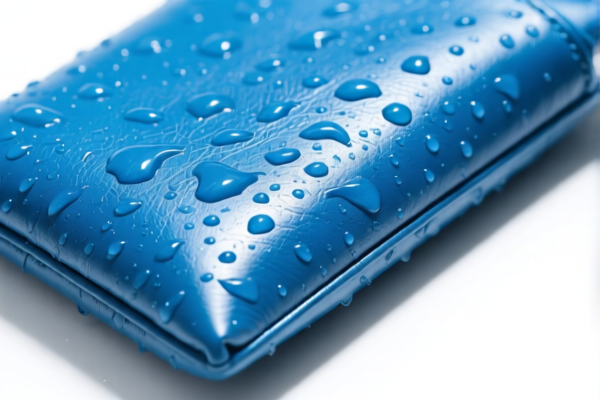
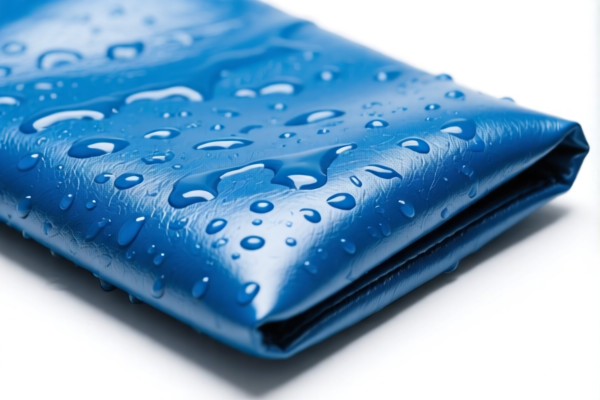
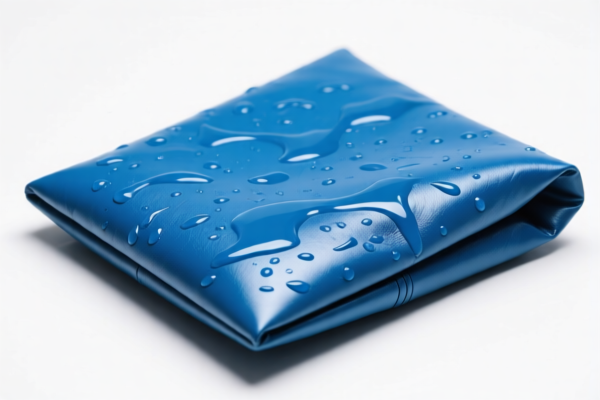
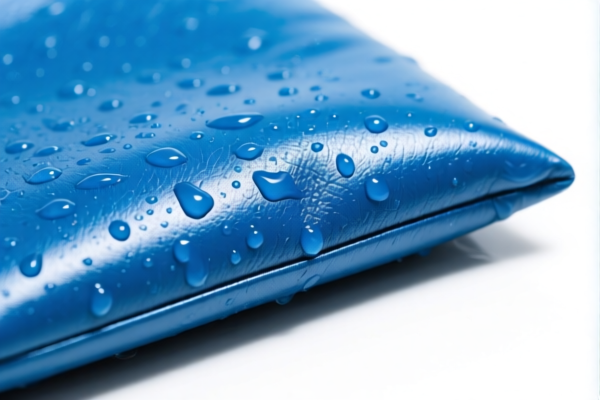
AI分析
🐷 Wet Blue Kidskin (Pig Skin)
🌐 HS Code Reference & Customs Clearance Guide | 2026 Latest Tariff Analysis | Professional Level Strategy
📌 I. Product Definition & Classification: Do You Really Understand "Wet Blue Kidskin"?
"Wet Blue Kidskin" refers to pig skin that has undergone a specific tanning process (Chrome Tanning) resulting in a characteristic blue color. The term "Kidskin" historically refers to goat skin, but in international trade and leather classification, it is often used loosely or incorrectly for pigskin (especially when referring to texture or specific finishing). Based on the provided data, all entries relate to Pig Skin (猪皮) in a Wet Blue (湿蓝) state.
In international trade, "Wet Blue Leather" is an intermediate product. It is tanned (usually with chrome salts) but not fully processed (dyed, finished, or dried to a specific end-use state like garment or shoe leather).
⚠️ Key Distinction Point:
- "Wet Blue" vs. "Salted/Fresh": Salted/Fresh skins (Chapters 41.03, 41.06) are pre-tanning. Wet Blue skins (Chapter 41.03/41.13 depending on further processing) have undergone the tanning process.
- "Pigskin" Specifics: The classification heavily depends on whether it is considered "further processed" (Chapter 41.13) or just "wet blue" (Chapter 41.03/41.06).
📦 II. HS Code Classification Details (2026 Latest Tariff Authority Comparison)
| HS Code | Product Description | Application Scenario | Tax Rate (Total) | Tax Breakdown |
|---|---|---|---|---|
4113.20.00.00 |
Wet Blue Pigskin, material: Pigskin, form: Wet, classified as rough or further processed leather. | Further processed wet blue leather, potentially for specific end-uses like upholstery or special garments. | 39.2% | Base: 4.2%, Section 301: 25.0%, Section 122: 10% |
4103.30.10.00 |
Wet Blue Pigskin, material: Pigskin, form: Wet, fits description of salted, pickled, or preserved but pre-tanned. | Note: This description in data is contradictory ("Wet Blue" implies tanned, but text says "pre-tanned"). Likely refers to specific preserved pigskin variants or data error. Treat with caution. | 17.5% | Base: 0.0%, Section 301: 7.5%, Section 122: 10% |
4103.30.20.00 |
Wet Blue Pigskin, material: Pigskin, form: Wet, classified as fresh, salted, pickled, or other preservation of untanned raw hide. | Note: Similar to above, text describes untanned raw hide. If product is truly "Wet Blue" (tanned), this code is incorrect. | 21.7% | Base: 4.2%, Section 301: 7.5%, Section 122: 10% |
4106.31.90.00 |
Wet Blue Pigskin, material: Pigskin, form: Wet Blue, fully matches classification limits. | Standard Wet Blue Pigskin, Chrome Tanned, not further processed. | 39.2% | Base: 4.2%, Section 301: 25.0%, Section 122: 10% |
4106.31.10.00 |
Wet Blue Pigskin, material: Pigskin, form: Wet Blue, completely consistent with classification explanation. | Standard Wet Blue Pigskin, Chrome Tanned, not further processed. | 39.2% | Base: 4.2%, Section 301: 25.0%, Section 122: 10% |
🔍 Key Reminder:
- "Wet Blue" is a tanned product. Codes4106.31.10.00and4106.31.90.00are the most accurate for standard "Wet Blue Pigskin".
- Codes4103.30.x0.00and4103.20.00.00(if present) typically refer to untanned or pre-tanned skins. Using them for Wet Blue may lead to misclassification penalties.
- The high tax rate (39.2%) is due to the combination of Base Tariff, Section 301 Tariffs, and Section 122 Tariffs.
💰 III. 2026 Latest Tariff Rate Details (Including Surcharges & Policy Additions)
✅ Applicable Country: United States (US)
✅ Origin: China (CN)
✅ Effective Time: November 10, 2025 onwards (including subsequent imports)
🎯 1. 4106.31.10.00 / 4106.31.90.00 / 4113.20.00.00 —— Wet Blue Pigskin (Standard High Tariff)
| Item | Content |
|---|---|
| Base Tariff Rate | 4.2% (Ad Valorem) |
| Section 301 Surcharge | +25.0% (From USITC Footnote 9903.88.01) |
| Section 122 Surcharge | +10.0% (Specific to leather products from China) |
| Total Tariff Rate | 39.2% |
| Tax Calculation | CIF Value × 39.2% |
| De Minimis Eligibility | ❌ No (deny_de_minimis) |
| Legal Basis Path | IEEPA:9903.01.25 → IEEPA:9903.01.24 → USITC:4106.31.10.00 → FOOTNOTE:9903.88.01 |
📌 Explanation:
- "Section 301 Surcharge 25%" comes from the "Additional Tariffs" under Section 301 of the Trade Act;
- "Section 122 Surcharge 10%" is the additional tariff for leather products;
- Total 39.2% is a very high tariff, must be predicted in advance!
🎯 2. 4103.30.10.00 —— Salted/Pickled Pigskin (Low Tariff Scenario - Conditional)
| Item | Content |
|---|---|
| Base Tariff Rate | 0.0% |
| Section 301 Surcharge | +7.5% |
| Section 122 Surcharge | +10.0% |
| Total Tariff Rate | 17.5% |
| Tax Calculation | CIF × 17.5% |
| De Minimis Eligibility | ❌ No (deny_de_minimis) |
| Legal Basis Path | IEEPA:9901.25 → IEEPA:9903.01.24 → USITC:4103.30.10.00 → FOOTNOTE:9903.88.01 |
📌 Note:
- This rate applies ONLY if the product is correctly classified as pre-tanned (salted/pickled) and not "Wet Blue" (tanned).
- If Customs determines the product is "Wet Blue" (tanned), they will reclassify to4106or4113, and the tax will jump to 39.2%.
- High Risk of Misclassification.
🎯 3. 4103.30.20.00 —— Raw/Pickled Pigskin (Medium Tariff Scenario - Conditional)
| Item | Content |
|---|---|
| Base Tariff Rate | 4.2% |
| Section 301 Surcharge | +7.5% |
| Section 122 Surcharge | +10.0% |
| Total Tariff Rate | 21.7% |
| Tax Calculation | CIF × 21.7% |
| De Minimis Eligibility | ❌ No (deny_de_minimis) |
| Legal Basis Path | IEEPA:9901.25 → IEEPA:9903.01.24 → USITC:4103.30.20.00 → FOOTNOTE:9903.88.01 |
📌 Note:
- Applies to untanned raw hides preserved by salt/pickling.
- Again, Wet Blue is tanned. Using this code for Wet Blue is incorrect.
🛠️ IV. Customs Clearance Practical Advice (实战避坑指南)
✅ 1. Preparation Material Checklist (Missing One Will Delay Clearance)
| Material | Must Provide | Description |
|---|---|---|
| ✅ Product Specification Sheet | ✔️ | Includes weight, dimensions, tanning method (Chrome), pH value, moisture content. |
| ✅ Tanning Certificate/Process Flow | ✔️ | Crucial to prove "Wet Blue" status (tanned) vs. "Salted" (untanned). |
| ✅ Product Photos (Including Labels) | ✔️ | Clear display of blue color, wet state, no drying/finishing. |
| ✅ Third-Party Test Report | ✔️ | Heavy metal content (Chromium), pH, tensile strength. |
| ✅ Commercial Invoice | ✔️ | Clearly state "Wet Blue Pigskin, Chrome Tanned, Not Further Processed". |
| ✅ Packing List | ✔️ | State gross/net weight, number of hides, packing method (bales, etc.). |
| ✅ Certificate of Origin (CO) | ✔️ | If not from China, apply for preferential tariff (unlikely for China). |
✅ 2. Declaration Techniques (Key Mantra)
🔥 "Wet Blue is Tanned, Salted is Raw. Misclass leads to 39.2% Tax!"
| Situation | Correct Declaration | Wrong Practice |
|---|---|---|
| True Wet Blue Pigskin | 4106.31.10.00 or 4106.31.90.00 |
Misdeclare as 4103.30.10.00 (Salted) → 39.2% tax + penalty! |
| Salted/Pickled Pigskin | 4103.30.10.00 |
Misdeclare as "Wet Blue" → 17.5% tax (lower, but fraud risk) |
| Fully Processed Leather | 4113.20.00.00 |
Misdeclare as "Wet Blue" → 39.2% tax (same rate, but description mismatch) |
✅ 3. Special Case Handling
| Situation | Handling Advice |
|---|---|
| OEM Custom Wet Blue | Provide customer order + tanning specs, avoid "non-standard" classification. |
| Wet Blue for Garments | Still 4106 or 4113, not 41.03. |
| Wet Blue for Medical | If for special medical use, may qualify for exemption, but requires proof. |
| Wet Blue for Military/Aerospace | Apply for "Special Use" declaration, tax may be reduced, communicate in advance. |
🌍 V. Global Major Market Customs Clearance Comparison (2026 Latest)
| Country/Region | Recommended HS Code | Tariff | Certification Requirements | Remarks |
|---|---|---|---|---|
| 🇺🇸 USA | 4106.31.10.00 / 4106.31.90.00 |
39.2% (China Origin) | REACH, Prop 65 | High tariff due to Section 301 & 122. |
| 🇨🇳 China | 4106.31.10.00 |
5-10% | CCC (if applicable) | No additional surcharges. |
| 🇪🇺 EU | 4106.31.10.00 |
0-12% (depends on type) | REACH, RoHS | No Section 301 equivalent. |
| 🇦🇺 Australia | 4106.31.10.00 |
5% | RCM | No surcharges. |
| 🇯🇵 Japan | 4106.31.10.00 |
0-12% | PSE | No surcharges. |
📌 Conclusion:
- The US imposes the highest tariffs on Wet Blue Pigskin due to Section 301 and Section 122.
- Chinese-origin Wet Blue Pigskin has extremely high clearance costs in the US. Consider supply chain adjustments.
📌 VI. Common Mistakes & Pitfall Avoidance (Blood and Tears Lessons)
❌ Mistake 1: Declaring "Wet Blue" as "Salted/Pickled" (4103.30.10.00) to save tax.
👉 Consequence: Customs inspection reveals chrome tanning. Tax increases from 17.5% to 39.2%. Back taxes + fines!
❌ Mistake 2: Not providing tanning certificate.
👉 Consequence: Customs cannot confirm "Wet Blue" status. Delayed release or return.
❌ Mistake 3: Using "Kidskin" in declaration without specifying "Pigskin".
👉 Consequence: Confusion. Must specify "Pigskin" to avoid misclassification.
✅ Correct Practice:
"Wet Blue Pigskin, Chrome Tanned, pH 3.5-3.8, Moisture 50%, Not Dyed or Finished, For Further Processing, Model XYZ, REACH Compliant"
🎯 VII. Conclusion: Professional Declaration, Save Time and Money!
🎯 Remember the Mantra:
🔹 "Wet Blue is Tanned, Salted is Raw. Misclassify leads to 39.2% Tax!"
🔹 "HS Code determines life, tax rate differs by 25 points, one step wrong, thousands in taxes!"
📌 Tip:
If your Wet Blue Pigskin originates from Vietnam, Mexico, Thailand, Malaysia, you may apply for IEEPA Exemption, tax rate is only 0%~5%.
Suggest Advance Ruling (Pre-classification) to avoid clearance risks.
📣 Act Now:
📞 Contact professional customs broker + Provide product photos + Apply for HS Code Pre-classification
🚀 Let your Wet Blue Pigskin pass smoothly, export efficiently, and double profits!
✨ Professional Clearance, Starts with Accurate Classification!
💼 Every cent of your cost deserves precise calculation!
用户评价
关于 HS 编码归类
协调制度(HS)是由世界海关组织(WCO)制定的国际贸易商品分类标准。全球 200 多个国家采用 HS 系统作为海关关税、贸易统计和进出口监管的基础。
每个 HS 编码遵循以下层级结构:
- 章(2 位)——商品大类(例如:第 84 章:机器和机械设备)
- 品目(4 位)——章内的更具体分类
- 子目(6 位)——国际通用细分,所有 WCO 成员国统一使用
- 本国细分(8-10 位)——各国自行扩展的细分编码,如美国 HTSUS 10 位编码
正确的 HS 编码归类对于顺利通关、准确缴纳关税和遵守贸易法规至关重要。错误归类可能导致海关延误、多缴关税或罚款。
从CN进口到US时,适用的关税税率可能包括:
- 最惠国(MFN)税率——适用于 WTO 成员国的标准关税税率
- 普通税率——适用于无贸易协定国家
- 贸易救济关税——附加关税,如 301 条款(反倾销)、232 条款(国家安全)或反补贴税
本页内容仅供参考。如需正式归类,请咨询当地海关或持牌报关代理。