Wheat straw bales
CN → US| HS编码 | 关税税率 | 原产国 | 目的国 | 文档 |
|---|---|---|---|---|
| 1404904000 | 37.3% | CN | US | 官方文档 |
| 1213000000 | 35.0% | CN | US | 官方文档 |
| 1404909090 | 35.0% | CN | US | 官方文档 |
| 1401904000 | 38.2% | CN | US | 官方文档 |
商品图片
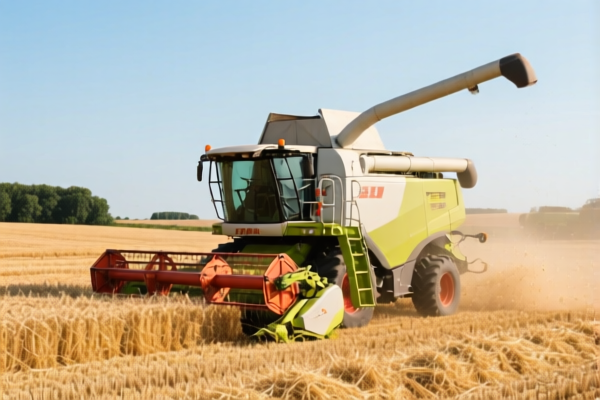
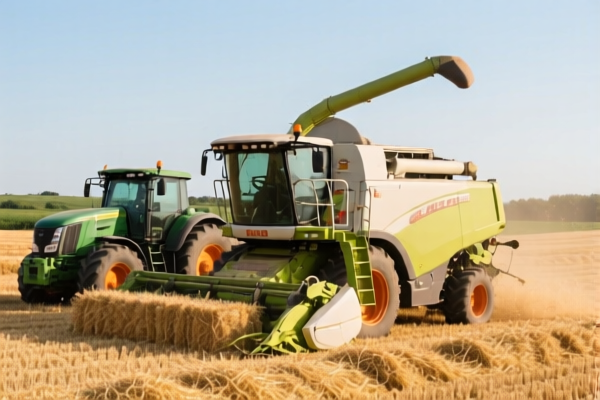
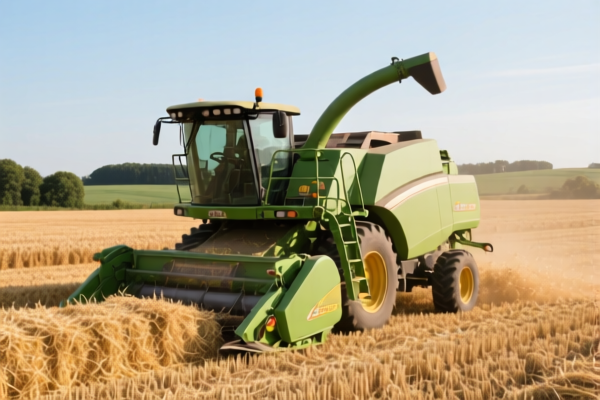
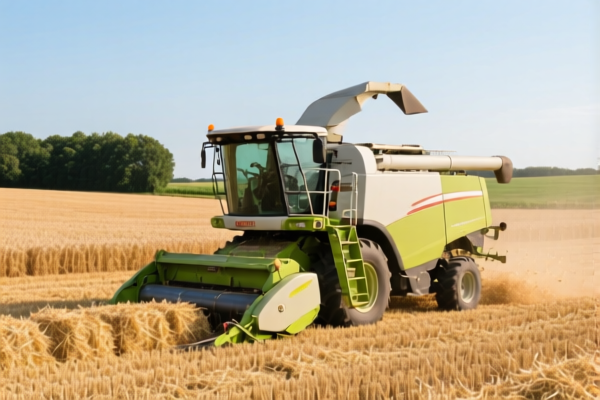
AI分析
🌾 Wheat Straw Bales (Agricultural Waste & Raw Plant Materials)
🌐 HS Code Reference & Customs Clearance Guide | 2026 Latest Tariff Analysis | Professional Entry Strategy
📌 I. Product Definition & Classification: What Exactly Are "Wheat Straw Bales"?
Wheat straw bales are the dried stalks remaining after wheat grain harvesting. In international trade, they are primarily classified as plant products or vegetable materials. However, their classification hinges on two critical factors: 1. Processing Level: Are they raw, unprocessed stalks? Or have they been processed into specific shapes (e.g., cut into lengths suitable for brooms/brushes)? 2. Intended Use: Are they used as general agricultural raw material, fuel, or manufacturing inputs for brushes/brooms?
⚠️ Key Distinction Point:
- If the straw is unprocessed (just baled stalks), it falls under Chapter 12 (Grain By-products) or Chapter 14 (Other Plant Products).
- If the straw is cut/prepared specifically for broom/brush making, it falls under HS 1404.90.40.00.
- General "other plant products" not specified elsewhere fall under HS 1404.90.90.90.
📦 II. HS Code Classification Details (2026 Latest Tariff Authority)
Based on the provided data, here are the applicable HS Codes for Wheat Straw Bales imported into the US from China:
| HS Code | Product Description | Application Scenario | Processing State |
|---|---|---|---|
1404.90.40.00 |
Broom or brush-making materials (Plant products) | Straw cut/prepared specifically for making brooms or brushes | ✅ Processed/Form-fitted |
1213.00.00.00 |
Grain straw and husks, unground, unprocessed | Raw wheat straw bales, used as bedding, fuel, or general feed | ✅ Unprocessed |
1404.90.90.90 |
Other plant products not elsewhere specified | General plant material, raw but not fitting other specific subheadings | ✅ Raw/Unprocessed |
1401.90.40.00 |
Vegetable materials (other than bamboo or rattan) | Other cereal straw (if distinct from wheat/grain straw in specific customs interpretations) | ✅ Vegetable Material |
🔍 Important Note:
- HS 1404.90.40.00 is the highest duty code (37.3%) because it is categorized as "broom/brush materials," often implying a level of preparation.
- HS 1213.00.00.00 and HS 1404.90.90.90 have a lower base duty (0%), resulting in a total duty of 35.0%.
- HS 1401.90.40.00 has a base duty of 3.2%, leading to the highest total duty (38.2%).
💰 III. 2026 Latest Tariff Rate Breakdown (Including Add-ons & Policy Surcharges)
✅ Applicable Country: United States (US)
✅ Origin: China (CN)
✅ Effective Time: Current trade restrictions apply (Section 301 + IEEPA)
🎯 1. 1404.90.40.00 — Broom/Brush Making Materials (Plant Products)
| Item | Detail |
|---|---|
| Base Tariff | 2.3% (ad valorem) |
| Section 301 Add-on | +25.0% (USITC Footnote for Chinese goods) |
| IEEPA Add-on | +10.0% (122 Clause Tariff, targeting specific Chinese exports) |
| Total Effective Rate | 37.3% |
| Duty Calculation | CIF Value × 37.3% |
| De Minimis Exemption | ❌ Not Eligible (Deny De Minimis) |
| Legal Basis Path | USITC:1404.90.40.00 → Section301:25% → IEEPA:122Clause:10% |
📌 Explanation:
- This code carries the highest base duty among the options.
- The 35% total non-base burden (25% + 10%) is applied on top of the 2.3% base.
- Cost Impact: High. Ensure the product truly fits "broom/brush materials" to avoid misclassification penalties.
🎯 2. 1213.00.00.00 — Grain Straw, Unprocessed
| Item | Detail |
|---|---|
| Base Tariff | 0.0% |
| Section 301 Add-on | +25.0% |
| IEEPA Add-on | +10.0% |
| Total Effective Rate | 35.0% |
| Duty Calculation | CIF Value × 35.0% |
| De Minimis Exemption | ❌ Not Eligible |
| Legal Basis Path | USITC:1213.00.00.00 → Section301:25% → IEEPA:122Clause:10% |
📌 Explanation:
- This is a cost-effective option if the straw is truly unprocessed.
- Base duty is zero, so the total duty is driven entirely by trade restrictions.
- Advantage: Saves 2.3% compared to HS 1404.90.40.00.
🎯 3. 1404.90.90.90 — Other Plant Products
| Item | Detail |
|---|---|
| Base Tariff | 0.0% |
| Section 301 Add-on | +25.0% |
| IEEPA Add-on | +10.0% |
| Total Effective Rate | 35.0% |
| Duty Calculation | CIF Value × 35.0% |
| De Minimis Exemption | ❌ Not Eligible |
| Legal Basis Path | USITC:1404.90.90.90 → Section301:25% → IEEPA:122Clause:10% |
📌 Explanation:
- Similar to HS 1213, this code has 0% base duty.
- Use this if the straw doesn't fit "grain straw" (1213) or "broom materials" (1404.40), but is still a plant product.
- Risk: Customs may challenge this if the product is clearly grain straw or broom material.
🎯 4. 1401.90.40.00 — Other Vegetable Materials (Cereal Straw)
| Item | Detail |
|---|---|
| Base Tariff | 3.2% |
| Section 301 Add-on | +25.0% |
| IEEPA Add-on | +10.0% |
| Total Effective Rate | 38.2% |
| Duty Calculation | CIF Value × 38.2% |
| De Minimis Exemption | ❌ Not Eligible |
| Legal Basis Path | USITC:1401.90.40.00 → Section301:25% → IEEPA:122Clause:10% |
📌 Explanation:
- Highest Total Duty (38.2%).
- Avoid this code unless strictly required by customs interpretation.
- Base duty is higher than all other options.
🛠️ IV. Customs Clearance Practical Advice (Pitfall Avoidance Guide)
✅ 1. Documentation Checklist (Mandatory)
| Document | Required | Notes |
|---|---|---|
| ✅ Product Specification Sheet | ✔️ | Specify: "Wheat Straw Bales," form (bale size), processing level (raw vs. cut) |
| ✅ Photos of Product | ✔️ | Show bales, texture, and any signs of processing (e.g., cut ends) |
| ✅ Commercial Invoice | ✔️ | Clearly state "Wheat Straw Bales" and correct HS Code |
| ✅ Packing List | ✔️ | Net weight, gross weight, number of bales |
| ✅ Phytosanitary Certificate | ✔️ | Critical! Required for all plant materials to prevent pest introduction |
| ✅ Non-wood Pulp Declaration | ✔️ | If applicable, confirm it's not processed into pulp |
✅ 2. Classification Strategy (Key Tips)
🔥 "Raw Straw = Low Duty, Processed Straw = High Duty"
| Scenario | Recommended HS Code | Total Duty | Why? |
|---|---|---|---|
| Raw, uncut straw bales | 1213.00.00.00 |
35.0% | 0% base duty; clearly "grain straw" |
| Straw cut for broom handles | 1404.90.40.00 |
37.3% | Specific subheading for broom materials; 2.3% base |
| General plant waste, undefined | 1404.90.90.90 |
35.0% | 0% base duty; fallback for plant products |
| Misclassified as generic veg. mat. | 1401.90.40.00 |
38.2% | Avoid! Highest base duty (3.2%) |
📌 Strategic Advice:
- If your wheat straw is not specifically prepared for brooms/brushes, do NOT use1404.90.40.00. It attracts a higher base duty.
- If it is raw, prefer1213.00.00.00or1404.90.90.90(both 0% base) to save 2.3% in duty.
- Never use1401.90.40.00unless customs explicitly demands it, as it results in the highest total tax (38.2%).
✅ 3. Special Considerations
| Issue | Handling Advice |
|---|---|
| Phytosanitary Compliance | Ensure the straw is dry and free of soil/seeds. Provide a Phytosanitary Certificate from the country of origin. |
| Moisture Content | Specify moisture content in docs. High moisture may lead to rejection or fungal issues. |
| Packaging | Bales must be securely wrapped (netting/plastic) to prevent spillage. Loose straw may be treated as "waste" with different rules. |
| Pre-shipment Inspection | Consider third-party inspection to verify HS code compliance before shipping to avoid delays. |
🌍 V. Global Market Comparison (2026)
| Country/Region | Recommended HS Code | Base Duty | Total Duty (China Origin) | Notes |
|---|---|---|---|---|
| 🇺🇸 USA | 1213.00.00.00 / 1404.90.90.90 |
0% | 35.0% | Best for raw straw |
| 🇺🇸 USA | 1404.90.40.00 |
2.3% | 37.3% | For broom/brush materials |
| 🇨🇳 China | 1213.00.00.00 |
~10-15% | ~10-15% | Import duties vary by agreement |
| 🇪🇺 EU | 1213.00.00.00 |
0-5% | 0-5% | Lower duties if phytosanitary docs are clean |
| 🇬🇧 UK | 1213.00.00.00 |
0-5% | 0-5% | Post-Brexit rules apply |
📌 Conclusion:
- USA has high duties due to Section 301 and IEEPA, but the difference between HS codes is small (2.3-3.2%).
- Focus on correct classification to avoid penalties and overpayment.
- Raw straw (HS 1213/1404.90.90) is cheaper than processed straw (HS 1404.90.40).
📌 VI. Common Errors & Pitfalls (Lessons Learned)
❌ Error 1: Classifying raw straw as "Broom Material" (1404.90.40.00) when it’s not processed.
👉 Consequence: Paying 2.3% extra base duty unnecessarily.
👉 Fix: Use 1213.00.00.00 for raw straw.
❌ Error 2: Missing Phytosanitary Certificate.
👉 Consequence: Goods held at port, destroyed, or returned.
👉 Fix: Obtain Phytosanitary Certificate from origin country.
❌ Error 3: Using 1401.90.40.00 without justification.
👉 Consequence: Highest total duty (38.2%).
👉 Fix: Only use if explicitly required by customs.
✅ Correct Declaration Example:
"Wheat Straw Bales, Unprocessed, for Agricultural Use, HS Code 1213.00.00.00, Phytosanitary Certificate Attached"
🎯 VII. Conclusion: Smart Classification Saves Money!
🎯 Remember the Key Rule:
🔹 "Raw Straw = 0% Base Duty (35% Total)"
🔹 "Broom Straw = 2.3% Base Duty (37.3% Total)"
🔹 "Misc. Veg. Mat. = 3.2% Base Duty (38.2% Total) – AVOID!"🔹 "HS Code Choice Saves 2.3% to 3.2% – Don’t Leave Money on the Table!"
📌 Pro Tip:
If you are shipping large volumes, consider Advance Ruling (Ruling Letter) from US Customs (CBP) to confirm your HS code classification. This protects you from audits and penalties.
📣 Action Item:
📞 Consult a customs broker + Provide product photos + Verify Phytosanitary docs
🚀 Ensure correct HS code to minimize duty and avoid delays!
✨ Professional Customs Clearance Starts with Accurate Classification!
💼 Every Percent Saved is Pure Profit!
用户评价
关于 HS 编码归类
协调制度(HS)是由世界海关组织(WCO)制定的国际贸易商品分类标准。全球 200 多个国家采用 HS 系统作为海关关税、贸易统计和进出口监管的基础。
每个 HS 编码遵循以下层级结构:
- 章(2 位)——商品大类(例如:第 84 章:机器和机械设备)
- 品目(4 位)——章内的更具体分类
- 子目(6 位)——国际通用细分,所有 WCO 成员国统一使用
- 本国细分(8-10 位)——各国自行扩展的细分编码,如美国 HTSUS 10 位编码
正确的 HS 编码归类对于顺利通关、准确缴纳关税和遵守贸易法规至关重要。错误归类可能导致海关延误、多缴关税或罚款。
从CN进口到US时,适用的关税税率可能包括:
- 最惠国(MFN)税率——适用于 WTO 成员国的标准关税税率
- 普通税率——适用于无贸易协定国家
- 贸易救济关税——附加关税,如 301 条款(反倾销)、232 条款(国家安全)或反补贴税
本页内容仅供参考。如需正式归类,请咨询当地海关或持牌报关代理。