Wheel Weight
CN → US| HS编码 | 关税税率 | 原产国 | 目的国 | 文档 |
|---|---|---|---|---|
| 7326190080 | 87.9% | CN | US | 官方文档 |
| 7326190010 | 87.9% | CN | US | 官方文档 |
| 8708995500 | 37.5% | CN | US | 官方文档 |
| 8483908080 | 37.8% | CN | US | 官方文档 |
| 8708990300 | 35.0% | CN | US | 官方文档 |
商品图片
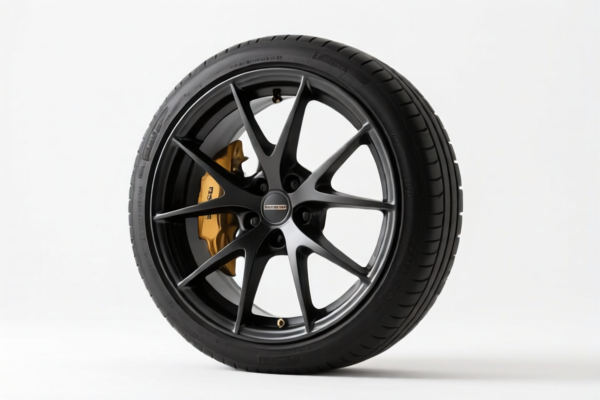
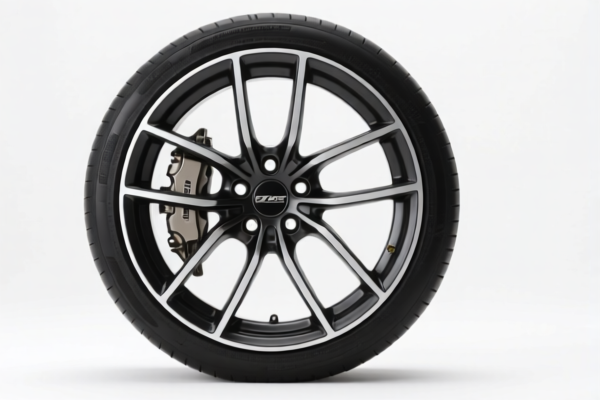
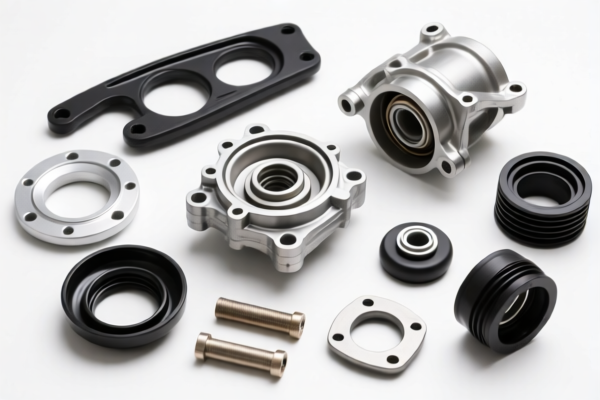
AI分析
⚖️ Wheel Weights (Balancing Blocks)
🌐 HS Code Reference & Customs Clearance Guide | 2026 Latest Tariff Analysis | Professional Clearance Strategy
📌 I. Product Definition & Classification: Do You Really Know “Wheel Weights”?
Wheel weights, also known as balancing blocks or counterweights, are essential components used to balance vehicle wheels. They ensure smooth rotation, reduce vibration, and extend the life of tires and suspension systems. In international trade, they are classified based on their material, intended use, and specific application (automotive vs. general machinery).
Key Classification Dilemmas:
- Are they automotive parts? → Likely Chapter 87
- Are they general steel articles? → Likely Chapter 73
- Are they machine parts (non-automotive)? → Likely Chapter 84
⚠️ Critical Distinction:
- If for motor vehicles (cars, trucks, buses) → Use 87xx codes
- If for industrial machinery (generators, fans, engines) → Use 84xx or 73xx codes
- Material: Usually lead-free steel, zinc, or composite. Customs often scrutinizes metal content for trade remedy duties.
📦 II. HS Code Classification Details (2026 Latest Tariff Authority Mapping)
Based on the provided data, there are 5 potential HS Codes depending on the specific nature and declaration strategy. Here is the authoritative breakdown:
| HS Code | Product Description | Applicability Scenario | Total Tax Rate (China to US) | Tax Details Breakdown |
|---|---|---|---|---|
8708.99.03.00 |
Other Parts & Accessories of Motor Vehicles | Best Fit for Automotive: General vehicle balancing blocks. No specific material restriction in this subheading. | 35.0% | Base: 0.0% +25% Section 301 +10% 122 Clause (Steel/Al/Cu) |
8708.99.55.00 |
Other Parts & Accessories of Motor Vehicles | Alternative Auto Fit: For rubber/metal composite weights or specific减震 (shock absorption) related weights. | 37.5% | Base: 2.5% +25% Section 301 +10% 122 Clause (Steel/Al/Cu) |
8483.90.80.80 |
Parts of Transmission Shafts & Gearing | Industrial Fit: Weights used in general mechanical transmission systems (e.g., industrial engines, not cars). | 37.8% | Base: 2.8% +25% Section 301 +10% 122 Clause (Steel/Al/Cu) |
7326.19.00.10 |
Other Articles of Iron or Steel | Material Fit: Classified strictly as a "mechanical component/parts" made of steel, lacking a more specific automotive chapter fit. | 87.9% | Base: 2.9% +25% Section 301 +50% Section 232 (Steel) |
7326.19.00.80 |
Other Articles of Iron or Steel | Catch-All Fit: General steel products. High tax due to Section 232 Steel duties. | 87.9% | Base: 2.9% +25% Section 301 +50% Section 232 (Steel) |
🔍 Key Insight:
- Codes7326.19.00.x0carry the highest risk (87.9%) because they trigger the 50% Section 232 Steel Tariff. Avoid this unless you cannot prove automotive use.
- Codes8708.99.x0are generally preferred for automotive parts, avoiding the Section 232 steel penalty.
- Code8483.90.80.80is a compromise for industrial machinery parts but still incurs standard 301 + 122 duties.
💰 III. 2026 Latest Tariff Rate Breakdown (Including Surcharge Policies)
✅ Applicable Country: United States (US)
✅ Origin: China (CN)
✅ Effective Date: Current trade policies (Section 301, 122 Clause, 232 Steel)
🎯 1. 8708.99.03.00 — Best Option for Automotive Wheel Weights
| Item | Content |
|---|---|
| Base Tariff | 0.0% |
| Section 301 Surcharge | +25.0% |
| 122 Clause Surcharge | +10.0% (Applies to Steel, Aluminum, Copper products) |
| Section 232 Steel Tariff | None (Not triggered under auto parts) |
| Total Tax Rate | 35.0% |
| Tax Calculation | CIF Value × 35.0% |
| De Minimis Eligibility | ❌ No (Value exceeds $800 threshold usually, and Section 301 applies) |
| Legal Basis | USITC:8708.99.03.00 → IEEPA:9903.01.24 (301) → IEEPA:9903.01.25 (122 Clause) |
📌 Explanation:
- This is the most cost-effective classification for standard automotive wheel weights.
- The 0% base rate significantly lowers the burden compared to general steel articles.
- The 10% 122 Clause applies because wheel weights are typically steel/zinc alloys.
- Crucially, it avoids the 50% Section 232 tariff by classifying as an "auto part" rather than a "steel article."
🎯 2. 8708.99.55.00 — Alternative Auto Classification
| Item | Content |
|---|---|
| Base Tariff | 2.5% |
| Section 301 Surcharge | +25.0% |
| 122 Clause Surcharge | +10.0% |
| Total Tax Rate | 37.5% |
| Tax Calculation | CIF Value × 37.5% |
| Legal Basis | Similar to above, but base tariff is higher. |
📌 Note: Use this if the weights are made of rubber-composite or fall into a "not elsewhere specified" auto parts category. The rate is only 2.5% higher than
8708.99.03.00.
🎯 3. 8483.90.80.80 — Industrial Machinery Parts
| Item | Content |
|---|---|
| Base Tariff | 2.8% |
| Section 301 Surcharge | +25.0% |
| 122 Clause Surcharge | +10.0% |
| Total Tax Rate | 37.8% |
| Legal Basis | USITC:8483.90.80.80 → IEEPA:9903.01.24 → IEEPA:9903.01.25 |
📌 Note: Only use if the weights are for non-automotive machinery (e.g., diesel generators, industrial fans). If imported as auto parts, this classification may be challenged.
🎯 4. 7326.19.00.10 & 7326.19.00.80 — General Steel Articles (High Risk)
| Item | Content |
|---|---|
| Base Tariff | 2.9% |
| Section 301 Surcharge | +25.0% |
| Section 232 Steel Tariff | +50.0% |
| Total Tax Rate | 87.9% |
| Legal Basis | USITC:7326.19.00.x0 → USITC:7326.90.01.00 (232 Footnote) → IEEPA:9901.25 (301) |
⚠️ WARNING:
- This classification triggers the Section 232 Steel Tariff (50%).
- Only use if: The product is clearly NOT for vehicles or machines, but a general steel product (e.g., decorative steel weights).
- Risk: High chance of customs reclassification if you claim it's for cars.
- Cost Impact: 87.9% is nearly double the cost of auto-part classification. Avoid this unless necessary.
🛠️ IV. Customs Clearance Practical Advice (Pitfall Avoidance Guide)
✅ 1. Documentation Checklist (Essential)
| Document | Required | Description |
|---|---|---|
| ✅ Product Description | ✔️ | Clearly state: "Wheel Balancing Weights for Motor Vehicles, Material: Steel/Zinc" |
| ✅ Material Composition | ✔️ | Specify % of steel, zinc, or rubber. Crucial for 122 Clause determination. |
| ✅ Intended Use Statement | ✔️ | "For use in balancing wheels of passenger vehicles." (Supports 8708) |
| ✅ Technical Specs | ✔️ | Weight range, adhesive type, compliance with ISO/TIN standards |
| ✅ Commercial Invoice | ✔️ | Must match HS Code and description exactly |
| ✅ Packing List | ✔️ | Show gross/net weight, carton dimensions |
✅ 2. Declaration Tips (Key Mnemonic)
🔥 “Auto Parts First, Steel Second; Claim Auto, Avoid 50%!”
| Scenario | Correct HS Code | Wrong Approach | Consequence |
|---|---|---|---|
| Car Truck Wheel Weights | 8708.99.03.00 |
Declaring as "Steel Articles" | 87.9% Tax (vs 35%) |
| Rubber Composite Weights | 8708.99.55.00 |
Declaring as "Plastic Parts" | May face different rules |
| Industrial Generator Weights | 8483.90.80.80 |
Declaring as "Auto Parts" | Customs may reject |
| General Steel Blocks (Non-Use Specific) | 7326.19.00.80 |
Declaring as "Auto Parts" | Audit risk, potential penalty |
✅ 3. Special Cases Handling
| Situation | Handling Suggestion |
|---|---|
| Lead-Free Weights | Clearly state "Lead-Free" in description. Some states (CA, NY) have restrictions. US federal tariff is same, but compliance is key. |
| Mixed Shipments (Auto + Industrial) | Separate shipments! Do not mix auto parts and general steel in one HS Code. Separate invoices required. |
| Section 301 Exclusions | Check if your specific HS Code had a temporary exclusion. Most wheel weights are NOT excluded. |
| Origin Marking | Must clearly mark "Made in China" on product/packaging to avoid penalties. |
🌍 V. Global Market Clearance Comparison (2026 Latest)
| Country/Region | Recommended HS Code | Tariff Rate | Certification | Notes |
|---|---|---|---|---|
| 🇺🇸 USA | 8708.99.03.00 |
35.0% | None (but material truthfulness) | Highest complexity due to Section 301/232/122 |
| 🇨🇳 China (Export) | 8708.99.03.00 |
0% (Export) | None | Standard export declaration |
| 🇪🇺 EU | 8708.99.90 |
4.5% | CE (if applicable) | No Section 301/232. Simpler. |
| 🇬🇧 UK | 8708.99.90 |
4.5% | UKCA | Post-Brexit rates apply |
| 🇦🇺 Australia | 8708.99.90 |
5.0% | RCM | Low tariff, simple process |
📌 Conclusion:
- USA is the most expensive market due to layered tariffs.
- EU/UK/AU are much simpler with ~4-5% tariffs and no trade remedy surcharges.
- Strategy: If you can source wheel weights from Vietnam, Mexico, or Malaysia, you may avoid Section 301/232 entirely (subject to rules of origin).
📌 VI. Common Mistakes & Pitfalls (Lessons Learned)
❌ Mistake 1: Declaring automotive wheel weights as 7326.19.00.80
👉 Result: 87.9% Tax → Loss of Profit!
👉 Fix: Always claim 8708 for auto parts if possible.
❌ Mistake 2: Not disclosing material composition
👉 Result: Customs assumes "Steel" → Applies 122 Clause or 232 Tariff incorrectly.
👉 Fix: Provide detailed material breakdown (e.g., "Steel Core, Zinc Coating, Adhesive Rubber").
❌ Mistake 3: Mixing lead and lead-free weights in one declaration
👉 Result: Regulatory compliance issues in restricted states (CA, NY).
👉 Fix: Clearly label "Lead-Free" and provide material safety data sheet (MSDS).
❌ Mistake 4: Ignoring Section 301 Exclusions List
👉 Result: Paying unnecessary taxes when an exclusion might apply.
👉 Fix: Check the USTR Section 301 Exclusions List for HS Code 8708.99.03.00 before shipment. (Note: Most exclude periods have expired, but verify).
✅ Correct Practice:
“Wheel Weights for Passenger Vehicles, Material: Steel/Zinc Alloy, Lead-Free, Adhesive Type, Model XYZ, Complies with ISO 10484”
🎯 VII. Conclusion: Professional Declaration, Save Cost, Ensure Compliance!
🎯 Remember the Mantra:
🔹 “Auto Parts = 35% vs Steel = 87.9%; Choose Wisely!”
🔹 “Base Rate 0% + 301(25%) + 122(10%) = 35%”
🔹 “Avoid Section 232 (50%) by Proving Auto Use!”
📌 Pro Tip:
If your wheel weights are produced in Vietnam, Mexico, or Thailand, you can apply for preferential tariff treatment (0%-5%), completely avoiding US Section 301/232 tariffs.
Recommendation: Consider supply chain diversification to reduce costs.
📣 Immediate Action:
📞 Contact your customs broker + Provide product specs + Apply for Advance Ruling
🚀 Clear customs smoothly, maximize profit, ensure global compliance!
✨ Professional Clearance Starts with Accurate Classification!
💼 Every Cent of Tax Saved is Pure Profit!
用户评价
关于 HS 编码归类
协调制度(HS)是由世界海关组织(WCO)制定的国际贸易商品分类标准。全球 200 多个国家采用 HS 系统作为海关关税、贸易统计和进出口监管的基础。
每个 HS 编码遵循以下层级结构:
- 章(2 位)——商品大类(例如:第 84 章:机器和机械设备)
- 品目(4 位)——章内的更具体分类
- 子目(6 位)——国际通用细分,所有 WCO 成员国统一使用
- 本国细分(8-10 位)——各国自行扩展的细分编码,如美国 HTSUS 10 位编码
正确的 HS 编码归类对于顺利通关、准确缴纳关税和遵守贸易法规至关重要。错误归类可能导致海关延误、多缴关税或罚款。
从CN进口到US时,适用的关税税率可能包括:
- 最惠国(MFN)税率——适用于 WTO 成员国的标准关税税率
- 普通税率——适用于无贸易协定国家
- 贸易救济关税——附加关税,如 301 条款(反倾销)、232 条款(国家安全)或反补贴税
本页内容仅供参考。如需正式归类,请咨询当地海关或持牌报关代理。