Whole Buffalo Hide, Unsplit, Full Grain
CN → US| HS编码 | 关税税率 | 原产国 | 目的国 | 文档 |
|---|---|---|---|---|
| 4107194000 | 12.5% | CN | US | 官方文档 |
| 4107124000 | 12.5% | CN | US | 官方文档 |
| 4104113060 | 12.4% | CN | US | 官方文档 |
| 4104413060 | 12.4% | CN | US | 官方文档 |
| 4101503500 | 19.9% | CN | US | 官方文档 |
商品图片
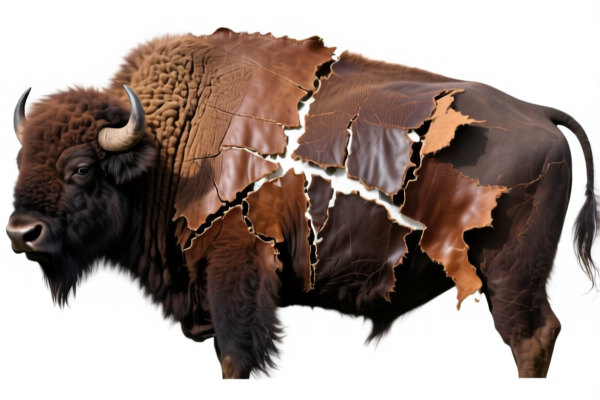
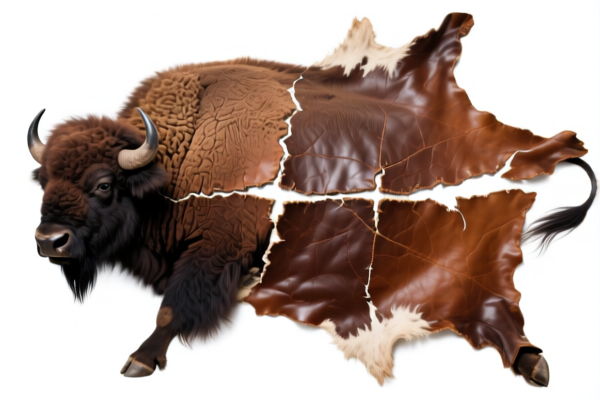
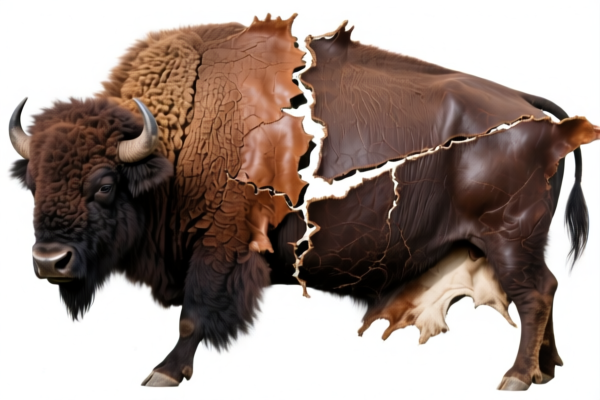
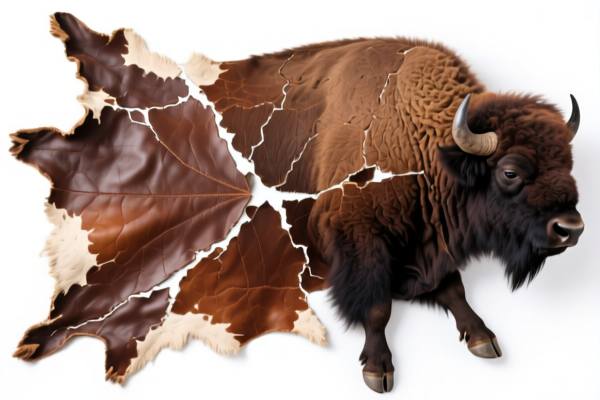
AI分析
🐃 Whole Buffalo Hide, Unsplit, Full Grain (Untanned & Tanned Variants)
🌐 HS Code Reference & Clearance Guide | 2026 Latest Tariff Analysis | Professional Customs Strategy
📌 I. Product Definition & Classification: Do You Really Understand "Buffalo Hide"?
Whole Buffalo Hide refers to the raw or processed skin of buffalo, retained in its full, unsplit integrity. In international trade, the classification hinges critically on processing status (tanned vs. raw) and legal origin restrictions (specifically regarding US Section 301 and Section 122 tariffs).
The data provided covers four distinct scenarios: 1. Raw/Salted Buffalo Hides: Classified under Chapter 41 (0101.50.35.00). 2. Chrome-Tanned/Ready-to-Take Leather: Classified under Chapter 41 (4107.19.40.00 / 4107.12.40.00). 3. Other Tanned/Prepared Hides: Classified under Chapter 41 (4104.11.30.60 / 4104.41.30.60).
⚠️ Key Distinction Point:
- If the hide is raw (salted/fresh) → Goes to 4101.50.35.00.
- If the hide is tanned (chrome or vegetable) and meets "whole hide" criteria → Goes to 4107 or 4104 series.
- Crucial Note: All these HS codes attract significant Section 122 tariffs (10%) in addition to base and Section 301 tariffs.
📦 II. HS Code Classification Details (2026 Latest Tariff Authority对照)
| HS Code | Product Description | Applicable Scenario | Tanning Status |
|---|---|---|---|
4101.50.35.00 |
Whole buffalo hides, fresh or salted, not split | Raw material, initial import stage | ❌ Raw/Untanned |
4107.19.40.00 |
Whole buffalo leather, chrome-tanned, other than sheep/goat | Chrome-tanned leather, full grain, unsplit | ✅ Chrome-Tanned |
4107.12.40.00 |
Whole buffalo leather, chrome-tanned (specific sub-category) | Chrome-tanned, meets specific buffalo leather definition | ✅ Chrome-Tanned |
4104.11.30.60 |
Whole buffalo leather, other tanning, unsplit | Vegetable-tanned or other non-chrome tanning | ✅ Other-Tanned |
4104.41.30.60 |
Whole buffalo leather, other tanning, unsplit (definition match) | Other tanned buffalo leather meeting "unsplit" criteria | ✅ Other-Tanned |
🔍 Important Reminder:
- 4101 covers raw hides. 4107/4104 covers processed leather.
- Misclassifying raw hides as tanned (or vice versa) can lead to customs delays or penalties.
- All listed HS codes apply to Unsplit hides (full thickness, not separated into layers).
💰 III. 2026 Latest Tariff Rate Breakdown (Including Surtaxes & Policy Add-ons)
✅ Applicable Country: USA (US)
✅ Origin: China (CN)
✅ Effective Date: Current as per 2026 data (includes Section 122 & 301)
🎯 1. 4101.50.35.00 — Whole Buffalo Hides, Raw/Untanned
| Item | Content |
|---|---|
| Base Tariff | 2.4% (ad valorem) |
| Section 301 Surcharge | +7.5% (USITC Footnote related to Chinese origin) |
| Section 122 Surcharge | +10.0% (Specific levy on certain leather goods/hides from China) |
| Total Tariff Rate | 19.9% |
| Tax Calculation | CIF Value × 19.9% |
| De Minimis Exemption | ❌ Not Eligible (Standard de minimis does not apply to these agricultural/leather products under these specific surcharges) |
| Legal Basis Path | Section 301: 9903.01.24 → Section 122: 19 U.S.C. 2101 → USITC:4101.50.35.00 |
📌 Explanation:
- Base 2.4%: Standard MFN rate for raw hides.
- Section 301 (7.5%): Reflects the current status of agricultural/animal product tariffs under Trade Act Section 301.
- Section 122 (10%): A specific additional duty imposed on certain leather-related imports to support domestic industries.
- Total 19.9%: Significantly higher than typical manufactured goods due to the double surcharge.
🎯 2. 4107.19.40.00 & 4107.12.40.00 — Chrome-Tanned Buffalo Leather
| Item | Content |
|---|---|
| Base Tariff | 2.5% (ad valorem) |
| Section 301 Surcharge | +0.0% (Note: Data shows 0.0% for this specific sub-category under current view, likely due to specific exclusion or lower tier) |
| Section 122 Surcharge | +10.0% |
| Total Tariff Rate | 12.5% |
| Tax Calculation | CIF Value × 12.5% |
| De Minimis Exemption | ❌ Not Eligible |
| Legal Basis Path | Section 122: 19 U.S.C. 2101 → USITC:4107.19.40.00 |
📌 Explanation:
- Base 2.5%: Standard rate for chrome-tanned leather.
- Section 301 (0.0%): This specific code appears to have a reduced or zero Section 301 rate in this dataset, which is favorable compared to raw hides.
- Section 122 (10%): Still applies fully.
- Total 12.5%: More competitive than raw hides, but still burdened by Section 122.
🎯 3. 4104.11.30.60 & 4104.41.30.60 — Other Tanned (e.g., Vegetable) Buffalo Leather
| Item | Content |
|---|---|
| Base Tariff | 2.4% (ad valorem) |
| Section 301 Surcharge | +0.0% |
| Section 122 Surcharge | +10.0% |
| Total Tariff Rate | 12.4% |
| Tax Calculation | CIF Value × 12.4% |
| De Minimis Exemption | ❌ Not Eligible |
| Legal Basis Path | Section 122: 19 U.S.C. 2101 → USITC:4104.11.30.60 |
📌 Explanation:
- Base 2.4%: Standard rate for other tanned leather.
- Section 301 (0.0%): No additional 301 tariff in this specific classification view.
- Section 122 (10%): Applies fully.
- Total 12.4%: The lowest total rate among the options, but only if the tanning process qualifies for this "other tanned" category.
🛠️ IV. Clearance Practical Advice (Actionable Pitfall Avoidance Guide)
✅ 1. Documentation Checklist (Non-Negotiable)
| Document | Mandatory | Description |
|---|---|---|
| ✅ Product Specifications | ✔️ | Must specify: Buffalo, Unsplit, Full Grain, Tanning Method (Chrome/Veg), Weight, Dimensions. |
| ✅ Tanning Certificate | ✔️ | Crucial for distinguishing between 4107 (Chrome) and 4104 (Other). Must confirm tanning agent used. |
| ✅ Commercial Invoice | ✔️ | Must clearly state: "Whole Buffalo Hide, Unsplit, [Tanning Type]", Origin: China. |
| ✅ Bill of Lading | ✔️ | Ensure package count and gross/net weights match invoice. |
| ✅ Origin Certificate | ✔️ | Required to prove Chinese origin for Section 122/301 calculation. |
| ✅ Photos of Hides | ✔️ | Show label, stitching (if any), and texture to prove "Unsplit" status. |
✅ 2. Declaration Strategy (Key Mantras)
🔥 “Raw vs. Tanned, Chrome vs. Veg, 122 is King!”
| Scenario | Correct Declaration | Wrong Approach |
|---|---|---|
| Raw Salted Hides | 4101.50.35.00 |
Misdeclare as tanned → Penalty + Back Duty |
| Chrome-Tanned Leather | 4107.19.40.00 |
Misdeclare as raw → 19.9% instead of 12.5% (Overpay) or Customs Query |
| Veg-Tanned Leather | 4104.11.30.60 |
Misdeclare as Chrome → Wrong HS Code |
| Split Leather (Not Full) | Do NOT use these codes | Use these codes for split leather → Seizure/Fine |
📌 Critical Note on "Unsplit":
- If the hide is split (e.g., top grain + split layer), it does not qualify for these "Whole Hide" codes.
- Split leather often has different tariffs and may not be subject to Section 122 in the same way. Misclassifying split as whole can lead to severe penalties.
✅ 3. Special Considerations
| Scenario | Handling Advice |
|---|---|
| Section 122 Applicability | Verify if your specific supplier/manufacturer is subject to Section 122. Some exemptions may apply if not of Chinese origin (but data assumes CN origin). |
| Hybrid Shipments | If a container contains both raw and tanned hides, separate HS Codes must be used. Do not consolidate under one code. |
| Pre-Ruling Request | Given the complexity of Section 122 + 301, consider filing a Binding Ruling with CBP to confirm the HS code and tariff rate before shipment. |
🌍 V. Global Market Comparison (2026 Latest)
| Country/Region | Recommended HS Code | Tariff (China Origin) | Certification | Notes |
|---|---|---|---|---|
| 🇺🇸 USA | 4101.50.35.00 / 4107.19.40.00 |
12.4% - 19.9% | No specific import certs | Section 122 (10%) is the key differentiator |
| 🇨🇳 China (Export) | 4101.50.35.00 / 4107.19.40.00 |
0% (Export Duty) | None | Focus on US tariffs |
| 🇪🇺 EU | 4101 20 / 4104 11 |
~4.5% - 7% | REACH Compliance | No Section 122 equivalent; lower tariffs |
| 🇬🇧 UK | 4101 20 / 4104 11 |
~4.5% - 7% | UK REACH | Post-Brexit rules apply |
| 🇦🇺 Australia | 4101 20 / 4104 11 |
~5% | No specific | Standard MFN rates |
📌 Conclusion:
- The USA is the most expensive market for buffalo hides due to the叠加 (layered) Section 301 + Section 122 tariffs.
- Raw hides (4101) are taxed highest at 19.9%.
- Tanned leathers (4107/4104) benefit from lower base/301 rates, totaling 12.4% - 12.5%.
📌 VI. Common Errors & Pitfall Guide (Lessons Learned)
❌ Mistake 1: Declaring Raw Hides as Tanned Leather
👉 Consequence: Customs may accept it temporarily, but if discovered, you owe the difference + penalties. Worse, if raw, it may not be subject to Section 301 but is subject to Section 122. Accuracy is vital.
❌ Mistake 2: Ignoring Section 122
👉 Consequence: Even if Section 301 is 0%, the 10% Section 122 applies. Many importers forget this and under-declare costs.
❌ Mistake 3: Confusing Unsplit with Split
👉 Consequence: Using "Whole Hide" codes for split leather is fraud. Split leather has different HS codes and potentially different tariff treatments.
❌ Mistake 4: Not Providing Tanning Method
👉 Consequence: Customs cannot distinguish between 4107 (Chrome) and 4104 (Other). This leads to hold-ups and potential re-classification to a higher/different rate.
✅ Correct Approach:
"Whole Buffalo Hide, Unsplit, Full Grain, Chrome-Tanned, Weight: 50 lbs, Origin: China, HS: 4107.19.40.00"
🎯 VII. Conclusion: Precision in Classification Saves Money!
🎯 Remember the Mantra:
🔹 "Raw is 19.9%, Tanned is ~12.5%, Section 122 hits 10%!"
🔹 "Unsplit is Key, Split is Different, Declare Exactly!"📌 Pro Tip:
If you are importing large volumes, consider:
1. Section 122 Exclusion Requests: Check if your product is eligible for exclusions.
2. Bonded Warehouses: Delay duty payment until sale.
3. Foreign Trade Zones (FTZ): Defend or eliminate duty payment.
📣 Immediate Action:
📞 Contact a Licensed Customs Broker
📄 Provide Full Product Specs (Tanning Method, Split Status)
🚀 Apply for Pre-Ruling if Unsure
💡 Your Profit Margin Depends on Accurate Tariff Classification!
✨ Professional Clearance Starts with Precise Classification!
💼 Every Cent in Duty Should Be Correctly Accounted For!
用户评价
关于 HS 编码归类
协调制度(HS)是由世界海关组织(WCO)制定的国际贸易商品分类标准。全球 200 多个国家采用 HS 系统作为海关关税、贸易统计和进出口监管的基础。
每个 HS 编码遵循以下层级结构:
- 章(2 位)——商品大类(例如:第 84 章:机器和机械设备)
- 品目(4 位)——章内的更具体分类
- 子目(6 位)——国际通用细分,所有 WCO 成员国统一使用
- 本国细分(8-10 位)——各国自行扩展的细分编码,如美国 HTSUS 10 位编码
正确的 HS 编码归类对于顺利通关、准确缴纳关税和遵守贸易法规至关重要。错误归类可能导致海关延误、多缴关税或罚款。
从CN进口到US时,适用的关税税率可能包括:
- 最惠国(MFN)税率——适用于 WTO 成员国的标准关税税率
- 普通税率——适用于无贸易协定国家
- 贸易救济关税——附加关税,如 301 条款(反倾销)、232 条款(国家安全)或反补贴税
本页内容仅供参考。如需正式归类,请咨询当地海关或持牌报关代理。