Wicker Basket
CN → US| HS编码 | 关税税率 | 原产国 | 目的国 | 文档 |
|---|---|---|---|---|
| 9503000073 | 10.0% | CN | US | 官方文档 |
| 9503000071 | 10.0% | CN | US | 官方文档 |
| 4602110700 | 35.0% | CN | US | 官方文档 |
| 4602191700 | 35.0% | CN | US | 官方文档 |
商品图片
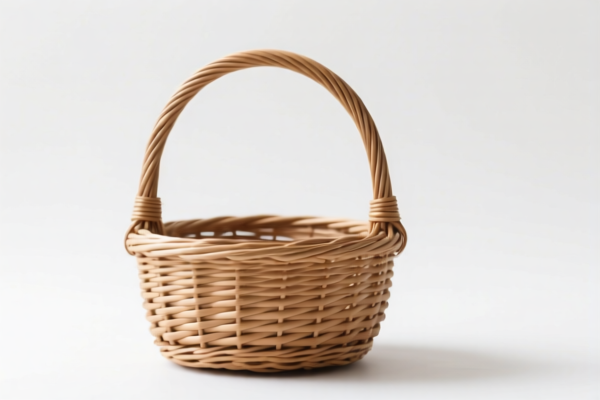
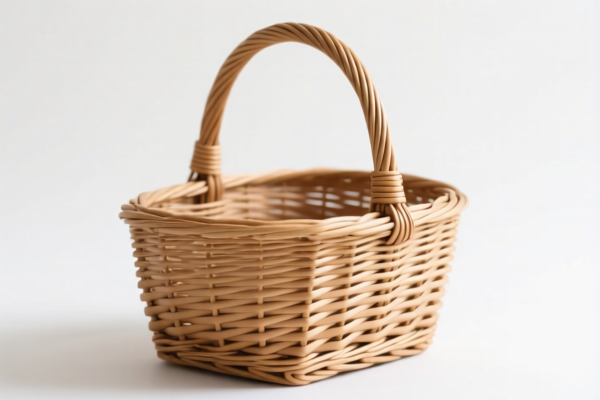
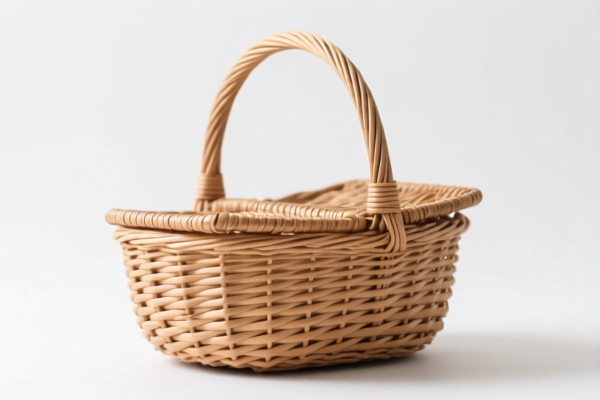
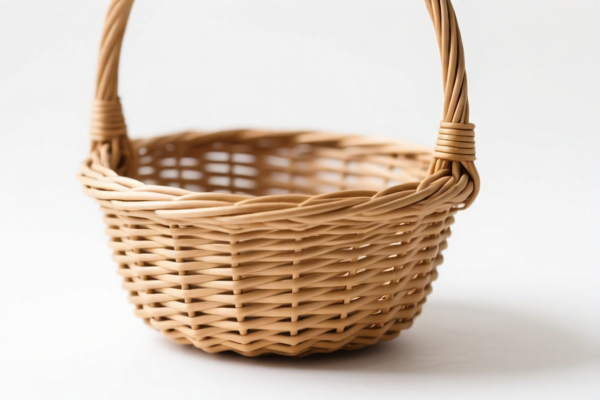
AI分析
🧺 Wicker Basket (Wickerwork & Bamboo Artifacts)
🌐 HS Code Reference & Customs Clearance Guide | 2026 Latest Tariff Analysis | Professional Clearance Strategy
📌 I. Product Definition & Classification: Do You Really Understand "Wicker"?
Wicker baskets are not just simple containers; they are categorized based on material composition, manufacturing method, and structural integrity. In international trade, specifically under US Harmonized Tariff Schedule (HTS), "Wicker" items fall under Heading 4602. The critical distinction lies in whether the item is made of Bamboo or Other Vegetable Materials, and whether it is classified as a "Basket/Bag" or "Other" article.
Key Distinction Points:
- Material: Is it Bamboo (Heading 4602.11) or Other Vegetable Materials like rattan, reed, or cane (Heading 4602.19)?
- Structure: Is it a defined "Basket or Bag" (lined or unlined) or a generic "Wickerwork Article"?
- Origin Impact: For Chinese-origin goods, both categories under analysis are subject to a 25% Additional Tariff (Section 301), despite a 0% Base Duty.
⚠️ Critical Warning:
- Misidentifying the material (e.g., calling rattan "bamboo") can lead to misclassification.
- "Wickerwork": This term refers to articles made directly to shape from plaiting materials or made up from articles of heading 4601.
- Duty Rate Reality: Both identified HS Codes carry a 25% Total Tax for Chinese exports. There is no de minimis exemption for this tariff layer.
📦 II. HS Code Classification Details (2026 Latest Tariff Authority)
| HS Code | Product Description | Applicable Scenario | Material Base | Total Tax Rate (China Origin) |
|---|---|---|---|---|
4602.11.07.00 |
Of vegetable materials; Of bamboo; Other baskets and bags, whether or not lined; Wickerwork | Bamboo baskets, bamboo tote bags, lined bamboo storage containers | ✅ Bamboo | 25% |
4602.19.17.00 |
Of vegetable materials; Other; Other baskets and bags, whether or not lined; Other; Wickerwork | Rattan, reed, cane, or mixed vegetable fiber baskets/bags; Generic wicker baskets | ✅ Other Veg. | 25% |
🔍 Key Insight:
- Both codes fall under "Basketwork, wickerwork and other articles, made directly to shape from plaiting materials...".
- The difference is purely material-specific (Bamboo vs. Other) and sub-category (Basket/Bag vs. Other Wickerwork).
- Base Duty: 0.0%
- Additional Duty: 25.0% (Section 301 Retaliatory Tariff)
- Total Effective Duty: 25.0%
💰 III. 2026 Latest Tariff Rate Breakdown (Detailed Policy)
✅ Applicable Country: United States (US)
✅ Country of Origin: China (CN)
✅ Effective Date: Current Section 301 Tariffs Apply
🎯 1. 4602.11.07.00 —— Bamboo Baskets & Bags (Wickerwork)
| Item | Content |
|---|---|
| Base Tariff | 0.0% (ad valorem) |
| Additional Tariff (Section 301) | +25.0% |
| Total Effective Rate | 25.0% |
| Tax Calculation | CIF Value × 25% |
| De Minimis Exemption? | ❌ NO (Section 301 duties apply regardless of value under current enforcement) |
| Legal Basis Path | HTSUS: 4602.11.07.00 → Section 301 Footnote |
📌 Explanation:
- This code covers bamboo-specific wicker products that are explicitly baskets or bags.
- Even though the base duty is free, the 25% punitive tariff significantly increases landing cost.
- Example: A $1,000 bamboo basket set incurs $250 in duties.
🎯 2. 4602.19.17.00 —— Other Vegetable Material Baskets & Bags (Wickerwork)
| Item | Content |
|---|---|
| Base Tariff | 0.0% |
| Additional Tariff (Section 301) | +25.0% |
| Total Effective Rate | 25.0% |
| Tax Calculation | CIF Value × 25% |
| De Minimis Exemption? | ❌ NO |
| Legal Basis Path | HTSUS: 4602.19.17.00 → Section 301 Footnote |
📌 Note:
- This code covers non-bamboo vegetable materials (e.g., rattan, willow, reed, cane).
- It applies to baskets and bags made of these materials.
- Same tax burden as bamboo: 25%. Do not assume "natural materials" are tax-free.
🛠️ IV. Customs Clearance Practical Advice (Pitfall Avoidance Guide)
✅ 1. Documentation Checklist (Non-Negotiable)
| Document | Required? | Notes |
|---|---|---|
| ✅ Product Specification Sheet | ✔️ | Must specify material composition (e.g., "100% Bamboo", "Rattan and Cotton Lining") |
| ✅ High-Resolution Photos | ✔️ | Show texture, plaiting style, lining (if any), and handles |
| ✅ Commercial Invoice | ✔️ | Clearly state "Wicker Basket" or "Bamboo Bag", avoid generic "Home Decor" |
| ✅ Packing List | ✔️ | Detail dimensions and weight to verify basket/bag classification |
| ✅ Origin Certificate (if applicable) | ✔️ | Crucial for proving Chinese origin (triggers 25%) or non-Chinese origin (avoids 25%) |
✅ 2. Declaration Tips (Key Mantra)
🔥 "Material First, Structure Second, Name Precise, Tax Avoided!"
| Scenario | Correct Declaration | Wrong Practice |
|---|---|---|
| Bamboo Basket | 4602.11.07.00 - "Bamboo Wicker Basket" |
Calling it "Plastic Container" → Misclassification Penalty |
| Rattan Bag | 4602.19.17.00 - "Wicker Rattan Bag" |
Calling it "Textile Bag" → May trigger textile duties instead |
| Mixed Material Basket | Determine Principal Material | Vague description "Mixed Basket" → Customs Detention |
| Bamboo Basket with Plastic Liner | Still 4602.11.07.00 (if basket is principal) |
Splitting line items → Risk of anti-avoidance audit |
✅ 3. Special Situations Handling
| Situation | Handling Advice |
|---|---|
| Non-Chinese Origin | If produced in Vietnam, Thailand, or Indonesia, the 25% Section 301 tariff may NOT apply. Provide Certificate of Origin to claim 0% additional duty. |
| Partially Lined Baskets | Lining does not change classification from 4602.11/19 to textile headings, as long as the wickerwork is the essential character. |
| Decorative Wicker Items (Not Baskets) | If it’s a wicker lampshade, frame, or sculpture (not a basket/bag), it may fall under 4602.19.17.00 ("Other") or potentially different headings. Verify structure carefully. |
| Small De Minimis Shipments | ⚠️ Caution: While the $800 de minimis rule (Section 321) exists, Section 301 duties are often enforced on all entries from China regardless of value. Do not rely on de minimis to avoid 25% duty. |
🌍 V. Global Market Comparison (2026 Update)
| Country/Region | Recommended HS Code | Tariff (China Origin) | Notes |
|---|---|---|---|
| 🇺🇸 USA | 4602.11.07.00 / 4602.19.17.00 |
25% | High additional tariff. Non-China origin preferred. |
| 🇨🇳 China | 4602.11.07.00 / 4602.19.17.00 |
~5-10% (Import Duty) | Domestic market favorable. |
| 🇪🇺 EU | 4602.11.00 / 4602.19.00 |
0-6% | No Section 301 equivalent. Standard WTO rates apply. |
| 🇬🇧 UK | 4602.11.00 / 4602.19.00 |
0-5% | Post-Brexit tariff schedules apply. |
📌 Conclusion:
- USA is the most expensive market for Chinese wicker/bamboo baskets due to the 25% additional tariff.
- Supply Chain Diversification is key: Consider sourcing from Vietnam, Indonesia, or India to bypass the 25% US tariff.
📌 VI. Common Errors & Pitfalls (Lessons Learned)
❌ Error 1: Declaring as "Plastic Basket"
👉 Consequence: Misclassification under HTS Chapter 39. If caught, penalties apply + retroactive 25% duty assessment.
❌ Error 2: Ignoring Material Composition
👉 Consequence: Customs may reclassify based on inspection. If bamboo is present but not declared, risk of underpayment.
❌ Error 3: Assuming "Natural Product" = Tax Free
👉 Consequence: 25% tariff still applies. Base duty 0% does not mean total duty 0%.
❌ Error 4: Using De Minimis for Large Batches
👉 Consequence: CBP increasingly scrutinizes Section 301 goods under de minimis. Risk of seizure and revocation of Section 321 privileges.
✅ Correct Approach:
"Wicker Basket, Handwoven Bamboo, with Cotton Lining, Model WB-100, Made in China"
🎯 VII. Conclusion: Strategic Sourcing & Compliance
🎯 Remember the Mantra:
🔹 "Material Matters: Bamboo vs. Other Veg".
🔹 "China Origin = 25% Extra. Source Elsewhere to Save".
🔹 "No De Minimis Shield for Section 301".
📌 Pro Tip:
If your wicker baskets are originally manufactured in Vietnam, Thailand, or the Philippines, you can likely avoid the 25% US additional tariff.
👉 Action: Ensure your Certificate of Origin clearly states the non-Chinese country of manufacture. Consult a customs broker to verify substantial transformation criteria.
📣 Immediate Action:
📞 Contact a Licensed Customs Broker
📝 Provide Material Specs + Photos + Origin Certificate
🚀 Optimize Your Supply Chain to Reduce Tariff Burden!
✨ Professional Clearance, Starting with Precise Classification!
💼 Your Cost Efficiency Depends on Accuracy!
用户评价
关于 HS 编码归类
协调制度(HS)是由世界海关组织(WCO)制定的国际贸易商品分类标准。全球 200 多个国家采用 HS 系统作为海关关税、贸易统计和进出口监管的基础。
每个 HS 编码遵循以下层级结构:
- 章(2 位)——商品大类(例如:第 84 章:机器和机械设备)
- 品目(4 位)——章内的更具体分类
- 子目(6 位)——国际通用细分,所有 WCO 成员国统一使用
- 本国细分(8-10 位)——各国自行扩展的细分编码,如美国 HTSUS 10 位编码
正确的 HS 编码归类对于顺利通关、准确缴纳关税和遵守贸易法规至关重要。错误归类可能导致海关延误、多缴关税或罚款。
从CN进口到US时,适用的关税税率可能包括:
- 最惠国(MFN)税率——适用于 WTO 成员国的标准关税税率
- 普通税率——适用于无贸易协定国家
- 贸易救济关税——附加关税,如 301 条款(反倾销)、232 条款(国家安全)或反补贴税
本页内容仅供参考。如需正式归类,请咨询当地海关或持牌报关代理。