Wicker Indoor Floor Mat
CN → US| HS编码 | 关税税率 | 原产国 | 目的国 | 文档 |
|---|---|---|---|---|
| 4602191800 | 39.5% | CN | US | 官方文档 |
| 4602198000 | 37.3% | CN | US | 官方文档 |
| 5705001000 | 35.0% | CN | US | 官方文档 |
| 5705002090 | 38.3% | CN | US | 官方文档 |
| 4602900000 | 38.5% | CN | US | 官方文档 |
商品图片
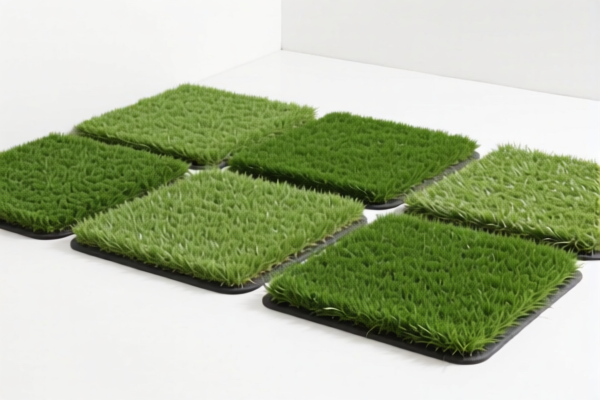
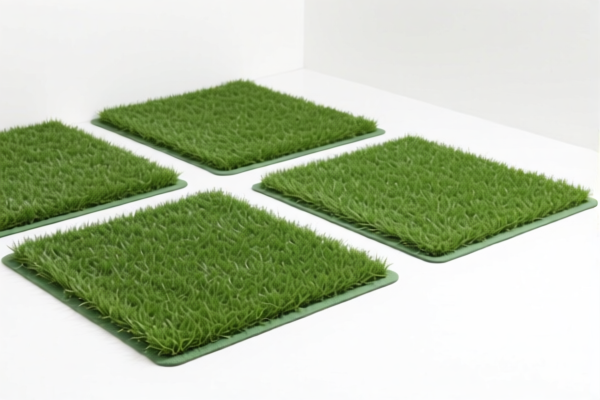
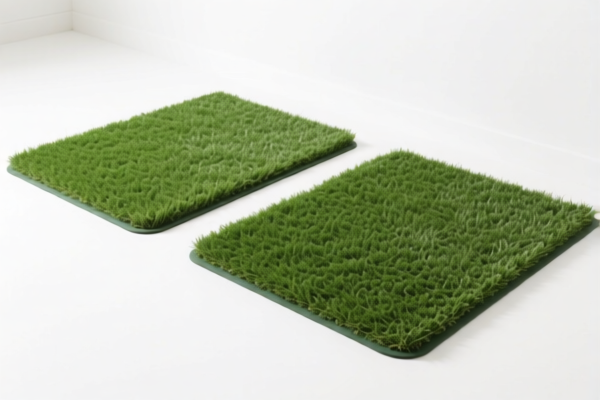
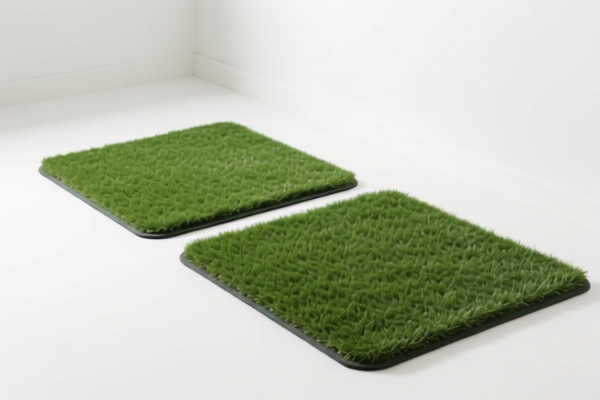
AI分析
🧺 Wicker Indoor Floor Mat (植物纤维编织地垫)
🌐 HS Code Reference & Customs Clearance Guide | 2026 Latest Tariff Analysis | Professional Strategy for US Imports
📌 I. Product Definition & Classification: What Exactly Is "Wicker"?
"Wicker" refers to a weaving technique using flexible plant materials (such as rattan, bamboo, reed, straw, or willow) rather than a specific material itself. In international trade, Indoor Floor Mats made of these materials are primarily classified under Chapter 46 (Articles of vegetable plaiting materials) or Chapter 57 (Carpeting and other textile floor coverings), depending on the specific fiber composition and whether they are considered "plaited articles" or "textile floor coverings."
⚠️ Key Distinction Point:
- If the mat is made of natural plant stems/leaves woven together (like straw, reed, or pure rattan) and retains the distinct "plaited" character → It usually falls under Chapter 46.
- If the material is processed into textile fibers (e.g., sisal, jute fibers spun into yarn) or if it is explicitly marketed as a "textile floor covering" → It may fall under Chapter 57.
- Critical Note: Many importers mistakenly classify these under Chapter 57 to get lower base duties, but US Customs often insists on Chapter 46 for natural woven mats, leading to significant tariff differences due to Section 301 and IEEPA penalties.
📦 II. HS Code Classification Details (2026 Latest Tariff Authority Reference)
Based on the provided dataset, here are the specific HS Codes and their corresponding tariff structures for Wicker/Grass/Straw Woven Floor Mats.
| HS Code | Product Description | Material/Form | Total Tax Rate* |
|---|---|---|---|
4602.19.18.00 |
Woven mats made of vegetable plaiting materials (specifically straw/grass-like) | Plant materials, woven form | 39.5% |
4602.19.80.00 |
Other woven articles of plaiting materials (general category) | Plant materials, woven form | 37.3% |
5705.00.10.00 |
Textile floor coverings, made of fibers (interpreted as textile/fiber mats) | Fibers/Textile | 35.0% |
5705.00.20.90 |
Other textile floor coverings (miscellaneous) | Textile/Fiber class | 38.3% |
4602.90.00.00 |
Note: Listed in data as "Willow Woven Tapestry" | Weaving materials, woven articles | 38.5% |
🔍 Important Note on Dataset:
The dataset includes4602.90.00.00with a summary for "Willow Woven Tapestry" (wall hanging). While similar in material, a Floor Mat is functionally different. However, if your mat is exceptionally heavy or decorative, Customs might scrutinize it. For standard floor mats,4602.19.18.00or4602.19.80.00are the most likely candidates for natural plant materials, while5705applies if the material is processed into textile yarns.
💰 III. 2026 Latest Tariff Rate Breakdown (Including Surcharges & Policies)
✅ Applicable Country: United States (US)
✅ Country of Origin: China (CN) (Assumed based on typical high-tariff context in dataset)
✅ Effective Time: Current rates (Including Section 301 & IEEPA)
The total tax rate is composed of three layers: Base Duty, Section 301 Additional Duty (25%), and IEEPA Duty (10%).
🎯 1. 4602.19.18.00 — Woven Mats (Vegetable Plaiting)
| Item | Content |
|---|---|
| Base Duty | 4.5% |
| Section 301 Duty | +25.0% |
| IEEPA Duty (122 Clause) | +10.0% |
| Total Tax Rate | 39.5% |
| Calculation | CIF Value × 39.5% |
| De Minimis Exemption? | ❌ No (Deny De Minimis) |
| Legal Path | USITC:4602.19.18.00 → FOOTNOTE:301 → IEEPA:122 |
📌 Explanation:
- This is the standard rate for natural plant-based woven mats.
- The 25% is from the US Trade Representative (USTR) Section 301 list for Chinese goods.
- The 10% is from the IEEPA (International Emergency Economic Powers Act), specifically targeting Chinese-origin goods in this category.
🎯 2. 4602.19.80.00 — Other Woven Plaiting Articles
| Item | Content |
|---|---|
| Base Duty | 2.3% |
| Section 301 Duty | +25.0% |
| IEEPA Duty (122 Clause) | +10.0% |
| Total Tax Rate | 37.3% |
| Calculation | CIF Value × 37.3% |
| De Minimis Exemption? | ❌ No |
| Legal Path | USITC:4602.19.80.00 → FOOTNOTE:301 → IEEPA:122 |
📌 Note:
- This code is often used if the mat doesn't fit the specific "straw/grass" definition of.18.
- Slightly cheaper than.18due to a lower base duty (2.3% vs 4.5%).
🎯 3. 5705.00.10.00 — Textile Floor Coverings (Fiber-based)
| Item | Content |
|---|---|
| Base Duty | 0.0% |
| Section 301 Duty | +25.0% |
| IEEPA Duty (122 Clause) | +10.0% |
| Total Tax Rate | 35.0% |
| Calculation | CIF Value × 35.0% |
| De Minimis Exemption? | ❌ No |
| Legal Path | USITC:5705.00.10.00 → FOOTNOTE:301 → IEEPA:122 |
📌 Crucial Strategy:
- This is the lowest total tariff (35%) in the dataset.
- However, it requires the product to be classified as "Textile Floor Covering" made of fibers (e.g., sisal, jute, or woven textile materials) rather than natural "plaiting materials" like raw rattan stems.
- Risk: If Customs determines the mat is made of raw plant stems (Chapter 46 material), they will reject this code and reassess at 37.3%-39.5%. Use this only if your material is genuinely processed into textile fibers.
🎯 4. 5705.00.20.90 — Other Textile Floor Coverings
| Item | Content |
|---|---|
| Base Duty | 3.3% |
| Section 301 Duty | +25.0% |
| IEEPA Duty (122 Clause) | +10.0% |
| Total Tax Rate | 38.3% |
| Calculation | CIF Value × 38.3% |
| De Minimis Exemption? | ❌ No |
📌 Note:
- Used for miscellaneous textile floor coverings not covered in.10.
- Higher total rate than.10due to the 3.3% base duty.
🎯 5. 4602.90.00.00 — Other Woven Articles (e.g., Willows/Tapestries)
| Item | Content |
|---|---|
| Base Duty | 3.5% |
| Section 301 Duty | +25.0% |
| IEEPA Duty (122 Clause) | +10.0% |
| Total Tax Rate | 38.5% |
| Calculation | CIF Value × 38.5% |
| De Minimis Exemption? | ❌ No |
📌 Warning:
- The dataset summary mentions "Willow Woven Tapestry." If your product is a floor mat, do not use this code unless it is a highly decorative, non-functional item that Customs might view as a wall hanging. For floor mats, this risks misclassification penalties.
🛠️ IV. Customs Clearance Practical Advice (Avoid Pitfalls)
✅ 1. Material Declaration is Key
| Material Type | Recommended HS Code | Risk Level |
|---|---|---|
| Straw, Reed, Papyrus, Pure Rattan Stems | 4602.19.18.00 or 4602.19.80.00 |
Low (if described accurately) |
| Sisal, Jute, Coir (Spun into Yarn/Textile) | 5705.00.10.00 |
Medium (Must prove textile nature) |
| Willow, Bamboo (Processed strips) | 4602.19.80.00 |
Low |
| Mixed Natural + Synthetic | 5705.00.20.90 |
High (Complex classification) |
🔥 Golden Rule:
"Describe the Material, Not Just the Shape!"
- ❌ Bad: "Wicker Floor Mat"
- ✅ Good: "Floor Mat, made of woven natural rattan stems (vegetable plaiting material)" → Leads to Chapter 46.
- ✅ Good: "Floor Mat, made of sisal fiber textile weaving" → Leads to Chapter 57.
✅ 2. Documentation Checklist (Must-Haves)
| Document | Requirement | Purpose |
|---|---|---|
| Product Specification Sheet | ✔️ Detailed material composition (e.g., 100% Rattan) | Proves Chapter 46 vs. 57 |
| Product Photos | ✔️ Clear shots of weave texture and backside | Visually confirms "plaiting" vs. "weaving" |
| Commercial Invoice | ✔️ State "Woven Mat" or "Floor Covering" accurately | Aligns with HS Code description |
| Packing List | ✔️ Net/Gross weight, dimensions | Standard clearance requirement |
| Origin Certificate | ✔️ If applicable for other markets | Not useful for US (no FTA for China) |
✅ 3. Special Situations
| Scenario | Advice |
|---|---|
| De Minimis (Section 321) | ❌ NOT APPLICABLE. All the HS Codes listed above are subject to "Deny De Minimis" for Chinese-origin goods. You must file a formal entry and pay duties. |
| Mixed Packaging | If mats are packed with wooden stands, the principal use (mat) dictates the classification. Do not split the shipment. |
| Customs Audits | If you use 5705.00.10.00 for a straw mat, Customs may issue a Post-Centry Audit and demand back taxes (39.5% - 35.0% = 4.5% difference + penalties). Pre-clearance ruling is recommended. |
🌍 V. Global Market Comparison (2026)
| Market | Recommended HS Code | Base Duty | Surcharges (China) | Total Est. Rate | Notes |
|---|---|---|---|---|---|
| 🇺🇸 USA | 4602.19.18.00 |
4.5% | +35% (301+IEEPA) | 39.5% | High tariff, no de minimis |
| 🇨🇳 China | 4602.19.18.00 |
10.0% | None | 10.0% | Low tariff, easy entry |
| 🇪🇺 EU | 4602.19.90 |
6.5% | None | 6.5% | No Section 301/IEEPA |
| 🇬🇧 UK | 4602.19.90 |
6.0% | None | 6.0% | Post-Brexit tariff |
📌 Conclusion:
The US market is significantly more expensive due to Section 301 and IEEPA tariffs.
- Chapter 46 (Natural Plaiting): ~37-40%
- Chapter 57 (Textile Fiber): ~35-38%
- Strategy: If your product can be legally classified as textile fiber (e.g., sisal/jute yarn) rather than raw plaiting materials, use5705.00.10.00to save 2.3% - 4.5% in total duties. Consult a customs broker to confirm if your material qualifies as "textile fiber" under US customs rulings.
📌 VI. Common Mistakes & Pitfalls (Learn from Others)
❌ Mistake 1: Calling it "Wicker" without specifying material.
👉 Consequence: Customs may default to the highest duty or ask for additional info, delaying clearance.
❌ Mistake 2: Using 5705.00.10.00 (35%) for a pure Straw/Reed mat.
👉 Consequence: Customs will reclassify to 4602.19.18.00 (39.5%) and charge back taxes + interest. Straw is not a "textile fiber" in the legal sense.
❌ Mistake 3: Assuming De Minimis ($800) applies.
👉 Consequence: Seizure or forced return. All these codes are subject to strict duty collection for Chinese goods. Do not ship under B13/A00 if the value exceeds limits for duty-paid entry.
🎯 VII. Conclusion: Professional Classification for Cost Optimization
🎯 Key Takeaway:
Material Dictates Code. Code Dictates Tax.
- Cheapest Legal Option:
5705.00.10.00(35%) — Only if made of textile fibers (sisal, jute, etc.). - Most Common Natural Option:
4602.19.80.00(37.3%) — For general woven plant materials. - Most Specific Straw Option:
4602.19.18.00(39.5%) — For straw/grass mats.
✅ Correct Action:
Ensure your product description and material samples clearly align with the chosen HS Code. For natural mats, provide material origin certificates and photos of the weaving technique to support Chapter 46 classification. If using Chapter 57, provide fiber composition tests.
📌 Pro Tip:
Apply for a Binding Tariff Ruling from US Customs and Border Protection (CBP) before large shipments. It provides legal certainty and protects you from retroactive duty adjustments.
📣 Immediate Action:
📞 Contact a Licensed Customs Broker
📄 Provide Material Sample & Photos
🚀 Optimize for 35-39% Duty, Avoid 100% Penalty Risks!
✨ Precise Classification Saves Money.
💼 Every Percentage Point Counts in US Imports.
用户评价
关于 HS 编码归类
协调制度(HS)是由世界海关组织(WCO)制定的国际贸易商品分类标准。全球 200 多个国家采用 HS 系统作为海关关税、贸易统计和进出口监管的基础。
每个 HS 编码遵循以下层级结构:
- 章(2 位)——商品大类(例如:第 84 章:机器和机械设备)
- 品目(4 位)——章内的更具体分类
- 子目(6 位)——国际通用细分,所有 WCO 成员国统一使用
- 本国细分(8-10 位)——各国自行扩展的细分编码,如美国 HTSUS 10 位编码
正确的 HS 编码归类对于顺利通关、准确缴纳关税和遵守贸易法规至关重要。错误归类可能导致海关延误、多缴关税或罚款。
从CN进口到US时,适用的关税税率可能包括:
- 最惠国(MFN)税率——适用于 WTO 成员国的标准关税税率
- 普通税率——适用于无贸易协定国家
- 贸易救济关税——附加关税,如 301 条款(反倾销)、232 条款(国家安全)或反补贴税
本页内容仅供参考。如需正式归类,请咨询当地海关或持牌报关代理。