Wide width UV Film
CN → US| HS编码 | 关税税率 | 原产国 | 目的国 | 文档 |
|---|---|---|---|---|
| 3705000000 | 35.0% | CN | US | 官方文档 |
| 3702440130 | 38.7% | CN | US | 官方文档 |
| 3701996030 | 35.0% | CN | US | 官方文档 |
| 3701996060 | 35.0% | CN | US | 官方文档 |
| 3702440160 | 38.7% | CN | US | 官方文档 |
商品图片
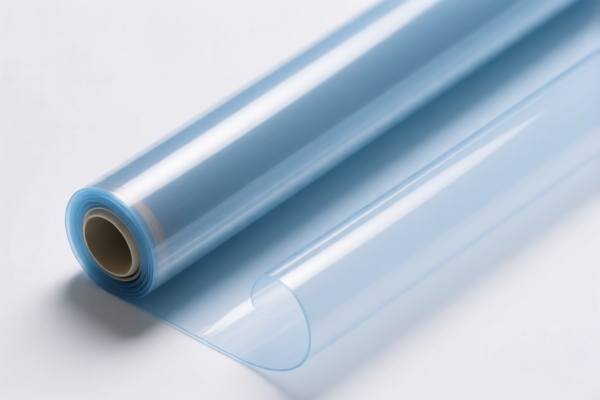
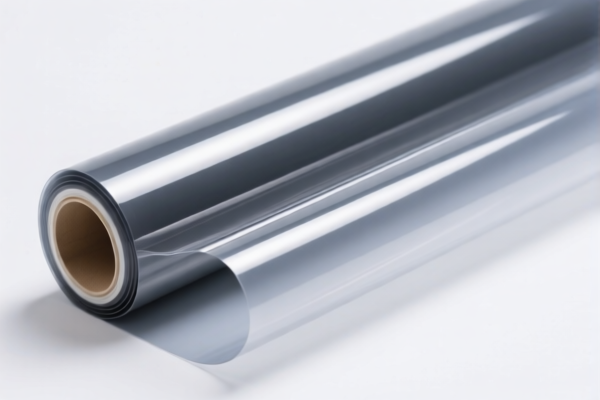
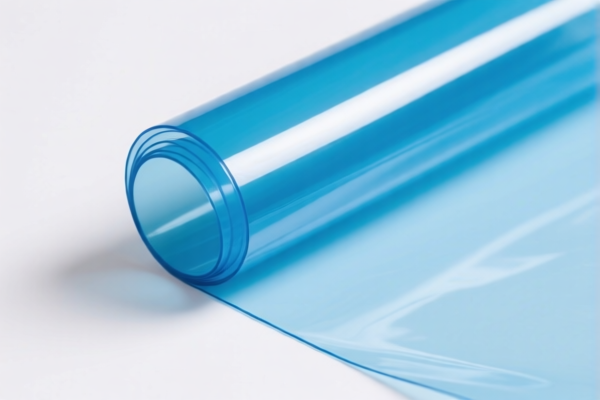
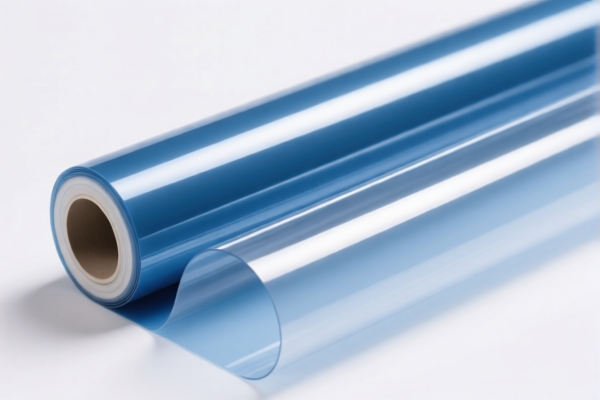
AI分析
🎞️ Wide Width UV Film (宽幅正片胶片)
🌐 HS Code Classification & Clearance Guide | 2026 Tariff Analysis | Professional Customs Strategy for Photographic Media
📌 Part I: Product Definition & Core Characteristics
Wide Width UV Film refers to sensitized, unexposed photographic film with a width exceeding 105mm. In the context of international trade and US customs regulations, this product falls under the category of "Photographic Film, Sensitized but Not Exposed".
⚠️ Key Distinction (Critical for Classification):
- Unexposed & Sensitized (Raw Material): Falls under Chapter 37 (Photographic or Cinematographic Goods), specifically Heading 3701 or 3702.
- Exposed & Developed (Finished Image): Falls under 3705.00.00.00.Assumption: Unless explicitly stated as "pre-exposed" or "developed," commercial "UV Film" for printing or photography is typically unexposed sensitizer-coated film. Therefore, it is classified under 3701 or 3702, NOT 3705.
Note: If your film is ALREADY exposed and developed, see the specific entry for
3705.00.00.00below.
📦 Part II: HS Code Classification Matrix (2026 Authoritative Mapping)
Based on the provided data, here are the precise HS Codes for Wide Width UV Film, categorized by its physical state (Unexposed vs. Exposed).
| HS Code | Product State | Width Range | Material Attribute | Primary Use Case |
|---|---|---|---|---|
3702.44.01.30 |
Unexposed & Sensitized | 105mm – 610mm | Non-paper, Non-textile | Artistic imaging, Industrial UV printing plates |
3702.44.01.60 |
Unexposed & Sensitized | > 105mm | Non-paper, Non-textile | Wide-format negative/positive film stock |
3701.99.60.30 |
Unexposed & Sensitized | Wide Format | Graphical Art Image Medium | Graphical art, High-precision graphic arts |
3701.99.60.60 |
Unexposed & Sensitized | Wide Format | Non-paper, Non-textile | General-purpose wide film, excludes specific sub-headings |
3705.00.00.00 |
Exposed & Developed | N/A (Image Fixed) | Photographic Plate/Film | Finalized photographic output, processed negatives |
🔍 Critical Note on "UV Film":
If the film is used for UV curing processes in industrial printing (e.g., making printing plates), it is treated as "Photographic Plate or Film". The classification depends strictly on whether it has been exposed to light before shipment.
- Raw Supply:3702...or3701...
- Processed Output:3705...
💰 Part III: 2026 US Tariff Rate Breakdown (Detailed Legal Basis)
✅ Destination: United States (US)
✅ Origin: China (CN) (Based on provided tax details)
✅ Effective Date: Post-2025 Policies (Section 301 + IEEPA)
🎯 1. 3705.00.00.00 — Exposed & Developed Photographic Film/Plates
(Use only if the film is ALREADY exposed and developed before import)
| Item | Detail |
|---|---|
| Base Tariff | 0.0% |
| Section 301 Tariff | +25.0% |
| IEEPA Section 122 Tariff | +10.0% |
| Total Effective Rate | 35.0% |
| Calculation Basis | CIF Value × 35% |
| De Minimis Exemption | ❌ Denied (denied_de_minimis) |
| Legal Path | IEEPA:122 → USITC:3705.00.00.00 → Footnote:301_Applicable |
📌 Explanation:
- Although the base duty is 0%, the Section 301 (25%) and IEEPA (10%) surcharges are fully applicable.
- Total: 35%. This is a significant cost for processed photographic media.
🎯 2. 3702.44.01.30 & 3702.44.01.60 — Unexposed Sensitized Film (Width >105mm)
(Standard for raw wide-format UV printing film or photographic negative/positive stock)
| Item | Detail |
|---|---|
| Base Tariff | 3.7% |
| Section 301 Tariff | +25.0% |
| IEEPA Section 122 Tariff | +10.0% |
| Total Effective Rate | 38.7% |
| Calculation Basis | CIF Value × 38.7% |
| De Minimis Exemption | ❌ Denied (denied_de_minimis) |
| Legal Path | IEEPA:122 → USITC:3702.44.01.30 → Footnote:301_Applicable |
📌 Explanation:
- The 3.7% base duty applies because these are specific photographic films.
- Combined with 35% in additional tariffs (25% + 10%), the total hit is 38.7%.
- Warning: This is higher than the exposed film rate (3705) because the base duty is non-zero.
🎯 3. 3701.99.60.30 & 3701.99.60.60 — Unexposed Sensitized Film (General Wide Format)
(For graphical art film or other sensitive unexposed film not fitting 3702 specifics)
| Item | Detail |
|---|---|
| Base Tariff | 0.0% |
| Section 301 Tariff | +25.0% |
| IEEPA Section 122 Tariff | +10.0% |
| Total Effective Rate | 35.0% |
| Calculation Basis | CIF Value × 35.0% |
| De Minimis Exemption | ❌ Denied (denied_de_minimis) |
| Legal Path | IEEPA:122 → USITC:3701.99.60.30 → Footnote:301_Applicable |
📌 Explanation:
- These codes are often used when the film does not meet the strict width or chemical composition definitions of3702.
- Total: 35%. Same as exposed film, but legally distinct.
🛠️ Part IV: Practical Customs Clearance Advice (Risk Mitigation)
✅ 1. Documentation Checklist (Mandatory)
| Document | Requirement | Purpose |
|---|---|---|
| Product Specification Sheet | Must state: "Unexposed," "Sensitized," "Width >105mm," "No Photochemical Process Applied" | Proves it is raw material (3701/3702), not finished goods. |
| Technical Data Sheet (TDS) | Details emulsion type, UV sensitivity range, base material (e.g., Polyester/PET). | Confirms non-paper/non-textile material (excludes Chapter 48/63). |
| Commercial Invoice | Description: "Wide Format Unexposed Photographic Film, Sensitized, for UV Printing" | Avoids ambiguous terms like "Plastic Film" which may trigger wrong classification. |
| Material Safety Data Sheet (MSDS) | Required if chemicals in emulsion are hazardous. | Customs & CBP safety compliance. |
| Certificate of Origin | To prove Chinese origin (triggers Section 301/IEEPA). | Determines applicability of additional tariffs. |
✅ 2. Classification Strategy & Pitfalls
🚫 Common Error 1: Misclassifying as "Plastic Film" (3920/3921)
- Consequence: May avoid 35-38% tariffs if wrongly deemed "simple plastic."
- Reality: CBP will reject this because sensitized photographic film has a specific heading in Chapter 37.
- Correct Action: Always declare under HS 37xx.
🚫 Common Error 2: Confusing "Exposed" vs. "Unexposed"
- Consequence: Declaring unexposed film as
3705.00.00.00(Exposed) might seem cheaper (35% vs 38.7%), BUT if the film is unexposed, it’s a false declaration. - Reality:
- If Unexposed: Must use
3701...or3702.... - If Exposed: Must use
3705.... - Rule: Do not misstate the product state. If you ship raw film, classify as 3701/3702.
✅ Best Practice for "Wide Width":
- If width is 105mm – 610mm, prioritize
3702.44.01.30or.60. - If width is >610mm or generic graphical art, use
3701.99.60.30or.60. - Why it matters:
3702has a 3.7% base duty, while3701has 0%. However, both have 35%+ in additional tariffs, so the difference is minimal (3.7%). Choose based on technical accuracy.
✅ 3. Clearance Optimization Tips
-
Pre-Ruling Application:
Apply for a CBP Binding Ruling before shipment. Submit samples and technical specs to confirm whether your specific UV film fits3702.44or3701.99. This locks in the classification. -
Description Clarity:
Use precise language:"Wide Format Photographic Film, Sensitized but Not Exposed, Polyester Base, Width 450mm, for UV-Curing Printing Processes"
-
Avoid "UV Film" as Sole Description:
"UV Film" is ambiguous. It could mean: - Photographic film sensitive to UV light (Chapter 37).
- Shrink film for packaging (Chapter 39).
-
Coating material (Chapter 32).
Always specify "Photographic/Sensitized". -
Tariff Engineering Consideration:
- If possible, verify if any HS 3701 subheadings have lower base duties (they do: 0%).
- However, with 35% total, the margin for savings is small. Focus on accurate declaration to avoid penalties.
🌍 Part V: Global Market Comparison (2026)
| Country | HS Code (Unexposed) | Base Duty | Add'l Tariff (CN Origin) | Total Est. Rate | Notes |
|---|---|---|---|---|---|
| 🇺🇸 USA | 3702.44.01.30 |
3.7% | +35% (301+IEEPA) | 38.7% | High barrier. De Minimis denied. |
| 🇺🇸 USA | 3701.99.60.30 |
0.0% | +35% (301+IEEPA) | 35.0% | Lower base duty option. |
| 🇨🇳 China | 3702.44 |
6.5% | None | 6.5% | Lower entry cost. |
| 🇪🇺 EU | 3702.44 |
6.5% | None (if GSP not applicable) | 6.5% | Check for trade agreements. |
| 🇯🇵 Japan | 3702.44 |
5.0% | None | 5.0% | Low tariff environment. |
📌 Conclusion:
- USA is the most expensive market for Chinese-made wide-width UV film due to Section 301 and IEEPA tariffs.
- Total cost impact: 35–38.7%.
- No de minimis exemption applies, so even small samples are taxed.
📌 Part VI: Frequently Asked Questions (FAQ)
Q1: Is "Wide Width UV Film" considered "Photographic Film"?
✅ Yes. If it is sensitizer-coated for capturing images or creating printing plates, it is Chapter 37. If it is just plastic with a UV-curable coating for packaging, it may be Chapter 39. Clarify your use case.
Q2: Can I use De Minimis (Section 321) for small samples?
❌ No. The provided data explicitly states deny_de_minimis for all these HS codes. All shipments are subject to full duty and inspection.
Q3: What if the film is for "UV Curing" (not imaging)?
🔍 If it is a clear film used as a mask in UV curing (not sensitizer-coated for image capture), it might be classified under 3920 (Plastic Sheets). However, if it is sensitized (photographic emulsion), it remains 3701/3702. Consult a customs broker to determine if your product is "photographic" or "industrial plastic."
🎯 Part VII: Final Recommendation
- Verify Product State: Is it Unexposed or Exposed?
- Unexposed →
3701or3702 -
Exposed →
3705 -
Measure Width:
- 105mm–610mm →
3702.44.01.30(38.7%) -
Other/General →
3701.99.60.30(35.0%) -
Prepare for 35–39% Duty: Budget accordingly. There is no exemption for Chinese origin.
-
Document Precision: Use exact terminology: "Sensitized Photographic Film, Unexposed."
🔥 Golden Rule:
"In the US, Chapter 37 film from China is TAXED HEAVILY. Do not guess the HS Code. Use technical specs to lock in 3701/3702/3705."
📣 Next Steps:
📞 Engage a licensed customs broker to submit a Pre-Ruling Request to CBP with your film’s technical data sheet.
📄 Ensure your Commercial Invoice clearly states "HS Code: [Selected Code]" and "Country of Origin: China".
✨ Professional Compliance. Precise Classification. Cost Control.
💼 Don’t let a wrong HS code cost you 38% of your product value!
用户评价
关于 HS 编码归类
协调制度(HS)是由世界海关组织(WCO)制定的国际贸易商品分类标准。全球 200 多个国家采用 HS 系统作为海关关税、贸易统计和进出口监管的基础。
每个 HS 编码遵循以下层级结构:
- 章(2 位)——商品大类(例如:第 84 章:机器和机械设备)
- 品目(4 位)——章内的更具体分类
- 子目(6 位)——国际通用细分,所有 WCO 成员国统一使用
- 本国细分(8-10 位)——各国自行扩展的细分编码,如美国 HTSUS 10 位编码
正确的 HS 编码归类对于顺利通关、准确缴纳关税和遵守贸易法规至关重要。错误归类可能导致海关延误、多缴关税或罚款。
从CN进口到US时,适用的关税税率可能包括:
- 最惠国(MFN)税率——适用于 WTO 成员国的标准关税税率
- 普通税率——适用于无贸易协定国家
- 贸易救济关税——附加关税,如 301 条款(反倾销)、232 条款(国家安全)或反补贴税
本页内容仅供参考。如需正式归类,请咨询当地海关或持牌报关代理。