Wild Mink Raw Hide Whole Skin
CN → US| HS编码 | 关税税率 | 原产国 | 目的国 | 文档 |
|---|---|---|---|---|
| 4301100010 | 17.5% | CN | US | 官方文档 |
| 4301100020 | 17.5% | CN | US | 官方文档 |
商品图片
AI分析
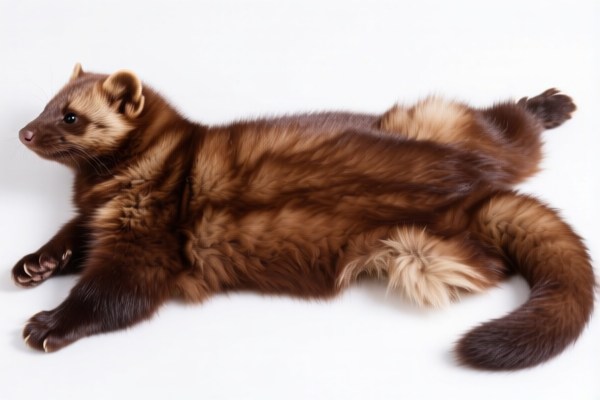
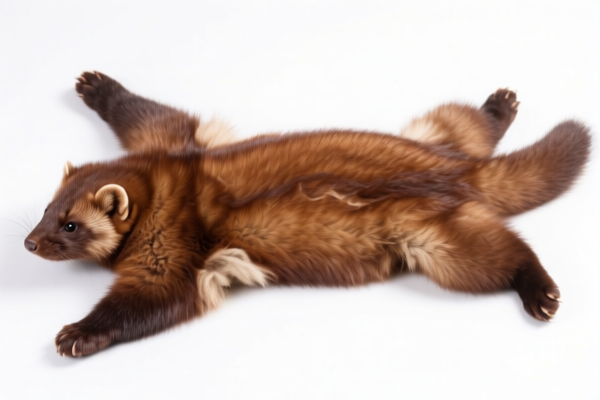
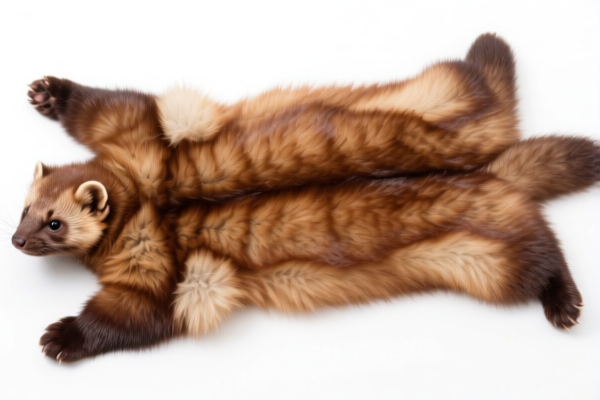
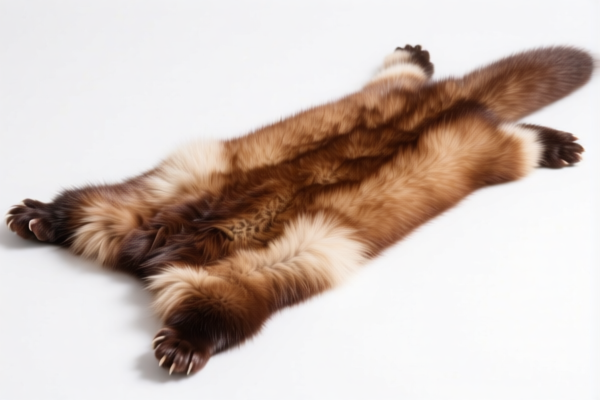
🐾 Wild Mink Raw Hides & Skins (Whole, Including Heads, Tails, Paws)
🌐 HS Code Reference & Customs Clearance Guide | 2026 Latest Tariff Analysis | Professional Clearance Strategy
📌 I. Product Definition and Classification: Do You Really Understand "Wild Mink Furskins"?
Raw Furskins refer to the untreated pelts of animals, including heads, tails, paws, and other cuttings, suitable for furriers' use. In international trade, specifically for Wild Mink, the classification is precise and distinct from farmed mink or other livestock hides.
The key distinction lies in the wild origin and the condition (whole vs. other pieces).
⚠️ Key Differentiation Point:
- If the mink skin is wild-caught and sold as a whole skin (with or without head, tail, or paws) → It falls under 4301.10.00.10.
- If the mink skin is wild-caught but is not whole (e.g., trimmed pieces, cuttings, or non-standard cuts) → It falls under 4301.10.00.20.
- Exclusion: Raw hides of heading 4101 (bovine), 4102 (sheep), or 4103 (other livestock) are not included here. These are specifically furrier-ready skins.
📦 II. HS Code Classification Details (2026 Latest Tariff Authority Match)
| HS Code | Product Description | Applicability | Condition |
|---|---|---|---|
4301.10.00.10 |
Of mink: Wild, whole, with or without head, tail or paws | Wild mink pelts in their natural whole state (head/tail/paws attached or detached but still part of the whole skin unit) | ✅ Whole |
4301.10.00.20 |
Of mink: Other (non-whole) | Wild mink pieces, cuttings, trimmed skins, or partial skins not considered "whole" for furriers' direct use in standard form | ❌ Not Whole |
🔍 Important Note:
- Farmed Mink: Often classified under different subheadings (e.g., 4301.60 or 4301.80 depending on the country's specific tariff schedule), but the provided data focuses on Wild Mink.
- "Other" Definition: In tariff terms, "Other" under heading 4301.10 usually captures pieces that are not whole skins, such as backs, bellies separated, or irregular cuttings.
- Do Not Confuse: Ensure the product is not a "raw hide" of cattle/sheep (Chapter 41). Mink skins are specifically Chapter 43.
💰 III. 2026 Latest Tariff Rate Details (Including Additional Duties & Policy Add-ons)
✅ Applicable Country: United States (US)
✅ Origin: China (CN) (Assumed based on typical trade context for such inquiries; verify if origin differs)
✅ Effective Date: Current applicable rates as per provided data
🎯 1. 4301.10.00.10 —— Wild Mink, Whole Skin
| Item | Content |
|---|---|
| Base Tariff Rate | 0.0% (ad valorem) |
| Additional Tariff (Section 301 / IEEPA) | +7.5% |
| Total Tariff Rate | 7.5% |
| Tax Calculation | CIF Value × 7.5% |
| De Minimis Exemption Eligibility | ❌ Not Applicable (Generally, furskins are high-value items and may not qualify for low-value exemption, but specifically, the 7.5% is an additional duty on top of base). |
| Legal Basis Path | HTSUS:4301.10.00.10 → Additional Duty: 7.5% |
📌 Explanation:
- The Base Tariff for wild mink whole skins is 0%, reflecting no standard import duty.
- The 7.5% additional tariff is likely due to trade policy measures (such as retaliatory tariffs or specific Section 301 duties on certain Chinese-origin goods).
- Total Cost Impact: A $10,000 shipment incurs $750 in duties.
🎯 2. 4301.10.00.20 —— Wild Mink, Other (Non-Whole)
| Item | Content |
|---|---|
| Base Tariff Rate | 0.0% (ad valorem) |
| Additional Tariff (Section 301 / IEEPA) | +7.5% |
| Total Tariff Rate | 7.5% |
| Tax Calculation | CIF Value × 7.5% |
| De Minimis Exemption Eligibility | ❌ Not Applicable |
| Legal Basis Path | HTSUS:4301.10.00.20 → Additional Duty: 7.5% |
📌 Note:
- The tax rate is identical to the "Whole Skin" category.
- Whether the skin is whole or cut into pieces, the 0.0% base + 7.5% additional structure applies for Wild Mink.
- The distinction matters for customs documentation and origin verification to ensure correct HS code selection.
🛠️ IV. Customs Clearance Practical Advice (实战避坑指南)
✅ 1. Required Documentation Checklist (Non-negotiable)
| Document | Must Provide | Description |
|---|---|---|
| ✅ Commercial Invoice | ✔️ | Clearly state: "Wild Mink Raw Furskins, Whole, with/without head/tail/paws." Avoid vague terms like "Animal Skins." |
| ✅ Packing List | ✔️ | Detail the number of skins, weight, and dimensions. Specify if heads/paws are included. |
| ✅ Furriers' Certificate | ✔️ | Some countries require a certificate from a licensed furrier confirming the skins are suitable for furrier use. |
| ✅ Wildlife Permit (CITES) | ⚠️ Check | Crucial! Mink may be subject to CITES regulations depending on the species and origin. Even if farm-bred, wild-sourced requires strict documentation. Verify if CITES permits are needed for US import. |
| ✅ Product Photos | ✔️ | Clear images of the skins, showing quality, condition, and attached parts (head/tail). |
| ✅ Origin Declaration | ✔️ | Proof of origin to determine applicability of the 7.5% additional tariff. |
✅ 2. Declaration Tips (Key Mantras)
🔥 “Wild Origin, Whole Form, 7.5% Duty, No Base Tax!”
| Scenario | Correct Declaration | Wrong Approach |
|---|---|---|
| Wild Mink, Whole Skin | HS Code: 4301.10.00.10 |
Misclassifying as Farmed Mink (4301.60) → Higher Base Tax |
| Wild Mink, Cut Pieces | HS Code: 4301.10.00.20 |
Declaring as "Whole" to avoid scrutiny → Risk of Audit & Penalties |
| Farmed Mink | HS Code: 4301.60.00.00 (Typical) |
Declaring as "Wild" → Fraudulent Origin Statement |
| Bovine Leather | HS Code: 4101.xxxx |
Declaring as "Mink" → Major Misclassification |
✅ 3. Special Cases & Handling
| Situation | Handling Advice |
|---|---|
| Mixed Lots (Wild + Farmed) | Must Separate. Do not mix Wild Mink (4301.10) with Farmed Mink (4301.60) in one shipment unless declared separately with distinct HS codes. |
| Tanned vs. Raw | The provided data is for Raw Furskins. If the skins are tanned or further prepared, they fall under Chapter 43 but different subheadings (e.g., 4302.19 for tanned fur skins). Ensure the product is raw (salted, pickled, or dried). |
| Parts Only (No Head/Tail) | If the skin is "whole" but the head/tail/paws were removed after tanning/preparation, it may still be considered "whole" depending on interpretation. However, for raw skins, if sold as a complete unit, use 4301.10.00.10. |
| CITES Compliance | Verify Species: American Mink (Neovison vison) is listed in CITES Appendix II (farmed) or not listed (wild in some contexts, but check current status). Importing requires valid CITES permits if applicable. Failure to comply leads to seizure. |
🌍 V. Global Market Clearance Comparison (2026 Latest)
| Country/Region | Recommended HS Code | Tariff Rate | Key Requirements |
|---|---|---|---|
| 🇺🇸 USA | 4301.10.00.10 / .20 |
7.5% (Total) | CITES Permit (if applicable), Proof of Origin |
| 🇨🇳 China | 4301.10 |
Varies (Check local) | Import License for Wildlife Products |
| 🇪🇺 EU | 4301.10 |
Varies (Often 0% + VAT) | CITES Annex compliance, REACH for chemicals used in processing |
| 🇬🇧 UK | 4301.10 |
Varies | UKCA marking not needed for raw skins, but CITES UK documentation required |
📌 Conclusion:
- The USA imposes a flat 7.5% additional tariff on these wild mink raw skins (on top of 0% base).
- CITES compliance is the biggest non-tariff barrier. Ensure you have the correct wildlife permits.
📌 VI. Common Errors & Pitfalls (Blood Lessons)
❌ Error 1: Declaring "Wild Mink" as "Farmed Mink"
👉 Consequence: Incorrect HS Code → Potential penalties for misdeclaration. Farmed mink may have different tariff rates and permit requirements.
❌ Error 2: Ignoring CITES Permits
👉 Consequence: Seizure of goods by Customs and Border Protection (CBP) or Fish and Wildlife Service. Fines can be substantial.
❌ Error 3: Misidentifying "Whole" vs. "Other"
👉 Consequence: While the tariff is the same (7.5%), incorrect classification can lead to audits and delays in clearance. Be precise in your description.
❌ Error 4: Confusing Raw with Tanned
👉 Consequence: Tanned skins have different HS codes and potentially different duties. Ensure the product is raw (untanned) for 4301.xx.
✅ Correct Practice:
"Wild Mink Raw Furskins, Whole, Salted, with Heads and Tails Attached, CITES Permit #XXXXX, Origin: China, HS Code: 4301.10.00.10"
🎯 VII. Conclusion: Professional Declaration, Smooth Clearance, Cost Control!
🎯 Remember the Mantra:
🔹 "Wild Mink, Raw, Whole: 0% Base + 7.5% Additional = 7.5% Total."
🔹 "CITES is Key, Document Everything, Avoid Delays."
🔹 "HS Code 4301.10.00.10 for Whole, .20 for Other Pieces."
📌 Pro Tip:
- Verify CITES Status: Before shipping, confirm if the specific mink species requires a CITES permit for US import.
- Use Advance Ruling: If unsure about "Whole" vs. "Other" for your specific product, apply for a Binding Tariff Information (BTI) or US CBP Ruling to get a legally binding classification.
- Work with Experienced Brokers: Furskins are specialized goods. Use a customs broker experienced in Chapter 43 (Furskins) to avoid costly mistakes.
📣 Immediate Action:
📞 Contact your Customs Broker + Provide Product Specs + Verify CITES Permits
🚀 Ensure your Wild Mink Raw Skins clear customs smoothly and cost-effectively!
✨ Professional Clearance Starts with Accurate Classification!
💼 Every Dollar Saved in Duties and Delays is Pure Profit!
用户评价
关于 HS 编码归类
协调制度(HS)是由世界海关组织(WCO)制定的国际贸易商品分类标准。全球 200 多个国家采用 HS 系统作为海关关税、贸易统计和进出口监管的基础。
每个 HS 编码遵循以下层级结构:
- 章(2 位)——商品大类(例如:第 84 章:机器和机械设备)
- 品目(4 位)——章内的更具体分类
- 子目(6 位)——国际通用细分,所有 WCO 成员国统一使用
- 本国细分(8-10 位)——各国自行扩展的细分编码,如美国 HTSUS 10 位编码
正确的 HS 编码归类对于顺利通关、准确缴纳关税和遵守贸易法规至关重要。错误归类可能导致海关延误、多缴关税或罚款。
从CN进口到US时,适用的关税税率可能包括:
- 最惠国(MFN)税率——适用于 WTO 成员国的标准关税税率
- 普通税率——适用于无贸易协定国家
- 贸易救济关税——附加关税,如 301 条款(反倾销)、232 条款(国家安全)或反补贴税
本页内容仅供参考。如需正式归类,请咨询当地海关或持牌报关代理。