Window Door Alarm
CN → US| HS编码 | 关税税率 | 原产国 | 目的国 | 文档 |
|---|---|---|---|---|
| 8543706000 | 35.0% | CN | US | 官方文档 |
| 8543709860 | 37.6% | CN | US | 官方文档 |
| 8531100045 | 36.3% | CN | US | 官方文档 |
| 8531100035 | 36.3% | CN | US | 官方文档 |
商品图片
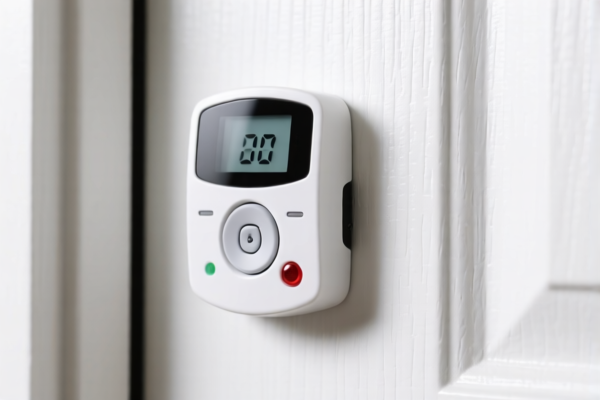
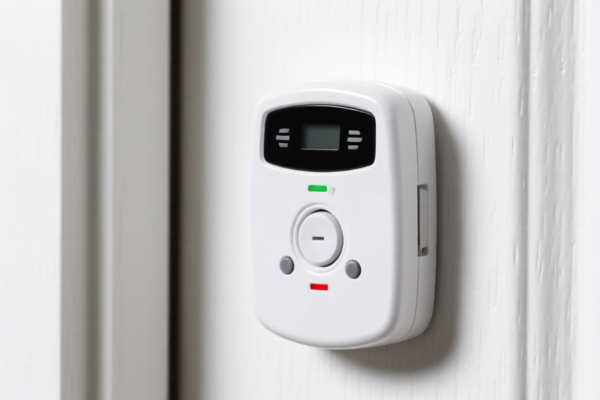
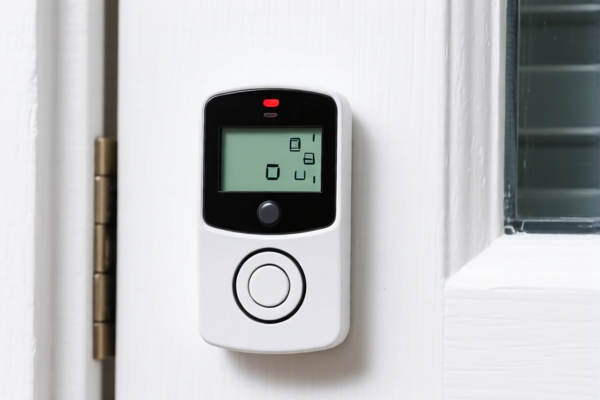
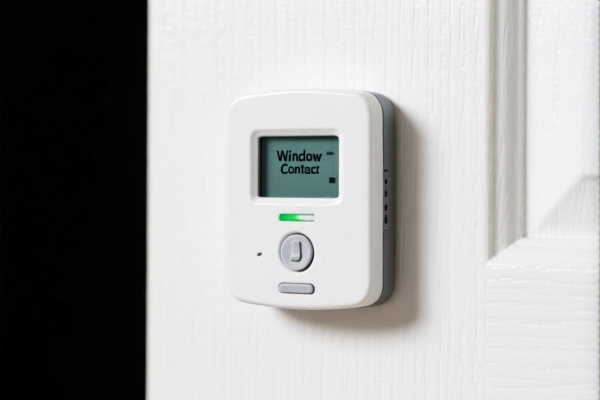
AI分析
🔒 Window & Door Alarm Systems (Security Alarms)
🌐 HS Code Reference & Customs Clearance Guide | 2026 Latest Tariff Analysis | Professional Clearance Strategy
📌 I. Product Definition & Classification: Do You Really Understand "Security Alarms"?
Window and door alarms are electronic security devices designed to detect unauthorized entry. In international trade, their classification depends heavily on how they function and whether they are standalone units or part of a networked system.
Key Classification Distinctions: 1. Network/Instrument-Linked Devices: Alarms designed specifically to connect to telephones, computers, or specific instrument networks. 2. Standalone Functional Units: Alarms with independent functions that do not fall under amplifiers or musical instrument effects. 3. Signal Emitting Devices: Alarms primarily functioning as auditory or visual signals for theft/fire detection.
⚠️ Critical Distinction Point:
- If the device is software-controlled via a network/phone → Likely 8543.70.60.00
- If the device is a standalone unit with specific logic → Likely 8543.70.98.60
- If the device is primarily a visual/audible signal emitter for security → Likely 8531.10.00.45 / .35
📦 II. HS Code Classification Details (2026 Latest Tariff Authority Comparison)
| HS Code | Product Description | Applicable Scenario | Key Classification Logic |
|---|---|---|---|
8543.70.60.00 |
Electronic apparatus designed to be connected to a telegraph or telephone apparatus, instrument, or network | Smart alarms linked to home automation, phone networks, or specific instruments | ✅ Matches "Designed to connect to..." feature |
8543.70.98.60 |
Other machines and apparatus with individual function not elsewhere specified | Standalone alarms that don't fit amplifier/effect pedal definitions | ✅ "Other machines/apparatus" catch-all for independent functions |
8531.10.00.45 |
Theft or fire alarms and similar equipment; other | General security alarms categorized under "Other" | ✅ Usage matches "Theft alarms" exactly |
8531.10.00.35 |
Theft or fire alarms and similar equipment; other | Alarm systems based on electrical/acoustic or visual signal principles | ✅ Matches "Theft alarm" usage via common sense inference |
🔍 Key Reminder:
- Networked/Smart Alarms often lean towards 8543 if the defining feature is the connection capability. - Traditional/Standalone Alarms often lean towards 8531 if the defining feature is the signaling function for theft/fire. - Misclassification between these groups can lead to significant tax differences and clearance delays.
💰 III. 2026 Latest Tariff Rate Details (Including Surtaxes, Policy Add-ons)
✅ Applicable Country: United States (US)
✅ Origin: China (CN)
✅ Effective Date: From November 10, 2025 (including subsequent imports)
🎯 1. 8543.70.60.00 — Electronic Apparatus Connected to Networks/Instruments
| Item | Details |
|---|---|
| Base Tariff Rate | 0.0% |
| Section 301 Surtax | +25.0% |
| Section 122 Surtax | +10.0% |
| Total Tax Rate | 35.0% |
| Tax Calculation | CIF Value × 35.0% |
| De Minimis Eligibility | ❌ Not Eligible (deny_de_minimis) |
| Legal Basis Path | 301 Tariff → 122 Clause → USITC:8543.70.60.00 |
📌 Explanation:
- This classification applies to alarms designed to interface with phones/networks. - Although the base rate is 0%, the high surtaxes bring the total to 35%. - No de minimis exemption applies, meaning even small shipments are subject to full duty calculation.
🎯 2. 8543.70.98.60 — Other Machines/Apparatus (Independent Function)
| Item | Details |
|---|---|
| Base Tariff Rate | 2.6% |
| Section 301 Surtax | +25.0% |
| Section 122 Surtax | +10.0% |
| Total Tax Rate | 37.6% |
| Tax Calculation | CIF Value × 37.6% |
| De Minimis Eligibility | ❌ Not Eligible (deny_de_minimis) |
| Legal Basis Path | 301 Tariff → 122 Clause → USITC:8543.70.98.60 |
📌 Note:
- This is the most expensive classification among the options. - Applies to standalone alarms that don't fit other specific categories. - The base rate of 2.6% adds to the surtaxes, making it less favorable than8543.70.60.00.
🎯 3. 8531.10.00.45 — Theft/Fire Alarms (Other)
| Item | Details |
|---|---|
| Base Tariff Rate | 1.3% |
| Section 301 Surtax | +25.0% |
| Section 122 Surtax | +10.0% |
| Total Tax Rate | 36.3% |
| Tax Calculation | CIF Value × 36.3% |
| De Minimis Eligibility | ❌ Not Eligible (deny_de_minimis) |
| Legal Basis Path | 301 Tariff → 122 Clause → USITC:8531.10.00.45 |
📌 Explanation:
- This classification is based on the purpose (theft/fire alarm). - Falls under the "Other" sub-category for signaling devices. - 36.3% total rate, slightly cheaper than standalone networked units but more expensive than the 0% base rate option.
🎯 4. 8531.10.00.35 — Theft/Fire Alarms (Other)
| Item | Details |
|---|---|
| Base Tariff Rate | 1.3% |
| Section 301 Surtax | +25.0% |
| Section 122 Surtax | +10.0% |
| Total Tax Rate | 36.3% |
| Tax Calculation | CIF Value × 36.3% |
| De Minimis Eligibility | ❌ Not Eligible (deny_de_minimis) |
| Legal Basis Path | 301 Tariff → 122 Clause → USITC:8531.10.00.35 |
📌 Note:
- Similar to.45but based on the inference of being an electrical/acoustic/visual signal device. - Commonly used for traditional door/window sensors that emit a siren/light. - Identical rate (36.3%) to.45, but the classification logic differs slightly.
🛠️ IV. Customs Clearance Practical Advice (实战避坑指南)
✅ 1. Required Documentation Checklist (None Can Be Skipped)
| Document | Required? | Description |
|---|---|---|
| ✅ Product Specification Sheet | ✔️ | Must include connectivity options (WiFi, Phone, Standalone), power supply, and sensor type. |
| ✅ Circuit Diagram / Block Diagram | ✔️ | Critical to determine if the device is "network-connected" (8543) or "standalone signal" (8531). |
| ✅ Product Photos (with Nameplate) | ✔️ | Clear view of model number, brand, and input/output parameters. |
| ✅ Third-Party Test Reports | ✔️ | FCC, CE, RoHS, UL (if applicable for security devices). |
| ✅ Commercial Invoice | ✔️ | Must clearly state "Security Alarm System" or "Window/Door Sensor". |
| ✅ Packing List | ✔️ | Detail components: sensors, sirens, control panels, cables. Avoid splitting a single system. |
✅ 2. Declaration Strategy (Key Mantra)
🔥 “Connectivity Defines 8543, Signaling Defines 8531, Accuracy Saves Money!”
| Scenario | Correct Declaration Approach | Incorrect Action |
|---|---|---|
| Smart Alarm with App/Phone Link | 8543.70.60.00 (35.0%) |
Misdeclare as standalone → Risk of penalty |
| Standalone Siren/Sensor | 8531.10.00.35 or .45 (36.3%) |
Misdeclare as networked → May increase rate if base rate differs |
| Complex Standalone Unit | 8543.70.98.60 (37.6%) |
Misdeclare as simple signal → Risk of under-declaration |
| Whole System (Panel + Sensors) | Declare as one unit if integrated | Splitting panel and sensors → Higher total duty |
✅ 3. Special Case Handling
| Situation | Handling Advice |
|---|---|
| OEM Custom Alarms | Provide client design docs to prove intended use (network vs. standalone). |
| Wireless vs. Wired | Both can fall under these codes; focus on functionality not just transmission method. |
| Alarms for Medical Use | If specifically for medical device security, may require additional justification for classification. |
| Dual-Function Devices | If it does both signaling and network control, prioritize the essential character for 8543 vs 8531. |
🌍 V. Global Market Clearance Comparison (2026 Latest)
| Country/Region | Recommended HS Code | Tariff Rate | Certification Requirements | Notes |
|---|---|---|---|---|
| 🇺🇸 USA | 8543.70.60.00 |
35.0% (CN) | FCC + UL | High surtax; no de minimis |
| 🇺🇸 USA | 8531.10.00.35 |
36.3% (CN) | FCC + UL | Slightly higher rate |
| 🇨🇳 China | 8543.70.60.00 |
5% (varies) | CCC | No 301/122 surtaxes |
| 🇪🇺 EU | 8543.70.60.00 |
0% (if CE) | CE + RoHS | No surtaxes |
| 🇬🇧 UK | 8543.70.60.00 |
0-5% | UKCA | Post-Brexit rules apply |
📌 Conclusion:
- USA imposes heavy surtaxes (301 + 122) on all security electronics from China. - EU/UK have much lower tariffs but strict CE/UKCA certification requirements. - China domestic market has no punitive surtaxes, making it cheaper for local sales.
📌 VI. Common Mistakes & Pitfall Avoidance (Lessons Learned)
❌ Mistake 1: Declaring a Networked Smart Alarm as a Standalone Signal Device
👉 Consequence: Misclassification may lead to 36.3% rate instead of 35.0%, or worse, penalties for inaccurate declaration.
❌ Mistake 2: Splitting a Complete Alarm System into "Sensors" and "Control Panel"
👉 Consequence: Higher total duty due to separate classification rates and packaging fees.
❌ Mistake 3: Ignoring Section 122 Tariffs
👉 Consequence: Assuming only 301 (25%) applies. 122 (10%) is also applicable, bringing total to 35%+.
❌ Mistake 4: Using vague descriptions like "Electronic Device"
👉 Consequence: Customs will reclassify, potentially at a higher rate, and cause delays.
✅ Correct Practice:
"Smart Window/Door Alarm Sensor with WiFi Connectivity, Model XYZ, FCC Certified, Designed for Home Security Network Integration"
🎯 VII. Conclusion: Precise Classification, Efficient Clearance, Cost Optimization!
🎯 Remember the Mantra:
🔹 “Network = 8543, Signal = 8531, 301+122 = 35%+”
🔹 “HS Code determines cost, 2% difference means thousands in savings!”
📌 Pro Tip:
If your alarms are originating from Vietnam, Mexico, Thailand, or Malaysia, you may qualify for IEEPA Exemptions or lower tariffs under USMCA/ASEAN agreements.
Recommend applying for an Advance Ruling (Pre-classification) to avoid clearance risks.
📣 Immediate Action:
📞 Contact a professional customs broker + Provide circuit diagrams + Apply for HS Code Advance Ruling
🚀 Ensure your alarms clear customs smoothly, efficiently, and profitably!
✨ Professional clearance starts with accurate classification!
💼 Every cent of your cost deserves precise calculation!
用户评价
关于 HS 编码归类
协调制度(HS)是由世界海关组织(WCO)制定的国际贸易商品分类标准。全球 200 多个国家采用 HS 系统作为海关关税、贸易统计和进出口监管的基础。
每个 HS 编码遵循以下层级结构:
- 章(2 位)——商品大类(例如:第 84 章:机器和机械设备)
- 品目(4 位)——章内的更具体分类
- 子目(6 位)——国际通用细分,所有 WCO 成员国统一使用
- 本国细分(8-10 位)——各国自行扩展的细分编码,如美国 HTSUS 10 位编码
正确的 HS 编码归类对于顺利通关、准确缴纳关税和遵守贸易法规至关重要。错误归类可能导致海关延误、多缴关税或罚款。
从CN进口到US时,适用的关税税率可能包括:
- 最惠国(MFN)税率——适用于 WTO 成员国的标准关税税率
- 普通税率——适用于无贸易协定国家
- 贸易救济关税——附加关税,如 301 条款(反倾销)、232 条款(国家安全)或反补贴税
本页内容仅供参考。如需正式归类,请咨询当地海关或持牌报关代理。