Wood Pellet Fuel Cleaning Block
CN → US| HS编码 | 关税税率 | 原产国 | 目的国 | 文档 |
|---|---|---|---|---|
| 4401310000 | 35.0% | CN | US | 官方文档 |
| 4401394210 | 35.0% | CN | US | 官方文档 |
商品图片

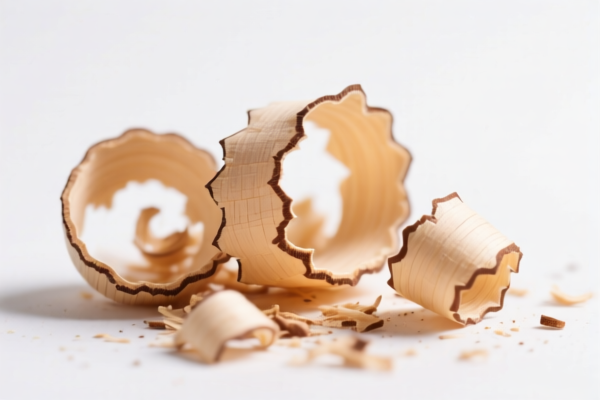
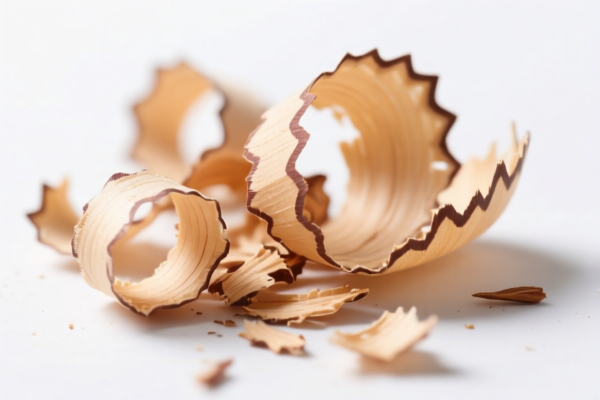
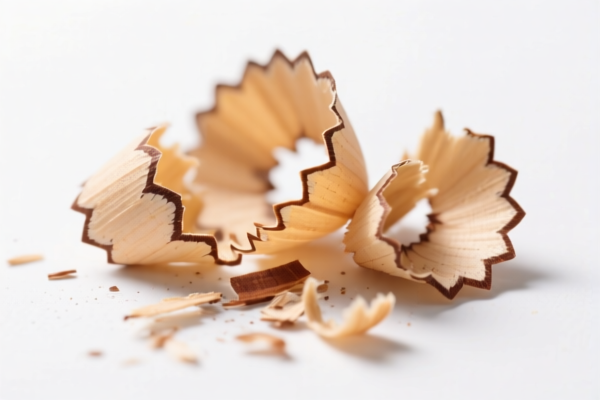
AI分析
🪵 Wood Pellet Fuel Cleaning Block (Agglomerated Sawdust/Waste)
🌐 HS Code Reference & Customs Clearance Guide | 2026 Latest Tariff Analysis | Professional Clearance Strategy
📌 I. Product Definition & Classification: What exactly is a "Wood Pellet"?
Wood Pellets, often referred to in commercial contexts as "biomass fuel blocks" or "cleaning blocks" (though the latter is a misnomer for fuel), are standardized cylindrical pellets made from compressed sawdust, wood waste, and scrap. In international trade, they fall under Chapter 44: Wood and articles of wood.
The key distinction lies in the form and agglomeration:
* Agglomerated Forms: If the wood waste is compressed into logs, briquettes, pellets, or similar forms, it is classified under HS 4401.3.
* Non-Agglomerated: If it is loose sawdust, chips, or particles, it falls under different subheadings (not covered in this specific <DATA> set).
⚠️ Critical Distinction:
- If the product is compressed into pellets (standard biomass fuel shape) → Goes to 4401.31.00.00 (Wood Pellets).
- If the product is compressed into other forms (e.g., irregular briquettes, logs, or faggots) or simply loose sawdust that is agglomerated but not in standard pellet form → Goes to 4401.39.42.10 (Other Sawdust).
📦 II. HS Code Classification Details (2026 Latest Tariff Authority Comparison)
Based on the provided <DATA>, here are the two relevant HS Codes for agglomerated wood waste/sawdust:
| HS Code | Product Description | Typical Form | Tax Rate (US) |
|---|---|---|---|
4401.31.00.00 |
Wood Pellets | Cylindrical, standardized biomass fuel pellets (typically 6-8mm diameter) | 25.0% |
4401.39.42.10 |
Other Sawdust (Agglomerated) | Irregular briquettes, logs, faggots, or non-standard agglomerated sawdust | 25.0% |
🔍 Key Note:
- Both categories fall under "Sawdust and wood waste and scrap, agglomerated in logs, briquettes, pellets or similar forms." - The primary difference is physical shape: Pellets vs. Other (Non-Pellet) Forms. - Despite the descriptive difference, both carry the same total tax rate of 25.0% under the provided data.
💰 III. 2026 Latest Tariff Rate Breakdown (Detailed Tax Clauses)
✅ Applicable Country: United States (US)
✅ Origin: China (CN) (Inferred from tax details)
✅ Effective Date: Current tariffs apply
🎯 1. 4401.31.00.00 —— Wood Pellets (Standard Biomass Fuel)
| Item | Detail |
|---|---|
| Base Duty Rate | 0.0% |
| Section 301 Additional Duty | +25.0% |
| Total Effective Rate | 25.0% |
| Tax Calculation | CIF Value × 25% |
| De Minimis Exemption? | ❌ NO (Denied) |
| Legal Basis | USITC: 4401.31.00.00 → Section 301: Footnote 9903.08.01 (Applied to Wood Products) |
📌 Explanation:
- Although the base tariff for wood pellets is 0%, the 25% additional duty is imposed due to Section 301 of the Trade Act of 1974, targeting specific Chinese goods. - This is a flat 25% on the total customs value. - No de minimis exemption applies, meaning even low-value shipments are subject to this tax.
🎯 2. 4401.39.42.10 —— Other Sawdust (Agglomerated)
| Item | Detail |
|---|---|
| Base Duty Rate | 0.0% |
| Section 301 Additional Duty | +25.0% |
| Total Effective Rate | 25.0% |
| Tax Calculation | CIF Value × 25% |
| De Minimis Exemption? | ❌ NO (Denied) |
| Legal Basis | USITC: 4401.39.42.10 → Section 301: Footnote 9903.08.01 (Applied to Wood Products) |
📌 Explanation:
- Similar to pellets, this category has a 0% base duty but faces a 25% additional tariff. - This applies to briquettes, logs, faggots, or any agglomerated wood waste that is not a standard pellet. - No de minimis exemption applies.
🛠️ IV. Customs Clearance Practical Advice (Avoid Pitfalls)
✅ 1. Required Documentation Checklist
| Document | Mandatory? | Notes |
|---|---|---|
| ✅ Commercial Invoice | ✔️ | Must clearly state "Wood Pellets" or "Agglomerated Sawdust" and CIF value |
| ✅ Packing List | ✔️ | Detail package dimensions, gross/net weight, and pallet configuration |
| ✅ Certificate of Origin | ✔️ | Required to prove origin (China) for Section 301 applicability |
| ✅ Product Specifications | ✔️ | Confirm if product is Pellet (cylindrical) or Briquette/Block (irregular) |
| ✅ ** fumigation Certificate (if applicable)** | ✔️ | If wood is raw and not heat-treated, ISPM 15 may be required |
| ✅ Test Report | ✔️ | Moisture content, density, and ash content (for quality control) |
✅ 2. Declaration Tips (Key Mnemonic)
🔥 "Shape Determines HS, Tax is 25%, No De Minimis!"
| Scenario | Correct Declaration | Error to Avoid |
|---|---|---|
| Standard Cylindrical Pellets | 4401.31.00.00 (Wood Pellets) |
Do not declare as "Briquettes" |
| Irregular Compressed Blocks | 4401.39.42.10 (Other Sawdust) |
Do not declare as "Pellets" |
| Loose Sawdust (Non-Agglomerated) | NOT COVERED in this data | Do not force into 4401.3x |
✅ 3. Special Cases
| Situation | Handling Advice |
|---|---|
| Mixed Shipment (Pellets + Briquettes) | Must be split and declared separately. Mixing may lead to reclassification and penalties. |
| Recycled Wood | If made from reclaimed wood, ensure it is clean and free of contaminants (paint, glue, chemicals). Contaminated wood may be rejected or classified differently. |
| Heat-Treated (HT) vs. Kiln-Dried (KD) | Ensure correct marking on packaging. HT is standard for international trade. |
🌍 V. Global Market Comparison (2026 Latest)
| Country/Region | Recommended HS Code | Tariff Rate | Notes |
|---|---|---|---|
| 🇺🇸 USA | 4401.31.00.00 |
25% | High due to Section 301 |
| 🇨🇳 China | 4401.31.00.00 |
0% | Low base duty, no additional tariff |
| 🇪🇺 EU | 4401.31.00 |
0-4.7% | Varies by member state; no Section 301 |
| 🇬🇧 UK | 4401.31.00 |
0-4.7% | Post-Brexit tariff regime applies |
📌 Conclusion:
- The US market is the most expensive for wood pellet imports from China due to the 25% Section 301 tariff. - EU and UK markets are more favorable, with 0-4.7% tariffs. - Consider supply chain diversification if targeting the US market heavily.
📌 VI. Common Errors & Pitfalls (Blood & Tears Lessons)
❌ Error 1: Declaring Briquettes as Pellets
👉 Consequence: Even though tax rate is the same (25%), incorrect classification can lead to customs delays and potential fines for misdeclaration.
❌ Error 2: Ignoring Section 301 Applicability
👉 Consequence: Assuming 0% base duty means 0% total tax. Result: Underpayment by 25%, leading to back taxes + penalties.
❌ Error 3: Failing to Provide Certificate of Origin
👉 Consequence: Customs cannot verify Section 301 applicability, leading to hold or re-classification.
✅ Correct Approach:
"Wood Pellets, 6mm diameter, Moisture Content <10%, Ash Content <1%, Heat Treated, Model WP-100, CIF Value $XX,XXX"
🎯 VII. Conclusion: Precision in Classification Saves Money!
🎯 Remember:
🔹 "Pellets vs. Briquettes: Shape Matters for HS, but Tax is 25% Either Way!"
🔹 "No De Minimis: Every Dollar is Taxed!"
🔹 "Section 301 is the Killer: Always Factor in 25%!"
📌 Pro Tip:
If you are importing non-China origin wood pellets (e.g., from Canada, Brazil, or Germany), the 25% Section 301 tariff does not apply. Check the Country of Origin carefully to avoid overpaying taxes.
📣 Action Item:
📞 Contact a licensed customs broker + Provide product specs + Apply for Pre-Ruling if unsure about classification.
🚀 Ensure your shipments are accurately declared to avoid customs holds and unexpected costs.
✨ Professional Customs Clearance Starts with Accurate Classification!
💼 Your Profit Margin Depends on Precise Tariff Application!
用户评价
关于 HS 编码归类
协调制度(HS)是由世界海关组织(WCO)制定的国际贸易商品分类标准。全球 200 多个国家采用 HS 系统作为海关关税、贸易统计和进出口监管的基础。
每个 HS 编码遵循以下层级结构:
- 章(2 位)——商品大类(例如:第 84 章:机器和机械设备)
- 品目(4 位)——章内的更具体分类
- 子目(6 位)——国际通用细分,所有 WCO 成员国统一使用
- 本国细分(8-10 位)——各国自行扩展的细分编码,如美国 HTSUS 10 位编码
正确的 HS 编码归类对于顺利通关、准确缴纳关税和遵守贸易法规至关重要。错误归类可能导致海关延误、多缴关税或罚款。
从CN进口到US时,适用的关税税率可能包括:
- 最惠国(MFN)税率——适用于 WTO 成员国的标准关税税率
- 普通税率——适用于无贸易协定国家
- 贸易救济关税——附加关税,如 301 条款(反倾销)、232 条款(国家安全)或反补贴税
本页内容仅供参考。如需正式归类,请咨询当地海关或持牌报关代理。