Wood Profiles
CN → US| HS编码 | 关税税率 | 原产国 | 目的国 | 文档 |
|---|---|---|---|---|
| 4418919140 | 38.2% | CN | US | 官方文档 |
| 4418300100 | 38.2% | CN | US | 官方文档 |
| 4409295100 | 35.0% | CN | US | 官方文档 |
| 4409105000 | 35.0% | CN | US | 官方文档 |
商品图片
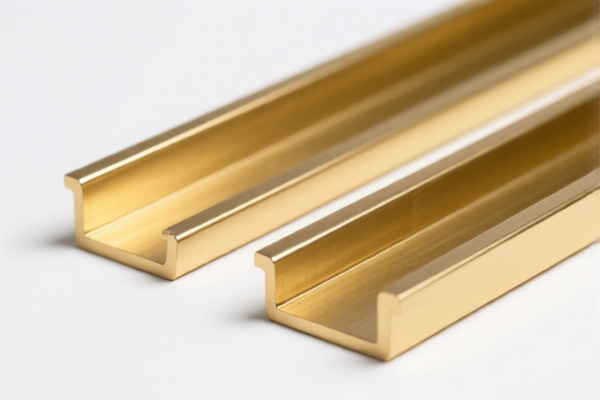
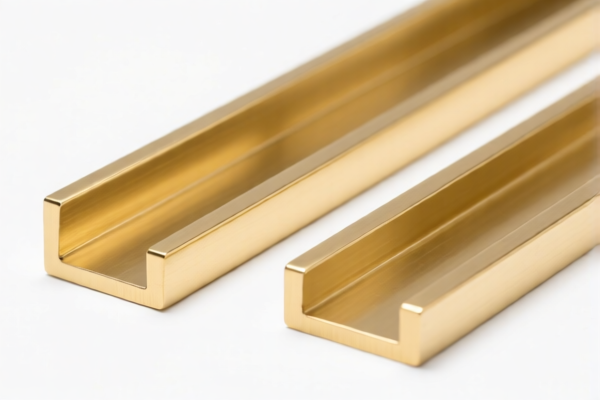
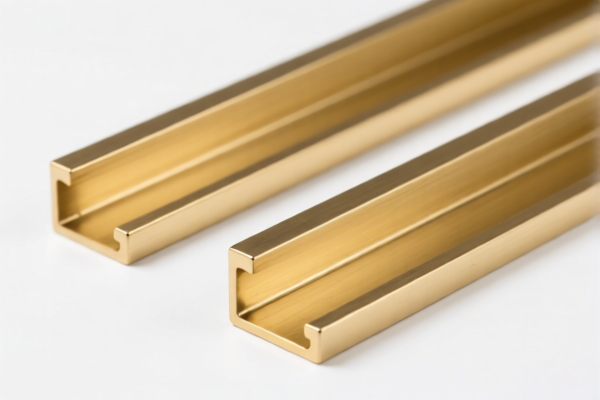
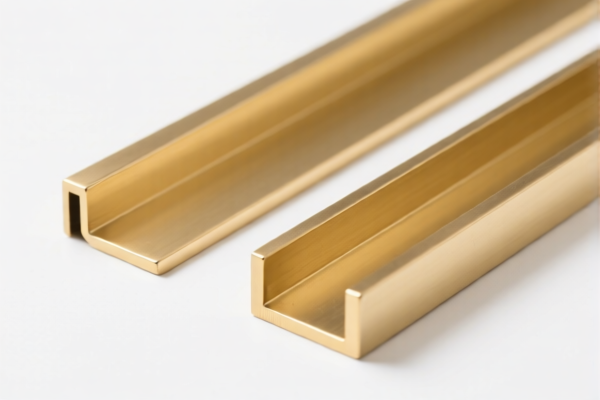
AI分析
🪵 Wood Profiles (Wooden Profiles / Mouldings)
🌐 HS Code Reference & Customs Clearance Guide | 2026 Latest Tariff Analysis | Professional Compliance Strategy
Wood profiles are a versatile category of timber products, ranging from structural beams to decorative mouldings. In international trade, their classification depends heavily on processing depth (whether they are simply shaped or continuously formed), function (structural vs. decorative), and wood species.
Misclassification is common and costly. For example, treating a structural beam as a decorative moulding can lead to significant duty discrepancies and customs audits.
⚠️ Key Distinction Point:
- If the wood is shaped for structural load-bearing purposes (columns, beams) → Classified under Chapter 4418 (Builders' carpentry).
- If the wood is continuously profiled (mouldings, skirting, trim) with specific cross-sections → Classified under Chapter 4409 (Wood continuously shaped along its entire length).
📦 二、HS Code Classification Details (2026 Latest Tariff Authority)
Based on the provided data, here is the detailed breakdown for Wood Profiles:
| HS Code | Product Description | Summary & Application |
|---|---|---|
| 4418.91.91.40 | Other manufactured structural wood components | Structural Use: Classified as other manufactured structural wood components. Typical for heavy-duty beams, columns, or large structural frames not specifically listed elsewhere. |
| 4418.30.01.00 | Wooden structural parts (columns, beams, etc.) | Builder's Carpentry: Specifically covers columns, beams, and other structural members for buildings. This is the standard code for primary load-bearing wooden elements in construction. |
| 4409.29.51.00 | Other continuously shaped wood (deciduous/non-coniferous) | Decorative/Trim: Covers wood with continuous shaping or decorative line features that do not fall under specific coniferous categories. Suitable for general trim, non-structural mouldings, or decorative strips. |
| 4409.10.50.00 | Wood continuously shaped (coniferous/spruce-pine-fir) | Mouldings & Trim: Covers wood that has been continuously shaped along its entire length to have specific cross-sections. Typically applies to coniferous wood (softwood) used for skirting boards, architraves, and other continuous profiles. |
🔍 Important Note:
- Structural vs. Decorative: Codes starting with 4418 are for builders' carpentry (structural). Codes starting with 4409 are for continuously shaped wood (decorative/finish work).
- Wood Type Matters: 4409.10 is generally for coniferous (softwood), while 4409.29 covers other woods (often hardwoods or non-specified). Always check the wood species.
💰 三、2026 Latest Tariff Rate Details (Including Surcharges & Policy Add-ons)
✅ Applicable Country: United States (US)
✅ Origin: China (CN)
✅ Effective Date: Rates include Section 301 and Section 232 tariffs as per current trade policies.
🎯 1. Structural Wood Components (HS 4418.91.91.40 & 4418.30.01.00)
These codes apply to wooden profiles used as structural members (columns, beams, structural frames).
| Item | Detail |
|---|---|
| Base Tariff | 3.2% (Ad Valorem) |
| Section 301 Tariff | +25.0% (Additional tariff for Chinese goods under Trade Act of 1974, Sec. 301) |
| Section 232 Tariff | +10.0% (Additional tariff for steel/aluminum or related timber products under International Emergency Economic Powers Act, often applied to certain wood categories or counted in the "122 Clause" reference in your data as part of the total surcharge structure. Note: Data explicitly lists "122 Clause Tariff 10%" which likely refers to specific administrative or bilateral surcharges included in the total 38.2%) |
| Total Effective Tax Rate | 38.2% |
| Tax Calculation | CIF Value × 38.2% |
| De Minimis Exemption | ❌ Not Eligible (Section 301 goods generally exclude de minimis exemptions for small parcels) |
| Legal Basis Path | HTSUS:4418 → Section 301: 9903.01.76 → Section 232/Other Surcharge |
📌 Explanation:
- The 3.2% is the standard MFN (Most Favored Nation) base rate.
- The 25.0% is the standard Section 301 retaliatory tariff on Chinese imports.
- The 10.0% is an additional surcharge (referred to in your data as "122 Clause Tariff", potentially related to specific administrative codes or bilateral measures).
- Total: 38.2%. This is a high-cost category for structural wood exports from China.
🎯 2. Continuously Shaped Wood Profiles / Mouldings (HS 4409.29.51.00 & 4409.10.50.00)
These codes apply to wooden profiles that are continuously shaped (e.g., mouldings, skirting, decorative trim).
| Item | Detail |
|---|---|
| Base Tariff | 0.0% (Ad Valorem) for most 4409 subheadings |
| Section 301 Tariff | +25.0% (Standard Section 301 surcharge) |
| Section 232/Other Surcharge | +10.0% (Same "122 Clause" surcharge as above) |
| Total Effective Tax Rate | 35.0% |
| Tax Calculation | CIF Value × 35.0% |
| De Minimis Exemption | ❌ Not Eligible (Section 301 goods are excluded) |
| Legal Basis Path | HTSUS:4409 → Section 301: 9903.01.76 → Surcharge Code |
📌 Explanation:
- The 0.0% base rate makes these products initially cheaper than structural wood (3.2% base).
- However, the 25% + 10% surcharges bring the total to 35.0%, which is still very high.
- Key Advantage: If you can prove the product is NOT from China (e.g., from Vietnam or Thailand), the base rate is 0%, but Section 301 may still apply depending on country-of-origin rules. Transshipment does not exempt you from Section 301 if the substantive transformation occurs in China.
🛠️ 四、Customs Clearance Practical Advice (Avoiding Pitfalls)
✅ 1. Documentation Checklist (Mandatory)
| Document | Required | Purpose |
|---|---|---|
| Product Specifications | ✅ | Must detail dimensions, cross-section shape, and wood species. |
| Technical Drawings | ✅ | To prove if it is "continuously shaped" (4409) or "structural" (4418). |
| Photos (Labeled) | ✅ | Show the profile shape, end grain, and any joints. |
| Bill of Lading / Invoice | ✅ | Must clearly state "Wood Profiles" or "Structural Wood Components," not generic "Wooden Parts." |
| Phytosanitary Certificate | ✅ | Critical for wood products to prove treatment against pests (ISPM 15 compliance). |
| Fumigation Certificate | ✅ | Proof of heat treatment or methyl bromide fumigation. |
| Country of Origin Certificate | ✅ | To verify eligibility for any potential exemptions (though rare for CN origin on these codes). |
✅ 2. Classification Strategy & Tips
| Scenario | Correct Classification | Risk if Incorrect |
|---|---|---|
| Load-bearing beams/columns | 4418.30.01.00 or 4418.91.91.40 | Misclassifying as moulding (4409) may lead to penalties for undervaluation of duty (since base rate is lower). |
| Decorative skirting/moulding | 4409.10.50.00 (Coniferous) or 4409.29.51.00 (Other) | Misclassifying as structural may lead to overpayment (38.2% vs 35.0%). |
| Mixed Shipment (Beams + Mouldings) | Separate Line Items | Do not lump them together. Customs may audit and assign the higher duty to all items. |
| Wood Species Unclear | Declare Specific Species | "Wood" is too vague. Specify "Spruce," "Pine," "Oak," etc., to ensure correct 4409 subheading. |
✅ 3. Special Considerations for US Imports
- Section 301 & 232 Surcharges are Strict: The 35%-38.2% total rate is not negotiable for Chinese-origin goods. Plan your pricing accordingly.
- Phytosanitary Compliance: US Customs and Border Protection (CBP) and the Animal and Plant Health Inspection Service (APHIS) are very strict on wood. Without a valid Phytosanitary Certificate, your shipment will be rejected or destroyed.
- De Minimis Loophole Closed: Do not attempt to ship small quantities under Section 321 (de minimis) to avoid these duties. Section 301 goods are explicitly excluded from de minimis exemptions.
🌍 五、Global Market Comparison (2026 Snapshot)
| Market | Recommended HS Code | Est. Total Duty (CN Origin) | Key Requirement |
|---|---|---|---|
| 🇺🇸 USA | 4409 or 4418 |
35.0% - 38.2% | Phytosanitary Cert, Section 301/232 Payment |
| 🇨🇳 China | 4409 or 4418 |
0% - 5% | No major surcharges for imports |
| 🇪🇺 EU | 4409 or 4418 |
0% - 6% | FSC/PEFC Chain of Custody often required |
| 🇨🇦 Canada | 4409 or 4418 |
0% (if CUSMA eligible) | Must meet Rules of Origin (not CN origin) |
📌 Conclusion:
The US market is the most expensive for wood profiles from China due to the 35%-38.2% effective tariff rate. Consider supply chain diversification (e.g., sourcing from non-China countries) or product value-added processing abroad to mitigate tariff risks.
📌 六、Common Errors & Pitfalls (Lessons Learned)
❌ Error 1: Declaring "Wood Profiles" without specifying structural vs. decorative.
👉 Result: Customs may assess the higher 38.2% rate if they suspect structural use, or delay clearance for classification review.
❌ Error 2: Omitting the Phytosanitary Certificate.
👉 Result: Shipment held or destroyed by APHIS. No financial remedy.
❌ Error 3: Assuming "small value" shipments are exempt from Section 301.
👉 Result: Seizure of goods. Section 301 surcharges apply to all imports, regardless of value.
✅ Best Practice:
Always declare: "Wood Moulding, Coniferous, Continuously Shaped, Fumigated, Model [XYZ], Country of Origin: China".
Provide drawings to prove the "continuously shaped" nature if claiming 4409.
🎯 七、Conclusion: Precision Saves Money!
🎯 Key Takeaway:
🔹 Structural Wood (4418): 38.2% Total Duty.
🔹 Decorative Profiles (4409): 35.0% Total Duty.
🔹 Documentation is King: Phytosanitary Cert + Technical Specs are mandatory.
📌 Recommendation:
If you are a Chinese exporter, build the 35-38% duty into your FOB/CIF pricing. Do not underestimate the impact of Section 301 and the "122 Clause" surcharge. For US importers, consider pre-clearance rulings to lock in the correct HS code and avoid surprise audits.
📣 Immediate Action:
📞 Contact your customs broker before shipping.
📄 Ensure your Phytosanitary Certificate is valid and matches the invoice.
📉 Calculate your Landed Cost with 38.2% for structural and 35.0% for mouldings to ensure profitability.
✨ Accurate Classification, Smooth Clearance, Maximized Profit!
💼 Don't let a 3% misclassification cost you 35% in duties!
用户评价
关于 HS 编码归类
协调制度(HS)是由世界海关组织(WCO)制定的国际贸易商品分类标准。全球 200 多个国家采用 HS 系统作为海关关税、贸易统计和进出口监管的基础。
每个 HS 编码遵循以下层级结构:
- 章(2 位)——商品大类(例如:第 84 章:机器和机械设备)
- 品目(4 位)——章内的更具体分类
- 子目(6 位)——国际通用细分,所有 WCO 成员国统一使用
- 本国细分(8-10 位)——各国自行扩展的细分编码,如美国 HTSUS 10 位编码
正确的 HS 编码归类对于顺利通关、准确缴纳关税和遵守贸易法规至关重要。错误归类可能导致海关延误、多缴关税或罚款。
从CN进口到US时,适用的关税税率可能包括:
- 最惠国(MFN)税率——适用于 WTO 成员国的标准关税税率
- 普通税率——适用于无贸易协定国家
- 贸易救济关税——附加关税,如 301 条款(反倾销)、232 条款(国家安全)或反补贴税
本页内容仅供参考。如需正式归类,请咨询当地海关或持牌报关代理。