Wood Pulp Cotton Paper Strip
CN → US| HS编码 | 关税税率 | 原产国 | 目的国 | 文档 |
|---|---|---|---|---|
| 4802586020 | 35.0% | CN | US | 官方文档 |
| 4802100000 | 12.0% | CN | US | 官方文档 |
| 4801000120 | 35.0% | CN | US | 官方文档 |
| 4801000140 | 35.0% | CN | US | 官方文档 |
| 4805911010 | 35.0% | CN | US | 官方文档 |
商品图片
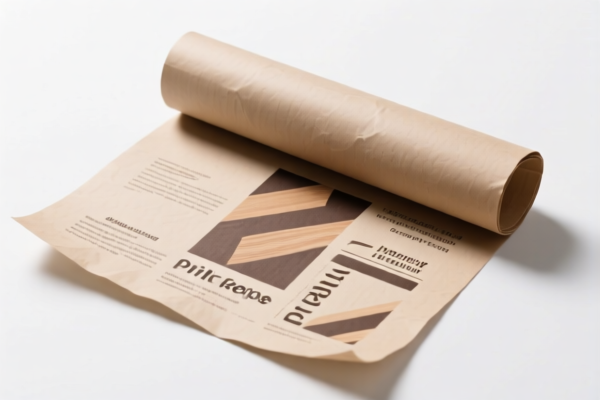
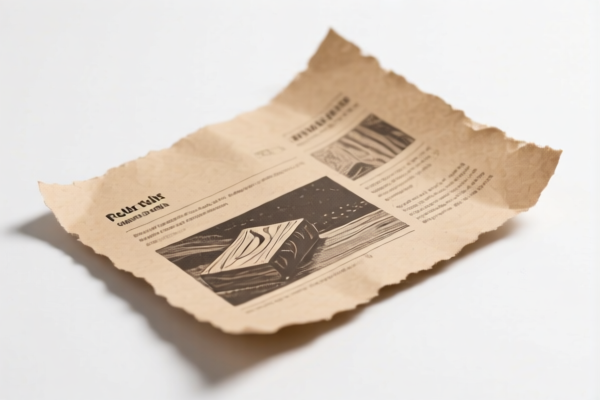

AI分析
📜 Wood Pulp Cotton Paper Strip (木浆棉手工纸/纸板片)
🌐 HS Code Reference & Customs Clearance Guide | 2026 Latest Tariff Analysis | Professional Clearance Strategy
📌 I. Product Definition and Classification: Do You Truly Understand "Wood Pulp Cotton Paper"?
"Wood Pulp Cotton Paper Strip" is not a single standardized commodity but a composite material whose classification depends entirely on its physical form, chemical composition, and intended use. In international trade, it falls under Chapter 48 (Paper and Paperboard), but the specific HS Code varies significantly based on whether it is viewed as a raw material, a specialty writing paper, or a structural cardboard sheet.
⚠️ Key Distinction Points:
- If used for writing, drawing, or graphic purposes with high cotton content → Classify as Specialty Writing Paper (4802.58).
- If classified broadly as Paper/Cardboard without specific end-use → Classify as Other Paper/Cardboard (4802.10).
- If used as raw material or generic paper stock → Classify as Newsprint-like or Generic Paper (4801.00).
- If in sheet/strip form intended for industrial/cardboard use → Classify as Cardboard Sheets (4805.91).
📦 II. HS Code Classification Details (2026 Latest Tariff Authoritative对照)
| HS Code | Product Description | Application Scenario | Key Feature |
|---|---|---|---|
4802.58.60.20 |
Wood pulp cotton handmade paper, contains cotton fiber, uncoated, for writing/graphic use | Premium stationery, art papers, certificates | ✅ High cotton content, specialty use |
4802.10.00.00 |
Wood pulp cotton handmade paper, falls under paper category, fits handmade paper/cardboard classification | General paper trading, bulk paper sales | ✅ Generic paper classification |
4801.00.01.20 |
Wood pulp cotton handmade paper, fits basic paper attributes, no material conflict | Raw material sourcing, industrial paper stock | ✅ Basic paper attributes |
4801.00.01.40 |
Wood pulp cotton handmade paper, belongs to paper raw materials, compatible with "Other" category | Bulk raw material, unsorted paper stock | ✅ Raw material category |
4805.91.10.10 |
Wood pulp cardboard sheets, fits cardboard attributes and sheet form features | Packaging materials, industrial cardboard, strip forms | ✅ Cardboard/Sheet form |
🔍 Critical Reminder:
- "Handmade" vs. "Industrial": If the product is genuinely handmade and for artistic/writing use, 4802.58 is most accurate.
- "Strip" Form Factor: If the "strip" implies a narrow sheet or roll used for packaging or industrial purposes, 4805.91 may apply.
- No "Special Tax Exemptions": Regardless of the HS Code, all entries face high US tariffs (see below).
💰 III. 2026 Latest Tariff Rate Details (Including Surtaxes, Policy Surcharges)
✅ Applicable Country: United States (US)
✅ Country of Origin: China (CN)
✅ Effective Date: From November 10, 2025 (including subsequent imports)
🎯 1. 4802.58.60.20 —— Wood Pulp Cotton Handmade Paper (Specialty Writing Paper)
| Item | Content |
|---|---|
| Base Rate | 0% (ad valorem) |
| USITC Surtax | +25% (under USITC Footnote 9903.88.01) |
| 122 Clause Tariff | +10% (Specific US-China trade provision) |
| Total Rate | 35% |
| Tax Calculation | CIF Value × 35% |
| De Minimis Exemption | ❌ Not Eligible (deny_de_minimis) |
| Legal Basis Path | USITC:4802.58.60.20 → FOOTNOTE:9903.88.01 → 122 Clause:10% |
📌 Explanation:
- The 25% USITC surtax is part of the Section 301 tariffs on Chinese goods.
- The 10% "122 Clause" is an additional specific tariff applied to certain paper products from China.
- Total 35% is extremely high for paper products. Must be factored into cost structure!
🎯 2. 4802.10.00.00 —— Other Paper/Cardboard (Generic Classification)
| Item | Content |
|---|---|
| Base Rate | 0% |
| USITC Surtax | +2% |
| 122 Clause Tariff | +10% |
| Total Rate | 12% |
| Tax Calculation | CIF × 12% |
| De Minimis Exemption | ❌ Not Eligible |
| Legal Basis Path | USITC:4802.10.00.00 → 122 Clause:10% |
📌 Note:
- This is the lowest tax rate among the options.
- Applies only if the product is classified broadly as "paper" without specific "handmade" or "specialty" claims.
- Risk: Customs may reclassify if evidence suggests it is specialty paper (which would incur 35%).
🎯 3. 4801.00.01.20 & 4801.00.01.40 —— Generic Paper / Raw Material
| Item | Content |
|---|---|
| Base Rate | 0% |
| USITC Surtax | +25% |
| 122 Clause Tariff | +10% |
| Total Rate | 35% |
| Tax Calculation | CIF × 35% |
| De Minimis Exemption | ❌ Not Eligible |
| Legal Basis Path | USITC:4801.00.01.20/40 → FOOTNOTE:9903.88.01 → 122 Clause:10% |
📌 Warning:
- Even if declared as "raw material," if the product is identifiable as wood pulp cotton paper, the 25% USITC surtax still applies.
- Misclassification as "raw material" to avoid tariffs is a high-risk audit trigger.
🎯 4. 4805.91.10.10 —— Wood Pulp Cardboard Sheets
| Item | Content |
|---|---|
| Base Rate | 0% |
| USITC Surtax | +25% |
| 122 Clause Tariff | +10% |
| Total Rate | 35% |
| Tax Calculation | CIF × 35% |
| De Minimis Exemption | ❌ Not Eligible |
| Legal Basis Path | USITC:4805.91.10.10 → FOOTNOTE:9903.88.01 → 122 Clause:10% |
📌 Note:
- Applies if the "strip" is actually a cardboard sheet or thick paper board used for packaging or structural purposes.
- Same high tariff burden as specialty paper.
🛠️ IV. Customs Clearance Practical Advice (Battle-Tested Pitfall Guide)
✅ 1. Required Documents Checklist (None Missing)
| Document | Mandatory | Description |
|---|---|---|
| ✅ Product Specification Sheet | ✔️ | Must detail: Material composition (wood pulp vs. cotton ratio), thickness, weight, dimensions, and end-use. |
| ✅ Photos (Clear Label/Marking) | ✔️ | Show texture, packaging, and any "Handmade" stamps. |
| ✅ Commercial Invoice | ✔️ | Must clearly describe the product. Avoid vague terms like "Paper." Use precise HS Code descriptions. |
| ✅ Packing List | ✔️ | Detail weight, dimensions, and number of strips/sheets. |
| ✅ Certificate of Origin (CO) | ✔️ | Essential for proving Chinese origin (which triggers the surtaxes). |
| ✅ Third-Party Test Report | ✔️ | If claiming "Cotton Content," provide lab results to support HS Code 4802.58. |
✅ 2. Declaration Strategy (Key Mantra)
🔥 "Be Precise, Avoid Vague Terms, Match Use to Code!"
| Scenario | Correct Declaration | Wrong Practice |
|---|---|---|
| Artistic/Writing Paper | 4802.58.60.20 – "Wood Pulp Cotton Handmade Paper for Writing" |
Declaring as "Cardboard" → 35% (but risk of reclassification) |
| Bulk Paper Stock | 4802.10.00.00 – "Paper, Unspecified Use" |
Over-specifying "Handmade" → 35% instead of 12% |
| Cardboard/Packaging Strip | 4805.91.10.10 – "Cardboard Sheets for Packaging" |
Declaring as "Writing Paper" → 35% (and potential false declaration) |
| Raw Material | 4801.00.01.20 – "Wood Pulp Paper, Raw Material" |
Hiding end-use → High audit risk |
📌 Strategic Tip:
- If the product is not strictly for writing/art and can be argued as general paper,4802.10.00.00(12%) is the optimal cost-saving code.
- However, you must justify this classification with product specs that do not emphasize "handmade" or "high cotton" for artistic use.
✅ 3. Special Cases Handling
| Situation | Handling Advice |
|---|---|
| "Handmade" Claim | If the product is genuinely handmade, customs may insist on 4802.58 (35%). Be prepared to provide artisan certification or production process docs. |
| Mixed Shipments | Do not mix "Writing Paper" and "Cardboard" in one declaration. Split invoices to apply correct codes and avoid penalties. |
| De Minimis (Section 321) | ❌ Not Applicable. All listed HS Codes for this product deny de minimis exemption. Full formal entry is required. |
| Cotton Content Dispute | If customs suspects high cotton content to classify under 4802.58, but you declared under 4802.10, expect a delay and potential reclassification to 35%. |
🌍 V. Global Market Comparison (2026 Latest)
| Country/Region | Recommended HS Code | Tariff Rate | Certification | Notes |
|---|---|---|---|---|
| 🇺🇸 USA | 4802.10.00.00 |
12% (Best Case) | None | 35% if classified as specialty paper (4802.58/4801/4805). |
| 🇨🇳 China | 4802.58.60.20 |
5% | None | No surtaxes. |
| 🇪🇺 EU | 4802.58.60.20 |
0% (if under quota) | None | Generally low tariffs on paper. |
| 🇯🇵 Japan | 4802.58.60.20 |
3.2% | None | Low tariffs. |
📌 Conclusion:
- USA is the most challenging market due to 122 Clause + USITC surtaxes.
- China is the primary origin, and US tariffs are punitive.
- Strategy: If possible, try to classify under4802.10.00.00to achieve 12% instead of 35%. This requires careful product description management.
📌 VI. Common Errors & Pitfall Guide (Blood & Tears Lessons)
❌ Error 1: Declaring "Handmade Cotton Paper" as "Cardboard" to avoid surtax
👉 Consequence: Customs reclassifies to 4802.58 → 35% tariff + penalties!
❌ Error 2: Using vague terms like "Paper Strip" without HS Code specificity
👉 Consequence: Customs assigns highest default rate → 35% or higher!
❌ Error 3: Ignoring the "122 Clause" in tariff calculations
👉 Consequence: Underestimating costs → Profit margin erosion!
❌ Error 4: Claiming De Minimis for shipments under $800
👉 Consequence: Shipment detained! This product category does not qualify for Section 321 exemption.
✅ Correct Approach:
"Wood Pulp Paper Sheets, Uncoated, For General Use, Model XYZ, HS Code 4802.10.00.00"
(Only if justifiable)"Wood Pulp Cotton Handmade Paper, Uncoated, For Artistic Writing, Model ABC, HS Code 4802.58.60.20"
(If true to product nature)
🎯 VII. Conclusion: Precision Classification Saves Cost!
🎯 Remember the Mantra:
🔹 "Generic Paper = 12%, Specialty Paper = 35%. Choose Wisely!"
🔹 "No De Minimis for Paper from China. Plan Formal Entry!"
🔹 "Describe Accurately to Avoid Audit and Penalty!"
📌 Pro Tip:
- If your product is not exclusively for writing/art, argue for
4802.10.00.00to save 23% in tariffs.- Always consult a customs broker to review product specs before shipping.
- Consider pre-ruling (Advance Ruling) from CBP to lock in the 12% rate if possible.
📣 Immediate Action:
📞 Contact Professional Customs Broker + Provide Product Specs + Apply for Advance Ruling (if needed)
🚀 Ensure your Wood Pulp Cotton Paper Strip clears smoothly, avoids penalties, and maximizes profit!
✨ Professional Clearance Starts with Accurate Classification!
💼 Every percentage point of tariff matters!
用户评价
关于 HS 编码归类
协调制度(HS)是由世界海关组织(WCO)制定的国际贸易商品分类标准。全球 200 多个国家采用 HS 系统作为海关关税、贸易统计和进出口监管的基础。
每个 HS 编码遵循以下层级结构:
- 章(2 位)——商品大类(例如:第 84 章:机器和机械设备)
- 品目(4 位)——章内的更具体分类
- 子目(6 位)——国际通用细分,所有 WCO 成员国统一使用
- 本国细分(8-10 位)——各国自行扩展的细分编码,如美国 HTSUS 10 位编码
正确的 HS 编码归类对于顺利通关、准确缴纳关税和遵守贸易法规至关重要。错误归类可能导致海关延误、多缴关税或罚款。
从CN进口到US时,适用的关税税率可能包括:
- 最惠国(MFN)税率——适用于 WTO 成员国的标准关税税率
- 普通税率——适用于无贸易协定国家
- 贸易救济关税——附加关税,如 301 条款(反倾销)、232 条款(国家安全)或反补贴税
本页内容仅供参考。如需正式归类,请咨询当地海关或持牌报关代理。