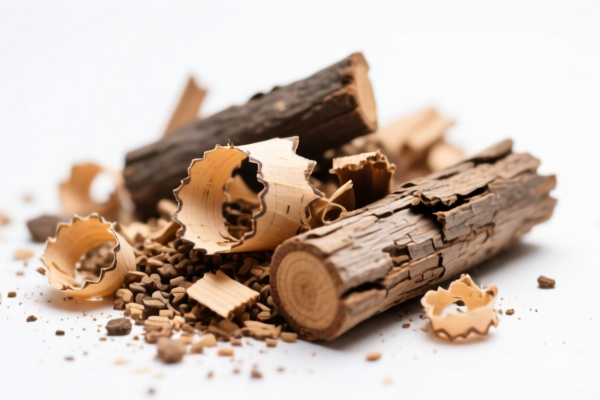
Wood Shaving Granular Biomass Fuel
CN → US| HS编码 | 关税税率 | 原产国 | 目的国 | 文档 |
|---|---|---|---|---|
| 4405000000 | 38.2% | CN | US | 官方文档 |
| 4401394210 | 35.0% | CN | US | 官方文档 |
| 4401310000 | 35.0% | CN | US | 官方文档 |
| 4401210000 | 35.0% | CN | US | 官方文档 |
| 4401394210 | 35.0% | CN | US | 官方文档 |
商品图片


AI分析
🌲 Wood Shaving Granular Biomass Fuel (Wood Pellets)
🌐 HS Code Reference & Customs Clearance Guide | 2026 Latest Tariff Analysis | Professional Clearance Strategy
📌 I. Product Definition & Classification: Do You Really Understand "Wood Pellets"?
"Wood Shaving Granular Biomass Fuel" (commonly known as wood pellets) is a solid biofuel produced by compressing sawdust, wood shavings, and other wood residues into cylindrical pellets. In international trade, the classification depends heavily on whether the product is considered "raw wood" for combustion or "wood waste/pulp."
Key Classification Logic:
- Fuel Use: If explicitly for combustion (biomass fuel), it typically falls under Chapter 44 (Wood), specifically heading 4401 (Wood in the rough, wood chips, and particles).
- Material Form: Granular/pelletized wood is treated as "particles" or "shavings."
- Origin Impact: Products originating from China are subject to significant additional tariffs (Section 301, Section 122, IEEPA).
📦 II. HS Code Classification Details (2026 Latest Tariff Authority Cross-Reference)
Based on the provided data, here are the four potential HS Codes for Wood Shaving Granular Biomass Fuel:
| HS Code | Product Description | Applicability Scenario | Rationale |
|---|---|---|---|
4405.00.00.00 |
Wood Sawdust and Wood Waste (incl. Shavings, Sawdust, Pellets) | Generic wood waste/pellets | Matches "wood" material and "particle/granular" form. Treated as wood waste/sawdust. |
4401.31.00.00 |
Wood in Chips or Particles; of Coniferous Origin | Coniferous wood pellets (e.g., Pine, Spruce) | Direct match for "wood chips/particles" of non-deciduous trees. |
4401.39.42.10 |
Wood in Chips or Particles; Other; Fuel Wood, Pellets | Non-coniferous or mixed wood pellets used as fuel | Specifically defines "Fuel Wood" and "Pellets" as a sub-category of wood particles. |
4401.21.00.00 |
Wood in Chips or Particles; of Coniferous Origin; Chips | Coniferous wood chips/particles | Matches material (wood) and use (fuel), inferred as coniferous chip/pellet category. |
🔍 Critical Distinction:
-4405.00.00.00vs4401.xxxx.xxxx:
-4405is often used for sawdust/waste with no specific fuel designation in some contexts, but4401is more precise for commercial fuel pellets.
-4401.39.42.10is the most specific for "Fuel Wood/Pellets", while4401.31.00.00and4401.21.00.00focus on Coniferous origin.
- Do not misclassify as "Plastic" or "Chemical" – this is 100% Wood.
💰 III. 2026 Latest Tariff Rate Breakdown (Including Additional Taxes & Policy Surcharges)
✅ Applicable Country: United States (US)
✅ Origin: China (CN)
✅ Effective Date: 2025/2026 (Current Enforcement)
🎯 1. 4405.00.00.00 – Wood Sawdust/Waste (Generic)
| Item | Detail |
|---|---|
| Base Tariff | 3.2% (ad valorem) |
| Section 301 Additional Tariff | +25.0% (China-specific) |
| Section 122 Tariff | +10.0% (China-specific) |
| Total Tax Rate | 38.2% |
| Tax Calculation | CIF Value × 38.2% |
| De Minimis Eligibility | ❌ Not Eligible (High-risk classification for small shipments) |
| Legal Basis Path | USITC:4405.00.00.00 → SECTION301:4405 → SECTION122:4405 |
📌 Explanation:
- This code attracts the highest total tax (38.2%) among the options.
- The 3.2% base rate is low, but the 35% in additional tariffs make it expensive.
- Often flagged as "Wood Waste," leading to stricter phytosanitary inspections.
🎯 2. 4401.31.00.00 – Coniferous Wood Chips/Particles
| Item | Detail |
|---|---|
| Base Tariff | 0.0% |
| Section 301 Additional Tariff | +25.0% |
| Section 122 Tariff | +10.0% |
| Total Tax Rate | 35.0% |
| Tax Calculation | CIF Value × 35.0% |
| De Minimis Eligibility | ❌ Not Eligible |
| Legal Basis Path | IEEPA:9903.01.25 → SECTION301:4401.31 → SECTION122:4401.31 |
📌 Note:
- Base tariff is 0%, which is favorable.
- Only applies if the wood is Coniferous (Pine, Spruce, Fir, etc.).
- If the wood is mixed (hardwood + softwood), this code may be rejected.
🎯 3. 4401.39.42.10 – Other Wood Particles (Fuel Wood/Pellets)
| Item | Detail |
|---|---|
| Base Tariff | 0.0% |
| Section 301 Additional Tariff | +25.0% |
| Section 122 Tariff | +10.0% |
| Total Tax Rate | 35.0% |
| Tax Calculation | CIF Value × 35.0% |
| De Minimis Eligibility | ❌ Not Eligible |
| Legal Basis Path | IEEPA:9903.01.25 → SECTION301:4401.39 → SECTION122:4401.39 |
📌 Advantage:
- This is the most accurate code for "Biomass Fuel Pellets".
- Explicitly mentions "Fuel Wood" and "Pellets" in the summary.
- Applies to both Coniferous and Non-Coniferous wood if not specified as pure coniferous chips.
- Recommended for clarity in customs declarations.
🎯 4. 4401.21.00.00 – Coniferous Wood Chips (Inferred)
| Item | Detail |
|---|---|
| Base Tariff | 0.0% |
| Section 301 Additional Tariff | +25.0% |
| Section 122 Tariff | +10.0% |
| Total Tax Rate | 35.0% |
| Tax Calculation | CIF Value × 35.0% |
| De Minimis Eligibility | ❌ Not Eligible |
| Legal Basis Path | IEEPA:9903.01.25 → SECTION301:4401.21 → SECTION122:4401.21 |
📌 Note:
- Similar to4401.31.00.00but under a different subheading.
- Use only if the product is clearly Coniferous Chips and not "Fuel Pellets" per se.
- Risk of reclassification if "Pellets" are declared but code implies "Chips."
🛠️ IV. Customs Clearance Practical Advice (Real-World Pitfall Guide)
✅ 1. Required Documentation Checklist (Mandatory)
| Document | Required | Explanation |
|---|---|---|
| ✅ Product Specification Sheet | ✔️ | Must specify: Wood type (Coniferous/Deciduous), Moisture Content (<20%), Diameter/Length of Pellets. |
| ✅ Phytosanitary Certificate | ✔️ | Crucial! USDA-APHIS requires proof that wood is treated (heat-treated or kiln-dried) to prevent pest introduction. |
| ✅ Bill of Lading / Commercial Invoice | ✔️ | Clearly state: "Wood Pellets for Biomass Fuel," NOT just "Wood Chips." |
| ✅ Certificate of Origin (CO) | ✔️ | Confirm CN origin to apply Section 301/122 tariffs correctly. |
| ✅ MSDS (Material Safety Data Sheet) | ✔️ | Required for fire risk classification during shipping. |
✅ 2. Declaration Tips (Key Mantra)
🔥 "Specify Wood Type, Declare Fuel Use, Avoid 'Waste' Labels!"
| Scenario | Correct Declaration | Wrong Practice |
|---|---|---|
| Coniferous Pellets | HS Code: 4401.31.00.00 or 4401.39.42.10Desc: "Coniferous Wood Pellets for Fuel" |
Declare as "Wood Waste" → Higher scrutiny |
| Mixed/Hardwood Pellets | HS Code: 4401.39.42.10 |
Use Coniferous code → Rejection/Refund |
| Generic "Wood Shavings" | HS Code: 4405.00.00.00 |
Use 4401 codes → Mismatch risk |
| OEM Private Label | Provide Supplier Invoice + Design Spec | Vague description "Biomass Material" → Delay |
✅ 3. Special Circumstances Handling
| Situation | Handling Suggestion |
|---|---|
| High Moisture Content (>20%) | May be classified as "Raw Wood" → Different HS Code & Higher Inspection Risk |
| Treated Wood (Chemically Treated) | Do NOT declare as Biomass Fuel. May be banned or classified under hazardous materials. Must declare as "Treated Wood Chips." |
| Shipments from Vietnam/Mexico | Check USMCA or VNFTA benefits. If non-Chinese origin, tariffs drop to 0%. |
| Small Samples (De Minimis) | ❌ Not Eligible. Wood products are high-risk; even small shipments require full entry & inspection. |
🌍 V. Global Market Comparison (2026 Latest)
| Country/Region | Recommended HS Code | Tariff (China Origin) | Certification | Notes |
|---|---|---|---|---|
| 🇺🇸 USA | 4401.39.42.10 |
35.0% | Phytosanitary + USDA | High tariff; strict pest control |
| 🇨🇳 China | 4401.31.00.00 |
0% (Import) | None | No additional tariffs |
| 🇪🇺 EU | 4401.31.00.00 |
0% | ENplus Certification | Requires sustainable sourcing proof |
| 🇬🇧 UK | 4401.31.00.00 |
0% | UKCA + FSC | Post-Brexit rules apply |
| 🇯🇵 Japan | 4401.31.00.00 |
0% | Phytosanitary | Strict moisture & pest checks |
📌 Conclusion:
- USA is the most expensive market due to Section 301 and 122 tariffs (35% total).
- EU/UK/Japan are more tariff-friendly but require Phytosanitary & Sustainability Certifications (FSC/PEFC).
- Supply Chain Diversification: Consider sourcing from Vietnam, Indonesia, or Brazil to avoid US China tariffs.
📌 VI. Common Mistakes & Pitfall Guide (Blood Lessons)
❌ Mistake 1: Declaring "Wood Pellets" as "Wood Waste" (4405.00.00.00)
👉 Consequence: 38.2% tax + Higher Inspection Rate.
✅ Fix: Use 4401.39.42.10 for fuel pellets.
❌ Mistake 2: Not declaring Wood Type (Coniferous vs. Deciduous)
👉 Consequence: Customs delays, reclassification, fines.
✅ Fix: Specify "Pine Pellets" or "Mixed Wood Pellets" on Invoice.
❌ Mistake 3: Failing to provide Phytosanitary Certificate
👉 Consequence: Cargo held at port, incineration, or return.
✅ Fix: Ensure supplier provides HTT (Heat Treatment) Certification.
❌ Mistake 4: Using Vague Descriptions like "Biomass"
👉 Consequence: CBP (Customs) may classify under higher-risk codes.
✅ Fix: Use precise terms: "Wood Pellets for Combustion, 6mm Diameter, Moisture <10%."
🎯 VII. Conclusion: Professional Declaration Saves Costs!
🎯 Remember the Mantra:
🔹 "Specify Type, Declare Fuel, Avoid 'Waste,' Check Origin!"
🔹 "HS Code4401.39.42.10is safest for Pellets, 35% Tax is the Cost of China Origin!"
📌 Pro Tip:
If your wood pellets are not from China (e.g., from USA, Canada, Vietnam), you can claim 0% tariff under normal trade terms.
For China-origin goods, pre-clearance with a licensed broker is mandatory to avoid port detention.
📣 Immediate Action:
📞 Hire a US Customs Broker specializing in Wood Products.
📤 Request Phytosanitary Certificate from supplier before shipment.
🚀 Ensure Invoice Description matches HS Code exactly!
✨ Professional Clearance Starts with Accurate Classification!
💼 Every Percent of Tariff Matters in Bulk Commodity Trade!
用户评价
关于 HS 编码归类
协调制度(HS)是由世界海关组织(WCO)制定的国际贸易商品分类标准。全球 200 多个国家采用 HS 系统作为海关关税、贸易统计和进出口监管的基础。
每个 HS 编码遵循以下层级结构:
- 章(2 位)——商品大类(例如:第 84 章:机器和机械设备)
- 品目(4 位)——章内的更具体分类
- 子目(6 位)——国际通用细分,所有 WCO 成员国统一使用
- 本国细分(8-10 位)——各国自行扩展的细分编码,如美国 HTSUS 10 位编码
正确的 HS 编码归类对于顺利通关、准确缴纳关税和遵守贸易法规至关重要。错误归类可能导致海关延误、多缴关税或罚款。
从CN进口到US时,适用的关税税率可能包括:
- 最惠国(MFN)税率——适用于 WTO 成员国的标准关税税率
- 普通税率——适用于无贸易协定国家
- 贸易救济关税——附加关税,如 301 条款(反倾销)、232 条款(国家安全)或反补贴税
本页内容仅供参考。如需正式归类,请咨询当地海关或持牌报关代理。