Wood based panels (HS 4412921140)
CN → US| HS编码 | 关税税率 | 原产国 | 目的国 | 文档 |
|---|---|---|---|---|
| 4412913110 | 43.0% | CN | US | 官方文档 |
| 4412513111 | 43.0% | CN | US | 官方文档 |
| 4410110060 | 35.0% | CN | US | 官方文档 |
| 4410110010 | 35.0% | CN | US | 官方文档 |
| 4410190060 | 35.0% | CN | US | 官方文档 |
商品图片
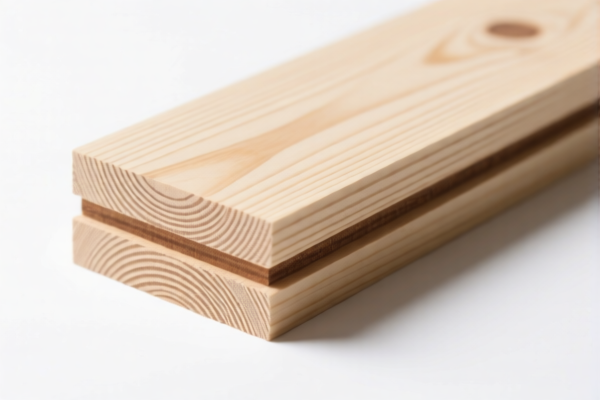
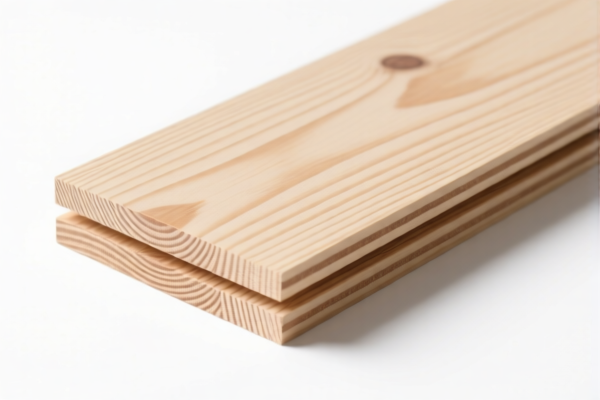
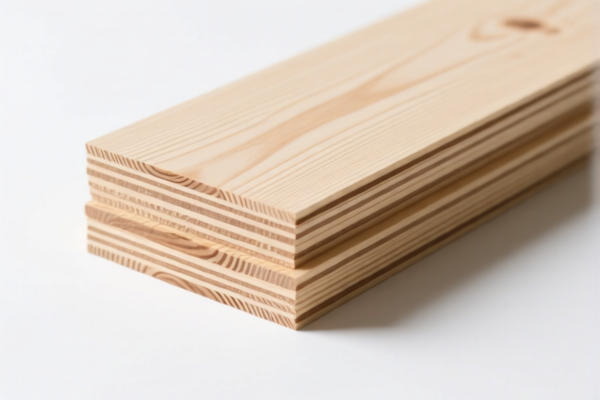
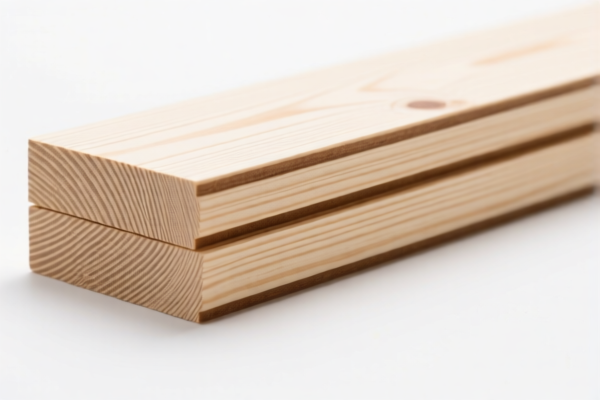
AI分析
🪵 Wood Based Panels (Wood Veneers & Plywood)
🌐 HS Code Reference & Customs Clearance Guide | 2026 Latest Tariff Analysis | Professional Level Clearance Strategy
📌 I. Product Definition & Classification: What Exactly Are "Wood Based Panels"?
Wood-based panels are engineered wood products produced by gluing wood layers, particles, or fibers together. In international trade, they are categorized based on their core structure, surface materials, and processing depth.
Plywood (胶合板): Made by gluing together an odd number of wood veneers with adjacent layers having grain directions at right angles.
Laminated Wood Products (层压木制品): Composite wood products involving adhesives and specific structural configurations.
Particle Board/Medium Density Fiberboard (颗粒板/MDF): Made from wood particles or fibers bonded with resin.
⚠️ Key Distinction Point:
- If the product is Plywood (layered veneers) → Classified under 4412
- If the product is Particle Board/MDF (compressed wood particles/fibers) → Classified under 4410
- Misclassification leads to massive tariff differences due to US Section 301 and Section 122 measures.
📦 II. HS Code Classification Details (2026 Latest Tariff Authority Comparison)
Based on the provided data, here are the specific HS codes and their corresponding tax rates. Note that the original query mentioned 4412921140, but the provided dataset contains specific 12-digit codes that map to the general categories.
| HS Code | Product Description | Applicability | Total Tax Rate | Tax Breakdown |
|---|---|---|---|---|
| 4412.51.31.11 | Wood Panels, Plywood Category | Wood veneers, glued, specific format matching | 43.0% | Base: 8%, Sec 301: 25%, Sec 122: 10% |
| 4412.91.31.10 | Wood Panels, Plywood/Laminated Wood | Material attributes consistent with plywood/laminated products | 43.0% | Base: 8%, Sec 301: 25%, Sec 122: 10% |
| 4410.11.00.60 | Wood Substrate, Particle Board | Specific classification for particle board | 35.0% | Base: 0%, Sec 301: 25%, Sec 122: 10% |
| 4410.11.00.10 | Wood Material, Particle Board & Similar | Form and classification match for particle board | 35.0% | Base: 0%, Sec 301: 25%, Sec 122: 10% |
| 4410.19.00.60 | Wood Panels, Wood Substrate | Highly consistent with wood board morphology | 35.0% | Base: 0%, Sec 301: 25%, Sec 122: 10% |
🔍 Important Note:
- Plywood (4412 series) attracts a higher base tariff (8%) compared to Particle Board (4410 series) (0% base), but both face the same additional tariffs.
- The Section 122 Tariff (10%) is a critical component here, often overlooked in standard 301 calculations.
💰 III. 2026 Latest Tariff Rate Details (Including Additional Taxes & Policy Surcharges)
✅ Applicable Country: United States (US)
✅ Origin: China (CN)
✅ Effective Time: Ongoing (Section 301 & 122 measures active)
🎯 1. 4412.51.31.11 & 4412.91.31.10 —— Plywood & Laminated Wood Products
| Item | Content |
|---|---|
| Base Tariff | 8.0% (ad valorem) |
| USITC Additional Tariff (Section 301) | +25.0% |
| Section 122 Tariff | +10.0% |
| Total Tariff | 43.0% |
| Tax Calculation | CIF Value × 43% |
| De Minimis Exemption | ❌ Not Applicable (Section 301/122 goods are excluded from de minimis) |
| Legal Basis Path | HTSUS:4412 → USITC:Section 301 → US Customs:Section 122 |
📌 Explanation:
- These codes fall under Chapter 44, specifically Plywood and Similar Laminated Wood.
- The 43% rate is extremely high. It combines the standard import duty (8%) with the punitive Section 301 tariff (25%) and the Section 122 reciprocal tariff (10%).
- No loophole via de minimis: Even small parcels will be subject to these taxes if classified here.
🎯 2. 4410.11.00.60, 4410.11.00.10, 4410.19.00.60 —— Particle Board & Wood Substrates
| Item | Content |
|---|---|
| Base Tariff | 0.0% (ad valorem) |
| USITC Additional Tariff (Section 301) | +25.0% |
| Section 122 Tariff | +10.0% |
| Total Tariff | 35.0% |
| Tax Calculation | CIF Value × 35% |
| De Minimis Exemption | ❌ Not Applicable |
| Legal Basis Path | HTSUS:4410 → USITC:Section 301 → US Customs:Section 122 |
📌 Explanation:
- These codes cover Particle Board and Medium Density Fiberboard (MDF).
- Although the base tariff is 0%, the additional taxes push the total to 35%.
- This is 8% lower than plywood (43%), making it slightly more cost-effective, but still a significant burden.
🛠️ IV. Customs Clearance Practical Advice (Real-World Pitfall Avoidance Guide)
✅ 1. Required Documentation Checklist (Missing Items Cause Delays)
| Document | Mandatory | Description |
|---|---|---|
| ✅ Product Specification Sheet | ✔️ | Must detail wood type, glue type (e.g., UREA, PHENOL), density, and thickness. |
| ✅ Technical Data Sheet (TDS) | ✔️ | Proves whether it is Plywood (4412) or Particle Board (4410). |
| ✅ Product Photos (Clear) | ✔️ | Show cross-section to distinguish veneers (plywood) from chips/fibers (particle board). |
| ✅ Commercial Invoice | ✔️ | Must specify "Wood Based Panels" and accurate HS Code. |
| ✅ Packing List | ✔️ | Include gross/net weight, dimensions, and number of packages. |
| ✅ Certificate of Origin | ✔️ | Required to confirm CN origin for Section 301/122 application. |
| ✅ Formaldehyde Emissions Certificate | ✔️ | CARB Phase 2 or TSCA Title VI compliance documents (Environmental/Safety Requirement). |
✅ 2. Declaration Tips (Key Mantras)
🔥 "Plywood vs. Particle, Check the Layer! Sec 122 is No Joke, 43% Hits Hard!"
| Scenario | Correct Declaration | Wrong Practice |
|---|---|---|
| Plywood Sheets | 4412.51.31.11 or 4412.91.31.10 |
Misdeclare as 4410 → Risk of Audit & Penalties |
| Particle Board | 4410.11.00.10 or 4410.19.00.60 |
Misdeclare as 4412 → Overpaying 8% unnecessarily |
| Laminated Plywood | 4412.91.31.10 |
Declare as simple 4410 → Under-declaration Risk |
| Wood Veneer Sheets | 4412.51.31.11 |
Declare as 4408 (Sawntimber) → Incorrect Chapter |
✅ 3. Special Situation Handling
| Situation | Handling Advice |
|---|---|
| Formaldehyde Compliance | Ensure TSCA Title VI compliance. Non-compliance leads to FDA/CBP seizure, not just tariffs. |
| Mixed Containers | If plywood and particle board are in the same container, declare separately. Do not blend. |
| OEM/Custom Sizes | Provide exact dimensions and thickness. Small variations can trigger re-classification. |
| Origin Marking | Ensure each piece or package is marked "Made in China" to avoid additional penalties. |
🌍 V. Global Major Market Comparison (2026 Latest)
| Country/Region | Recommended HS Code | Tariff (China Origin) | Certification Required | Notes |
|---|---|---|---|---|
| 🇺🇸 USA | 4412.xxxx.xxxx / 4410.xxxx.xxxx |
35% - 43% | TSCA Title VI / CARB | Highest tariff burden. Section 122 applies. |
| 🇨🇳 China | 4412 / 4410 |
0% - 5% | N/A | No additional duties. |
| 🇪🇺 EU | 4412 / 4410 |
0% - 6.5% | CE (if applicable) / FSC | No Section 301/122. |
| 🇦🇺 Australia | 4412 / 4410 |
5% | WPA (Wood Packaging) | Lower tariffs, but strict biosecurity. |
| 🇯🇵 Japan | 4412 / 4410 |
0% - 5.5% | JIS / FSC | No major punitive tariffs. |
📌 Conclusion:
- The US market is the most challenging for wood-based panels due to the cumulative effect of Base Tariff + Section 301 + Section 122.
- Plywood (43%) is more expensive than Particle Board (35%) due to the 8% base tariff difference.
- TSCA Title VI compliance is equally as important as tariff classification. Failure to comply results in shipment rejection.
📌 VI. Common Errors & Pitfalls Guide (Lessons Learned from Tears)
❌ Error 1: Classifying Plywood as Particle Board to save 8% base tariff.
👉 Consequence: Customs audit, penalty, and potential back-tariffs. The visual difference (layers vs. chips) is obvious.
❌ Error 2: Ignoring Section 122 Tariff.
👉 Consequence: Unexpected 10% charge on every shipment, eroding profit margins. Always budget for 43% or 35%, not just 33% or 25%.
❌ Error 3: Missing TSCA Title VI Documentation.
👉 Consequence: Shipment held at US port indefinitely, storage fees accumulate, goods may be destroyed.
❌ Error 4: Using vague descriptions like "Wood Board".
👉 Consequence: Customs cannot determine HS Code → Delays and manual inspection fees.
✅ Correct Practice:
"Plywood, Birch Veneer, 12mm, Interior Grade, CARB Phase 2 Compliant, Model XYZ"
OR
"Particle Board, MDF, 18mm, Melamine Faced, TSCA Title VI Certified, Model ABC"
🎯 VII. Conclusion: Professional Declaration, Save Time, Reduce Costs!
🎯 Remember the Mantra:
🔹 "Plywood is 43%, Particle Board is 35%. Check the Section 122! It’s 10% Extra!"
🔹 "TSCA Compliance is Non-Negotiable. No Cert, No Entry!"
📌 Pro Tip:
- For low-value samples, remember that Section 301 and Section 122 duties still apply. There is no de minimis exemption for these goods from China.
- Consider Advance Rulings if your product is complex (e.g., laminated with metal or plastic).
📣 Immediate Action:
📞 Contact a professional customs broker + Provide Cross-Section Photos + Verify TSCA Certificates
🚀 Ensure your wood-based panels clear US customs smoothly, avoid penalties, and protect your profit margins!
✨ Professional Customs Clearance Starts with Accurate Classification!
💼 Every Percent of Tariff Counts! Precision Saves Money!
用户评价
关于 HS 编码归类
协调制度(HS)是由世界海关组织(WCO)制定的国际贸易商品分类标准。全球 200 多个国家采用 HS 系统作为海关关税、贸易统计和进出口监管的基础。
每个 HS 编码遵循以下层级结构:
- 章(2 位)——商品大类(例如:第 84 章:机器和机械设备)
- 品目(4 位)——章内的更具体分类
- 子目(6 位)——国际通用细分,所有 WCO 成员国统一使用
- 本国细分(8-10 位)——各国自行扩展的细分编码,如美国 HTSUS 10 位编码
正确的 HS 编码归类对于顺利通关、准确缴纳关税和遵守贸易法规至关重要。错误归类可能导致海关延误、多缴关税或罚款。
从CN进口到US时,适用的关税税率可能包括:
- 最惠国(MFN)税率——适用于 WTO 成员国的标准关税税率
- 普通税率——适用于无贸易协定国家
- 贸易救济关税——附加关税,如 301 条款(反倾销)、232 条款(国家安全)或反补贴税
本页内容仅供参考。如需正式归类,请咨询当地海关或持牌报关代理。