Wooden Model
CN → US| HS编码 | 关税税率 | 原产国 | 目的国 | 文档 |
|---|---|---|---|---|
| 9023000000 | 10.0% | CN | US | 官方文档 |
| 4421999300 | 35.0% | CN | US | 官方文档 |
| 9503000073 | 10.0% | CN | US | 官方文档 |
| 4421919300 | 35.0% | CN | US | 官方文档 |
| 9503000090 | 10.0% | CN | US | 官方文档 |
商品图片
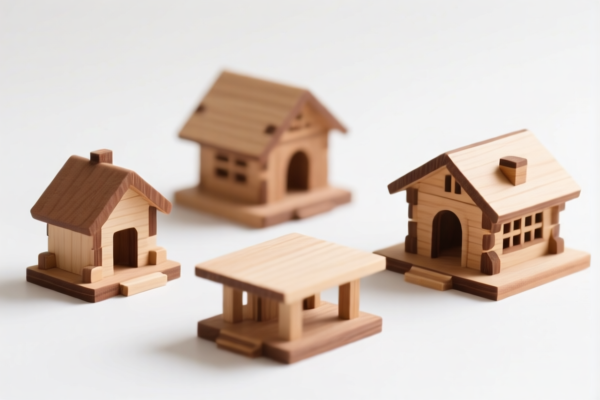
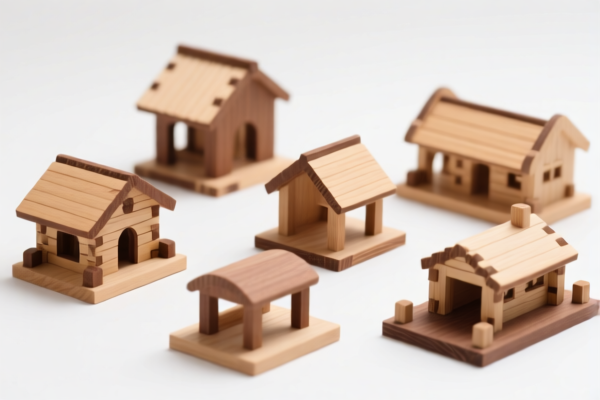


AI分析
🪵 Wooden Model (Experimental/Display/Entertainment Models)
🌐 HS Code Reference & Clearance Guide | 2026 Latest Tariff Analysis | Professional Classification Strategy
📌 I. Product Definition: What is a "Wooden Model"?
A "Wooden Model" is a broad term covering various items made primarily of wood, ranging from scientific instruments to entertainment props. In international trade, the Harmonized System (HS) classifies these goods based on their primary function and material composition, leading to significantly different tariff outcomes.
The classification hinges on three key distinctions: 1. Scientific/Display Instrument: Models used for demonstrating scientific principles or machinery. 2. Entertainment/Toy Model: Scale models designed for play or decoration (e.g., aircraft, cars). 3. Miscellaneous Wood Product: Wooden items used as props, set pieces, or general craft goods without specific instrument or toy functions.
⚠️ Critical Distinction Point:
- If it is for demonstrating mechanics/science → Likely Chapter 90 (Instruments).
- If it is for play/decoration → Likely Chapter 95 (Toys).
- If it is for theater sets/general use → Likely Chapter 44 (Wood Products).
📦 II. HS Code Classification Details (2026 Latest Authoritative Comparison)
Based on the provided data, here are the five potential HS codes for "Wooden Models," categorized by their functional logic and tax implications.
| HS Code | Product Description & Logic | Application Scenario | Tax Rate (Total) | Key Conflict/Note |
|---|---|---|---|---|
9023.00.00.00 |
Instruments & Apparatus: Experimental models used for demonstration. | Scientific demos, industrial machinery models, educational props. | 10.0% | ✅ Best Fit for Science: No material conflict; prioritizes "instrument" function over "wood" material. |
4421.99.93.00 |
Miscellaneous Wooden Articles: Theater/ballet/opera scenery and props. | Stage props, decorative sets, non-functional wooden models. | 35.0% | ⚠️ High Tax: Classified as general wood goods. High due to trade measures (Section 301 + IEEPA). |
9503.00.00.73 |
Toys & Entertainment Models: Reduced-scale models for entertainment. | Toy airplanes, ships, cars, decorative miniatures. | 10.0% | ✅ Best Fit for Toys: No conflict with "toy" category. Wood is just the material. |
4421.91.93.00 |
Other Wooden Articles: Scenographic components or general props. | Scene building blocks, structural wooden models without specific toy/instrument function. | 35.0% | ⚠️ High Tax: Similar to 4421.99.93.00, categorized as miscellaneous woodwork. |
9503.00.00.90 |
Other Toys & Models: General models without specific sub-category fit. | Broad category of wooden models not fitting other specific toy or instrument codes. | 10.0% | ✅ Low Tax: Fallback for general models; wood is considered a standard toy material. |
🔍 Key Insight:
- Chapter 90 & 95 (Instruments & Toys) attract a lower total tariff of 10% because the function (scientific/entertainment) outweighs the material (wood).
- Chapter 44 (Wood Products) attracts a much higher total tariff of 35% because it is treated as a general manufactured wood good, subject to heavier trade penalties.
💰 III. 2026 Latest Tariff Rate Breakdown (Including Surtaxes & Policy Add-ons)
✅ Applicable Country: United States (US)
✅ Origin: China (CN)
✅ Effective Date: From November 10, 2025 (including subsequent imports)
🎯 1. 9023.00.00.00 & 9503.00.00.73 & 9503.00.00.90 — The "10% Tier"
These codes share the same tax structure because they are classified as instruments or toys, which are exempt from the highest trade sanctions compared to general wood products.
| Item | Content |
|---|---|
| Base Tariff | 0% (ad valorem) |
| USITC Surtax (Section 301) | 0% |
| IEEPA Surtax (Section 122/EO) | +10% (Targeting China/HK products) |
| Total Tariff | 10.0% |
| Tax Calculation | CIF Value × 10% |
| De Minimis Exemption | ❌ Not Applicable (For this specific tariff structure, typically requires higher value handling or specific courier limits, but listed as 10% total implying full collection). |
| Legal Basis | IEEPA:122Clause → USITC:9023/9503 |
📌 Explanation:
- The 10% is purely the IEEPA (International Emergency Economic Powers Act) surcharge.
- These goods avoid the 25% Section 301 tariff applied to many wood products.
- Strategy: If your wooden model is for play or science, always aim for Chapter 95 or 90 to save 25% in duties.
🎯 2. 4421.99.93.00 & 4421.91.93.00 — The "35% Tier"
These codes classify the wooden model as a general wood product, triggering the highest level of trade penalties.
| Item | Content |
|---|---|
| Base Tariff | 0% |
| USITC Surtax (Section 301) | +25% |
| IEEPA Surtax (Section 122/EO) | +10% |
| Total Tariff | 35.0% |
| Tax Calculation | CIF Value × 35% |
| De Minimis Exemption | ❌ Not Applicable |
| Legal Basis | IEEPA:122Clause → IEEPA:9901.25 → USITC:4421 → FOOTNOTE:9903.88.01 |
📌 Warning:
- The 25% is the Section 301 surtax for Chinese wood products.
- The 10% is the additional IEEPA surtax.
- Result: 35% total. This is 3.5 times higher than the toy/instrument classification.
- Avoidance: Do not classify a toy airplane as a "wooden prop" or "scenic component" unless it is strictly for theater use and not for play.
🛠️ IV. Customs Clearance Practical Advice (Real-World Pitfall Guide)
✅ 1. Required Documentation Checklist
| Document | Mandatory? | Purpose |
|---|---|---|
| ✅ Product Specification Sheet | ✔️ | Must specify: "Is this a toy for children?" "Is this a scientific demonstrator?" "Is this a stage prop?" |
| ✅ High-Resolution Photos | ✔️ | Show details to prove functionality (e.g., moving parts, labeling like "Toy," "Educational"). |
| ✅ Commercial Invoice | ✔️ | Clear description: e.g., "Wooden Scale Model for Educational Demonstration" (for 9023) vs. "Wooden Decoration" (for 4421). |
| ✅ Origin Certificate | ✔️ | Crucial for proving China origin to apply correct IEEPA/Section 301 rates. |
| ✅ Safety Certifications (CPSIA) | ✔️ | Critical for Chapter 95. If classifying as a toy (9503), you MUST provide US CPSIA compliance. Without it, goods may be detained. |
✅ 2. Declaration Strategy (Key Mantras)
🔥 "Function Rules Material! Toy = 10%, Wood Prop = 35%"
| Scenario | Correct HS Code | Wrong Code | Consequence |
|---|---|---|---|
| Wooden Airplane for Kids | 9503.00.00.73 (10%) |
4421.99.93.00 (35%) |
Overpaid 25% tax. Can file for refund if caught early. |
| Wooden Model for Science Class | 9023.00.00.00 (10%) |
4421.91.93.00 (35%) |
Overpaid 25% tax. |
| Theater Stage Prop | 4421.99.93.00 (35%) |
9503.00.00.73 (10%) |
Underpaid Tax. High risk of audit, penalty, and seizure. |
✅ 3. Special Handling
| Situation | Recommendation |
|---|---|
| Mixed Container | If you ship toys (9503) and stage props (4421), separate the shipments or declare separately. Do not mix under one general "Wooden Model" line to avoid ambiguity. |
| "Assemblers Kit" | If it requires assembly, it is likely a Toy (9503). Ensure packaging indicates "Adult Supervision Required" if it has small parts, to stay in Chapter 95. |
| Educational Kits | If it includes diagrams, scientific labels, or is sold in bookstores, argue for 9023.00.00.00. Provide brochures as evidence. |
🌍 V. Global Market Comparison (2026 Latest)
| Country/Region | Recommended HS Code | Total Tariff (CN Origin) | Certification | Note |
|---|---|---|---|---|
| 🇺🇸 USA | 9503.00.00.73 |
10% | CPSIA, ASTM F963 | Save 25% vs. wood classification. |
| 🇺🇸 USA | 4421.99.93.00 |
35% | None specific | Avoid if function allows Chapter 95/90. |
| 🇨🇳 China | 9503.00.00.73 |
5% | CCC (if applicable) | Lower base tariff. |
| 🇪🇺 EU | 9503.00.00 |
0% | CE, EN71 | No Section 301/IEEPA equivalents. |
| 🇬🇧 UK | 9503.00.00 |
0% | UKCA, EN71 | Post-Brexit, competitive rates. |
📌 Conclusion:
- USA is the only market with drastic tariff differences (10% vs. 35%) based on this classification.
- Misclassification is the biggest risk. A "wooden model" is not a legal term; you must define its use.
📌 VI. Common Mistakes & Pitfall Guide (Blood & Tears Lessons)
❌ Mistake 1: Declaring a Children's Toy as "Wooden Handicraft"
👉 Result: Tax jumps from 10% to 35%. Loss of 25% profit margin.
👉 Fix: Use 9503 and provide CPSIA docs.
❌ Mistake 2: Declaring a Scientific Demo Model as "Stage Prop"
👉 Result: Tax jumps from 10% to 35%.
👉 Fix: Highlight "Educational/Demonstration" purpose on the invoice.
❌ Mistake 3: No Safety Certs for Chapter 95 Goods
👉 Result: Detention by CBP. Goods returned or destroyed.
👉 Fix: Must have CPSIA test reports from CPSC-accepted labs.
❌ Mistake 4: Vague Description "Wooden Model"
👉 Result: Customs officer has discretion. They may choose the highest tariff code (4421) to protect domestic wood industries.
👉 Fix: Be specific. "Wooden Scale Model of Car for Collection/Play."
✅ Correct Declaration Example:
"Wooden Scale Model, Airplane, for Children's Entertainment & Collection, No Electronic Parts, CPSIA Compliant, HS 9503.00.00.73"
🎯 VII. Conclusion: Precision Saves Money!
🎯 Remember the Mantra:
🔹 "Toy or Tool? 10%! Wood Prop? 35%!"
🔹 "Define Function, Not Just Material!"
🔹 "Check CPSIA for Chapter 95, Avoid Section 301 for Chapter 44!"
📌 Pro Tip:
If your product is ambiguous (e.g., a decorative wooden model that could be a toy OR a prop), consider applying for a Pre-Ruling (Prelinary Determination) from US Customs and Border Protection (CBP) to secure the lower 10% rate legally. This is especially worth it for high-volume shipments.
📣 Immediate Action:
📞 Audit your product descriptions.
📸 Get photos that prove "Play" or "Science" use.
📄 Obtain CPSIA if using9503.
🚀 Classify Smart, Import Efficiently, Maximize Profit!
✨ Professional Clearance Starts with Accurate Classification!
💼 Every 25% saved is pure profit kept!
用户评价
关于 HS 编码归类
协调制度(HS)是由世界海关组织(WCO)制定的国际贸易商品分类标准。全球 200 多个国家采用 HS 系统作为海关关税、贸易统计和进出口监管的基础。
每个 HS 编码遵循以下层级结构:
- 章(2 位)——商品大类(例如:第 84 章:机器和机械设备)
- 品目(4 位)——章内的更具体分类
- 子目(6 位)——国际通用细分,所有 WCO 成员国统一使用
- 本国细分(8-10 位)——各国自行扩展的细分编码,如美国 HTSUS 10 位编码
正确的 HS 编码归类对于顺利通关、准确缴纳关税和遵守贸易法规至关重要。错误归类可能导致海关延误、多缴关税或罚款。
从CN进口到US时,适用的关税税率可能包括:
- 最惠国(MFN)税率——适用于 WTO 成员国的标准关税税率
- 普通税率——适用于无贸易协定国家
- 贸易救济关税——附加关税,如 301 条款(反倾销)、232 条款(国家安全)或反补贴税
本页内容仅供参考。如需正式归类,请咨询当地海关或持牌报关代理。