Wooden Poles and Stakes
CN → US| HS编码 | 关税税率 | 原产国 | 目的国 | 文档 |
|---|---|---|---|---|
| 4407190055 | 35.0% | CN | US | 官方文档 |
| 4407190056 | 35.0% | CN | US | 官方文档 |
商品图片
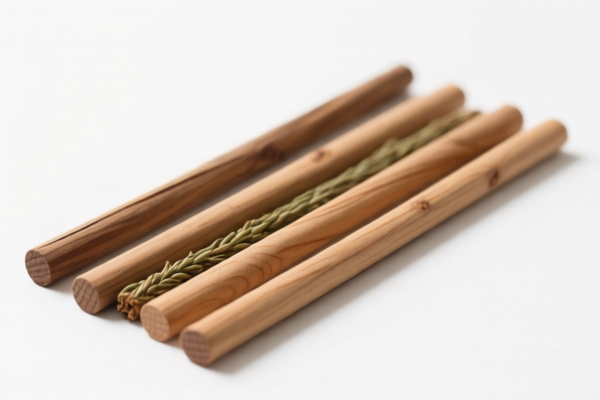
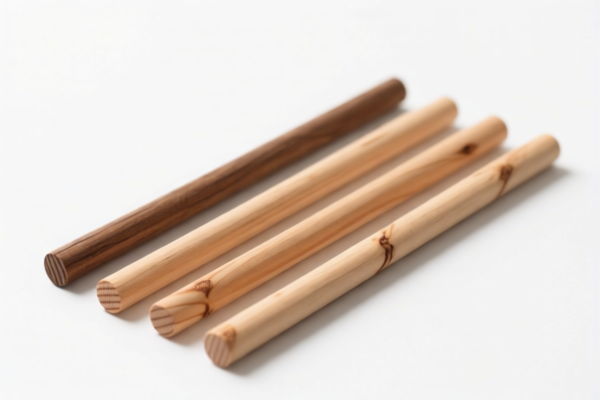
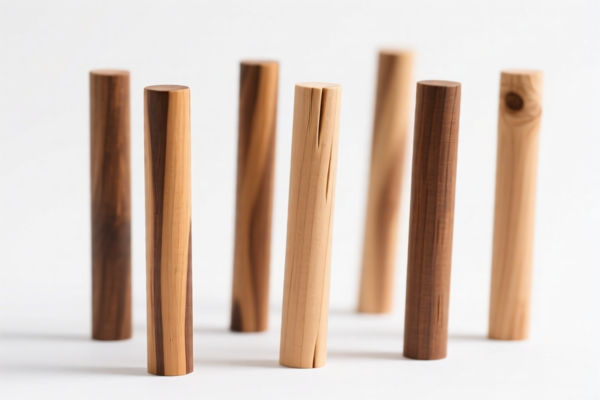
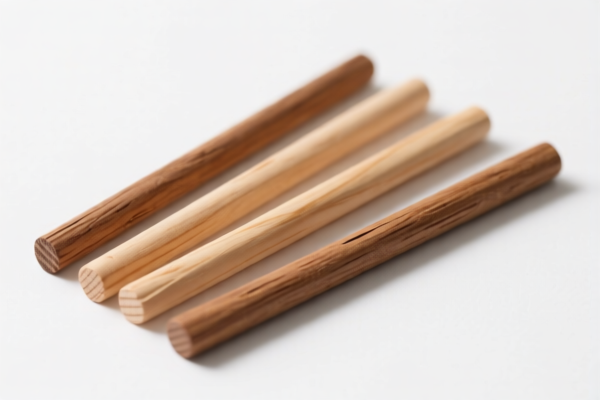
AI分析
🌲 Wooden Poles and Stakes (Sawn Wood of Coniferous Origin)
🌐 HS Code Reference & Customs Clearance Guide | 2026 Tariff Structure Analysis | Professional Compliance Strategy
📌 I. Product Definition: What Are "Wooden Poles and Stakes"?
In international trade, "Wooden Poles and Stakes" typically refer to wood sawn or chipped lengthwise, sliced, or peeled, of a thickness exceeding 6 mm. For customs classification purposes, it is crucial to determine the species, treatment status, and dimensions of the wood.
Key Classification Criteria: 1. Species: Coniferous (e.g., Douglas-fir, Pine, Spruce). 2. Processing State: Rough (unplaned, unsanded) or Finished (planed/sanded). 3. Treatment: Treated (preservative/chemical) or Not Treated. 4. Dimensions: Minimum dimension thickness/width.
⚠️ Critical Distinction:
- If the wood is Rough (not planed/sanded) and Not Treated → Classified under 4407.19.
- If the wood is Treated → May fall under different headings or require additional declaration (e.g., ISPM 15 compliance for pests).
- If Non-Coniferous → Different subheading applies (e.g., Tropical woods).
📦 II. HS Code Classification Details (2026 Latest Tariff Data)
Based on the provided data for Douglas-fir (Pseudotsuga menziesii), a common coniferous wood used for poles/stakes:
| HS Code | Product Description | Application Scenario | Dimension Requirement | Treatment Status |
|---|---|---|---|---|
| 4407.19.00.55 | Sawn wood, Coniferous (Other), Not Treated, Douglas-fir: Rough | Small stakes, fencing posts, landscaping | Min. dim ≥ 5.1 cm but < 12.7 cm | ❌ Not Treated |
| 4407.19.00.56 | Sawn wood, Coniferous (Other), Not Treated, Douglas-fir: Rough | Structural poles, large stakes, utility posts | Min. dim ≥ 12.7 cm | ❌ Not Treated |
🔍 Key Insight:
- Both codes fall under Heading 4407 (Wood sawn or chipped lengthwise...).
- The primary differentiator is the minimum dimension of the piece.
- Douglas-fir is specifically listed; other conifers may have different sub-codes under 4407.19.00.xx.
- "Rough" means the surface has not been planed or sanded. If planed, it may fall under 4407.19.00.xx with different suffixes or require different descriptions.
💰 III. 2026 Tariff Rate Breakdown (Import into USA)
✅ Applicable Country: United States (US)
✅ Origin: China (CN) – Assumed based on typical 301 tariff context; adjust if origin differs
✅ Effective Date: Current rates as per 2025/2026 trade policy
🎯 1. HS Code 4407.19.00.55 – Douglas-fir, Rough, Small Dimension
| Item | Detail |
|---|---|
| Base Tariff | 0.0% (MFN Rate) |
| Section 301 Additional Tariff | +25.0% |
| Total Tariff Rate | 25.0% |
| Tax Calculation | CIF Value × 25% |
| De Minimis Exemption | ❌ Not Applicable (Threshold usually $800 for low-value, but Section 301 items often excluded or scrutinized; check current CBP guidance) |
| Legal Basis | HTSUS: 4407.19.00.55 → USITC Footnote 9903.88.01 (if applicable) or Section 301 List 4A/4C |
📌 Explanation:
- Base Duty: 0% for most sawn wood from China under MFN.
- Additional Duty: 25% imposed under Section 301 of the Trade Act of 1974 on certain Chinese imports.
- Total Cost: Importers must budget for 25% ad valorem duty on top of CIF value.
🎯 2. HS Code 4407.19.00.56 – Douglas-fir, Rough, Large Dimension
| Item | Detail |
|---|---|
| Base Tariff | 0.0% (MFN Rate) |
| Section 301 Additional Tariff | +25.0% |
| Total Tariff Rate | 25.0% |
| Tax Calculation | CIF Value × 25% |
| De Minimis Exemption | ❌ Not Applicable |
| Legal Basis | HTSUS: 4407.19.00.56 → USITC Footnote 9903.88.01 (if applicable) or Section 301 List 4A/4C |
📌 Note:
- Identical tariff structure to.55.
- Dimension does not affect tariff rate, only HS Code classification.
🛠️ IV. Customs Clearance Practical Advice (Pitfall Avoidance Guide)
✅ 1. Required Documentation Checklist
| Document | Required? | Notes |
|---|---|---|
| Commercial Invoice | ✔️ | Must clearly state "Wooden Poles/Stakes," species (e.g., Douglas-fir), dimensions, and value. |
| Packing List | ✔️ | Detail dimensions (min. dim) to justify HS Code selection (.55 vs .56). |
| Phytosanitary Certificate | ✔️ | Crucial for untreated wood. Prove freedom from pests/diseases. |
| ISPM 15 Mark | ✔️ | If wood is packaged, pallets, or untreated wood crossing borders, it must be heat-treated/fumigated and marked. |
| Bill of Lading/Air Waybill | ✔️ | Standard shipping document. |
| Country of Origin Certificate | ✔️ | To verify origin and apply correct MFN vs. Trade Act tariffs. |
✅ 2. Classification Tips (Key Mantra)
🔥 "Check Species, Check Size, Check Treatment!"
| Scenario | Correct HS Code | Wrong Code Risk |
|---|---|---|
| Douglas-fir, Rough, Min Dim 10 cm | 4407.19.00.55 |
Misclassifying as .56 → Potential audit for under-declaration of dimension detail. |
| Douglas-fir, Rough, Min Dim 15 cm | 4407.19.00.56 |
Misclassifying as .55 → Over-declaration, possible delay. |
| Treated Wood (Preservative) | Not 4407.19.00.55/56 | Treated wood may be excluded or classified differently (e.g., 4407.99.00 or specific treated codes). Declare treatment! |
| Non-Coniferous (e.g., Oak) | Different Subheading | Coniferous codes apply only to softwoods. Hardwoods go elsewhere. |
✅ 3. Special Cases & Handling
| Situation | Advice |
|---|---|
| Mixed Shipments | If shipment contains both <12.7cm and ≥12.7cm pieces, you must split the HS Codes in the entry. Do not lump them under one code. |
| Treated vs. Untreated | If wood is chemically treated, it may fall under a different heading or require special declaration. Untreated is simpler but requires Phyto Cert. |
| Planed/Sanded Wood | If wood is finished, it is no longer "Rough." It may fall under 4407.19.00.6x or similar. Ensure description matches "Rough" for .55/.56. |
| Pest Control | CBP and USDA APHIS strictly enforce ISPM 15. Missing marks = Rejection/Quarantine/Destruction. |
🌍 V. Global Market Comparison (2026)
| Country/Region | Recommended HS Code | Tariff Rate | Certification Required | Notes |
|---|---|---|---|---|
| 🇺🇸 USA | 4407.19.00.55 / .56 |
25% (Total) | Phytosanitary, ISPM 15 | High duty due to Section 301. |
| 🇨🇳 China | 4407.19.00.xx | 0% - 5% | Depends on export policy | Low import duty for raw wood. |
| 🇪🇺 EU | 4407.19.00.xx | 0% - 3% | FLEGT, EUTR Compliance | Strict due diligence for wood legality. |
| 🇬🇧 UK | 4407.19.00.xx | 0% - 3% | UK Timber Regulation | Post-Brexit rules apply. |
📌 Conclusion:
- USA is the most costly market for Chinese-origin coniferous sawn wood due to the 25% additional tariff.
- Phytosanitary compliance is non-negotiable. Failure results in immediate rejection.
📌 VI. Common Mistakes & Pitfalls (Lessons Learned)
❌ Mistake 1: Declaring "Wooden Poles" without specifying Species
👉 Result: Customs cannot classify correctly → Hold/Additional Info Request.
❌ Mistake 2: Ignoring Dimension Thresholds (5.1 cm vs 12.7 cm)
👉 Result: Incorrect HS Code → Discrepancy Audit or Penalties.
❌ Mistake 3: Failing to provide Phytosanitary Certificate for untreated wood
👉 Result: USDA Rejection, destruction of cargo, and storage fees.
❌ Mistake 4: Claiming goods are "Planed" when they are "Rough"
👉 Result: Misclassification → Underpayment of Duty (if planed has different rate) or Overpayment.
✅ Correct Declaration Example:
"Douglas-fir (Pseudotsuga menziesii) Wooden Poles, Rough, Not Treated, Min. Dim 8.5 cm, Phytosanitary Cert #12345, ISPM 15 Marked"
🎯 VII. Conclusion: Precise Classification Saves Costs
🎯 Remember the Rules:
🔹 "Species + Rough + Untreated = 4407.19.00.55/.56"
🔹 "Dimension < 12.7cm = .55 | ≥ 12.7cm = .56"
🔹 "Total Duty = 25% (Section 301)"
🔹 "No Phyto Cert = No Entry!"
📌 Pro Tip:
If you are importing into the US, consider supply chain diversification (e.g., sourcing from Canada or Vietnam) to mitigate the 25% additional tariff on Chinese-origin wood. Always request a Binding Ruling from CBP if your product characteristics are ambiguous.
📣 Immediate Action:
📞 Consult with a licensed Customs Broker
📄 Ensure Phytosanitary Certificates are valid
📐 Measure minimum dimensions precisely before shipping
✨ Expert Clearance Starts with Accurate HS Codes!
💼 Don’t Let Wood Rot Your Profits!
用户评价
关于 HS 编码归类
协调制度(HS)是由世界海关组织(WCO)制定的国际贸易商品分类标准。全球 200 多个国家采用 HS 系统作为海关关税、贸易统计和进出口监管的基础。
每个 HS 编码遵循以下层级结构:
- 章(2 位)——商品大类(例如:第 84 章:机器和机械设备)
- 品目(4 位)——章内的更具体分类
- 子目(6 位)——国际通用细分,所有 WCO 成员国统一使用
- 本国细分(8-10 位)——各国自行扩展的细分编码,如美国 HTSUS 10 位编码
正确的 HS 编码归类对于顺利通关、准确缴纳关税和遵守贸易法规至关重要。错误归类可能导致海关延误、多缴关税或罚款。
从CN进口到US时,适用的关税税率可能包括:
- 最惠国(MFN)税率——适用于 WTO 成员国的标准关税税率
- 普通税率——适用于无贸易协定国家
- 贸易救济关税——附加关税,如 301 条款(反倾销)、232 条款(国家安全)或反补贴税
本页内容仅供参考。如需正式归类,请咨询当地海关或持牌报关代理。