Wooden Profile (HS 4409225060)
CN → US| HS编码 | 关税税率 | 原产国 | 目的国 | 文档 |
|---|---|---|---|---|
| 4418999195 | 38.2% | CN | US | 官方文档 |
| 4409225090 | 35.0% | CN | US | 官方文档 |
| 4409226000 | 35.0% | CN | US | 官方文档 |
| 4409226500 | 39.9% | CN | US | 官方文档 |
| 4409106500 | 39.9% | CN | US | 官方文档 |
商品图片
AI分析
🌲 Wooden Profiles & Timber Moldings (HS 4409 Series)
🌐 HS Code Reference & Customs Clearance Guide | 2026 Latest Tariff Breakdown | Professional Clearance Strategy
📌 I. Product Definition & Classification: What Exactly Are "Wooden Profiles"?
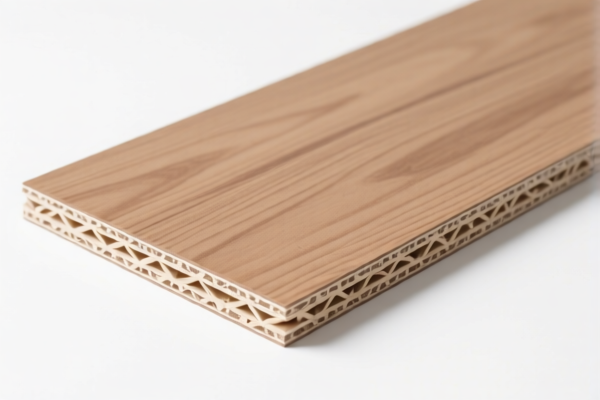
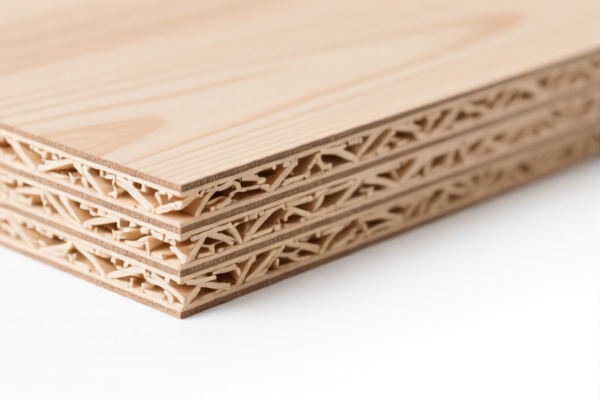
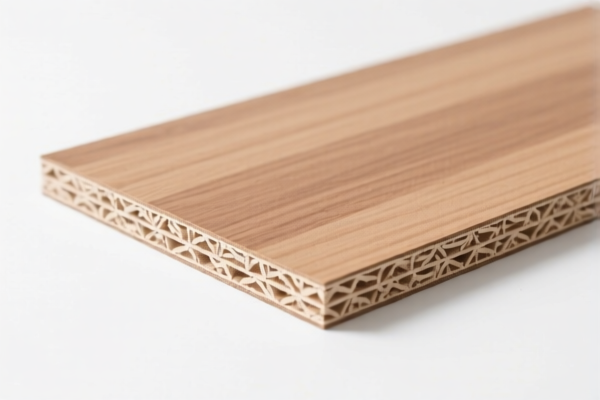
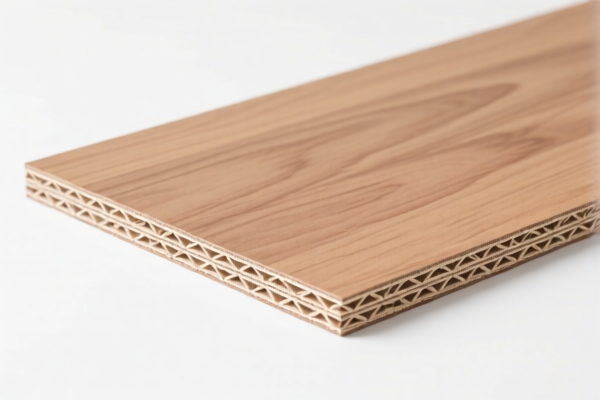
Wooden profiles (also known as timber moldings or shaped timber) are wood products that have been continuous shaped along their entire length. Unlike simple planks or boards, these profiles have undergone specific mechanical processes such as tonguing, grooving, chamfering, or other edge/surface shaping.
In international trade, the classification depends heavily on the wood species and the degree of processing:
- Coniferous Wood (Softwood): Typically pine, spruce, fir. Usually classified under
4409.10. - Non-Coniferous Wood (Hardwood) / Tropical Wood: Includes tropical species or non-pine hardwoods. Usually classified under
4409.22or4409.29. - General Building Timber: If the shaping is minimal or doesn't fit specific molding categories, it may fall under general building timber products like
4418.99.
⚠️ Key Distinction Point:
- If the wood is coniferous and shaped →4409.10.65.00
- If the wood is non-coniferous/tropical and shaped →4409.22.60.00or4409.22.50.90
- If it’s a generic building timber (less specific shaping) →4418.99.91.95
📦 II. HS Code Classification Details (2026 Latest Tariff Authority Comparison)
| HS Code | Product Description | Application Scenario | Wood Type | Processing Level |
|---|---|---|---|---|
4418.99.91.95 |
Other building timber works (e.g., beams, joists, frames) not elsewhere specified | General construction timber, non-specific moldings | Mixed/Non-specific | Low/Structural |
4409.22.50.90 |
Wooden profiles of non-coniferous tropical wood | Tropical timber moldings, decorative edges | Tropical Hardwood | Shaped/Molded |
4409.22.60.00 |
Wooden profiles of non-coniferous wood (non-tropical) | Standard hardwood moldings, trim, flooring edges | Non-Tropical Hardwood | Shaped/Molded |
4409.22.65.00 |
Cylindrical/rod-shaped wooden profiles | Dowels, rods, rounded edges | Non-Coniferous | Cylindrical/Round |
4409.10.65.00 |
Wooden profiles of coniferous wood (softwood) | Pine/Spruce trim, skirting, baseboards | Coniferous (Softwood) | Shaped/Molded |
🔍 Key Reminder:
- "Shaped" means continuous forming along the length (tongue-and-groove, chamfered, etc.).
- "Non-coniferous" includes both tropical and non-tropical hardwoods; the HS code further distinguishes based on whether it's classified as "tropical" in specific national lists.
-4409.22.65.00is specifically for round/cylindrical profiles (like dowels), which may attract a slightly higher base tariff.
💰 III. 2026 Latest Tariff Rate Breakdown (Including Surtaxes & Policy Add-ons)
✅ Applicable Country: United States (US)
✅ Origin: China (CN)
✅ Effective Time: 2025 November 10 onwards (including subsequent imports)
🎯 1. 4418.99.91.95 —— Other Building Timber Works (General)
| Item | Content |
|---|---|
| Base Tariff | 3.2% (ad valorem) |
| USITC Surtax (301) | +25.0% |
| IEEPA Surtax (122) | +10.0% |
| Total Tariff | 38.2% |
| Tax Calculation | CIF Value × 38.2% |
| De Minimis Eligibility | ❌ Not Eligible (deny_de_minimis) |
| Legal Basis Path | USITC:4418.99.91.95 → FOOTNOTE:301.88.01 → IEEPA:9903.01.24 |
📌 Explanation:
- This code captures general timber building components not specifically categorized as moldings.
- The 38.2% total rate is driven by the 25% Section 301 duty and an additional 10% IEEPA duty (often referred to as "122 Clause" tariff in some contexts, though technically IEEPA).
- No de minimis exemption applies; even small shipments are subject to full taxation.
🎯 2. 4409.22.50.90 —— Tropical Wood Wooden Profiles
| Item | Content |
|---|---|
| Base Tariff | 0.0% |
| USITC Surtax (301) | +25.0% |
| IEEPA Surtax (122) | +10.0% |
| Total Tariff | 35.0% |
| Tax Calculation | CIF Value × 35.0% |
| De Minimis Eligibility | ❌ Not Eligible |
| Legal Basis Path | USITC:4409.22.50.90 → FOOTNOTE:301.88.01 → IEEPA:9903.01.24 |
📌 Note:
- Tropical hardwood profiles enjoy a 0% base tariff but still face the 25% + 10% surcharges.
- This makes the total rate 35.0%, which is 3.2% lower than general building timber (4418.99).
- Critical: Must prove the wood species is officially classified as "tropical" under US customs definitions.
🎯 3. 4409.22.60.00 —— Non-Coniferous (Non-Tropical) Wooden Profiles
| Item | Content |
|---|---|
| Base Tariff | 0.0% |
| USITC Surtax (301) | +25.0% |
| IEEPA Surtax (122) | +10.0% |
| Total Tariff | 35.0% |
| Tax Calculation | CIF Value × 35.0% |
| De Minimis Eligibility | ❌ Not Eligible |
| Legal Basis Path | USITC:4409.22.60.00 → FOOTNOTE:301.88.01 → IEEPA:9903.01.24 |
📌 Note:
- Same tax treatment as tropical wood profiles.
- 35.0% total rate.
- Commonly used for oak, maple, or other non-tropical hardwood moldings.
🎯 4. 4409.22.65.00 —— Cylindrical/Rod Profiles (Non-Coniferous)
| Item | Content |
|---|---|
| Base Tariff | 4.9% |
| USITC Surtax (301) | +25.0% |
| IEEPA Surtax (122) | +10.0% |
| Total Tariff | 39.9% |
| Tax Calculation | CIF Value × 39.9% |
| De Minimis Eligibility | ❌ Not Eligible |
| Legal Basis Path | USITC:4409.22.65.00 → FOOTNOTE:301.88.01 → IEEPA:9903.01.24 |
📌 Note:
- Highest total rate among hardwoods at 39.9% due to the 4.9% base tariff.
- Applies specifically to cylindrical/round profiles (e.g., dowels, rods).
- Be cautious: If these are simple dowels, they might be classified differently, but if shaped as profiles, this code applies.
🎯 5. 4409.10.65.00 —— Coniferous (Softwood) Wooden Profiles
| Item | Content |
|---|---|
| Base Tariff | 4.9% |
| USITC Surtax (301) | +25.0% |
| IEEPA Surtax (122) | +10.0% |
| Total Tariff | 39.9% |
| Tax Calculation | CIF Value × 39.9% |
| De Minimis Eligibility | ❌ Not Eligible |
| Legal Basis Path | USITC:4409.10.65.00 → FOOTNOTE:301.88.01 → IEEPA:9903.01.24 |
📌 Note:
- Coniferous wood (pine, spruce, fir) profiles also face 39.9% total tariff.
- Base tariff is 4.9%, similar to cylindrical hardwoods.
- Commonly used for interior trim, skirting boards, and framing members with shaped edges.
🛠️ IV. Customs Clearance Practical Advice (Battle-Tested Pitfall Avoidance)
✅ 1. Required Documentation Checklist (No Shortcuts)
| Document | Mandatory? | Description |
|---|---|---|
| ✅ Product Specification Sheet | ✔️ | Must include wood species (scientific name), dimensions, shape type (tongue/groove, round, etc.) |
| ✅ Species Verification Report | ✔️ | Proof of wood type (Tropical vs. Non-Tropical vs. Coniferous) from accredited lab |
| ✅ Product Photos (Clear) | ✔️ | Must show the cross-section to prove continuous shaping |
| ✅ Commercial Invoice | ✔️ | Must describe as "Wooden Profiles" or "Timber Moldings", not generic "Wood" |
| ✅ Packing List | ✔️ | Detail packaging to avoid claims of improper packing |
| ✅ Fumigation Certificate | ✔️ | Required for all wood products entering the US (ISPM 15 standard) |
✅ 2. Declaration Tips (Key Mnemonics)
🔥 “Shape defines the code, Species defines the rate, Base tax matters most!”
| Scenario | Correct Declaration | Wrong Practice |
|---|---|---|
| Pine skirting boards | 4409.10.65.00 (Coniferous) |
Misdeclare as 4409.22 → Higher base tax risk |
| Oak decorative trim | 4409.22.60.00 (Non-Coniferous) |
Declare as 4418 → Unnecessary scrutiny |
| Tropical wood molding | 4409.22.50.90 |
Declare as 4409.22.60 → Risk of species mismatch |
| Dowels/Rods | 4409.22.65.00 |
Declare as flat profiles → Different tax basis |
| General beams/frames | 4418.99.91.95 |
Declare as 4409 → If no continuous shaping, error |
✅ 3. Special Case Handling
| Situation | Handling Advice |
|---|---|
| Mixed Wood Species | Must separate shipments by species. Mixed declarations lead to the highest applicable base tariff being applied. |
| OEM/Custom Shapes | Provide design drawings showing continuous shaping along the length to justify 4409 over 4418. |
| Reconstituted Wood | If made from plywood or particle board, do NOT use 4409. Use appropriate codes for engineered wood (e.g., 4412). |
| Fumigation Issues | Ensure wood has ISPM 15 stamp. Without it, goods will be rejected or re-exported. |
🌍 V. Global Market Clearance Comparison (2026 Latest)
| Country/Region | Recommended HS Code | Tariff (China Origin) | Certification | Notes |
|---|---|---|---|---|
| 🇺🇸 United States | 4409.22.60.00 |
35.0% | None specific | 38.2%-39.9% for others. High surtaxes. |
| 🇨🇳 China | 4409.22.60.00 |
0% - 5% | N/A | No surtaxes. Free trade within region. |
| 🇪🇺 European Union | 4409.22.60.00 |
0% | FLEGT/Voluntary Partnership | No surtaxes if legal timber proven. |
| 🇬🇧 United Kingdom | 4409.22.60.00 |
0% | None | Post-Brexit alignment with EU for many goods. |
| 🇯🇵 Japan | 4409.22.60.00 |
0% | Phytosanitary Cert | Low tariffs, strict phytosanitary checks. |
📌 Conclusion:
- The US is the most expensive market for Chinese wooden profiles due to 35%-39.9% total tariffs.
- Europe and Asia remain tariff-free or low-tax hubs, but strict legality and phytosanitary requirements apply.
- Strategy: Consider transshipment or sourcing from non-China origins (e.g., Vietnam, Thailand) for US-bound goods to mitigate tariff risks.
📌 VI. Common Errors & Pitfall Guide (Blood-Teachings)
❌ Error 1: Declaring shaped timber as "raw wood" (4407)
👉 Consequence: If customs inspects and finds continuous shaping, reclassification leads to higher penalties and delays.
❌ Error 2: Misidentifying wood species (Tropical vs. Non-Tropical)
👉 Consequence: 4409.22.50.90 (Tropical) and 4409.22.60.00 (Non-Tropical) have the same tax rate but different legal scrutiny. Wrong species = customs seizure.
❌ Error 3: Ignoring the "Continuous Shaping" requirement for 4409
👉 Consequence: If the wood is only cut to size but not shaped along the edge, it should be 4418 or 4407. Misclassification leads to audit flags.
❌ Error 4: Not providing Fumigation Certificate
👉 Consequence: Immediate rejection by US Customs and Border Protection (CBP) or Animal and Plant Health Inspection Service (APHIS).
✅ Correct Practice:
“Wooden Profile, Oak, Tongue-and-Groove, 2m Length, Fumigated, ISPM 15 Marked, HS 4409.22.60.00”
🎯 VII. Conclusion: Precision Classification, Cost Efficiency, Smooth Clearance!
🎯 Remember the Mnemonic:
🔹 “Conifer = 39.9%, Hardwood = 35%, General = 38.2%”
🔹 “Shape is Key, Species is Money, Fumigation is Mandatory!”
📌 Pro Tip:
If your wooden profiles are originally sourced from Vietnam, Malaysia, or Thailand, you may avoid the 25% Section 301 surtax (depending on current trade policies).
Recommend Advanced Ruling from US CBP for complex shapes to avoid post-clearance audits.
📣 Immediate Action:
📞 Contact a licensed customs broker + Provide species certificate + Apply for HS Code Advance Ruling
🚀 Let your wooden profiles clear smoothly, reduce costs, and boost profits!
✨ Professional clearance starts with accurate classification!
💼 Every cent of duty deserves precise calculation!
用户评价
关于 HS 编码归类
协调制度(HS)是由世界海关组织(WCO)制定的国际贸易商品分类标准。全球 200 多个国家采用 HS 系统作为海关关税、贸易统计和进出口监管的基础。
每个 HS 编码遵循以下层级结构:
- 章(2 位)——商品大类(例如:第 84 章:机器和机械设备)
- 品目(4 位)——章内的更具体分类
- 子目(6 位)——国际通用细分,所有 WCO 成员国统一使用
- 本国细分(8-10 位)——各国自行扩展的细分编码,如美国 HTSUS 10 位编码
正确的 HS 编码归类对于顺利通关、准确缴纳关税和遵守贸易法规至关重要。错误归类可能导致海关延误、多缴关税或罚款。
从CN进口到US时,适用的关税税率可能包括:
- 最惠国(MFN)税率——适用于 WTO 成员国的标准关税税率
- 普通税率——适用于无贸易协定国家
- 贸易救济关税——附加关税,如 301 条款(反倾销)、232 条款(国家安全)或反补贴税
本页内容仅供参考。如需正式归类,请咨询当地海关或持牌报关代理。