Wooden Profile (HS Code 4409101060)
CN → US| HS编码 | 关税税率 | 原产国 | 目的国 | 文档 |
|---|---|---|---|---|
| 4409106500 | 39.9% | CN | US | 官方文档 |
| 4409225090 | 35.0% | CN | US | 官方文档 |
| 4409226000 | 35.0% | CN | US | 官方文档 |
| 4409226500 | 39.9% | CN | US | 官方文档 |
| 4418999195 | 38.2% | CN | US | 官方文档 |
商品图片
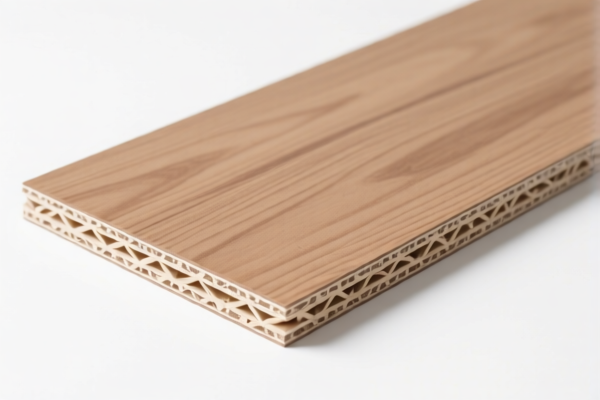
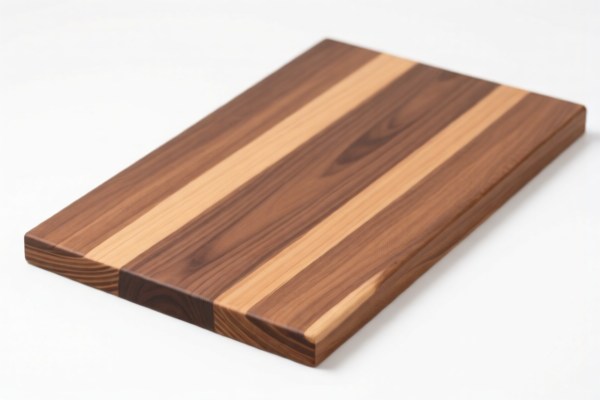
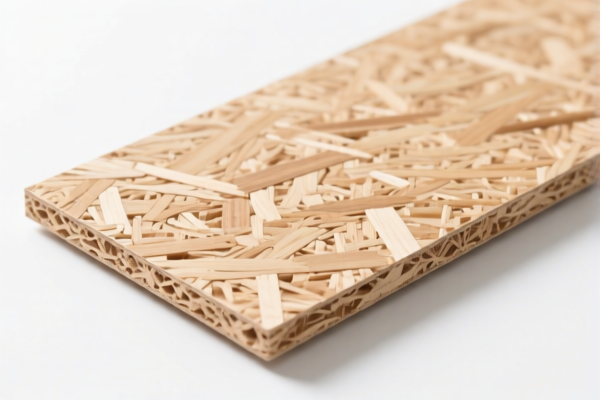
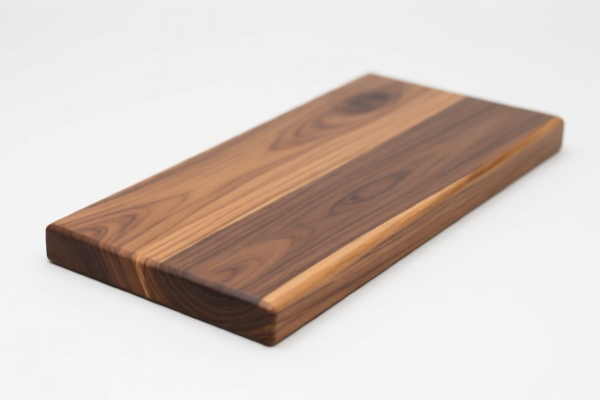
AI分析
🪵 Wooden Profiles (Milled/Tongued & Grooved Timber)
🌐 HS Code Reference & Customs Clearance Guide | 2026 Latest Tariff Analysis | Professional Logistics Strategy
📌 I. Product Definition & Classification: What Exactly is "Wooden Profile"?
Wooden profiles, in the context of international trade, refer to wood that has been mechanically worked along its edges, ends, or surfaces. This includes shaping, molding, tonguing, grooving, rabbeting, centering, roundings, and other profiling. They are distinct from simple sawn timber because they have a specific cross-section and finish intended for final assembly or further construction.
In the Harmonized System (HS), these are primarily categorized under Chapter 44, specifically heading 4409. The classification depends heavily on two factors:
1. Wood Species: Is it Coniferous (Softwood), Tropical Hardwood, or Other Non-Coniferous Hardwood?
2. Form: Is it a simple molded bar, or a complex architectural component (like flooring, molding, or other joinery)?
⚠️ Critical Distinction:
- If the wood is merely sawn but not profiled along the length, it falls under 4407 (Sawn wood).
- If the wood is further worked into specific architectural shapes (like doors, windows, or structural frames not covered by 4409), it may fall under 4418 (Builders' carpentry).
- 4409 is strictly for "Tongued, Grooved, Reeded, etc., Wood."
📦 II. HS Code Classification Matrix (Based on Provided Data)
| HS Code | Product Description | Material Type | Form/Processing | Total Tax Rate |
|---|---|---|---|---|
4409.10.65.00 |
Wooden Profiles, Shape: Milled/Tongued & Grooved | Coniferous (Softwood) | Continuous profiling along edges/surface | 39.9% |
4409.22.50.90 |
Tropical Wood Profiles, Shape: Molded Bars/Sections | Tropical Hardwood | Non-specific species, molded shape | 35.0% |
4409.22.65.00 |
Wood Profiles, Shape: Molded/Profiled | Non-Coniferous/Non-Tropical (Other Hardwood) | Rod-like or specific profiled features | 39.9% |
4409.22.60.00 |
Non-Coniferous/Tropical Wood Profiles | Non-Coniferous/Non-Tropical (Other Hardwood) | Continuous molding along edges/surface | 35.0% |
4418.99.91.95 |
Other Builders' Carpentry & Joinery | Wood | Other construction wood products (not strictly 4409) | 38.2% |
🔍 Key Insight:
- Coniferous vs. Hardwood: Coniferous wood (like Pine, Spruce, Fir) generally attracts a higher base duty (4.9%) compared to some tropical or other hardwoods which may have 0% base duty, but both are hit hard by supplementary taxes.
- 4409 vs. 4418: If the item is a complete window frame, door, or staircase, it might be classified as "Builders' Carpentry" (4418) rather than just "Profiles" (4409). The shape and degree of finishing determine this.
💰 III. 2026 Latest Tariff Rate Breakdown (Including Surcharges)
✅ Applicable Country: United States (US)
✅ Country of Origin: China (CN)
✅ Effective Time: 2025/2026 (Current Trade Policy)
🎯 1. 4409.10.65.00 — Coniferous Wood Profiles (Softwood)
| Item | Content |
|---|---|
| Base Duty | 4.9% (MFN Rate for Coniferous Wood) |
| Section 301 Surcharge | +25.0% (Trump/Biden Era Trade War Tariffs) |
| Section 122 Surcharge | +10.0% (Specific USITC Section 122 Provision) |
| Total Effective Tax | 39.9% |
| Calculation Basis | CIF Value (Cost + Insurance + Freight) × 39.9% |
| De Minimis Eligibility | ❌ None (Section 321 de minimis exemption is blocked for China-origin goods subject to Section 301) |
| Legal Path | USITC:4409.10.65.00 → Section 301: 25% → Section 122: 10% |
📌 Explanation:
- Coniferous wood is a traditional Chinese export strength (e.g., Pine flooring, cladding).
- The 4.9% base rate is standard for sawn/milled softwood.
- The 25% Section 301 tariff is the dominant cost driver.
- The 10% Section 122 tariff is an additional layer for specific wood products under current enforcement.
- Total: 39.9%. This is a high-cost item for US importers.
🎯 2. 4409.22.50.90 — Tropical Hardwood Profiles
| Item | Content |
|---|---|
| Base Duty | 0.0% (Many tropical hardwoods have 0% MFN) |
| Section 301 Surcharge | +25.0% |
| Section 122 Surcharge | +10.0% |
| Total Effective Tax | 35.0% |
| Calculation Basis | CIF Value × 35.0% |
| De Minimis Eligibility | ❌ None |
| Legal Path | USITC:4409.22.50.90 → Section 301: 25% → Section 122: 10% |
📌 Note:
- Even with a 0% base duty, the 25% + 10% surcharges make it expensive.
- Common for items like Ipe, Teak, or Merbau decking strips and moldings.
🎯 3. 4409.22.65.00 & 4409.22.60.00 — Other Hardwood Profiles
| Item | Content |
|---|---|
| Base Duty | 4.9% (for .65) or 0.0% (for .60) |
| Section 301 Surcharge | +25.0% |
| Section 122 Surcharge | +10.0% |
| Total Effective Tax | 39.9% (.65) or 35.0% (.60) |
| De Minimis Eligibility | ❌ None |
📌 Distinction:
-.65applies to "other" non-coniferous/tropical woods with specific profiling (e.g., oak, maple).
-.60applies to general molded profiles of these woods.
- Both face the same high surcharge structure.
🎯 4. 4418.99.91.95 — Other Builders' Carpentry
| Item | Content |
|---|---|
| Base Duty | 3.2% |
| Section 301 Surcharge | +25.0% |
| Section 122 Surcharge | +10.0% |
| Total Effective Tax | 38.2% |
| De Minimis Eligibility | ❌ None |
📌 When to Use:
- If your product is a pre-assembled or highly finished component (e.g., a complete window frame, door panel, or staircase stringer), it may be classified as "Builders' Carpentry" (4418) rather than "Profile" (4409).
- The rate (38.2%) is slightly lower than coniferous profiles (39.9%) due to a lower base duty (3.2% vs 4.9%).
🛠️ IV. Customs Clearance Practical Advice (Battle-Tested Pitfalls)
✅ 1. Essential Documentation Checklist
| Document | Required? | Description |
|---|---|---|
| ✅ Product Specification Sheet | ✔️ | Must detail wood species (scientific name preferred), dimensions, and degree of profiling (tongue/groove vs. simple edge). |
| ✅ HS Code Pre-Ruling Request | ✔️ | Critical. Submit to CBP to confirm if it's 4409 or 4418. Misclassification leads to severe penalties. |
| ✅ Commercial Invoice | ✔️ | Must clearly state: "Wooden Profiles, Milled, [Species Name], Country of Origin: China." |
| ✅ Phytosanitary Certificate | ✔️ | Mandatory for all wood products entering the US to prevent pest introduction. Issued by China Customs. |
| ✅ Fumigation Certificate | ✔️ | Proof of heat treatment (HT) or methyl bromide fumigation (MB) for ISPM 15 compliance. |
| ✅ Bill of Lading | ✔️ | Ensure packaging is palletized (wood pallets also need ISPM 15 marks). |
✅ 2. Classification Strategy (The "Shape" Rule)
🔥 “Profile Determines Chapter, Finish Determines Heading!”
| Scenario | Correct HS Code | Incorrect Code | Risk |
|---|---|---|---|
| Simple wooden bar with one side grooved | 4409 series |
4407 (Sawn Wood) |
Undervaluation penalty if 4407 is cheaper (it's not, due to surcharges). |
| Finished window frame with glass | 9406 (Windows) |
4418 or 4409 |
Wrong Chapter! Glass components change classification. |
| Pre-assembled door | 4418 (Doors) |
4409 (Profiles) |
4418 may have slightly lower base duty (3.2% vs 4.9%). |
| Raw timber, no profiling | 4407 (Sawn) |
4409 |
Incorrect. 4407 does not have Section 122 surcharge? Check! (Note: Data provided only lists 4409/4418 taxes, assume 4407 may differ). |
⚠️ Warning:
- Do not classify complex joinery as "profiles" if they are functionally complete building components. CBP often reclassifies "profiles" into "builders' carpentry" (4418) if they have holes for hinges, handles, etc.
✅ 3. Special Considerations for Wood Products
| Issue | Solution |
|---|---|
| ISPM 15 Compliance | Ensure all wooden packaging (pallets, crates) is heat-treated and marked with the IPPC logo. Non-compliance leads to refusal of entry or destruction. |
| Fumigation | For solid wood, a phytosanitary certificate is mandatory. Without it, CBP will detain the cargo. |
| Section 301 Exclusions | Check if your HS Code has an exclusion. Many wood product exclusions expired or were not renewed. Assume no exclusion unless confirmed by USTR database. |
| De Minimis Loophole | Do not attempt to split shipments into < $800 packages to avoid duty. CBP is actively cracking down on this for China-origin goods. Expect penalties and account suspension. |
🌍 V. Global Market Comparison (2026)
| Market | Recommended HS Code | Estimated Total Duty | Notes |
|---|---|---|---|
| 🇺🇸 USA | 4409.10.65.00 / 4418... |
35.0% – 39.9% | High due to Section 301 (+25%) + Section 122 (+10%). |
| 🇨🇳 China (Import) | 4409 |
~5% - 10% | Lower duties. China imports hardwood profiles. |
| 🇪🇺 EU | 4409 |
~0% - 4.5% | No Section 301. But Deforestation Regulation (EUDR) applies. |
| 🇨🇦 Canada | 4409 |
~0% - 5% | USMCA may apply if sourced from Mexico/Canada, but China origin gets MFN rates. |
| 🇯🇵 Japan | 4409 |
~5% - 10% | Lower surcharges. CPTPP benefits if applicable. |
📌 Key Takeaway:
- The US market is the most expensive for Chinese wood products due to layered tariffs.
- The EU imposes strict due diligence requirements (EUDR) to prove wood is not from deforested areas. Compliance costs are high.
📌 VI. Common Mistakes & How to Avoid Them
❌ Mistake 1: Classifying as "Parts of Furniture" (9403)
👉 Result: Wrong chapter. Wood profiles are raw materials/components, not finished furniture.
✅ Fix: Use Chapter 44.
❌ Mistake 2: Ignoring ISPM 15
👉 Result: Cargo stuck at port, fumigation fees ($1,000+), delays.
✅ Fix: Provide phytosanitary certificate and pallet marks.
❌ Mistake 3: Assuming "Base Duty" is the total cost
👉 Result: Budgeting errors. 4.9% base looks cheap, but 39.9% total is expensive.
✅ Fix: Calculate Total Landed Cost using 39.9% for coniferous and 35.0-38.2% for others.
❌ Mistake 4: Using "Lumber" as a generic description
👉 Result: CBP rejects vague descriptions.
✅ Fix: Use precise terms: "Milled Pine Profiles, Tongued and Grooved, 1x4 inch, Fumigated."
🎯 VII. Conclusion: Strategic Sourcing Advice
🎯 Memory Hook:
🔹 "Profiles are Profiled, Surcharges are Real."
🔹 "39.9% for Pine, 35% for Tropical, Plan Your Price."
🔹 "Phytosanitary Certificate is King, No Certificate, No Entry."
📌 Pro Tip:
If your wooden profiles are not from China (e.g., from Vietnam, Mexico, or Canada), you may avoid the Section 301 and Section 122 tariffs entirely.
- Mexico: 0% duty under USMCA (if compliant).
- Canada: 0% under USMCA (if compliant).
- Vietnam: 0% MFN, but check for US anti-circumvention investigations.
🚀 Action Plan:
1. Confirm Wood Species (Coniferous vs. Hardwood).
2. Verify Profile Type (Simple molding vs. Complex joinery).
3. Calculate Landed Cost with 39.9% (if China).
4. Secure Phytosanitary Certificate.
5. Apply for CBP Pre-Ruling if uncertain.
✨ Professional Customs Clearance Starts with Precise Classification!
💼 Your Profit Margin Depends on Accurate Tariff Calculation!
用户评价
关于 HS 编码归类
协调制度(HS)是由世界海关组织(WCO)制定的国际贸易商品分类标准。全球 200 多个国家采用 HS 系统作为海关关税、贸易统计和进出口监管的基础。
每个 HS 编码遵循以下层级结构:
- 章(2 位)——商品大类(例如:第 84 章:机器和机械设备)
- 品目(4 位)——章内的更具体分类
- 子目(6 位)——国际通用细分,所有 WCO 成员国统一使用
- 本国细分(8-10 位)——各国自行扩展的细分编码,如美国 HTSUS 10 位编码
正确的 HS 编码归类对于顺利通关、准确缴纳关税和遵守贸易法规至关重要。错误归类可能导致海关延误、多缴关税或罚款。
从CN进口到US时,适用的关税税率可能包括:
- 最惠国(MFN)税率——适用于 WTO 成员国的标准关税税率
- 普通税率——适用于无贸易协定国家
- 贸易救济关税——附加关税,如 301 条款(反倾销)、232 条款(国家安全)或反补贴税
本页内容仅供参考。如需正式归类,请咨询当地海关或持牌报关代理。