Yarn Twist 900+ Turns/Meter
CN → US| HS编码 | 关税税率 | 原产国 | 目的国 | 文档 |
|---|---|---|---|---|
| 5205280020 | 47.0% | CN | US | 官方文档 |
| 5205220020 | 42.3% | CN | US | 官方文档 |
| 5402529000 | 43.8% | CN | US | 官方文档 |
| 5402590100 | 43.0% | CN | US | 官方文档 |
| 5509220090 | 45.6% | CN | US | 官方文档 |
商品图片
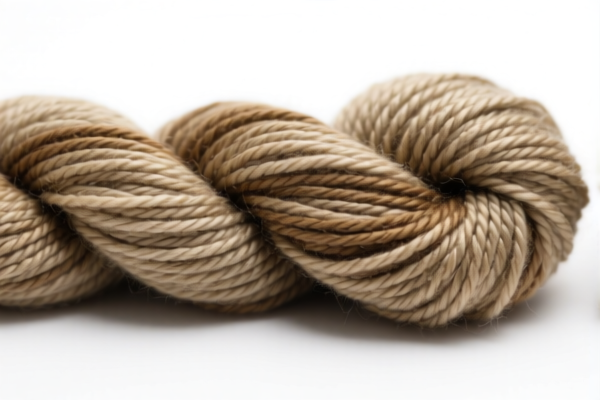
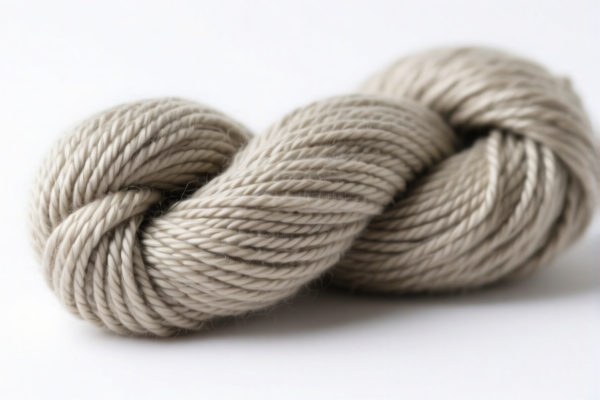


AI分析
🧵 Yarn Twist: 900+ Turns/Meter (High-Twist Yarns)
🌐 HS Code Reference & Customs Clearance Guide | 2026 Latest Tariff Analysis | Professional Compliance Strategy
📌 I. Product Definition & Classification: What is "High-Twist Yarn"?
High-twist yarn, defined here as yarn with a twist intensity exceeding 50 turns per meter (tpm), often reaching 900+ tpm for crimping or specific texturing effects. In international trade, these are primarily classified based on their fiber material (Cotton vs. Synthetic) and spinning process (Ring-spun vs. Other).
⚠️ Key Distinction Points:
- If the yarn is Cotton (natural fiber) and made via Ring Spinning → Falls under HS 5205 series.
- If the yarn is Synthetic (Polyester, Nylon, etc.) and continuous filaments → Falls under HS 5402/5509 series.
- The high twist (>50 tpm) is a critical technical parameter that distinguishes these from standard yarns in some sub-headings, triggering specific tariff rules.
📦 II. HS Code Classification Details (2026 Latest Tariff Authority对照)
Based on the provided data, here are the five specific HS codes applicable to high-twist yarns, categorized by material and construction:
| HS Code | Product Description | Inferred Material/Feature | Key Technical Trigger |
|---|---|---|---|
5205.28.00.20 |
High-twist yarn | Cotton or natural fiber blend | Consistent with cotton yarn classification |
5205.22.00.20 |
High-twist yarn | Ring-spun characteristic | Implies fiber product, likely cotton ring-spun |
5402.52.90.00 |
Twist >50 tpm | Polyester Monofilament | Synthetic fiber, single continuous filament |
5402.59.01.00 |
Twist >50 tpm | Synthetic Filament Yarn | General synthetic continuous filament |
5509.22.00.90 |
High-speed twisting | Polyester Blend | Meets polyester content requirements, high-speed twist |
🔍 Critical Reminder:
- Material is King: You must declare the exact fiber composition. "Yarn" is not specific enough.
- Twist Count: The specification ">50 turns/meter" is explicitly mentioned in the HS descriptions for synthetic codes (5402), confirming that high twist is a defining characteristic for these sub-headings.
- Manufacturing Process: For cotton codes (5205), distinguishing between Ring-spun (5205.22) and Other (5205.28) is crucial for accurate classification.
💰 III. 2026 Latest Tariff Rate Breakdown (Including Additional Duties & Policy Surcharges)
✅ Applicable Country: United States (US)
✅ Country of Origin: China (CN)
✅ Effective Date: Current rates apply as per 2026 data provided.
🎯 1. 5205.28.00.20 — Cotton High-Twist Yarn (Non-Ring-Spun/Other)
| Item | Content |
|---|---|
| Base Duty Rate | 12.0% (Ad Valorem) |
| Section 301 Additional Duty | +25.0% |
| Section 122 Clause Duty | +10.0% |
| Total Effective Rate | 47.0% |
| Tax Calculation | CIF Value × 47.0% |
| De Minimis Eligibility | ❌ Not Eligible (High duty threshold blocks de minimis) |
| Legal Basis Path | USITC:5205.28.00.20 → Section 301: +25% → Section 122: +10% |
📌 Explanation:
- This category attracts the highest tax burden (47%) among the listed options due to the higher base duty (12%) for certain cotton yarns compared to finer ring-spun yarns.
- The Section 122 duty (10%) is a specific punitive tariff on certain textile imports, adding significant cost.
🎯 2. 5205.22.00.20 — Cotton High-Twist Yarn (Ring-Spun)
| Item | Content |
|---|---|
| Base Duty Rate | 7.3% (Ad Valorem) |
| Section 301 Additional Duty | +25.0% |
| Section 122 Clause Duty | +10.0% |
| Total Effective Rate | 42.3% |
| Tax Calculation | CIF Value × 42.3% |
| De Minimis Eligibility | ❌ Not Eligible |
| Legal Basis Path | USITC:5205.22.00.20 → Section 301: +25% → Section 122: +10% |
📌 Note:
- Savings Alert: Choosing the Ring-Spun classification (5205.22) reduces the base duty from 12% to 7.3%, lowering the total tax by 4.7% compared to the other cotton category.
- Ensure your manufacturing process is documented as Ring-Spinning to qualify for this lower base rate.
🎯 3. 5402.52.90.00 — Synthetic Polyester Monofilament (Twist >50 tpm)
| Item | Content |
|---|---|
| Base Duty Rate | 8.8% (Ad Valorem) |
| Section 301 Additional Duty | +25.0% |
| Section 122 Clause Duty | +10.0% |
| Total Effective Rate | 43.8% |
| Tax Calculation | CIF Value × 43.8% |
| De Minimis Eligibility | ❌ Not Eligible |
| Legal Basis Path | USITC:5402.52.90.00 → Section 301: +25% → Section 122: +10% |
📌 Explanation:
- This code applies specifically to Monofilaments (single continuous filament, often used for fishing lines, bristles, or technical textiles).
- If your product is a multi-filament yarn (not mono), this code may be incorrect. Misclassification here can lead to penalties.
🎯 4. 5402.59.01.00 — Other Synthetic Filament Yarn (Twist >50 tpm)
| Item | Content |
|---|---|
| Base Duty Rate | 8.0% (Ad Valorem) |
| Section 301 Additional Duty | +25.0% |
| Section 122 Clause Duty | +10.0% |
| Total Effective Rate | 43.0% |
| Tax Calculation | CIF Value × 43.0% |
| De Minimis Eligibility | ❌ Not Eligible |
| Legal Basis Path | USITC:5402.59.01.00 → Section 301: +25% → Section 122: +10% |
📌 Note:
- This is a catch-all for synthetic filament yarns with high twist that do not fit specific mono-filament categories.
- It offers the lowest base duty (8.0%) among all synthetic options, resulting in a total rate of 43.0%.
🎯 5. 5509.22.00.90 — Blended Synthetic Yarn (High-Speed Twist)
| Item | Content |
|---|---|
| Base Duty Rate | 10.6% (Ad Valorem) |
| Section 301 Additional Duty | +25.0% |
| Section 122 Clause Duty | +10.0% |
| Total Effective Rate | 45.6% |
| Tax Calculation | CIF Value × 45.6% |
| De Minimis Eligibility | ❌ Not Eligible |
| Legal Basis Path | USITC:5509.22.00.90 → Section 301: +25% → Section 122: +10% |
📌 Explanation:
- This code is for Blended Yarns (e.g., Polyester/Cotton blends) where the synthetic fiber is the predominant component by weight.
- The "High-Speed Twist" descriptor implies a specific manufacturing method. Ensure your product matches the polyester content requirements for this sub-heading.
🛠️ IV. Customs Clearance Practical Advice (Field Pitfall Avoidance Guide)
✅ 1. Documentation Checklist (Non-Negotiable)
| Document | Must Provide | Explanation |
|---|---|---|
| ✅ Product Spec Sheet | ✔️ | Must explicitly state "Twist: 900+ Turns/Meter" and fiber composition (%). |
| ✅ Material Declaration | ✔️ | Clearly distinguish between Cotton (5205) vs. Synthetic (5402/5509). |
| ✅ Spinning Process Proof | ✔️ | For cotton: Confirm Ring-Spun vs. Other to justify 5205.22 vs. 5205.28. |
| ✅ Commercial Invoice | ✔️ | Describe as "High-Twist Yarn, [Material], >50 tpm" to align with HS notes. |
| ✅ Packaging List | ✔️ | Show net weight and gross weight; high-twist yarn is often sold in cones/bobbins. |
| ✅ Test Report | ✔️ | Optional but helpful: Third-party lab test confirming twist per meter (TPM). |
✅ 2. Declaration Tips (Critical Mnemonics)
🔥 “Material First, Twist Second, Base Duty Dictates Total!”
| Scenario | Correct Declaration | Wrong Practice |
|---|---|---|
| 100% Cotton, Ring-Spun, High Twist | 5205.22.00.20 (42.3% Total) |
Declare as 5205.28 → Pay 47% (Loss of 4.7%) |
| 100% Polyester, Monofilament | 5402.52.90.00 (43.8% Total) |
Declare as 5402.59 → Wrong technical fit |
| Polyester/Cotton Blend | 5509.22.00.90 (45.6% Total) |
Declare as pure cotton → Severe Penalty |
| Twist < 50 tpm | Do NOT use 5402.59.01.00 |
Misuse of twist clause → Rejection |
✅ 3. Special Cases Handling
| Situation | Handling Advice |
|---|---|
| Blended Yarns | If the blend contains both natural and synthetic fibers, check the weight percentage. If synthetic >50%, it likely falls under 5509. |
| Crinkled Yarn | If the high twist is used to create crimp (texture), ensure the description highlights the textured nature if it affects the final use (e.g., knitting vs. weaving). |
| Pre-Compliance Ruling | For high-volume shipments, apply for an ACE Pre-Ruling from CBP to lock in the HS code and avoid retrospective audits. |
| Section 122 Risk | Since Section 122 (10%) applies to all, consider if any exclusions or trade remedy waivers apply (rare, but check latest USTR lists). |
🌍 V. Global Market Comparison (2026 Overview)
| Country/Region | Recommended HS Code | Est. Total Duty (China Origin) | Key Certification | Note |
|---|---|---|---|---|
| 🇺🇸 USA | See Table Above | 42.3% – 47.0% | None specific | High Section 301 + 122 taxes |
| 🇪🇺 EU | Similar HS Codes | 4.0% – 6.5% | REACH (Chemicals) | No Section 301/122 |
| 🇨🇳 China | Similar HS Codes | 4.0% – 7.5% | N/A (Import Duty) | Low base duty, no punitive tariffs |
| 🇬🇧 UK | Similar HS Codes | 4.0% – 6.5% | UKCA (Post-Brexit) | Post-Brexit rates similar to EU |
📌 Conclusion:
- The US market is exceptionally costly for high-twist yarns from China due to the cumulative effect of Base + Section 301 (25%) + Section 122 (10%).
- Strategic Advice: If possible, explore transshipment (via Vietnam/Mexico) with substantial transformation to change the Country of Origin, or negotiate Cost Sharing with buyers.
📌 VI. Common Errors & Pitfalls (Lessons Learned)
❌ Error 1: Failing to specify "Ring-Spun" for cotton yarns
👉 Consequence: Defaulted to higher base duty (5205.28 at 12%) → Higher total tax (47% vs 42.3%).
❌ Error 2: Confusing Monofilament (5402.52) with Multifilament (5402.59)
👉 Consequence: Misclassification leads to customs holds, audits, and potential fines. Monofilaments have different base duties (8.8% vs 8.0%).
❌ Error 3: Ignoring the Section 122 Clause
👉 Consequence: Underestimating landed cost by 10%. This is a mandatory surcharge for many Chinese textile imports.
❌ Error 4: Vague Product Description ("Yarn")
👉 Consequence: Customs officers may reclassify under general headings with higher penalties or delay shipment for inspection.
✅ Correct Approach:
"High-Twist Yarn, 100% Cotton, Ring-Spun, Twist 900 TPM, for Knitting, Model HT-900"
🎯 VII. Conclusion: Precision is Profit
🎯 Key Takeaway:
🔹 Cotton: Choose Ring-Spun (
5205.22) to save 4.7% vs. Other (5205.28).
🔹 Synthetic: Differentiate Mono vs. Multi filament to ensure correct HS code.
🔹 Total Cost: Budget for 42% – 47% total tax in the US. This is not a niche duty; it's a structural cost.
📌 Pro Tip:
📞 Consult a Licensed Customs Broker to review your spinning process documentation and fiber blend percentages before filing the Bill of Lading.
🚀 Accurate Classification = Predictable Costs = Competitive Pricing!
✨ Professional Customs Clearance Starts with Accurate Classification!
💼 Your Margin Depends on These Percentages!
用户评价
关于 HS 编码归类
协调制度(HS)是由世界海关组织(WCO)制定的国际贸易商品分类标准。全球 200 多个国家采用 HS 系统作为海关关税、贸易统计和进出口监管的基础。
每个 HS 编码遵循以下层级结构:
- 章(2 位)——商品大类(例如:第 84 章:机器和机械设备)
- 品目(4 位)——章内的更具体分类
- 子目(6 位)——国际通用细分,所有 WCO 成员国统一使用
- 本国细分(8-10 位)——各国自行扩展的细分编码,如美国 HTSUS 10 位编码
正确的 HS 编码归类对于顺利通关、准确缴纳关税和遵守贸易法规至关重要。错误归类可能导致海关延误、多缴关税或罚款。
从CN进口到US时,适用的关税税率可能包括:
- 最惠国(MFN)税率——适用于 WTO 成员国的标准关税税率
- 普通税率——适用于无贸易协定国家
- 贸易救济关税——附加关税,如 301 条款(反倾销)、232 条款(国家安全)或反补贴税
本页内容仅供参考。如需正式归类,请咨询当地海关或持牌报关代理。