Yoga Balance Board
CN → US| HS编码 | 关税税率 | 原产国 | 目的国 | 文档 |
|---|---|---|---|---|
| 3926909989 | 22.8% | CN | US | 官方文档 |
| 6307909891 | 24.5% | CN | US | 官方文档 |
| 3926909950 | 22.8% | CN | US | 官方文档 |
| 6307907500 | 14.3% | CN | US | 官方文档 |
| 9506910030 | 22.1% | CN | US | 官方文档 |
商品图片
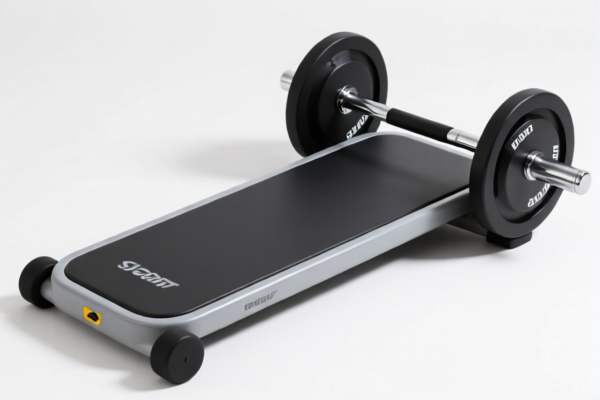
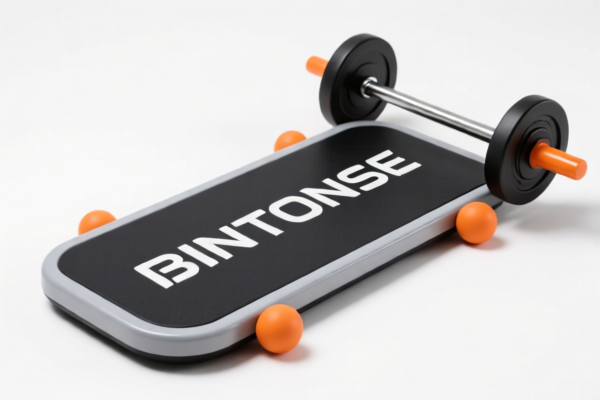
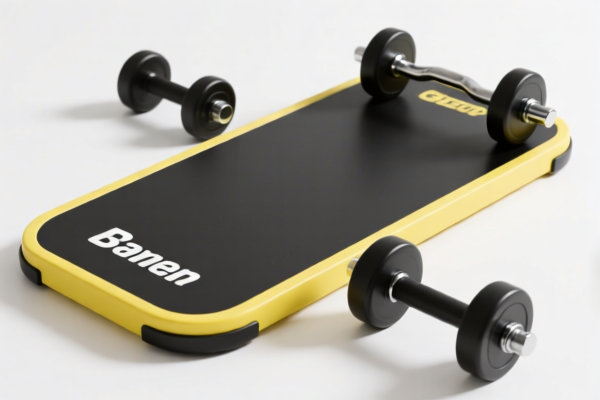
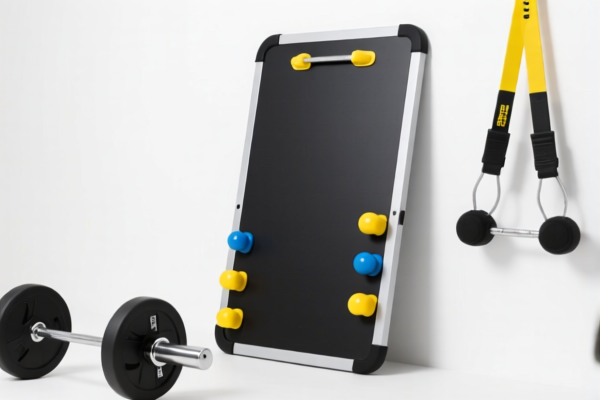
AI分析
🧘♀️ Yoga Balance Board (Stability Board)
🌐 HS Code Reference & Customs Clearance Guide | 2026 Latest Tariff Analysis | Professional Clearance Strategy
📌 I. Product Definition & Classification: Do You Really Understand the "Yoga Balance Board"?
A Yoga Balance Board is a fitness and rehabilitation device designed to improve core strength, balance, and proprioception. In international trade, its classification is highly sensitive to material composition, specific usage, and component status. It is not a single commodity but falls into several categories depending on its construction:
1. Plastic Plate-Type Products: If the board is primarily made of plastic plates.
2. Completed Textile/Goods: If it is treated as a general manufacturing product, potentially involving rubber, wood, or plastic composite materials for auxiliary yoga use.
3. Textile/General Accessory: If considered a minor part or accessory of a larger system.
4. Sports Equipment Parts: If specifically identified as a component for gymnastics or sports apparatus.
⚠️ Key Distinction Point:
- If it is a standalone plastic board → Classify under Plastic Articles (Chapter 39).
- If it is a composite finished good (wood/plastic/rubber) for yoga → Classify under Made-up Articles (Chapter 63).
- If it is a specific part for sports equipment → Classify under Sports Equipment Parts (Chapter 95).
- If it is a general accessory → Classify under Other Manufactured Articles (Chapter 63).
📦 II. HS Code Classification Details (2026 Latest Tariff Authoritative Comparison)
| HS Code | Product Description | Applicable Scenario | Material/Form | Total Tax Rate |
|---|---|---|---|---|
3926.90.99.89 |
Other plastic articles | Plastic plate-shaped products | Plastic, Plate | 22.8% |
6307.90.98.91 |
Other made-up articles | Yoga auxiliary instruments, composite materials | Plastic/Rubber/Wood, Completed | 24.5% |
3926.90.99.50 |
Other plastic articles | Board-shaped plastic items | Plastic, Plate | 22.8% |
6307.90.75.00 |
Other accessories | Parts/components, no textile conflict | General Components | 14.3% |
9506.91.00.30 |
Parts of gymnastics/sports equipment | Fixed board parts for sports/gymnastics | Plastic/Metal, Part | 22.1% |
🔍 Key Reminder:
- Plastic Boards: If the product is clearly a plastic board, it generally falls under 3926.90 (22.8% total tax).
- Composite/Finished Goods: If it's a "yoga auxiliary instrument" made of mixed materials (plastic/rubber/wood), it may be classified under 6307.90.98.91 (24.5% total tax).
- Parts vs. Whole: If declared as a "part" of a larger sports machine, it might fall under 9506.91.00.30 (22.1% total tax) or 6307.90.75.00 (14.3% total tax).
- Material Matters: The tax rate varies by 0.7% to 10.2% depending on the exact material and form declaration.
💰 III. 2026 Latest Tariff Rate Detailed Explanation (Including Surcharges & Policy Add-ons)
✅ Applicable Country: United States (US)
✅ Country of Origin: China (CN)
✅ Effective Time: Includes subsequent imports (as per 122 Clause & Section 301)
🎯 1. 3926.90.99.89 & 3926.90.99.50 —— Plastic Other Articles (Plate Form)
| Item | Content |
|---|---|
| Base Tariff | 5.3% (General Rate) |
| Section 301 Surcharge | +7.5% (List 4B) |
| 122 Clause Surcharge | +10% (Specific policy for certain Chinese goods) |
| Total Tax Rate | 22.8% |
| Tax Calculation | CIF Value × 22.8% |
| De Minimis Eligibility | ❌ Not Eligible (High tariff excludes small package benefits in many cases) |
| Legal Basis Path | Base: 3926 → Sec 301: 7.5% → 122 Clause: 10% |
📌 Explanation:
- Base Tariff: Standard US import duty for plastic articles.
- Section 301: Additional tariff due to US-China trade relations.
- 122 Clause: Additional 10% tariff applied to specific categories of Chinese imports.
- Total: 22.8% is the effective duty rate for plastic balance boards.
🎯 2. 6307.90.98.91 —— Other Made-up Articles (Yoga Auxiliary Instruments)
| Item | Content |
|---|---|
| Base Tariff | 7.0% |
| Section 301 Surcharge | +7.5% |
| 122 Clause Surcharge | +10% |
| Total Tax Rate | 24.5% |
| Tax Calculation | CIF Value × 24.5% |
| De Minimis Eligibility | ❌ Not Eligible |
| Legal Basis Path | Base: 6307 → Sec 301: 7.5% → 122 Clause: 10% |
📌 Note:
- This is the highest tax rate in the dataset.
- Applies if the product is classified as a "finished yoga instrument" made of composite materials (plastic/rubber/wood).
- The higher base rate (7.0%) compared to plastic (5.3%) makes this classification more expensive.
🎯 3. 6307.90.75.00 —— Other Accessories (Parts/Components)
| Item | Content |
|---|---|
| Base Tariff | 4.3% |
| Section 301 Surcharge | 0.0% (Specific exemption or lower list) |
| 122 Clause Surcharge | +10% |
| Total Tax Rate | 14.3% |
| Tax Calculation | CIF Value × 14.3% |
| De Minimis Eligibility | ❌ Not Eligible |
| Legal Basis Path | Base: 6307.75 → Sec 301: 0% → 122 Clause: 10% |
📌 Important:
- This is the lowest tax rate in the dataset.
- Applies if the item is declared as an accessory or component with no textile conflict.
- Strategy: If your product can be legally justified as an "accessory" or "part" rather than a "finished yoga device," this classification saves 10.2% in taxes compared to the yoga instrument category.
🎯 4. 9506.91.00.30 —— Sports/Gymnastics Equipment Parts
| Item | Content |
|---|---|
| Base Tariff | 4.6% |
| Section 301 Surcharge | +7.5% |
| 122 Clause Surcharge | +10% |
| Steel/Aluminum/Copper Surcharges | +50% (If material is steel/aluminum/copper) |
| Total Tax Rate (Plastic/Mixed) | 22.1% |
| Total Tax Rate (Metal) | 72.1% (If pure metal) |
| Tax Calculation | CIF Value × 22.1% (for plastic/mixed) |
| De Minimis Eligibility | ❌ Not Eligible |
| Legal Basis Path | Base: 9506.91 → Sec 301: 7.5% → 122 Clause: 10% |
📌 Warning:
- If the board is made of steel, aluminum, or copper, the total tax rate jumps to 72.1% due to the 50% additional surcharge.
- For plastic or mixed-material balance boards, the rate is 22.1%.
- This category is for "fixed board parts" for sports/gymnastics.
🛠️ IV. Customs Clearance Practical Advice (Avoid Pitfalls Guide)
✅ 1. Preparation Checklist (All Required)
| Document | Mandatory | Explanation |
|---|---|---|
| ✅ Product Specifications | ✔️ | Include material (plastic/wood/rubber), dimensions, weight, and usage. |
| ✅ Photos (Labeled) | ✔️ | Clear images showing the board, any logos, and material texture. |
| ✅ Commercial Invoice | ✔️ | Describe clearly: "Yoga Balance Board, Plastic/Wood, for Fitness Use." |
| ✅ Packing List | ✔️ | Detail contents to avoid separation issues. |
| ✅ Material Declaration | ✔️ | Specify if it's 100% plastic, composite, or includes metal parts. |
✅ 2. Declaration Strategy (Key Rules)
🔥 "Material Matters, Form Defines, Part vs. Whole Determines Tax!"
| Scenario | Correct Declaration | Wrong Practice |
|---|---|---|
| Plastic Board Only | 3926.90.99.89 or 3926.90.99.50 (22.8%) |
Declare as "Yoga Instrument" → 24.5% |
| Composite Yoga Board | 6307.90.98.91 (24.5%) |
Declare as "Plastic Part" → Incorrect classification |
| Accessory/Component | 6307.90.75.00 (14.3%) |
Declare as "Finished Good" → Higher tax |
| Sports Equipment Part | 9506.91.00.30 (22.1% Plastic / 72.1% Metal) |
Use metal without noting surcharge → 72.1% penalty risk |
✅ 3. Special Situations Handling
| Situation | Handling Advice |
|---|---|
| Mixed Materials (Plastic + Rubber) | Classify as 6307.90.98.91 (24.5%) or 3926 (22.8%) depending on principal material. Consult classification guide. |
| Metal Parts (Steel/Aluminum) | Avoid 9506.91.00.30 unless necessary. The 50% surcharge makes it extremely expensive. Consider if it can be classified as plastic accessory (6307.90.75.00). |
| "Yoga" vs. "Sports" Labeling | Use "Yoga Auxiliary Instrument" for 6307 or "Plastic Article" for 3926. "Sports Equipment Part" (9506) is risky for general balance boards unless part of a machine. |
| De Minimis (Section 321) | Not Recommended. With tariffs >10%, using de minimis may trigger higher scrutiny or penalties if not properly declared. |
🌍 V. Global Main Market Clearance Comparison (2026 Latest)
| Country/Region | Recommended HS Code | Tariff | Certification | Notes |
|---|---|---|---|---|
| 🇺🇸 USA | 3926.90.99.89 / 6307.90.75.00 |
14.3% - 22.8% | None specific | Highest complexity due to 122 Clause & 301 |
| 🇨🇳 China | 3926.90.99.89 |
~5-7% | CCC (if applicable) | Lower base rates, no 122/301 |
| 🇪🇺 EU | 3926.90.99 |
~0-4% | CE | No additional surcharges like US |
| 🇬🇧 UK | 3926.90.99 |
~0-4% | UKCA | Post-Brexit rules apply |
📌 Conclusion:
- USA is the most complex market due to layered tariffs (Base + 301 + 122 Clause).
- Metal components drastically increase costs in the US market.
- Optimization Tip: If possible, classify as Accessory (6307.90.75.00) to achieve the 14.3% rate, but ensure legal justification.
📌 VI. Common Errors & Pitfall Guide (Blood & Tears Lessons)
❌ Error 1: Declaring a plastic board as a "Yoga Instrument" (6307.90.98.91)
👉 Consequence: Tax increases from 22.8% to 24.5%.
👉 Fix: If it's primarily plastic, use 3926.90.99.89.
❌ Error 2: Declaring a metal part as 9506.91.00.30 without noting material
👉 Consequence: Tax jumps to 72.1% (Base 4.6% + 301 7.5% + 122 10% + Metal Surcharge 50%).
👉 Fix: Verify material. If non-metal, use plastic classification.
❌ Error 3: Treating it as a "Part" (6307.90.75.00) when it's a "Finished Good"
👉 Consequence: Customs may reclassify and charge back taxes + penalties.
👉 Fix: Only use "Part" if it is genuinely a component of a larger system.
❌ Error 4: Ignoring the 122 Clause
👉 Consequence: Underpayment of 10% of CIF value.
👉 Fix: Always include 122 Clause surcharge in cost calculations for US imports from China.
✅ Correct Practice:
"Yoga Balance Board, Plastic Plate, for Fitness Use, Model XYZ, HS Code 3926.90.99.89"
🎯 VII. Conclusion: Precise Classification, Cost Control!
🎯 Key Takeaways:
🔹 "Plastic Board? 22.8%. Composite Yoga? 24.5%. Accessory? 14.3%. Metal Part? 72.1%."
🔹 "The 122 Clause adds 10% to almost all categories. Factor it in!"
🔹 "Material determines the surcharge. Metal is the killer."
📌 Pro Tip:
- If your board is 100% plastic, aim for
3926.90.99.89(22.8%).- If it can be justified as an accessory, aim for
6307.90.75.00(14.3%).- Avoid metal if possible to escape the 50% surcharge.
📣 Immediate Action:
📞 Consult a Customs Broker for pre-classification.
📄 Provide Detailed Material Specs.
🚀 Optimize HS Code to save 10%+ in taxes.
✨ Professional Clearance, Starting from Accurate Classification!
💼 Every Dollar Saved is a Dollar Earned!
用户评价
关于 HS 编码归类
协调制度(HS)是由世界海关组织(WCO)制定的国际贸易商品分类标准。全球 200 多个国家采用 HS 系统作为海关关税、贸易统计和进出口监管的基础。
每个 HS 编码遵循以下层级结构:
- 章(2 位)——商品大类(例如:第 84 章:机器和机械设备)
- 品目(4 位)——章内的更具体分类
- 子目(6 位)——国际通用细分,所有 WCO 成员国统一使用
- 本国细分(8-10 位)——各国自行扩展的细分编码,如美国 HTSUS 10 位编码
正确的 HS 编码归类对于顺利通关、准确缴纳关税和遵守贸易法规至关重要。错误归类可能导致海关延误、多缴关税或罚款。
从CN进口到US时,适用的关税税率可能包括:
- 最惠国(MFN)税率——适用于 WTO 成员国的标准关税税率
- 普通税率——适用于无贸易协定国家
- 贸易救济关税——附加关税,如 301 条款(反倾销)、232 条款(国家安全)或反补贴税
本页内容仅供参考。如需正式归类,请咨询当地海关或持牌报关代理。